
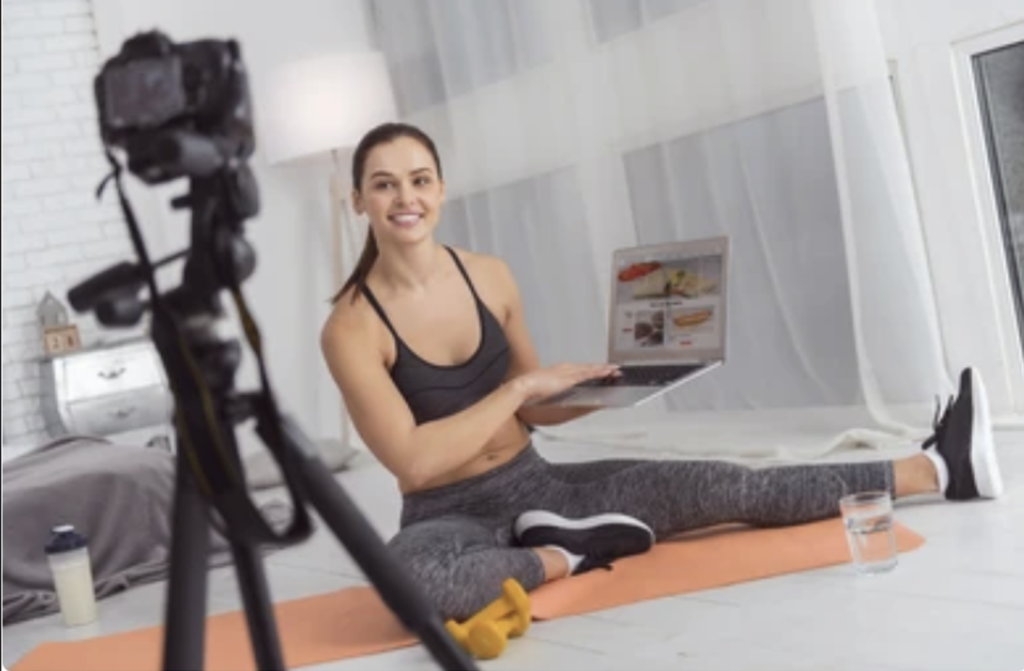
I didn’t start my fitness blog with a strategy.
I started it with a feeling.
It was one of those quiet evenings when the house finally settles into silence, when your body feels pleasantly tired from movement and your mind is a little softer than usual. I had just finished a workout that wasn’t impressive by any visible standard — no personal record, no dramatic sweat session, no transformation photo waiting to happen. Just a simple workout that made me feel grounded again after a stressful day.
I sat down with my laptop mostly out of habit. I opened a blank page without knowing what I wanted to say. But there was this quiet urge to capture the moment before it disappeared into routine. So I began typing. Not a guide, not advice, not a list of tips. Just a reflection on how movement had slowly become less about changing my body and more about understanding it.
That post wasn’t optimized for search engines. It didn’t have a clever headline. It didn’t include keywords or call-to-action phrases. But it felt honest.
And honesty, I would later realize, is where everything meaningful begins.
At the time, I didn’t even think of blogging as a marketing strategy. I wasn’t trying to attract clients or build a brand. I was simply documenting a relationship — the evolving, sometimes complicated relationship I had with fitness, with consistency, with self-image, with discipline, with rest.
But slowly, quietly, something started happening.
People began reading.
Not thousands at first. Just a few. Women who left thoughtful comments. Messages saying they felt the same. That they appreciated seeing the “in-between” moments, not just highlights. That my words felt like conversations instead of instructions.
And that’s when I began to see the deeper potential of blogging.
Not just as a place to share workouts or knowledge, but as a bridge between experience and connection. Between personal growth and community. Between storytelling and trust.
If you’re thinking about starting a fitness blog — or wondering whether it’s worth the effort in a world dominated by short videos and quick posts — I understand the hesitation. It’s easy to feel like long-form writing is outdated, like attention spans are too short, like blogging belongs to a different era of the internet.
I thought that too.
But what I’ve discovered is that blogs offer something social media rarely does: depth. Space. Nuance. A slower pace where readers can sit with your thoughts instead of scrolling past them.
And in the fitness world, that depth matters.
Because fitness isn’t just about exercises or nutrition plans. It’s emotional. Psychological. Personal. It intersects with identity, confidence, self-worth, stress, and life transitions. A blog gives you the space to explore those layers in ways that a caption simply can’t hold.
Looking back, one of the most important steps in building my blog wasn’t technical at all. It was deciding what part of fitness genuinely lit something up inside me.
Not what was trending.
Not what I thought would perform well.
But what I couldn’t stop thinking about.
For me, it was the emotional side of consistency. The quiet discipline. The mental conversations before workouts. The self-compassion required after setbacks. The way fitness subtly reshaped my mindset more than my appearance.
That became my niche without me formally naming it.
And here’s the truth: your niche doesn’t have to be narrow or rigid. It simply needs to be authentic enough that writing about it feels natural instead of forced. Readers can feel the difference. Passion translates into warmth, curiosity, and depth. And that’s what makes them stay.
But passion alone isn’t enough if you want your blog to grow beyond your immediate circle. At some point, I realized that blogging is both an emotional outlet and a form of communication. And communication means understanding who you’re speaking to.
This realization didn’t come through analytics or research at first. It came through messages. Stories readers shared. The questions they asked. The struggles they admitted privately. Patterns began to emerge. Many were balancing busy lives. Many felt intimidated by gym culture. Many were seeking sustainable habits rather than quick fixes.
That awareness shaped my writing more than any keyword research ever could.
I began writing with a specific reader in mind — not an abstract audience, but a woman who might be tired after work, scrolling late at night, questioning her progress, searching for reassurance rather than perfection. Imagining her changed my tone. It softened my words. It made me more empathetic, less performative.
Later, I did explore the practical side of blogging — things like search terms and headlines. Not because I wanted to chase algorithms, but because I wanted my posts to reach the women who might need them. I started noticing what questions people typed into search bars. How they phrased their struggles. What they were curious about.
It felt less like “SEO” and more like listening.
And listening, I realized, is one of the most powerful skills in blogging.
There’s a delicate balance between writing what you want to express and writing what readers are searching for. The magic happens where those two overlap. Where your personal experiences meet collective curiosity. Where your reflections answer questions readers haven’t fully articulated yet.
Writing itself became a ritual over time. Sometimes I’d start with a headline. Sometimes with a memory. Sometimes with a feeling I couldn’t shake. I stopped overthinking structure and allowed posts to unfold organically, trusting that clarity would come through editing.
Editing, I learned, isn’t about stripping personality away. It’s about refining emotion. Removing clutter so the heart of the message can breathe. Breaking long paragraphs into softer ones. Adding space where readers might need to pause. Reading sentences aloud to see if they sound human instead of polished.
Because reader experience isn’t just about what you say. It’s about how it feels to read it.
Competition exists in every industry, and fitness is no exception. There were moments when I scrolled through other blogs and felt that familiar flicker of comparison. Their designs were sleek. Their routines structured. Their photos professionally lit. It was easy to question whether my quieter, reflective style had a place.
But comparison eventually shifted into curiosity.
I began exploring other blogs not to measure myself against them, but to understand the landscape. What topics resonated. What perspectives felt overrepresented. What conversations felt missing. Sometimes inspiration came from noticing gaps — emotional angles that weren’t being explored, everyday experiences that weren’t being voiced.
Your uniqueness doesn’t always come from inventing new topics. Often, it comes from offering a different emotional lens.
And readers notice that.
As my blog grew, I started understanding something else: writing alone doesn’t bring people to your words. Visibility matters. Sharing matters. Letting people know your blog exists matters.
Social media, which I once saw as separate from blogging, became an extension of it. Not a replacement, but a doorway. A way to offer glimpses into posts, to spark curiosity, to invite readers into deeper conversations waiting on the blog itself.
Sometimes I’d share a small excerpt. A sentence that captured the mood of a post. A behind-the-scenes moment. A photo connected to the story. Not to summarize everything, but to create a gentle invitation.
I learned that promotion doesn’t have to feel pushy. It can feel like sharing something meaningful you’re proud of. Like telling a friend, “I wrote something today that might resonate with you.”
Over time, blogging also became a subtle form of business growth — though that was never my initial intention. Trust built through storytelling. Readers who connected with my reflections became curious about my coaching. They felt they already knew my approach, my values, my voice. The blog became less of a marketing tool and more of a relationship builder.
And relationships are the foundation of any sustainable business.
One of the most unexpected lessons blogging taught me is patience. Growth is slow. Sometimes invisible. There are posts that resonate deeply and others that quietly exist without much attention. But every post contributes to the overall story you’re telling. Every reflection adds depth to your voice.
There were weeks when inspiration felt distant. Weeks when life felt too full to write. I used to see those gaps as failures. Now I see them as seasons. Blogging, like fitness, doesn’t need perfection to be meaningful. Consistency matters, but so does grace.
Some of my most heartfelt posts came after pauses. After life experiences that shifted my perspective. After moments of burnout, rediscovery, or quiet growth. Writing from lived experience always carries more weight than writing from obligation.
And maybe that’s the most important thing I’ve learned: a successful fitness blog isn’t defined by traffic numbers or posting frequency alone. It’s defined by authenticity. By emotional resonance. By the sense of connection readers feel when they land on your words.
Tonight, as I reflect on this journey, I realize my blog has become more than a platform. It’s a space of reflection. A record of growth. A gentle reminder of how far I’ve come, not just physically but emotionally.
If you’re standing at the beginning of your blogging journey, unsure where to start, I hope you know this: you don’t need a perfect plan. You don’t need flawless writing. You don’t need a fully defined niche or polished strategy.
You just need a story.
Your story.
The one that unfolds in ordinary moments. In small victories. In quiet doubts. In the evolving relationship you have with movement and yourself. When you write from that place, readers don’t just consume your content — they feel it.
And feeling is what makes them return.
I close my laptop with the same quiet gratitude I felt the night I wrote my first post. The world of blogging has changed since then, faster and noisier. But the essence remains the same: human beings seeking connection through shared experiences.
Fitness blogs, at their best, aren’t about expertise alone. They’re about empathy. Reflection. Honesty. They remind readers that progress isn’t a straight line, that strength comes in many forms, that growth often happens quietly.
And maybe that’s why blogging still matters.
Because beneath all the noise, people are still searching for stories that feel real.
Stories like yours.