
Because staying active during pregnancy doesn’t mean sacrificing your grace, your style, or your sanity.
Let me be honest with you — when I first found out I was pregnant, my first thought (after the tears, the joy, the silent panic) was: what happens to my body now? Not in a vain way, but in that deep, primal, this-is-really-happening way. I’d spent years cultivating a relationship with movement. Morning walks in linen trousers, reformer Pilates twice a week, weekend yoga in my favourite studio tucked away in a leafy part of the city. Movement wasn’t just exercise for me — it was ritual. It was the way I started conversations with myself each day.
And then suddenly, everything was different. The fatigue in the first trimester was nothing like regular tiredness. It was a bone-deep exhaustion that made even lifting my arms feel like too much. My usual routines felt either too intense or completely out of reach. Gym memberships felt pointless. I didn’t want to be around loud music and heavy weights. I wanted softness. I wanted something that respected where my body was, not where it used to be.
What I discovered over those nine months — and what I want to share with you now — is that pregnancy can actually be one of the most profound and beautiful periods of physical self-discovery. When you move with intention, when you listen to what your body is asking for in each trimester, when you build a gentle at-home practice that fits around your life and your changing shape… something shifts. You stop fighting your body and start dancing with it.
This guide is for every elegant, aware, beautifully busy woman navigating pregnancy in 2026. Whether you’re someone who loves the clean girl aesthetic of a soft morning routine or you find yourself doom-scrolling Pinterest for quiet luxury wellness inspo at 2am — this is for you. Let’s talk about movement that is actually joyful. Workouts that don’t make you feel like you’re punishing yourself. A pregnancy fitness approach that honours your femininity, your strength, and yes, even your style.
— ✦ —
First, Let’s Talk About Why Movement Matters (And Why This Isn’t Just About ‘Bouncing Back’)
I want to address something before we go any further, because I think it needs to be said plainly and without apology: this is not a guide about getting your pre-baby body back. If that’s what you’re here for, I’d gently encourage you to close this tab, make yourself a cup of chamomile tea, and sit with the idea that your body is currently doing the most extraordinary thing it will ever do. It deserves reverence, not shrinking.
Moving during pregnancy is about energy. It’s about managing the very real physical discomforts that come with growing a human — the lower back ache, the swollen ankles, the pelvic pressure, the breathlessness that shows up without warning. It’s about maintaining the kind of strength that will help you through labour, through recovery, through the early days of new motherhood. And it’s about mental health — the endorphins that keep the anxiety at bay, the sense of agency in a time that can feel deeply out of your control.
Studies consistently show that women who exercise regularly during pregnancy experience shorter labours, lower rates of gestational diabetes, better sleep quality, and reduced symptoms of prenatal anxiety and depression. These are not small things. These are life-changing things. But beyond the clinical benefits, there’s something else — something harder to quantify but very real — and that’s the feeling of being inhabiting your body with pride during pregnancy. Of moving through the world with a kind of intentional grace.
That’s what we’re building here. Not a punishing routine. A practice.
— ✦ —
The First Trimester: Gentle Is Not Weak
The first trimester is a strange, secretive season. Most of the world doesn’t know yet. You might not even look different. But internally? You are building a universe. The fatigue, the nausea, the hormonal upheaval — it’s all very real and very valid. This is not the time to push yourself. This is the time to be extraordinarily kind to yourself.
When I was six weeks pregnant, I remember trying to do a workout I’d done fifty times before — a moderate-intensity Pilates flow — and having to stop halfway through because the room started spinning and the nausea hit me like a wave. I lay on my mat on the floor of my living room, stared at the ceiling, and laughed quietly to myself. My body had spoken. I listened.
The best workouts for the first trimester are low-intensity, short in duration, and focused on body awareness. Think of this period as laying the groundwork. You’re not building a skyscraper right now — you’re pouring the foundation. And that foundation matters enormously.
Morning Walks: The Most Underrated Pregnancy Workout
There is something quietly luxurious about a morning walk. It doesn’t require a gym membership or a fitness tracker or even proper athletic wear, honestly. Throw on your best soft-tailored trousers, a cashmere blend hoodie, and those white trainers you’ve been living in since they became the cornerstone of the 2026 clean girl aesthetic, and just… walk. Slowly. Intentionally.
Aim for twenty to thirty minutes of gentle walking most mornings. The fresh air alone will do wonders for first-trimester nausea — there’s something about being outside and breathing that settles the stomach in a way nothing else quite does. Walking also keeps circulation moving, which helps with the bloating and fatigue that tend to peak in these early weeks.
Don’t time yourself. Don’t count steps obsessively. This isn’t about performance. It’s about movement as medicine, as self-care, as a quiet moment of mindfulness before the day fully begins. Bring your headphones and a playlist that feels like warm light. Think ambient, think instrumental, think whatever makes you feel like the most serene, glowing version of yourself.
Prenatal Yoga: Your New Best Friend
If there’s one form of movement I would recommend to every pregnant woman in every trimester, it’s prenatal yoga. Not because it’s trendy (though it absolutely has had its Pinterest moment, and for good reason), but because it’s genuinely, profoundly beneficial.
In the first trimester, prenatal yoga helps with nausea through specific breathing techniques, eases lower back tension that starts surprisingly early, and introduces you to the concept of the pelvic floor — which is about to become the most important muscle group in your life.
You don’t need a studio. You don’t need expensive equipment. All you need is a quality yoga mat (invest in one if you can — the cushioning matters more than ever now), comfortable clothes that move with you, and either a prenatal yoga app or a trusted YouTube channel. There are some beautiful, thoughtfully curated prenatal yoga practices online — search for instructors who specialise in pregnancy, not just general yoga instructors who’ve added a disclaimer.
Some of the poses that feel particularly wonderful in the first trimester: Cat-Cow (for spinal mobility and back relief), Child’s Pose (with knees wide to accommodate your belly), gentle seated twists (always twist open, never compressed), and legs-up-the-wall for swollen legs and calm nerves. These are not glamorous movements, but the way they make your body feel is genuinely luxurious.
Breathing Work and Pelvic Floor Foundations
This might be the most unglamorous section of this article, but please don’t skip it. The pelvic floor is having its cultural moment right now — there are entire social media accounts dedicated to women finally understanding this crucial part of their anatomy — and if you’re pregnant, now is the time to get serious about it.
The pelvic floor is a hammock of muscles at the base of your pelvis that supports your bladder, uterus, and bowel. As your baby grows, the pressure on these muscles intensifies dramatically. Strengthening them now (and learning to release them — equally important) will help with bladder control, reduce the risk of prolapse post-birth, and genuinely support a smoother labour.
Kegel exercises — the classic pelvic floor contraction and release — can be done anywhere, at any time. In the first trimester, I’d recommend doing three sets of ten contractions daily. Hold each for five seconds, release fully. But equally important is the release — many women over-tighten their pelvic floor without realising it. Learning to consciously, completely relax those muscles is as vital as strengthening them.
Pair this with diaphragmatic breathing: breathing deeply into your belly rather than your chest. Place one hand on your ribcage and one on your belly. Breathe in through your nose for four counts, feeling your belly and ribs expand. Exhale slowly for six counts. This supports your nervous system, reduces cortisol levels, and prepares your body for the very real breath work of labour.
— ✦ —
The Second Trimester: Your Golden Season of Movement
Ah, the second trimester. For many women, this is when the fog of the first trimester lifts and they find themselves feeling something remarkable: good. Genuinely, surprisingly good. The nausea typically subsides. Energy returns — not to its pre-pregnancy level necessarily, but enough to feel human again. The bump is showing but isn’t yet unwieldy. You’re in what many midwives and fitness instructors refer to as the ‘sweet spot’ of pregnancy exercise.
This is the time to lean into movement with a little more enthusiasm, while still listening carefully to your body and keeping safety the highest priority. The second trimester is roughly weeks thirteen to twenty-seven, and within that window, there’s a beautiful opportunity to build genuine strength and stamina that will serve you enormously in the third trimester and beyond.
But let me add a gentle caveat here, because I think it matters: this is not the time to suddenly become an athlete if you weren’t one before. The goal isn’t to impress anyone. The goal is to feel strong, capable, and connected to your body. Whether that means a thirty-minute walk plus some gentle strength work, or a full prenatal Pilates class, or simply stretching on your living room floor while watching something beautiful on television — all of it counts. All of it matters.
Pregnancy Pilates: Elegant, Effective, Essential
If the second trimester has a signature workout, I’d argue it’s Pilates. Specifically, reformer Pilates if you have access to a good prenatal studio, or mat Pilates if you’re working at home. The focus on core engagement, postural alignment, and controlled movement makes it one of the safest and most effective forms of exercise during pregnancy.
Now, a note on core work during pregnancy: traditional crunches and sit-ups are out. Not just because they’re uncomfortable (though they are), but because they can contribute to a condition called diastasis recti — the separation of the abdominal muscles that many women experience during and after pregnancy. Instead, prenatal Pilates focuses on what’s called ‘deep core’ work: engaging the transverse abdominis (the deep muscle that wraps around your trunk like a corset) without bearing down or creating intra-abdominal pressure.
This is more sophisticated than it sounds, and it’s exactly why working with a prenatal-qualified instructor — even via a high-quality online platform — is worth it. The difference between generic Pilates and prenatal-specific Pilates is significant, and your body will thank you for seeking out someone who truly understands the biomechanics of pregnancy.
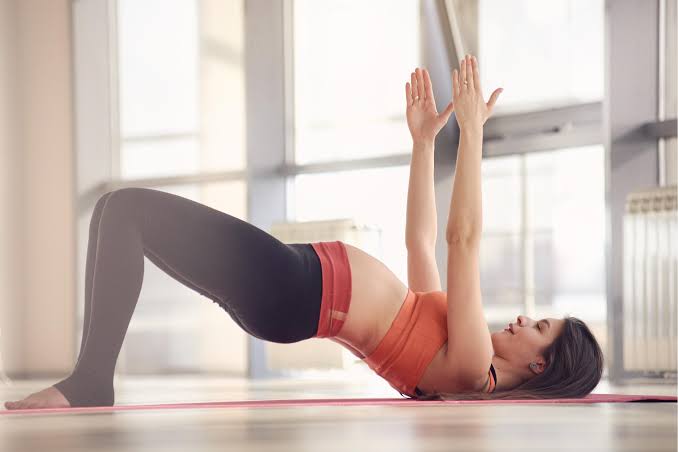
At home, some of my favourite second-trimester Pilates movements include: side-lying leg circles and clam shells (for hip strength), seated ball squeezes, standing wall push-ups, modified bird-dog on hands and knees, and the classic pregnancy-safe bridge. These movements sound simple, and they are — but done with intention and proper breathing, they are genuinely transformative for your posture, your hip stability, and your sense of physical confidence.
Strength Training: Yes, Really
Strength training during pregnancy is one of those topics that still carries a surprising amount of outdated stigma — people imagine heavy barbells and breath-holding and risk. But prenatal strength training, done correctly, is not just safe — it’s actively beneficial. And in 2026, with the amount of quality information available, there’s really no reason to be in the dark about it.
What we’re talking about here is light to moderate resistance work: dumbbells, resistance bands, bodyweight exercises. Nothing that requires you to hold your breath (the Valsalva manoeuvre, common in heavy lifting, is contraindicated in pregnancy). Nothing that puts you flat on your back for extended periods after about sixteen weeks. Nothing that involves heavy overhead loading that strains the lumbar spine.
What’s absolutely on the table: bicep curls with light dumbbells, seated shoulder presses, resistance band rows, standing squats and lunges, and modified deadlifts with very light weight. These exercises maintain muscle mass, support your joints (which are under increased stress due to the relaxin hormone that loosens ligaments during pregnancy), improve metabolic function, and give you a sense of genuine physical strength at a time when your body might feel like it belongs to someone else.
I personally found that doing twenty to thirty minutes of gentle strength work two or three times per week in my second trimester made an enormous difference to how I felt. Not just physically, but emotionally. There’s something deeply grounding about picking up a weight, however light, and doing something with it. It reminded me that I was still here inside this changed body. Still capable. Still strong.
Swimming: The Ultimate Pregnancy Exercise
If you have access to a pool, please use it. Swimming during pregnancy is extraordinary — the buoyancy of the water takes the weight of your bump entirely off your joints and spine, the coolness combats the overheating that many pregnant women experience, and the resistance of the water provides a full-body workout without any impact.
Even if you’re not a strong swimmer, gentle laps or simply walking back and forth in the shallow end offers significant cardiovascular and strengthening benefits. Many leisure centres and community pools offer prenatal aqua aerobics classes, which are brilliant — they’re social, they’re fun, and they’re specifically designed for pregnancy.
Aqua aerobics has a bit of an image problem — people picture it as something grandmothers do on holiday. But I’d challenge that perception entirely. The effort required to move against water resistance is real, and the full-body engagement is genuine. Put on your most elegant maternity swimsuit (yes, they exist, and yes, you deserve one that makes you feel gorgeous), find a session near you, and go.
— ✦ —
The Third Trimester: Slow Down and Surrender (In the Best Way)
The third trimester — roughly weeks twenty-eight through forty — is its own universe entirely. Your baby is growing rapidly, your bump is now unignorable, your sleep is probably disrupted, and your body is beginning the slow, extraordinary process of preparing for birth. Every system is working overtime.
This is not the time to push. This is the time to be deeply, tenderly gentle with yourself. The goal in the third trimester is not to maintain your second-trimester fitness level. It’s to stay mobile, ease discomfort, prepare your body for labour, and honour the profound work your body is already doing without you lifting a single dumbbell.
I want to say something here that I think women don’t hear enough: resting is productive during the third trimester. Lying down with your feet elevated is not laziness. Taking a nap instead of doing a workout is not weakness. Your body is using an enormous amount of energy for things you cannot see — organ development, brain formation, immune system preparation, bone mineralisation. When you rest, you are contributing to all of that. Please stop apologising for needing to stop.
Pregnancy Ball Work: Comfort Meets Functionality
The birthing ball (also called an exercise ball or Swiss ball) is one of the most genuinely useful items you can own in the third trimester — and it costs almost nothing. Sitting on a birthing ball throughout the day instead of on a sofa or chair encourages the baby to move into an optimal position for birth. It opens the pelvis. It eases lower back pressure. And it gently engages the core and pelvic floor without any effort on your part.
Beyond just sitting, there are some beautiful, gentle movements you can do with a birthing ball in the third trimester. Gentle hip circles while sitting on the ball. Slow figure-eights. Leaning forward over the ball in a kneeling position to take weight off the spine. Gently bouncing — not dramatically, just a subtle, rhythmic movement that many women find soothes baby and eases pelvic discomfort simultaneously.
I used my birthing ball while watching television, while taking calls, while reading. It became such a fixture in my living room that my friends started sitting on it when they visited. It’s both practical and, in a quiet way, beautiful — a symbol of preparation, of readiness, of surrender to what’s coming.
Gentle Stretching and Restorative Yoga
In the third trimester, the focus of any movement practice shifts from strengthening to releasing. Your hip flexors, your lower back, your shoulders (which tend to round forward as the bump pulls your centre of gravity), your inner thighs — all of these areas hold enormous tension as your body changes. Stretching them isn’t just for physical relief; it’s for nervous system regulation. When you stretch deeply and breathe into tight places, you activate the parasympathetic nervous system — the ‘rest and digest’ mode that counters the anxiety and overwhelm that often accompany late pregnancy.
Restorative yoga is ideal for this season. Unlike active yoga, restorative yoga uses props — bolsters, blankets, blocks — to support the body completely while it rests in gentle poses. Sessions can last anywhere from twenty minutes to an hour, and the whole experience feels more like deep, supported rest than exercise. Many women find it profoundly emotional, which makes complete sense. You’re about to become a mother. Your body is doing something ancient and enormous. The space to feel that, to breathe into it, to let it land — that is its own kind of work.
Some of my most cherished third-trimester stretches: supported butterfly pose (sitting with feet together, reclined back on a bolster, letting the hips open completely), a wide-legged child’s pose with the belly resting between the knees, standing wall stretches for the calves and hamstrings, and thread-the-needle for the thoracic spine and shoulders. These are slow, these are gentle, these are deeply nourishing.
Walking Still Matters: Maybe More Than Ever
Don’t underestimate the power of a gentle daily walk in the third trimester. Even twenty minutes on flat ground helps maintain circulation, eases swelling in the ankles and feet, keeps the pelvis mobile, and contributes to better sleep. Walking also stimulates the release of oxytocin — the same hormone involved in labour — which is why many midwives encourage daily walking as the pregnancy approaches its end.
In the final weeks, walking can feel like an achievement. Your pace will have slowed considerably. Your gait will have changed. Your bump will feel heavier with every step. And that’s completely fine. Honour the pace your body sets. There is no timeline here, no benchmark. Just you, moving through the world, carrying the most important thing you will ever carry.
I took my final pre-birth walk the day before I went into labour. I didn’t know it was the last one. I remember the evening light, how it came through the trees in long golden strips, the way everything felt slightly heightened and soft. It was just a walk, but it was also somehow everything.
— ✦ —
Building Your At-Home Pregnancy Workout Space: Small Details That Make a Big Difference
Let’s talk environment for a moment, because I genuinely believe that where you exercise matters almost as much as how you exercise — especially during pregnancy, when your nervous system is heightened and your sensitivity to your surroundings is intensified.
You don’t need a dedicated home gym. You don’t need much space at all. But you do need a space that feels intentional, calm, and beautiful. This is very much in keeping with the quiet luxury aesthetic that has shaped so much of how we think about home and lifestyle in 2026 — the idea that even functional spaces can be elevated by attention to detail, quality over quantity, and considered design.
Start with your yoga mat. If you’ve been using a basic foam mat, now is the time to invest in something better. A good quality mat — perhaps a natural rubber one in a soft, muted tone — provides the cushioning your joints need during pregnancy and signals to your brain that this space is sacred. Roll it out in the same spot every time. Let it become your anchor.
Add a diffuser with calming essential oils — eucalyptus, lavender, or the frankincense blends that feel simultaneously ancient and deeply modern. Light is everything: if you exercise in the morning, let in natural light wherever possible. If evenings, choose warm, low lighting rather than harsh overhead brightness. A small Bluetooth speaker with a curated playlist can completely transform the feeling of a workout.
Your workout clothes matter too — not from a performance standpoint, but from a psychological one. The clean girl aesthetic that’s dominated 2026 wellness culture is built on a foundation of effortless, refined simplicity: matching sets in neutral tones, soft fabrics that move beautifully, minimal branding, understated elegance. Dressing well for your at-home workout is an act of self-respect, and self-respect during pregnancy is not a luxury. It’s a necessity.
Some of the maternity activewear that’s worth knowing about: high-waisted leggings with a fold-over panel that accommodates a growing bump (avoid tight waistbands entirely), soft, breathable sports bras that can be adjusted as your size changes, oversized cotton-blend tanks in the colours that make you feel most like yourself. You’re not going anywhere. You’re not impressing anyone. But the right clothes make movement feel easier, and easier movement means you’ll actually do it.
— ✦ —
What To Avoid: A Practical, Non-Alarmist Guide
The internet is full of terrifying pregnancy exercise lists that read like legal disclaimers written by someone who has never actually been pregnant. I want to give you something more useful than that: a clear, practical, common-sense guide to what genuinely warrants caution — without the hysteria.
Contact sports and activities with a high fall risk should be avoided throughout pregnancy. Skiing, horse riding, mountain biking, martial arts — these all involve the potential for sudden impact or falls that could be dangerous to you or your baby. This isn’t about being overly cautious; it’s about removing unnecessary risk during a finite period of your life.
After about sixteen to eighteen weeks, lying flat on your back for extended periods is generally discouraged. In this position, the weight of the uterus can compress the vena cava (the large vein that returns blood to your heart), potentially reducing blood flow to both you and your baby. This doesn’t mean you can never briefly rest on your back — it means you shouldn’t sustain that position for the duration of a workout. Prop yourself up slightly, or move to your side.
Hot yoga and saunas should be avoided. Overheating during pregnancy can be dangerous, particularly in the first trimester when the neural tube is forming. Keep your exercise environment cool and well-ventilated. If you start feeling too hot during any workout, stop. Hydration cannot be emphasised enough — drink water before, during, and after every session.
Heavy, high-intensity interval training (HIIT) that leaves you unable to carry a conversation is too intense for pregnancy. A good rule of thumb is the ‘talk test’: you should always be able to speak in short sentences during exercise. If you’re gasping for breath and can’t form words, dial it back. This isn’t about being less fit — it’s about ensuring adequate oxygen reaches your baby throughout your workout.
Finally, trust your body above everything else, including this article. Every pregnancy is different. Some women run half-marathons at eight months pregnant. Others find that even gentle walking becomes too much in the third trimester. Neither is better or worse; both are valid. The most important thing you can do is pay attention to how you feel, and respond to what you notice with kindness rather than judgement.
— ✦ —
Listening to Your Body: The Most Important Skill You Can Develop
I want to spend some time on this, because I think it’s genuinely the most important thing in this entire guide — more important than any specific exercise, any number of sets and reps, any carefully curated playlist.
Pregnancy is an extraordinary invitation to develop a relationship with your body that most of us, in our ordinary, rushed, achievement-oriented lives, never quite manage. The subtle signals your body sends you — the twinge in the hip that means you’ve overdone it, the breathlessness that says your heart rate has climbed too high, the nausea that means you need to slow down and sit — these signals are not inconveniences. They are information. Valuable, specific, useful information.
We live in a culture that has long rewarded the pushing through of discomfort. ‘No pain, no gain.’ ‘Mind over matter.’ These mantras have their place — but they have absolutely no place in pregnancy fitness. During pregnancy, discomfort is a signal worth listening to, not overriding. Pain is always a reason to stop. Dizziness is always a reason to stop. Any sudden, sharp, or unusual sensation is a reason to stop and speak to your midwife or doctor.
Stop if you experience any of the following during exercise: vaginal bleeding or fluid leaking, sudden or severe abdominal pain, chest pain or heart palpitations, severe shortness of breath, dizziness or feeling faint, decreased foetal movement (after twenty weeks), or significant swelling in the face, hands, or legs (which can be a sign of pre-eclampsia). These are not normal workout sensations, and they require medical attention, not powering through.
But beyond the clinical red flags, listen for the subtler signals too. The tiredness that says today is not a workout day. The heaviness in the pelvis that says a gentle walk is more appropriate than Pilates. The emotional fragility that says what you actually need is to sit in a warm bath and cry a little and that’s completely okay. Pregnancy is not a linear process. Some days will feel unexpectedly powerful. Others will feel desperately vulnerable. All of it is normal. All of it is allowed.
— ✦ —
The Emotional Landscape of Moving During Pregnancy
Nobody talks about this enough, so I’m going to. Moving your body during pregnancy is not always empowering or joyful or Pinterest-worthy. Sometimes it’s hard and strange and emotional in ways that catch you completely off guard.
There will be days when you look in the mirror mid-workout and don’t recognise yourself. When your body moves differently than it used to and you feel a sudden, sharp grief for the version of yourself you were before all of this began. That grief is real, and it deserves to be acknowledged. You can be simultaneously grateful for your pregnancy and mourning parts of your old life. Both truths can coexist.
There will also be days of genuine exhilaration — when you feel the baby move during a yoga session, or when you finish a walk feeling genuinely proud of yourself, or when you look in that same mirror and feel, for a moment, completely awe-struck by what your body is capable of. These moments are real too. Hold onto them.
The emotional regulation that comes from regular movement during pregnancy is well-documented in research, but it’s also deeply personal. Exercise gives you agency at a time when so much feels out of your control. It provides a container for anxiety, a release for tension, a rhythm when everything else feels chaotic. That’s worth showing up for, even on the days when showing up means a fifteen-minute walk and nothing else.
Be patient with yourself. Be curious about your body rather than critical of it. Notice what it can do rather than fixating on what it can’t. This is a season, and seasons change.
— ✦ —
Postpartum Considerations: What Happens After
I know this guide is about pregnancy workouts, but I’d be doing you a disservice if I didn’t briefly address the postpartum period, because the decisions you make during pregnancy have a direct impact on your recovery after birth.
The first six weeks postpartum are universally a time for rest. Whatever anyone else tells you, whatever you see on social media, whatever the voice in your head suggests — rest is the primary job of the first six weeks. This is true regardless of your birth experience, whether you had a straightforward vaginal birth or a caesarean section. Your body has been through something seismic. It needs time.
Maintaining your pelvic floor practice during pregnancy means you’ll have the foundations for rehabilitation postpartum. Many physiotherapists recommend seeing a women’s health physiotherapist around six to eight weeks after birth for an internal assessment — to check pelvic floor function, look for any diastasis recti, and guide your return to movement safely. This is standard care in many countries and should be sought out proactively where it isn’t.
The return to exercise postpartum is gradual and personal. Walking comes first — gentle, short walks that build in duration over weeks and months. Core rehabilitation comes before anything high-impact. Running and jumping are typically not recommended before three to four months postpartum at minimum, and often longer. The emphasis on ‘getting your body back’ in the postpartum period is one of the more damaging cultural narratives around new motherhood. Your body did not go anywhere. It evolved. Let it continue evolving at its own pace.
— ✦ —
A Sample Weekly Movement Plan for Each Trimester
First Trimester Sample Week
Monday: 20-minute gentle walk, 10 minutes of pelvic floor work and breathwork.
Tuesday: 30-minute prenatal yoga (focus on gentle opening and breath work).
Wednesday: Rest, or a very gentle 15-minute walk if energy allows.
Thursday: 30-minute prenatal yoga or stretching session.
Friday: 20-minute walk, 10 minutes of pelvic floor exercises.
Saturday: Rest, gentle movement, or whatever feels most nourishing.
Sunday: Complete rest. This is sacred.
Second Trimester Sample Week
Monday: 30-minute brisk walk, 20 minutes of prenatal strength (light dumbbells, resistance bands).
Tuesday: 45-minute prenatal Pilates session.
Wednesday: 30-minute swim or aqua walk.
Thursday: 45-minute prenatal yoga, emphasising hip opening and spine mobility.
Friday: 30-minute walk, 15 minutes of gentle strength work.
Saturday: Prenatal yoga or an active outing (gentle hiking on flat ground, leisurely cycling on easy terrain).
Sunday: Rest, or a leisurely walk.
Third Trimester Sample Week
Monday: 20-minute gentle walk, birthing ball hip circles.
Tuesday: 30-minute restorative yoga or gentle stretching.
Wednesday: 20-minute walk (or less if that feels like enough).
Thursday: 30-minute prenatal yoga, focus on hip opening, breathwork, labour preparation poses.
Friday: Gentle walk, birthing ball practice, pelvic floor work.
Saturday: Rest, or a gentle stroll.
Sunday: Complete rest. Always.
— ✦ —
The Aesthetics of Pregnancy Fitness in 2026: A Love Letter to the Modern Expectant Woman
We’re living in a fascinating cultural moment around pregnancy and movement. The social media landscape — particularly Instagram and Pinterest — has shifted considerably in how pregnancy is depicted and discussed. Gone (mostly, thankfully) are the days of the perfectly staged bump shots with no indication of the realities of growing a human. In their place: honesty, softness, specificity.
The pregnancy wellness aesthetic that feels most resonant right now is rooted in the same quiet luxury sensibility that has defined so much of 2026’s visual culture. Neutral tones. Natural light. Clean, uncluttered spaces. Quality over quantity. There’s a move away from the high-energy, high-intensity fitness culture of previous years toward something slower, more intentional, more feminine in the truest sense of the word.
This resonates with me deeply — as someone who has always believed that femininity is not fragility. That choosing softness is a form of strength. That elegance and power can coexist, and that there is something profoundly radical about a pregnant woman who moves through the world with grace and intention, who prioritises her own wellbeing, who refuses to minimise her experience or rush through it.
The women I admire most in the pregnancy fitness space are not the ones who ran marathons at thirty-eight weeks or who were back in their pre-pregnancy jeans at three weeks postpartum. They’re the ones who were honest about the difficulty and the beauty simultaneously. Who shared the restorative yoga sessions and the long walks in autumn light. Who wore beautiful clothes that fit their changing bodies with dignity. Who made choices that prioritised their health and their baby’s health above the performance of fitness.
That’s the kind of pregnant woman I want to be. That’s the kind of woman this guide is written for.
— ✦ —
Final Thoughts: Moving Into Motherhood with Grace
Pregnancy is finite. Nine months that will pass far more quickly than you expect — and far more slowly than you can bear, depending on the day. The discomforts are real. The joy is real. The strange, suspended quality of existing in a body that is simultaneously yours and not entirely yours anymore — that is very, very real.
Moving your body through this season — gently, intentionally, kindly — is one of the greatest gifts you can give yourself and your growing child. Not because it will make the birth easier (though it might). Not because it will help you ‘bounce back’ (please, let that phrase go). But because it keeps you connected to yourself at a time when it’s very easy to lose yourself in the enormity of what’s happening.
When you roll out your yoga mat in the early morning light and move through a gentle sequence that was designed with your body and your baby in mind, you are making a statement. You are saying: I am here. I am taking care of myself. I am showing up for this pregnancy with intention. I am worthy of this care.
You are. Entirely, completely, without qualification.
Move well. Rest often. Trust your body. It knows what it’s doing — even when, especially when, it doesn’t feel that way.
— ✦ —
—
This article was written for informational purposes only and should not replace advice from your midwife, obstetrician, or healthcare provider. Always consult with a qualified medical professional before beginning or modifying an exercise programme during pregnancy.