
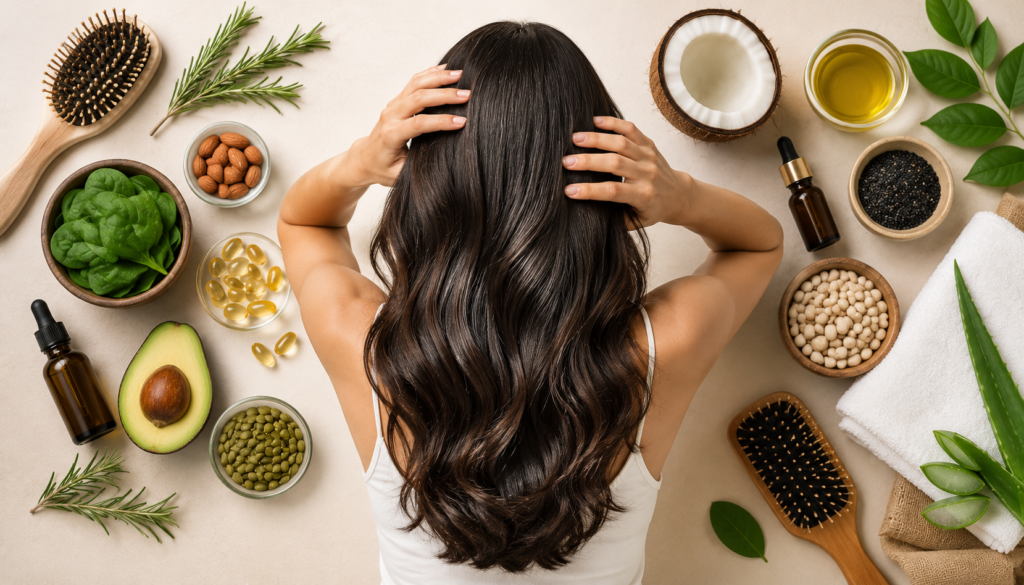
LOOKING TO IMPROVE THICKNESS AND LENGTH
Everything I learned after two years of obsessive research, expensive mistakes, and genuinely transformative results
Because beautiful hair isn’t luck. It’s biology — and once you understand the biology, everything changes.
I was standing in the shower the morning I decided something had to change. It was about two and a half years ago, and the shower drain was doing that thing — collecting more hair than it ever used to, the kind of accumulation that you can’t quite look at directly because doing so requires fully confronting a truth you’ve been gently avoiding. My hair, which had once been something I took for granted in the specific way you take for granted anything that functions without requiring your attention, had started to feel thin to me. Not dramatically, not alarmingly, but persistently. The kind of gradual change that’s almost invisible month-to-month and then suddenly, one morning in a certain light, is unmistakable.
I’m sharing this because I think the hair loss and thinning conversation among women is one of the most quietly distressing ones that rarely gets spoken out loud. It sits at the intersection of identity and beauty and aging and health in a way that’s hard to disentangle, and the shame attached to it — this sense that your hair is supposed to just be fine, that worrying about it is somehow vain, that you should be grateful it’s not worse — makes it lonelier than it needs to be.
What I discovered, in the two-plus years I’ve spent researching and experimenting and rebuilding my hair, is that most of the mainstream guidance on hair growth is either incomplete, actively misleading, or oriented toward products and treatments rather than the underlying biology that actually determines whether your hair grows and how healthy it is when it does. The supplement marketed for hair growth that doesn’t address the root cause of why it stopped growing in the first place. The expensive treatment that masks the symptom without resolving the condition. The scalp oil that smells divine and does almost nothing without the circulation work that makes it effective.
This guide is the comprehensive, honest version — everything I genuinely know, from the biology of the hair follicle to the specific interventions with real evidence behind them, from the nutritional foundations that most women are missing to the mechanical habits that silently undermine growth without anyone mentioning them. It’s organized so that you can understand not just what to do but why — because when you understand the why, you make better choices, you’re less susceptible to marketing that doesn’t serve you, and you trust the process enough to stick with it long enough for it to work.
Hair growth is slow. The results of anything you do today won’t show up in your hair for three to six months, because that’s how the hair cycle works. This is simultaneously the most discouraging thing about hair care and the most important thing to know, because it reframes the entire project from immediate results to long-term investment. The woman who understands this doesn’t abandon her programme at week four when she can’t see anything happening. She keeps going, knowing that the work is occurring at the follicle level, invisibly, and that what she’ll see in six months is the sum of what she’s done consistently today.
Let’s start at the beginning — with the biology, which is where all of the practical guidance originates.
The Hair Growth Cycle: Understanding the System You’re Working With
The single most useful piece of knowledge for any woman trying to improve her hair thickness and length is a solid understanding of the hair growth cycle. Not in a textbook way — in a practical way that explains why your hair behaves as it does, why certain interventions work and others don’t, and why patience isn’t just a virtue in hair care but an absolute requirement.
Each individual hair follicle on your scalp operates on its own independent cycle, moving through three distinct phases. The anagen phase is the active growth phase — the period during which the hair is actively being produced and pushed out of the follicle. This phase lasts between two and seven years for most people, and its length is primarily genetically determined. This is why some women can grow their hair to their waist without cutting it and others reach a consistent maximum length — it’s not that their hair stops growing, but that their anagen phase is shorter, meaning hair reaches the end of its growth cycle and sheds before it reaches that length.
The catagen phase is a brief transitional period lasting two to three weeks, during which the follicle shrinks and the hair detaches from the blood supply. No active growth occurs during catagen, and the hair that has been produced becomes what’s called a ‘club hair’ — a strand anchored in the follicle but no longer connected to the growth mechanism.
The telogen phase is the resting phase, lasting two to four months. During telogen, the old hair sits in the follicle while a new hair begins forming beneath it. At the end of telogen, the old hair sheds and the new hair enters anagen. This is normal, healthy hair loss — the fifty to one hundred and fifty hairs we shed daily, woven into our brush and collected in the shower drain.
Understanding this cycle explains several things that might otherwise seem alarming. It explains why hair loss often appears to worsen months after a triggering event — illness, significant stress, dramatic dietary change, hormonal shift. The event occurs; the follicles that were affected shift into telogen prematurely; two to four months later, those telogen hairs shed simultaneously, creating what feels like sudden, dramatic loss that is actually a delayed response to something that happened earlier. This phenomenon, called telogen effluvium, is extremely common in women and is frequently misunderstood as progressive loss when it’s actually a temporary response.
It also explains why consistency matters more than intensity in hair growth. Because the cycle operates over months, the cumulative effect of consistent, daily good practice — scalp massage, nutritional support, minimal mechanical damage — produces results that are genuinely visible at the four-to-six-month mark even though nothing perceptible is happening at week three. The growth is occurring inside the follicle, invisibly, before any strand becomes externally visible. The women who see results are the women who kept doing the work during the invisible phase.
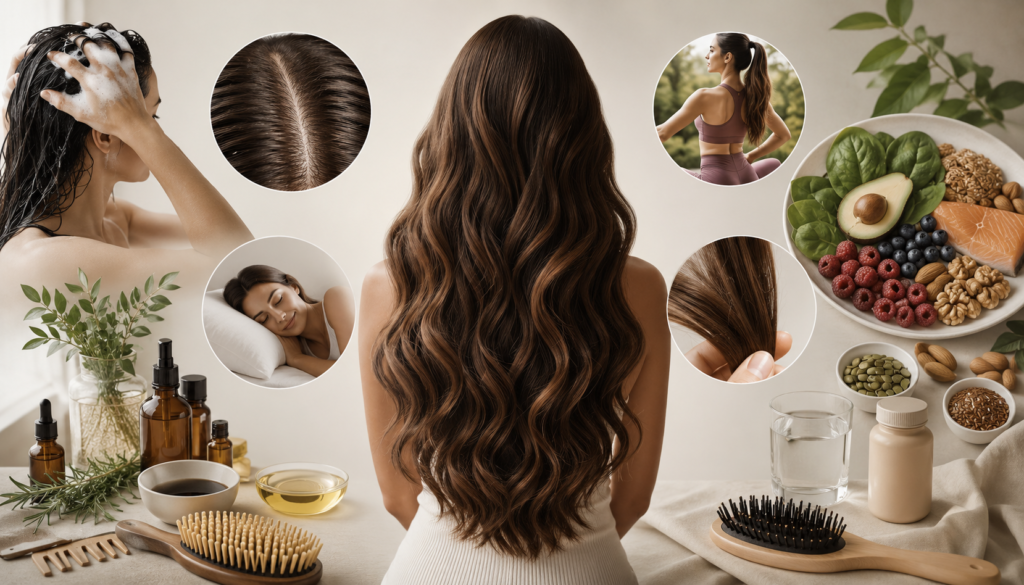
What Determines Your Hair’s Maximum Thickness and Length?
Hair thickness — the diameter of individual hair strands — is primarily genetic. The number of follicles you have, distributed across your scalp at birth, doesn’t change significantly across your lifetime under normal circumstances. What does change, and what can be influenced by your choices and your circumstances, is the proportion of follicles in the active growth phase at any given time, the diameter of the hair produced by each follicle, and the length of the anagen phase.
A healthy scalp with good circulation, adequate nutrition, and minimal inflammation produces hair from more follicles simultaneously — meaning a higher percentage of your follicles are in anagen at any given time. This directly translates to visible density and fullness. Conversely, conditions that stress the follicle — nutritional deficiency, chronic stress, hormonal disruption, scalp inflammation — can push follicles from anagen into telogen prematurely, reducing the proportion actively growing and creating the impression of significant thinning even when the total number of follicles hasn’t changed.
Hair length, as I mentioned, is primarily determined by the length of your anagen phase. But it’s also determined by breakage. A woman whose hair is in anagen for four years but who experiences significant mechanical damage — heat damage, chemical processing, physical tension from tight styles — may see her hair never reach the potential length that her anagen phase allows, because it’s breaking off at the same rate it’s growing. Managing breakage is therefore just as important as optimizing growth, particularly for women who have been processing their hair and are puzzled by why their length has stagnated.
Your hair is not failing to grow. It is growing and breaking at the same rate, invisibly canceling its own progress. Stop the breakage and the length reveals itself.
✦ ✦ ✦
The Scalp: Where Hair Growth Actually Begins and Ends
If I had to name the single most impactful area of focus for women who want to improve their hair growth and thickness, it wouldn’t be supplements, wouldn’t be oils, wouldn’t be any specific product category. It would be scalp health. Everything that matters about hair growth originates at the scalp — in the follicles, in the blood supply that delivers nutrients to those follicles, in the microenvironment of the scalp’s skin and its microbial community. A healthy scalp is the prerequisite for everything else, and almost every other intervention becomes more effective when the scalp is in good condition.
The scalp is skin — complex, layered, biological skin — with a microbiome, a vascular system, sebaceous glands, and an immune environment that responds to everything from your diet to your stress levels to the products you apply. It can become inflamed, dry, congested with product buildup, or disrupted in its microbial balance, and each of these conditions impairs hair follicle function in different ways. A scalp that is inflamed, for instance, produces an environment where the inflammatory cytokines circulating locally can suppress follicle activity and shorten the anagen phase. A scalp clogged with silicone buildup or dried sebum can physically impede the hair shaft’s emergence and impair the circulation that the follicle depends on.
Scalp health is therefore not a cosmetic concern. It is a physiological one, and treating it as such — with the same seriousness and consistency you’d bring to any other health-focused practice — produces results that cosmetic interventions alone simply cannot.
Scalp Massage: The Most Evidence-Backed Free Intervention That Exists
Let me tell you about the study that changed how I approach my morning routine. Published in the journal ePlasty and later replicated in several derivative studies, the original research followed a group of men who performed four minutes of standardized scalp massage daily for twenty-four weeks. At the end of the study, hair thickness measurements showed a statistically significant increase in the massage group versus the control group. The mechanism identified was improved blood flow to the follicles and mechanical stretch stimulation of the dermal papilla cells — the cells at the base of each follicle that are responsible for regulating the growth cycle.
Four minutes. Daily. No product required. And the results were measurable.
I started daily scalp massage about two years ago and I have watched my hairline density improve in a way that I can document photographically if you’re the type who documents these things (I am, because I needed to see it to believe it while the process was underway). The temples and the crown, which were my areas of most visible thinning, showed the most significant improvement. And I believe, based on both the research and my own experience, that the reason the improvement was so pronounced at the temples is that those areas have notoriously poor circulation relative to the rest of the scalp — they’re furthest from the major blood vessels — and the massage specifically addresses that circulatory deficit.
The technique matters more than most people realize. The common instinct is to scratch the scalp or rub it vigorously with the fingertips, but the most effective technique is significantly gentler and more deliberate. Use the pads of your fingers — not the nails, not the fingertips alone, but the soft pads. Apply firm, consistent pressure and move in small, circular or kneading motions. Work systematically across the entire scalp: the nape of the neck, the crown, the temples, the hairline, the sides. Spend at least thirty seconds on each zone before moving to the next. The total session should be a minimum of four minutes to match the studied protocol, though longer is better if you have the time.
I do mine in the morning, before getting up. Lying in bed, still half-asleep, spending five or six minutes moving my fingertips across my scalp. It has become one of the most automatic parts of my morning — as reflexive as checking my phone, and significantly more beneficial. The relaxation effect is a bonus: scalp massage activates the parasympathetic nervous system, which is why it feels so pleasurable. The hair growth benefit is the point.
Scalp Exfoliation: The Step That Makes Everything Else Work Better
Scalp exfoliation is underutilized by most women and profoundly useful for most scalp types, because the accumulation of dead skin cells, dried sebum, and product residue on the scalp creates a physical barrier that impairs follicle function and reduces the penetration of any scalp treatment you apply afterward. Exfoliating removes this barrier, restores the scalp’s natural shedding capacity, and creates the clean environment in which follicles function most efficiently.
There are two approaches, both effective. Physical exfoliation uses a scalp scrub — either a commercial formula or a DIY version using sugar or sea salt with a carrier oil — massaged into the scalp before shampooing. The mechanical action lifts and loosens buildup, and the subsequent shampoo rinses it away. Chemical exfoliation uses acids — typically salicylic acid, which is oil-soluble and therefore effective at cutting through sebum-based buildup, or glycolic or lactic acid for a more general skin-cell turnover effect. Chemical exfoliants can be found in scalp serums and treatments, and for sensitive scalps, they’re often gentler than physical options.
The frequency depends on your scalp type. Oily scalps and scalps with significant product buildup benefit from weekly exfoliation. Dry or sensitive scalps do better with every two to three weeks. Over-exfoliation — particularly physical scrubbing done too frequently — can disrupt the scalp’s barrier function and create the irritation and dryness it’s meant to address, so consistency at an appropriate frequency is more valuable than aggressive, too-frequent use.
I notice, every time I exfoliate my scalp, that the next wash day produces a noticeably cleaner, lighter feeling at the roots that lasts longer than it would without the exfoliation step. The scalp oil treatment I apply afterward also seems to absorb more effectively, which makes intuitive sense — there’s less barrier between the oil and the follicle when the buildup has been removed. The two practices work best together: exfoliation to clear the way, oil treatment to deliver the therapeutic benefit.
Understanding and Addressing Scalp Conditions
Several scalp conditions can significantly impair hair growth and density, and they’re worth understanding because they require different approaches from general scalp maintenance. Seborrheic dermatitis — a fungal overgrowth condition caused by the Malassezia yeast — produces the greasy, yellowish flaking and scalp inflammation that constitutes clinical dandruff. The inflammation associated with this condition directly impacts follicle health and, when chronic and untreated, can contribute to progressive thinning. The treatment requires antifungal ingredients: zinc pyrithione, ketoconazole, or selenium sulfide in shampoo form, used consistently and with adequate contact time (leaving the shampoo on for three to five minutes rather than rinsing immediately).
Scalp psoriasis, an autoimmune condition, produces thick, silvery plaques on the scalp and requires dermatological management rather than cosmetic treatment. If your scalp flaking is accompanied by significant redness, clear demarcation of affected areas, or scaling that extends beyond the hairline, a dermatologist referral is the appropriate first step before spending money on any hair growth intervention.
Androgenetic alopecia — genetic hair loss responsive to androgen hormones — is the most common cause of progressive thinning in women and is significantly undertreated. It doesn’t look the same in women as in men: rather than a receding hairline, women typically experience diffuse thinning across the crown and a widening part line. If you’ve noticed this specific pattern of thinning, and particularly if it has progressed over time, seeking medical assessment is important. There are effective treatments (minoxidil, finasteride in some cases, and increasingly, low-level laser therapy) that work best when implemented early and require a physician’s guidance to use appropriately.
✦ ✦ ✦
The Oils That Work: What the Research Actually Says
The hair oil category is one of the most cluttered, most marketed, and most misunderstood in the beauty industry. Every few months, a new oil is elevated to ‘miracle growth oil’ status by social media, given beautiful packaging and elaborate claims, and sold to millions of women who experience minimal results and move on to the next candidate. The cycle perpetuates because the mechanism of hair oil action is poorly understood, the feedback loop is so slow (months of use before any results are attributable), and the products are easy to make and profitable to sell.
Let me be clear about what hair oils actually do and don’t do, and then let me tell you about the specific oils that have genuine evidence behind them, so you can make choices that are based on biology rather than marketing.
Hair oils applied to the scalp work primarily through two mechanisms: they can improve circulation (when massaged in) by the mechanical action of the massage itself and, in some cases, through active compounds that dilate blood vessels or stimulate follicle activity. They can also improve the scalp microenvironment by providing fatty acids that support the scalp’s skin barrier, reducing inflammation, and creating conditions in which follicles function better. What most oils cannot do is directly stimulate the dermal papilla cells to produce more hair — that requires compounds that can penetrate to the follicle and interact with the growth signaling pathways.
Rosemary Oil: The Oil With Actual Clinical Evidence
The rosemary oil story in hair growth began, in terms of scientific legitimacy, with a 2015 study published in SKINmed that compared rosemary oil applied to the scalp with minoxidil 2% — the active ingredient in Rogaine, the gold standard pharmacological treatment for androgenetic alopecia in women — over six months. The result was remarkable: equivalent hair count increases in both groups, with the rosemary oil group reporting significantly less scalp itching than the minoxidil group. This is not an anecdote. This is a controlled clinical trial that produced equivalent outcomes to an FDA-approved pharmaceutical.
The proposed mechanism involves rosemary oil’s ability to inhibit the enzyme 5-alpha-reductase, which converts testosterone to dihydrotestosterone (DHT). DHT is the androgen primarily responsible for the miniaturization of hair follicles in androgenetic alopecia — it binds to receptors in the follicle and gradually reduces the anagen phase until the follicle produces only fine, vellus hairs and eventually becomes inactive. By inhibiting 5-alpha-reductase, rosemary oil may reduce DHT levels at the follicle, partially mimicking the mechanism of finasteride (a 5-alpha-reductase inhibitor prescribed for hair loss) in a topical, natural form.
There is also evidence for rosemary oil’s ability to improve peripheral circulation through its ursolic acid content, which may increase the blood supply to follicles and complement the massage-based circulation benefit.
The protocol that mirrors the studied application: dilute rosemary essential oil at a concentration of one to two percent in a carrier oil (jojoba, which closely mimics human sebum and is well-tolerated by most scalp types, is my recommendation as a carrier). This means approximately ten to twenty drops of rosemary essential oil per tablespoon of carrier oil. Apply to the scalp — particularly the areas of most concern — massage thoroughly for three to five minutes, and leave on for a minimum of four hours before washing out. I apply mine in the evening, three times per week, and wash it out the following morning.
The timeline for results mirrors the studied protocol: six months of consistent use. Not occasional use, not sporadic use — consistent, at-least-three-times-weekly application, every week, for six months. This is a significant commitment and I want to set the expectation clearly. The women who see results are the women who treat this as a non-negotiable part of their routine rather than something they do when they remember.
Peppermint Oil: The Circulation Catalyst
Peppermint essential oil contains menthol, which is a vasodilator — it relaxes the smooth muscle in blood vessel walls, allowing them to expand and increasing blood flow to the area. Applied to the scalp, this vasodilation creates a measurable increase in dermal blood flow, which delivers more oxygen and nutrients to the follicles in the period following application.
A 2014 study in Toxicological Research directly tested peppermint oil against minoxidil, jojoba oil, and saline in an animal model. The peppermint oil group showed the most significant increases in the number of hair follicles, follicle depth, and dermal thickness — changes that indicate active follicle stimulation rather than simply improved growth of existing hairs. While animal studies don’t translate directly to human outcomes, the mechanistic plausibility is strong and the anecdotal evidence among women who use peppermint oil consistently is significant.
Use peppermint oil at very low dilution — no more than half a percent, which is five drops per tablespoon of carrier oil. The menthol creates a significant cooling sensation that can become irritating at higher concentrations. Some women are sensitive to mint in any concentration on the scalp, so a patch test on a small area of the neck is worth doing before full scalp application.
I use peppermint and rosemary together in the same carrier oil blend, which combines the vasodilation mechanism of peppermint with the 5-alpha-reductase inhibition of rosemary. The combination makes more mechanistic sense than either alone, and the tingling sensation from the peppermint also makes the massaging-in process feel pleasurable and effective — you can feel, quite literally, that something is happening at the scalp.
Castor Oil: The Thickness Builder With Caveats
Castor oil deserves honest treatment, because it’s one of the most enthusiastically promoted hair growth oils and one of the most frequently misapplied. Castor oil is extraordinarily thick — its viscosity is among the highest of any plant-derived oil — and it’s rich in ricinoleic acid, a fatty acid with anti-inflammatory and antimicrobial properties that may help reduce scalp inflammation and create a more favorable follicle environment. The evidence for castor oil directly stimulating hair follicles to produce more or thicker hair is less robust than for rosemary or peppermint, but its anti-inflammatory properties are real and relevant for women whose hair thinning has an inflammatory component.
The main practical challenges with castor oil are its viscosity and its tendency to be difficult to rinse out. Applied directly, it sits heavily on the scalp and can contribute to buildup if not thoroughly washed out. Jamaican black castor oil, which undergoes a roasting process that makes it slightly lighter and may increase its bioavailability to the scalp, is the version most consistently reported to produce results in the hair community. Both versions work best when diluted in a lighter carrier oil — at a ratio of perhaps one part castor to three parts jojoba or argan — to improve spreadability and rinsability.
Apply castor oil blends specifically to areas of concern and the scalp edge, leave on for several hours or overnight, and shampoo out thoroughly — often requiring double-shampooing to remove fully. Once or twice weekly is appropriate for most scalp types; more frequent application risks the buildup issues mentioned.
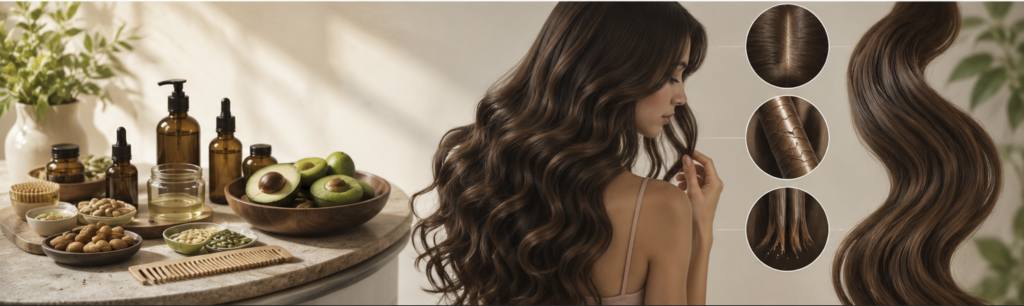
The Oils That Penetrate the Hair Shaft: Coconut and Its Alternatives
A brief note on oils for the hair shaft itself, distinct from the scalp treatments above. Coconut oil is unique among plant oils in its ability to penetrate the hair cortex — its small molecular size and high affinity for hair protein allow it to enter the shaft rather than sitting on the surface. Research has shown that pre-treating hair with coconut oil before washing significantly reduces protein loss during the wash process, which is one of the primary mechanisms of cumulative hair damage. Used as a pre-wash treatment on the lengths and ends, left on for thirty minutes to overnight and then shampooed out, coconut oil reduces breakage in a measurable and practically significant way.
For women who find that coconut oil makes their hair feel dry or brittle over time — a sign of protein overload, where the coconut oil’s protein-sparing effect has tipped the hair into an over-proteinated state — alternatives like argan oil or marula oil provide surface-level protection and shine without the penetrating protein-affecting effect.
✦ ✦ ✦
Nutrition for Hair Growth: The Internal Foundation That Nothing Topical Can Replace
Hair is a biological product of the body, and the body produces it using the nutritional raw materials available to it. When those materials are insufficient — when iron is low, when protein is chronically undereaten, when zinc is depleted, when the vitamins involved in cell division and protein synthesis are inadequate — hair production suffers. The follicle, which is one of the fastest-dividing cell systems in the body and therefore one of the most nutritionally demanding, is disproportionately affected by nutritional deficiency relative to other body systems. This is why nutritional deficiency shows up in hair before it shows up as clinical symptoms elsewhere — hair is an early indicator of what’s happening internally.
Conversely, optimizing the nutritional inputs for hair production is one of the highest-return interventions available. Not supplements primarily — food first, always — but a diet that consistently provides the specific nutrients that the hair follicle requires to function at its best.
Iron and Ferritin: The Most Commonly Missed Cause of Hair Loss in Women
Iron deficiency is the single most common nutritional cause of hair loss and thinning in premenopausal women, and it is chronically underdiagnosed in two ways: it’s often not tested, and when it is tested, the wrong marker is used. The standard complete blood count measures hemoglobin — the iron in circulating red blood cells. Hemoglobin can be entirely normal while ferritin — stored iron — is significantly depleted. Hair follicles use ferritin, not circulating hemoglobin, as their iron source. A woman with normal hemoglobin and low ferritin may be told her iron is fine while her hair follicles are iron-depleted.
The ferritin threshold relevant to hair is significantly higher than the clinical lower bound of ‘normal.’ Most laboratory reference ranges mark ferritin above 12-15 ng/mL as normal. Research specifically examining hair loss in women suggests that ferritin levels below 70-80 ng/mL are associated with impaired hair growth, and that increasing ferritin above this threshold can produce measurable improvements in hair density and shedding within six months. If your ferritin has been tested and is anywhere below 70, regardless of whether you’ve been told it’s ‘normal,’ there is a meaningful chance that iron is contributing to your hair concerns.
Addressing ferritin deficiency requires iron supplementation if the deficiency is significant, and dietary emphasis on iron-rich foods — red meat, particularly liver, is the most bioavailable source; dark leafy greens, lentils, and fortified foods provide non-heme iron that is less efficiently absorbed but cumulatively meaningful. Vitamin C consumed alongside iron-rich meals significantly improves non-heme iron absorption; coffee and tea consumed within an hour of iron-rich meals significantly impairs it. These are simple behavioral adjustments with real consequences for iron status over time.
I’d recommend asking specifically for a ferritin test — not just ‘iron levels’ — the next time you have bloodwork, and asking for the number rather than just whether it’s ‘normal’ or ‘low.’ The number is what matters, and interpreting it in the context of hair health requires knowing it precisely.
Protein: The Literal Building Material of Hair
Hair is approximately ninety-five percent keratin, a structural protein. Keratin is synthesized from amino acids, which come from dietary protein. When protein intake is insufficient, the body prioritizes protein allocation to critical functions — immune defense, organ maintenance, enzymatic processes — over cosmetic ones like hair production. The hair follicle, which is metabolically very active and requires consistent amino acid availability to produce the keratin that becomes hair, is therefore among the first systems to be compromised by protein deficiency.
Women chronically undereat protein, for reasons that are cultural, dietary, and partially mythological (the association of protein with male fitness culture, the prevalence of low-protein ‘healthy’ eating patterns that emphasize vegetables and grains at the expense of protein sources). The research-supported recommendation for a woman focused on hair health is approximately 1.2 to 1.6 grams of protein per kilogram of body weight per day — considerably more than the standard dietary recommendations, which are set to prevent deficiency rather than to optimize specific biological functions.
The specific amino acids most important for hair growth include cysteine (one of the primary amino acids in keratin itself, high in eggs and poultry), lysine (found in meat, fish, eggs, and legumes, and important for iron absorption as well as keratin synthesis), and glycine (high in bone broth and collagen-containing foods). Making protein the centerpiece of every meal rather than an afterthought is the single most impactful dietary change most women can make for their hair.
The Micronutrients That Matter Most
Zinc is involved in the protein synthesis that produces keratin and in the regulation of the hair growth cycle at the follicle level. It’s also an anti-inflammatory and supports the immune environment of the scalp. Deficiency is common — zinc is found primarily in meat, shellfish (particularly oysters, which are extraordinarily zinc-dense), pumpkin seeds, and legumes, and the anti-nutrients in some plant foods can impair its absorption. Women on plant-based diets are particularly at risk for zinc deficiency and may benefit from supplementation.
Vitamin D has multiple roles in hair follicle health. It binds to receptors on dermal papilla cells and regulates the hair growth cycle. Several studies have found associations between vitamin D deficiency and alopecia areata (an autoimmune hair loss condition) and telogen effluvium. Vitamin D deficiency is extraordinarily common — the majority of people in northern latitudes are deficient, particularly in winter — and supplementation is one of the few truly universal recommendations I feel comfortable making.
Biotin has been marketed so aggressively as a hair growth supplement that many women believe it’s the primary driver of hair growth. The reality is more nuanced: biotin deficiency does cause hair loss, but genuine biotin deficiency is rare in women who eat a varied diet that includes eggs, nuts, and whole grains. Supplementing biotin when you’re not deficient doesn’t appear to produce additional hair growth benefits, which explains why many women who take biotin supplements don’t notice any effect. If you have biotin deficiency — it can be tested — supplementation is genuinely useful. If you don’t, the money is better spent elsewhere.
Selenium · Selenium is a trace mineral involved in the enzymatic processes that protect cells from oxidative damage, and oxidative stress at the follicle level is an underappreciated contributor to hair loss. Brazil nuts contain extraordinarily high levels of selenium — two Brazil nuts per day provides more than the daily recommended intake — making them one of the most efficient single-food interventions for selenium status.
Omega-3 Fatty Acids · The EPA and DHA in oily fish and algae-based supplements are anti-inflammatory, and scalp inflammation is one of the primary mechanisms through which follicle function is impaired. Women who eat oily fish (salmon, mackerel, sardines) two to three times per week consistently report improvements in hair texture, shine, and overall health. The anti-inflammatory effect also supports the scalp microenvironment in which follicles function best.
Iodine and Selenium Together · Thyroid hormones, which regulate almost every metabolic process in the body including the hair growth cycle, require iodine and selenium for their synthesis and activation. Hypothyroidism — low thyroid function, which is common in women — is a well-established cause of hair thinning and loss. If your hair loss is accompanied by fatigue, cold intolerance, weight changes, and low mood, thyroid function testing is warranted. Ensuring adequate iodine (from seafood, seaweed, or iodized salt) and selenium supports thyroid health preventatively.
✦ ✦ ✦
Hormones, Stress, and the Hair Loss Connection Women Rarely Hear About
The relationship between hormones, stress, and hair growth is one of the most significant and most underexplored conversations in women’s health. Hormonal fluctuations — across the menstrual cycle, during and after pregnancy, perimenopausally, and in the context of conditions like polycystic ovary syndrome — directly impact the hair growth cycle in ways that are predictable and often manageable, but only if you understand the mechanisms involved.
Estrogen, Progesterone, and the Pregnancy Hair Paradox
The extraordinary hair that many women experience during pregnancy is not a myth — it’s a real physiological phenomenon. Estrogen at the elevated levels of pregnancy prolongs the anagen phase, meaning a higher percentage of follicles are actively growing at any given time and the telogen shedding phase is deferred. The hair becomes fuller and denser simply because it’s staying in active growth longer.
What follows pregnancy — the postpartum period, typically three to six months after delivery — is the dramatic reversal of this effect. All of the hairs that were extended into anagen during pregnancy suddenly enter telogen simultaneously, and two to four months later, they shed simultaneously in what can be a genuinely alarming volume. Postpartum hair loss (technically postpartum telogen effluvium) is entirely normal and generally self-resolving within six to twelve months, but knowing it’s coming — and knowing that the hair will regrow — is information most women don’t receive and desperately need.
The perimenopausal decline in estrogen and progesterone has the opposite effect: as these hormones decrease, the anagen phase shortens, the telogen phase becomes more prominent, and hair generally becomes thinner, finer, and slower-growing. The relative increase in androgen activity that occurs as estrogen declines also contributes to the androgenetic pattern thinning that becomes more common in women over forty. Managing this hormonally — through HRT where appropriate — can meaningfully preserve hair thickness during and after menopause, and it’s a conversation worth having with a gynecologist or menopause specialist.
PCOS and Androgens: The Hair Loss Most Women Aren’t Told to Expect
Polycystic ovary syndrome is the most common hormonal condition in women of reproductive age, affecting roughly ten to fifteen percent of women, and one of its characteristic features is androgen excess. The androgens associated with PCOS — testosterone and its more potent derivative DHT — bind to receptors in hair follicles and produce the same miniaturization effect that causes androgenetic alopecia. This creates a paradox where PCOS can cause both excess body and facial hair (from androgen stimulation of follicles in those areas) and scalp hair loss (from androgen suppression of scalp follicles).
If you have PCOS and are experiencing scalp hair thinning, the treatment approach involves both the underlying hormonal condition and the follicle-level effect. Medications that reduce androgen activity — spironolactone, which is both a diuretic and an androgen blocker, is frequently prescribed for PCOS-related hair loss — combined with topical treatments like minoxidil and the lifestyle interventions described in this guide, can produce significant improvement. But the hormonal component must be addressed; topical interventions alone are less effective when androgen excess is ongoing.
Cortisol and the Stress-Hair Loss Cycle
Chronic stress produces elevated cortisol, and chronically elevated cortisol has been shown to directly suppress hair follicle activity through multiple mechanisms. It reduces the production of hyaluronic acid and fibronectin — molecules involved in follicle maintenance and function. It promotes premature transition from anagen to catagen. It activates the body’s stress response systems in ways that divert resources away from non-essential functions including hair growth. And it disrupts sleep, which is when growth hormone is released and much of the follicle’s repair work occurs.
The practical implication is that stress management is genuinely, biologically relevant to hair growth — not in a vague ‘stress is bad for everything’ way, but in the specific, mechanistic way that makes addressing chronic stress a meaningful part of any comprehensive hair growth strategy. Practices that reduce cortisol — consistent sleep, regular movement, the kind of daily restorative practices described in the self-care guide — are hair care practices, even though they don’t involve a single scalp oil.
I’ll also mention that the relationship between stress and hair loss often creates a cruel feedback loop. Stress causes hair shedding; noticing the hair shedding creates more stress; the increased stress causes more shedding. Breaking this loop requires both addressing the underlying stressors and understanding that the shedding, while distressing, is generally reversible with consistent management. The follicle is not destroyed by telogen effluvium — it is dormant, not dead, and it will return to active growth when the stressor is resolved or managed.
✦ ✦ ✦
The Mechanical Habits That Silently Undermine Your Growth
Here is the category of hair growth factors that costs the most women the most progress without them ever knowing it. The oils, the supplements, the scalp massages — these are the active interventions. The mechanical habits are the passive ones: the ways you handle, style, and sleep on your hair that either preserve or destroy the length your follicles are working to produce. A woman can have excellent scalp health, optimal nutrition, and a beautiful oil protocol and still see no length gain if her mechanical habits are creating breakage at the same rate as the growth.
Heat and Chemical Processing: The Length Killers
Heat damage is cumulative and largely irreversible. Every time a flat iron or curling wand passes over a section of hair at high temperature, the protein bonds in the cortex are stressed — hydrogen bonds temporarily and sulfide bonds potentially permanently. Repeated high-heat styling on the same sections creates weakened zones that are prone to mechanical breakage, producing the split ends and mid-shaft fractures that limit length far more than any growth issue.
The practical guidance: use the lowest effective temperature for your hair type, apply a high-quality heat protectant every single time without exception, and reduce the frequency of direct high-heat styling as much as your life practically allows. For women focused on length retention, the session of air-drying rather than blow-drying, the week of braided or tucked styles that require no heat — these are meaningful contributions to the health of the ends and therefore to the length you’ll ultimately retain.
Chemical processing — bleaching particularly, but also any colouring that requires lifting the hair’s natural pigment — disrupts the disulfide bonds that give hair its structural integrity. Bleached hair is more porous, more fragile, and more prone to breakage than unprocessed hair. This doesn’t mean bleaching and length growth are incompatible, but it means they require significantly more investment in strength-supporting treatments (bond-rebuilding treatments, protein masks, consistent deep conditioning) to offset the structural compromise. Women who bleach their hair and wonder why it never grows past a certain length are often experiencing breakage at the ends that equals the growth from the roots.
Protective Styling and the Art of Leaving Hair Alone
The hair community concept of ‘protective styling’ — wearing hair in styles that tuck the ends away from environmental exposure, reduce mechanical manipulation, and minimize contact with potentially damaging surfaces — is one of the most effective length-retention strategies available. It doesn’t require specific hair types or textures; the principle applies universally.
Low manipulation is protective. Every time you run your fingers through your hair, pull a brush through it, tie it up and take it down, you create friction that accumulates into microscopic damage over thousands of repetitions. The less you handle your hair, the more of the length your follicles produce will still be there six months from now. Styles that stay in for multiple days — loose braids, buns secured with silk scrunchies, protective updos — reduce daily manipulation dramatically.
The specific products and accessories you use for styling also matter. Metal hair clips with unprotected edges, rough elastics that snap against the hair shaft, bobby pins without rubber tips — these all create breakage points at the sites of contact. Silk or satin scrunchies, claw clips that distribute pressure over a larger area, and pins with protective coatings or rubber tips reduce this mechanical damage significantly. These are not vanity purchases. They’re equipment purchases, in the same category as a good heat protectant.
Pillowcases, Bonnets, and the Eight Hours Nobody Thinks About
Eight hours of your hair pressed against a cotton pillowcase is eight hours of friction, moisture absorption, and mechanical stress on the hair’s outermost layer. Cotton’s texture is rough at a microscopic level, and the movement of the head during sleep — which is significant and frequent — creates a consistent mechanical abrasion that roughens the cuticle, creates tangles, and contributes to the breakage that limits length retention.
A silk pillowcase is the most elegantly practical solution — the smooth surface creates minimal friction, doesn’t absorb moisture from the hair, and the results in the morning (less tangling, smoother cuticle, reduced morning breakage) are immediately and perceptibly different from sleeping on cotton. It’s also, as someone who cares about the aesthetic of her sleep environment, simply a more beautiful object than a cotton pillowcase. The quiet luxury home aesthetic and the beauty practice align here with pleasing coincidence.
A silk or satin bonnet is an alternative that protects the hair even more completely and is particularly valuable for women with textured or natural hair, for those who wear styling products that benefit from being contained, and for women who move significantly during sleep. A loose satin sleep braid — just loosely braiding the hair before bed in a silk or satin scrunchie — is the minimum friction-reduction strategy for those who won’t commit to either the pillowcase or bonnet approach.
Brushing, Detangling, and the Direction That Matters
The instinct to brush hair from roots to tips — the direction our mothers showed us, the direction that feels natural — is actually the direction most likely to cause significant breakage. Starting at the root and dragging a brush through tangles forces knots down the hair shaft, where they accumulate, eventually causing either the hair to snap or the force required to resolve the tangle to be high enough to break multiple strands.
The correct technique, which produces dramatically less breakage particularly in longer hair: begin detangling at the ends, resolving the tangles there before moving up the shaft, working in small sections from ends to roots. This resolves each tangle at its source rather than compressing it downward. Use a wide-tooth comb or a detangling brush with flexible bristles rather than a boar bristle or hard-tined brush for wet or damp hair, which is at its most vulnerable. And apply a leave-in conditioner or a detangling spray before combing through anything other than dry, thoroughly conditioned hair — the slip provided by a leave-in dramatically reduces the force required to move through tangles and therefore the damage that resolving them creates.
✦ ✦ ✦
The Supplement Landscape: What to Take, What to Skip, and Why
The supplement industry’s marketing of products specifically for hair growth is a masterclass in exploiting a combination of genuine need, slow feedback loops, and insufficient scientific literacy in the consumer market. Products make claims that are either unsubstantiated, technically true but practically irrelevant, or accurate only in the context of deficiency that most buyers don’t have. Navigating this landscape requires either expertise or a clear set of criteria for evaluation.
My criteria: does the supplement address a genuine, testable deficiency in women who experience hair loss? Is there direct human clinical evidence for its effect on hair specifically, rather than indirect mechanistic evidence or animal model data? Is the dosage in the product in line with the doses used in the research?
Applied consistently, these criteria significantly narrow the supplement field.
The Supplements With Genuine Evidence
Iron, in supplementation form, produces documented improvement in hair density and shedding in women who are iron-deficient (specifically ferritin-deficient) and should be considered the first supplement to assess and address if ferritin is below 70 ng/mL. The form of iron matters: ferrous bisglycinate is significantly better tolerated than ferrous sulfate and produces fewer gastrointestinal side effects, which are the primary reason women discontinue iron supplementation. Take with vitamin C, away from calcium and caffeine.
Vitamin D at supplementation doses of 2000-4000 IU daily is well-supported for the majority of women in northern climates, given the near-universal deficiency rates. Testing before supplementing and re-testing after three months of supplementation to confirm adequate status is the most responsible approach.
Zinc, if deficiency is identified through testing, produces clear improvements in hair health. The challenge is that zinc toxicity is possible with oversupplementation, and excessive zinc actually impairs iron absorption — making untargeted supplementation potentially counterproductive. Test before supplementing.
Collagen peptides — hydrolyzed collagen in supplement form — have some interesting evidence for hair and skin health through their high glycine content, which supports keratin synthesis, and through their proline content, which supports connective tissue including the dermal papilla. The evidence base is not as strong as for the nutrients above, but the risk profile is low and the mechanism plausible. Marine collagen has the best bioavailability of the available forms.
The Supplements That Probably Aren’t Worth Your Money
Biotin, as mentioned earlier, is broadly unnecessary for women who are not genuinely deficient. The doses in most commercial ‘hair growth’ supplements (often 5000-10000 mcg, versus the daily requirement of approximately 30 mcg) are dramatically excessive and may actually interfere with some laboratory tests including thyroid tests and cardiac biomarkers. If you’re taking biotin and due for any bloodwork, inform your healthcare provider.
Most of the ‘proprietary blend’ supplements marketed specifically for hair growth — blends of various herbs, vitamins, and minerals — contain ingredients at doses too low to produce clinical effects, and the evidence for the ingredient combination is non-existent (each ingredient would need to be studied individually at the doses included, which they rarely are). The attractive branding and confident claims reflect marketing investment, not research investment.
Saw palmetto, like rosemary oil, acts as a 5-alpha-reductase inhibitor and therefore reduces DHT production. It has some evidence for male pattern hair loss and is increasingly studied in women. If rosemary oil is not producing sufficient results and androgenetic pattern thinning is suspected, saw palmetto oral supplementation is a reasonable consideration — but at appropriate doses and ideally under the guidance of a physician or trichologist, because its hormonal effects mean it’s not appropriate for everyone.
✦ ✦ ✦
The Treatments Worth Knowing About: Professional and At-Home
Beyond the daily practices and nutritional foundations, there is a category of treatments — both professional and at-home — that can meaningfully accelerate hair growth and thickness improvements when the fundamentals are in place. These are not replacements for the foundations but amplifiers of them.
Minoxidil: The Gold Standard Everyone Is Scared Of
Minoxidil is the most extensively studied and most consistently effective topical treatment for hair loss in women. It’s been FDA-approved for female pattern hair loss since 1991, is available over the counter in most countries, and the research base behind it is more robust than any other topical intervention discussed in this guide. And yet many women are hesitant to use it, partly because of its association with male-pattern baldness treatments and partly because of concerns about side effects.
The evidence: minoxidil 2% applied twice daily to the scalp produces significant improvements in hair count and density in women with androgenetic alopecia and has also shown benefit in telogen effluvium. The mechanism is not fully understood but involves vasodilation at the follicle level, prolongation of the anagen phase, and possible direct stimulation of follicle activity. The 5% formulation, originally approved only for men, has been increasingly studied and used in women and appears more effective at comparable tolerability.
The real considerations with minoxidil: it requires consistent use — stopping treatment results in the loss of gains over the following six to twelve months, as the follicles return to their pre-treatment state. Initial shedding is common in the first four to eight weeks (as follicles shift synchronously into telogen before entering a new anagen phase), which is alarming to experience and important to anticipate. And for women with no androgenetic component to their hair loss — for example, those experiencing telogen effluvium from nutritional deficiency or stress — addressing the root cause may produce equivalent or better results without the commitment of ongoing topical treatment.
If you’re considering minoxidil, discussing it with a dermatologist or trichologist who can confirm the diagnosis and advise on the appropriate formulation and protocol is the most responsible approach. It’s genuinely effective and genuinely worth considering for women with androgenetic thinning — but it’s a commitment, not a trial.
Low-Level Laser Therapy: The Technology That Works When Used Consistently
Low-level laser therapy (LLLT) uses specific wavelengths of red light to stimulate mitochondrial activity in hair follicle cells, increasing cellular energy production (ATP synthesis) and promoting follicle function. It’s FDA-cleared for hair loss treatment, which means there’s evidence of safety and efficacy sufficient for regulatory approval.
Several clinical trials have shown significant improvements in hair count and density in women with androgenetic alopecia using LLLT devices three times weekly over sixteen to twenty-six weeks. At-home devices — laser combs, laser caps, and laser helmets — are available at a range of price points, with the highest-quality devices having more diodes at appropriate wavelengths and larger scalp coverage.
LLLT works well as a complement to other interventions. Used consistently three times weekly, it can accelerate the improvements you’re seeing from scalp massage, oil treatments, and nutritional optimization. It’s worth noting that ‘red light’ and ‘laser’ devices are not equivalent — a simple red light lamp is not the same as a calibrated laser or LED device with the specific wavelengths and power densities used in the clinical research.
PRP (Platelet-Rich Plasma) Therapy: The Professional Option with Real Evidence
Platelet-rich plasma therapy involves drawing a small amount of your own blood, processing it to concentrate the platelets (which contain growth factors that stimulate tissue repair and regeneration), and injecting this concentrate into the scalp. The growth factors in PRP — PDGF, VEGF, EGF among others — have direct stimulatory effects on hair follicle cells and have been shown in multiple clinical studies to improve hair density, hair count, and hair shaft diameter in women with androgenetic alopecia.
PRP requires multiple sessions — typically three to four initial treatments one month apart, followed by maintenance treatments every four to six months — and is performed by dermatologists, trichologists, or aesthetic physicians. It’s not inexpensive (typically three hundred to eight hundred pounds or dollars per session in most markets), but the evidence base is sufficiently strong that for women for whom conventional interventions have produced limited results, it represents a genuinely evidence-supported next step.
✦ ✦ ✦
Your Complete Protocol: Putting It All Together
Everything I’ve described so far is most useful when integrated into a coherent, consistent daily and weekly practice rather than applied sporadically as individual interventions. What follows is the complete protocol I use and recommend — built from the evidence-based practices described in this guide, organized into daily, wash-day, and weekly rhythms that fit within a real life.
The Daily Practice
Every morning: five to six minutes of scalp massage using the pads of your fingers, moving systematically across the entire scalp. On the three mornings each week when you’re applying your oil treatment, the massage is done with the oil already applied, which extends the contact time and allows the active compounds to penetrate during the massage session. On non-oil days, massage on dry scalp or with a very small amount of your lightest scalp oil.
Every morning: your nutrition strategy. Protein at breakfast — not incidentally but deliberately, as a non-negotiable component of the first meal. A handful of pumpkin seeds or two Brazil nuts if you’re focused on zinc and selenium. Vitamin D supplement with breakfast, since it’s fat-soluble and absorbs better with food. Iron supplement if your ferritin indicates deficiency, ideally with something containing vitamin C and away from coffee.
Every evening: the protective habit stack. Sleeping on a silk pillowcase or with a silk bonnet or a loose satin sleep braid. Any leave-in or overnight treatment on the lengths and ends — a pea-sized amount of an oil or cream applied to the ends before bed creates a light protection layer that reduces overnight friction damage.
Wash Day Practice (Once or Twice Weekly)
The wash day begins with pre-treatment: a generous application of coconut oil or your chosen oil blend to dry hair from mid-lengths to ends, left on for a minimum of thirty minutes and ideally overnight. This pre-treatment creates a barrier that reduces protein loss and moisture loss during the wash process.
Shampoo with a sulfate-free or gentle-sulfate formula applied only to the scalp, massaged in thoroughly for sixty seconds, then rinsed. If you’ve used heavy oil, a second shampoo is usually needed. Every other wash day, use a clarifying shampoo instead of your regular formula to remove any accumulated buildup.
Follow with a deep conditioning treatment — applied from mid-lengths to ends, never on the scalp, and left on under a shower cap for fifteen to thirty minutes. The warmth from a shower or a heated cap improves penetration. Rinse with cool water to close the cuticle.
Once every two to three weeks: scalp exfoliation, performed before the shampoo step. Apply your scalp scrub or chemical exfoliant, work through the scalp systematically, leave on for three to five minutes, then shampoo normally.
The Biweekly and Monthly Practices
Every two weeks: a targeted scalp treatment session. Apply your rosemary-peppermint blend or your primary scalp treatment generously, perform your most thorough scalp massage (ten minutes, working every zone with deliberate attention), apply heat (sitting in a warm room or wrapping a warm towel around the head enhances circulation and penetration), leave on for four or more hours, then wash out thoroughly. This biweekly intensive treatment is where much of the circulatory and therapeutic benefit of the oil practice accumulates.
Monthly: a review and adjustment. Look at what’s working — are you seeing less shedding? More density at the roots? Better length retention? — and what might need adjustment. Check in with your nutrition: have you been consistently eating enough protein? Is your iron supplementation on track? Are there stressors in your life that are affecting your sleep or your cortisol levels and therefore your hair?
Every three to four months: a professional trim. The paradox of growing hair is that trimming it — removing the split and damaged ends — allows more length to accumulate than not trimming, because split ends travel up the shaft and cause breakage significantly higher than the original split. A trim of half an inch every three to four months costs you very little length and saves you potentially inches of breakage. It’s the length retention investment that most women resist most strongly and that most consistently pays off.
✦ ✦ ✦
The Patience Practice: Living Well in the Waiting
The hardest part of a hair growth journey is not the protocol. It’s the timeline. The investment you make today — the scalp massage, the oil treatment, the iron supplement, the extra protein at breakfast, the silk pillowcase — does not produce visible results in a timeframe that is emotionally satisfying. The biology doesn’t negotiate on this. The hair cycle operates on its own schedule, and the most beautifully designed protocol in the world cannot accelerate it beyond certain limits.
What I want to offer in this final section is not motivation of the generic kind — the ‘you can do it’ variety that doesn’t actually help anyone persist through months of invisible progress — but a genuine framework for thinking about and relating to the waiting period in a way that makes it more sustainable.
Documenting Progress Without Becoming Obsessed
Photographs taken in consistent lighting and from consistent angles, once per month, are the most reliable way to track progress over a timeline where day-to-day and week-to-week variation obscures the larger trend. The monthly photograph creates an objective record that memory cannot. It will show you things your daily observation misses: the way your hairline has filled in at the temples over three months, the increase in density at the crown between month two and month five, the improvement in the hair’s overall texture and shine as your nutritional status has improved.
I’m not suggesting obsessive documentation. I’m suggesting a single photograph once per month, taken in the same bathroom light with your hair in the same position. The cumulative record of twelve such photographs, taken over a year, is the most convincing thing you’ll ever have seen about the effectiveness of consistent long-term care.
What Progress Actually Looks Like
The first sign of improvement most women notice, typically around weeks four to eight, is reduced shedding. The shower drain collects less. The brush accumulates less. This is the follicles stabilizing — fewer prematurely entering telogen, fewer simultaneously shedding. It precedes visible density improvement by weeks to months.
The second sign, typically around months two to four, is a change in the quality of existing hair. The strands feel stronger, look shinier, seem more resilient. This reflects improved keratin synthesis from better nutrition and reduced mechanical damage from the protective habits, and it’s the period when the treatment is clearly working even though the length and density haven’t dramatically changed yet.
The visible density improvement — new growth at the temples, improved thickness at the crown, a hairline that’s fuller than it was — typically becomes apparent at months four to six for most women, and continues to improve for as long as the practice is maintained. It’s subtle at first, then unmistakable. The moment I looked at my five-month photograph and then at my starting photograph and genuinely could not believe they were five months apart was one of the most validating experiences of this entire journey.
The Aesthetic of Growth: Living in the Transition
There’s something worth addressing about the aesthetic experience of a hair growth journey, because the period of transition — when the hair is improving but hasn’t yet reached the density or length it will have — can feel frustrating to navigate from a style perspective.
The contemporary fashion moment is actually generous to this period. The 2025-2026 aesthetic, with its emphasis on effortless undone beauty rather than the heavily styled looks of previous decades, accommodates hair at every stage with a certain elegance. The quietly pulled-back look — a loose bun, a low knot, a simple half-up style secured with a claw clip in a beautiful resin or a silk ribbon — is both on-trend and kind to hair that’s in a process of improvement. The clean girl aesthetic built around real skin, real texture, real hair in its natural state rather than manipulated into something else, is a framework that works beautifully during the growth period.
The quiet luxury approach to styling during this time is the same as the quiet luxury approach to everything: less manipulation, better quality products, more attention to the things that actually matter (scalp health, hydration, minimal heat), and the confidence to let hair be itself rather than perform a version of itself it hasn’t quite reached yet. The most stylish thing about a woman who is actively growing and caring for her hair is usually the quality of care itself — the shine that comes from consistent deep conditioning, the healthiness of ends that are being protected rather than processed, the density at the roots that’s building visibly and inexorably toward something genuinely beautiful.
Every oil treatment, every morning massage, every extra serving of protein — you are building something real, inside follicles you can’t see, in a timeline you can’t rush. Keep going anyway.
Your hair is growing right now. The follicles are active, the keratin is being synthesized, the hair shaft is lengthening by approximately half a millimeter every day. The question is not whether growth is happening — it almost certainly is. The question is whether the practices you’re building are creating the conditions in which that growth produces the thickness and length you can see and feel.
Build those conditions consistently. Trust the biology. Document the progress. Be patient with the timeline in the way that you would be patient with anything worth growing — because it is worth growing, and because the woman who is attending to her health and her habits with this kind of care and consistency is building not just better hair, but a better relationship with herself and with the time it takes to build something real.
You’re not waiting for your hair to change. You’re in the process of changing it, every day, invisibly. The visible part comes later.
✦ ✦ ✦
Your Complete Hair Growth Reference Guide
Everything in this guide, organized for quick access as your protocol becomes habit.
DAILY PRACTICES
Morning scalp massage: 5–6 minutes, fingerpads, systematic coverage of all scalp zones. Protein at every meal, minimum 1.2g per kg body weight. Vitamin D supplement with breakfast. Iron supplement (if indicated by ferritin testing) with vitamin C, away from coffee. Evening: silk pillowcase or satin bonnet; light oil or cream on ends before sleep.
OIL TREATMENT PROTOCOL (3x per week)
Rosemary essential oil at 1–2% dilution in jojoba carrier. Optional peppermint at 0.5% in the same blend. Apply to scalp before morning massage session. Leave minimum 4 hours, ideally overnight. Wash out thoroughly at next wash. Continue consistently for minimum 6 months before evaluating results.
WASH DAY PROTOCOL (1–2x per week)
Pre-treatment: coconut oil on mid-lengths to ends, 30 minutes minimum. Scalp-only shampoo, massage 60 seconds, thorough rinse. Double-shampoo if heavy oil was used. Deep conditioning mask on mid-lengths and ends, 15–30 minutes under shower cap. Cool water rinse. Scalp exfoliation: every 2–3 weeks, before the shampoo step.
BIWEEKLY INTENSIVE
10-minute scalp massage with oil treatment blend. Apply gentle warmth (warm towel or warm room) for enhanced penetration. Leave 4+ hours. Thorough wash-out.
KEY NUTRITIONAL TARGETS
Ferritin: test specifically, target above 70 ng/mL. Protein: 1.2–1.6g/kg/day minimum. Vitamin D: test and supplement to reach optimal range. Zinc: test before supplementing. Selenium: 2 Brazil nuts daily. Omega-3s: oily fish 2–3x per week or algae-based supplement.
MECHANICAL PROTECTION
Silk or satin pillowcase or bonnet nightly. Detangle ends-to-roots only, on conditioned hair, with wide-tooth comb. Heat protectant every time heat is used. Silk scrunchies and protective clips for styling. Protective styles to minimize daily manipulation. Trim every 3–4 months.
— With warmth, and the particular patience that comes from knowing it’s working —
Your guide to the hair that was always growing toward you
✦ ✦ ✦