
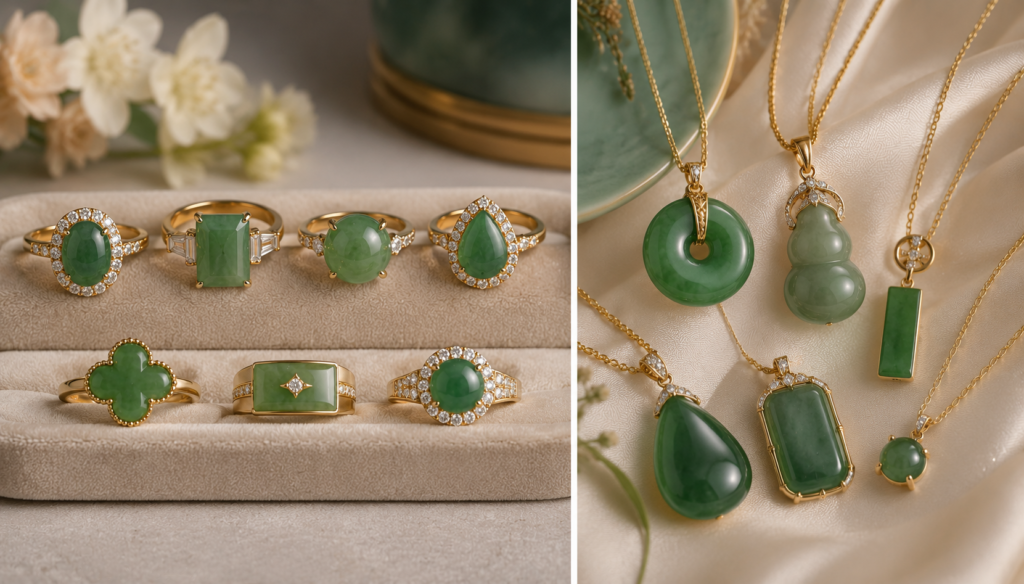
I remember the exact moment I fell in love with jade. Not the polite, textbook kind of love where you admire something from a distance — the real, slightly obsessive kind, the kind that makes you start pulling up auction listings at midnight and asking your mother, out of nowhere, whether your grandmother ever owned any jade jewelry. I was standing in a tiny antique shop tucked behind a flower market, the kind of place that smells like dust and old velvet in the best possible way, and there it was: a single jade bangle, sitting alone in a glass case like it knew exactly how good it looked being the only thing in there. That particular shade of green — not emerald, not mint, somewhere in between, somehow both cool and warm at once — did something to me I still can’t fully explain. I bought it on the spot. I have never once regretted it.
That’s the thing about jade that I don’t think gets talked about enough in mainstream jewelry content, which tends to be obsessed with diamonds and gold chains and the latest micro-trend cycling through our feeds every six weeks. Jade isn’t loud. It doesn’t need to be. It has survived thousands of years of shifting fashions, empires rising and falling, entire civilizations reorganizing themselves around new aesthetics, and it just kept being beautiful the whole time, quietly, patiently, the way the truly great things always do.
So today I want to talk about jade — rings, necklaces, the whole gorgeous world of it — not as some niche interest for collectors and grandmothers, but as one of the smartest, most elegant, most genuinely timeless choices you can make for your jewelry box right now, in this exact cultural moment, when everyone is craving substance over noise. Settle in. This is going to be a long, loving one.
Why Jade Is Having Such a Real Moment Right Now
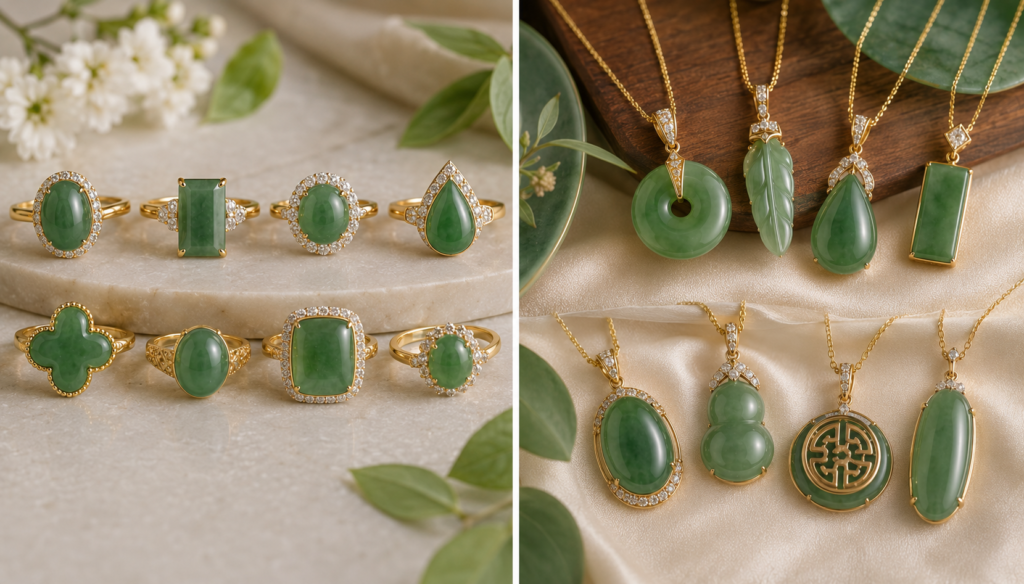
If you’ve spent any time on Pinterest or in the more tastefully curated corners of Instagram lately, you’ve probably noticed jade creeping back into the conversation. And I don’t mean in a costume-jewelry, trend-of-the-week way. I mean in the quiet luxury sense — the same instinct that has women reaching for archival Bottega pieces instead of whatever’s newest, the same energy behind the whole “old money aesthetic” that took over everyone’s mood boards a few years back and never really left, just kept evolving into something even more refined.
Jade fits into this moment almost perfectly, because it does the exact opposite of what fast fashion trained us to expect from jewelry. It doesn’t sparkle aggressively for attention. It doesn’t need a huge carat weight to feel significant. It has this soft, almost otherworldly glow instead — something jewelers actually call the stone’s “luster” — that reads as expensive and intentional without ever looking flashy. There’s a reason the clean girl aesthetic, with all its emphasis on effortless, “I woke up like this” elegance, pairs so naturally with a single elegant jade ring instead of a hand full of competing diamonds.
I also think there’s something happening culturally where women are craving jewelry with actual meaning behind it, not just visual appeal. We’re tired, a little, of things that exist purely to be photographed. Jade carries thousands of years of symbolism — protection, prosperity, harmony, feminine strength — layered into every single piece, whether the wearer knows the specific history or just feels it instinctively the way I did standing in that antique shop. That depth is exactly what’s missing from so much of what gets marketed to us now, and I think our collective nervous systems are quietly craving it back.
And practically speaking, jade is having a resurgence because it photographs beautifully in the soft, warm-toned lighting everyone’s obsessed with right now — golden hour selfies, warm film-style photo dumps, that whole soft glam aesthetic that’s taken over from the harsher, more contoured looks of years past. A jade ring against warm, sun-kissed skin, captured in that hazy late-afternoon light, is genuinely one of the most flattering, most “your feed just got so much more elevated” combinations I can think of.
A Little Bit About What Makes Jade Actually Special (Beyond Just Being Pretty)
Before we get into specific ring and necklace ideas, I want to give you a little bit of real knowledge here, because I think understanding what you’re actually buying makes you love it so much more, and it also protects you from spending real money on something that isn’t what it claims to be.
Here’s the thing most people don’t realize: “jade” isn’t actually one single mineral. It’s a name that covers two genuinely different stones — jadeite and nephrite — which happen to share a family resemblance but are chemically distinct from each other, kind of like how “citrus” covers both lemons and oranges. Jadeite is the rarer, generally more prized of the two, known for that vivid, almost glowing emerald-green color that people picture when they hear the word “jade,” though it actually comes in a much wider range of colors than most people expect — lavender, soft creamy white, buttery yellow, even a warm reddish-brown. Nephrite tends to run in more muted, earthier greens, sometimes edging into a deep, almost mossy tone, and it’s actually the more common of the two historically, especially in ancient jewelry and carved objects.
The quality of jade comes down to a combination of color, translucency, and texture, and honestly, this is one of those categories where photos genuinely do not do the stone justice. The very best jade — the kind collectors call “imperial jade,” a term I fell in love with the second I heard it, because it’s exactly as dramatic as it sounds — has this rich, saturated, almost glowing green color combined with real translucency, meaning light seems to move through the stone rather than just bouncing off the surface. Lower grades can look flat or overly opaque, or have a slightly muddy, uneven color that a good jeweler will be honest with you about if you ask directly.
I always tell friends: if you’re investing real money into a jade piece, ask specifically whether it’s natural, untreated jade (sometimes labeled “Type A”), because there’s a whole world of treated jade out there — bleached, dyed, or polymer-infused to enhance color and clarity — that’s sold at a much lower price point and isn’t inherently bad, but absolutely should be priced and represented honestly. This isn’t meant to scare you off buying jade at all. It’s meant to make you a slightly more informed shopper than the average person walking into a shop, which, in my experience, tends to get you both better pieces and better prices.
The Jade Ring That Started It All: The Classic Cabochon Solitaire
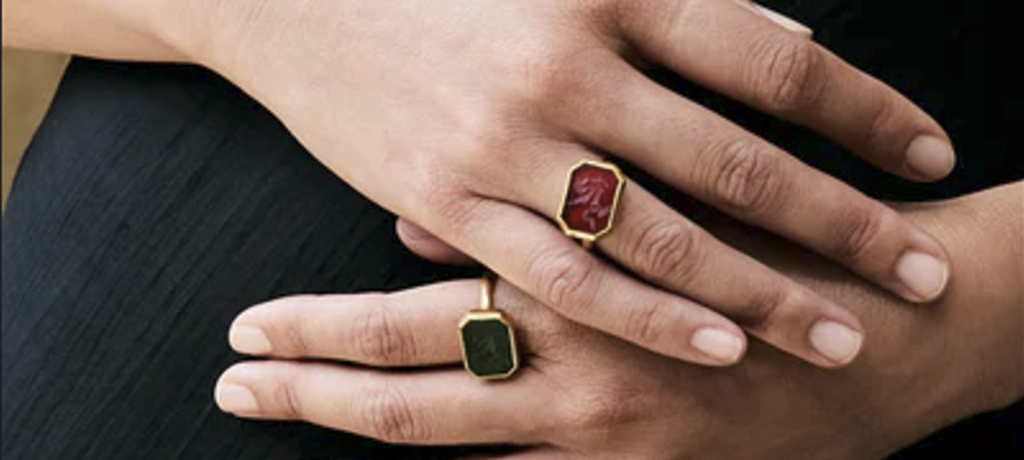
Let’s talk rings, because this is where I think jade gets to show off its most romantic, most versatile side.
The cabochon cut — a smooth, polished dome shape without any faceting — is the traditional way jade has been cut for literally thousands of years, and I think it remains the single most elegant option for a jade ring today. There’s something about the way light plays across a smooth, rounded surface, rather than bouncing between sharp facets, that feels inherently softer and more feminine. It doesn’t sparkle the way a diamond does. It glows. And I genuinely believe that glow is more captivating in person than almost any amount of brilliant-cut sparkle, precisely because it’s unexpected in a culture so trained to associate “special ring” with “maximum sparkle.”
A simple oval or round cabochon jade set in a thin gold band is, in my opinion, one of the most underrated rings a stylish woman can own. It works as an everyday piece in a way that feels effortless rather than precious, which is exactly the energy that’s dominating right now — the same instinct behind why everyone’s suddenly wearing their “good” jewelry to run errands instead of saving it for special occasions only. A jade cabochon ring doesn’t scream “this is my one nice thing I’m terrified to damage.” It just quietly belongs on your hand, every single day, the way your favorite ring should.
I have a particular soft spot for jade cabochons set in warm yellow gold, because the combination of that rich, warm metal against the cool green of the stone creates this gorgeous visual tension — warm and cool, soft and structured, all happening at once on one small object. It’s the kind of detail that a stylish woman will clock immediately and a less observant person will just register as “oh, that’s such a pretty ring” without quite understanding why.
The Jade Signet Ring: An Old Idea, Beautifully Reinvented
If you’ve been anywhere near fashion content in the last couple of years, you’ve noticed the absolute takeover of the signet ring. What used to be a somewhat stuffy, old-fashioned piece — think heavy gold rings with family crests, worn almost exclusively by men in period dramas — has been completely reimagined by stylish women into one of the defining jewelry trends of the current era.
A jade signet ring takes this whole aesthetic and gives it an unexpected, gorgeous twist. Instead of the traditional flat gold face engraved with initials or a crest, imagine a smooth, polished jade panel set into that same classic signet silhouette — chunky band, flat top, that unmistakable, slightly masculine-meets-feminine energy that’s exactly what makes the signet ring trend so compelling in the first place. It has that “borrowed from the boys” quality that’s been so central to the whole quiet luxury, old money aesthetic movement, but softened and made entirely feminine through the choice of stone.
I’ve noticed this style becoming an increasingly popular choice for women who want a statement piece that isn’t a traditional diamond or colored gemstone ring — something with a bit of edge, a bit of history, a bit of “I put actual thought into this instead of just buying whatever was trending.” Worn on its own, it has quiet confidence. Stacked with a few thin gold bands on the same hand, which is very much having its moment right now as part of the broader “curated stack” trend taking over from the more chaotic maximalist rings-on-every-finger look of a few years back, it becomes something even more personal and layered.
The Modern Jade Halo: Vintage Romance With a Contemporary Edge
For women who love the drama of a halo setting but want something that feels entirely their own rather than following the exact same diamond-halo-engagement-ring template everyone else has, a jade center stone surrounded by a delicate ring of tiny diamonds is one of the most beautiful combinations I’ve ever seen in person.
The contrast here does something really special visually. That cool, slightly cloudy green glow of the jade against the crisp, bright sparkle of surrounding diamonds creates this layered depth effect — your eye moves between the soft center and the sharp, glittering edge in this really satisfying way that a single-material ring just can’t replicate. It photographs beautifully too, catching both the soft warmth of golden hour light and the sharper sparkle of evening lighting, which makes it a genuinely versatile piece for a woman who wants one ring that transitions seamlessly from a daytime brunch to an evening event.
I think this particular combination has such staying power because it takes something genuinely ancient — jade has been treasured in various cultures for well over five thousand years — and places it within a completely modern setting language. It doesn’t feel costume-y or overly ornate the way some halo rings can when they lean too hard into maximalism. Because the jade itself carries so much visual weight and history on its own, the diamond halo gets to stay relatively delicate and restrained, which keeps the whole thing feeling elevated rather than busy.
Stacking Rings: How Jade Plays Beautifully With Others
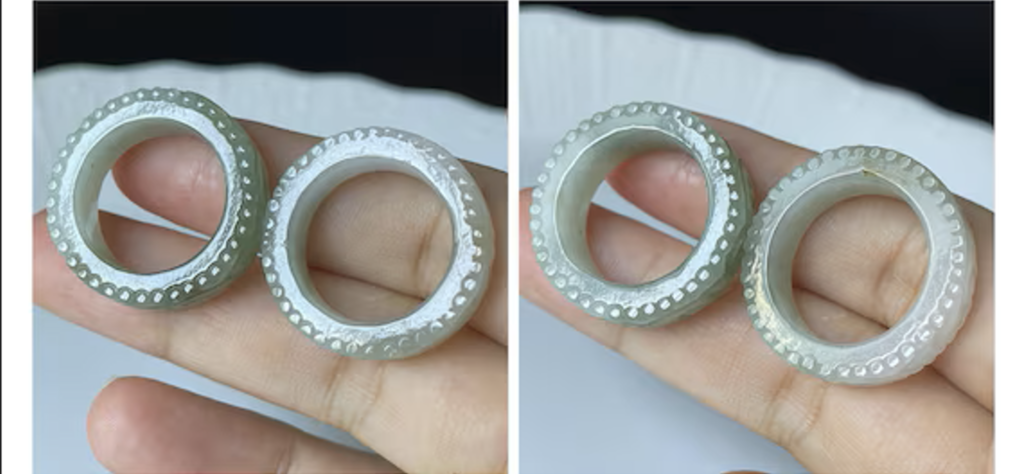
One of my favorite things about jade as a ring stone is how effortlessly it plays with other pieces, which matters enormously in an era where almost nobody is wearing just one ring anymore. The whole curated stack trend — a few thoughtfully chosen rings worn together rather than one big statement piece — has become such a defining part of how stylish women approach their hands, and jade slots into that world beautifully.
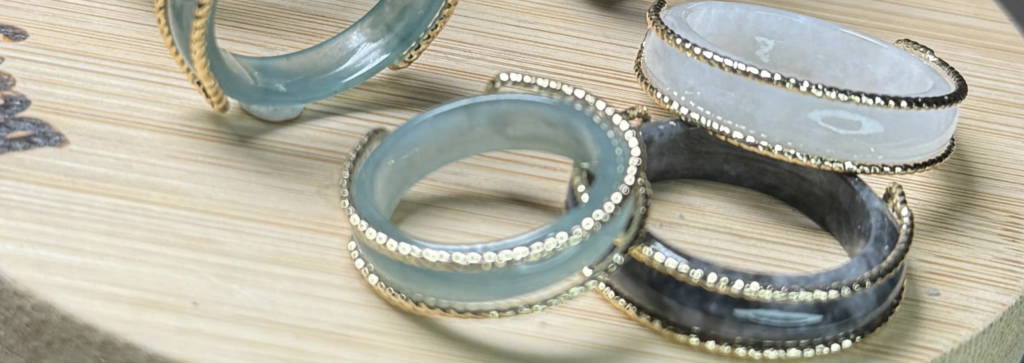
A thin jade band, sometimes called an eternity-style ring even though jade doesn’t typically come faceted the way diamonds do for a traditional eternity setting, paired with a couple of simple gold bands and maybe one small diamond accent ring, creates this soft, layered look that feels intentional without feeling overdone. I love pairing jade with warm, textured gold bands specifically — the kind with a subtly hammered or brushed finish rather than a high polish — because it echoes that same organic, slightly imperfect quality that makes jade feel so grounding compared to the machine-precision perfection of a lot of modern jewelry.
If you’re someone building out a ring stack slowly over time, which I think is actually the smartest and most sustainable way to do it rather than buying five rings at once, I’d suggest starting with a single, simple jade band or cabochon ring as your anchor piece, then building outward with complementary metals and textures as you find pieces you genuinely love. This is exactly the kind of slow, intentional collecting that feels so aligned with where personal style is heading right now — away from impulsive fast-fashion jewelry hauls and toward a smaller, more meaningful, more truly “yours” collection.
Now Let’s Talk Necklaces, Because This Is Where Jade Really Gets to Shine
If jade rings are elegant and understated, jade necklaces are where the stone gets to be genuinely, unapologetically the main character. There’s a reason jade pendants and beaded necklaces have such deep cultural and historical roots across so many different traditions — the stone sitting right at the throat, close to the heart, has carried symbolic weight for literally thousands of years, and I think that history is part of why a jade necklace feels so different to wear than almost any other piece of jewelry.
The Single Jade Pendant: Simplicity That Never Fails
If I had to recommend just one jade piece to a woman who owned absolutely nothing in this category yet, it would be a single, simple jade pendant on a thin gold or silver chain, and I’d recommend it with total confidence every single time.
There’s something almost meditative about a solitary pendant resting at the collarbone. It doesn’t compete with anything else you’re wearing. It doesn’t require you to build an entire outfit around it the way a more elaborate statement necklace might. It just sits there quietly, catching light, doing its own gentle, glowing thing, whether you’re wearing a crisp white button-down for a work meeting or a slip dress for dinner. This is exactly the kind of versatility that makes a piece genuinely timeless rather than just seasonally trendy — it has to work across your entire life, not just one specific aesthetic moment.
I’m especially drawn to teardrop or oval-shaped jade pendants, because that soft, elongated silhouette echoes some of the most flattering ring cuts too, creating this really lovely visual continuity if you’re wearing jade pieces together. A rounded, slightly asymmetrical pendant, the kind that looks like it was shaped by hand rather than stamped out by machine, has an even more special, one-of-a-kind quality that I think resonates so deeply with the current cultural craving for things that feel authentic rather than mass-produced.
Styling-wise, this is the piece I’d tell you to wear with absolutely everything. Layer it under a cozy sweater so just the very top peeks out, the way that whole “hidden detail” styling trend has become so popular on Pinterest lately — the idea that the most elegant outfits often have one small secret element rather than everything being fully visible and obvious. Or let it sit boldly on its own against bare skin with a low neckline for an evening look, where it becomes the entire focal point of your whole outfit without you needing to add another single accessory.
The Layered Jade Bead Necklace: Old World Meets New World
There’s a very specific kind of necklace that keeps showing up in my Pinterest saves lately, and it’s a strand, or sometimes multiple layered strands, of smooth, rounded jade beads, often mixed with small gold spacer beads or delicate chain segments woven throughout.
This style has deep roots in various historical jewelry traditions, where beaded jade necklaces were treasured pieces passed down through generations, sometimes worn as a symbol of status, sometimes purely for their believed protective qualities. What I love about seeing this exact style reinterpreted right now is how naturally it fits into the broader “layered necklace” trend that’s honestly been dominating jewelry styling for a few years and shows no signs of slowing down.
A single strand of jade beads has a lovely, understated presence on its own, but layering two or three strands of slightly different lengths — maybe one shorter choker-length strand paired with a longer, looser strand that falls closer to the chest — creates this rich, textured look at the neckline that reads as effortlessly collected rather than deliberately matched. It’s the jewelry equivalent of that “my closet just naturally has really good pieces in it” energy that’s so central to the whole quiet luxury aesthetic right now, even though, let’s be honest, most of us curated that look with a lot more intention than we let on.
I’d suggest mixing bead sizes too, if you’re building out a layered look like this over time. A slightly chunkier strand of larger jade beads paired with a more delicate strand of smaller ones creates visual interest without looking mismatched, the same principle behind why a great outfit usually mixes at least one structured piece with something softer and more relaxed.
The Jade Choker: Bold, Feminine, and Having a Real Comeback
Chokers went through a strange journey over the last decade — massively popular, then almost entirely written off as a dated 90s throwback, and now, right on schedule, fully back in style again, because that’s just how fashion cycles work. But the current choker moment feels different from the velvet-band, grunge-inspired version we saw before. It’s softer, more refined, more directly tied into that whole feminine elegance and soft glam aesthetic that’s everywhere right now.
A jade choker, whether it’s a solid carved band of jade sitting flush against the throat or a delicate chain with small jade accent beads spaced evenly around it, has such a striking, almost regal presence. There’s something about jade specifically sitting right at the neck that connects back to genuinely ancient traditions of jade being worn as protective jewelry, close to the throat and heart, believed to guard the wearer and bring good fortune. Whether or not you personally hold any of those beliefs, there’s an undeniable emotional weight to wearing a stone with that much history in a spot so intimately connected to your body.
Styling a jade choker well comes down to giving it room to breathe. This isn’t a necklace you want competing with a high, fussy neckline or a dozen other pieces of jewelry. Let it be the singular statement — pair it with a simple scoop neck or off-the-shoulder top, keep your other jewelry minimal or nonexistent, and let that one striking piece do all the talking. It’s an incredibly editorial, fashion-forward look when styled this way, the kind of thing that gets photographed and saved and screenshotted, which, again, matters more in our current social-media-driven style landscape than we always want to admit out loud.
Jade and Pearls: An Unexpectedly Perfect Pairing
I need to talk about this combination specifically, because I think it’s genuinely one of the most elegant, most underrated pairings in all of jewelry, and I don’t see it discussed nearly enough.
Pearls have had their own massive resurgence lately, tied deeply into the whole clean girl and quiet luxury aesthetic — that soft, lustrous, effortlessly feminine energy that pairs so naturally with minimal makeup, glossy skin, and an overall “your beauty routine looks expensive but simple” vibe. What a lot of people haven’t fully discovered yet is how beautifully pearls and jade work together in the same piece or the same layered look.
The soft, milky luster of a pearl against the cool, slightly translucent glow of jade creates this incredibly soft, almost dreamy combination — nothing about it feels harsh or overly sparkly, which fits perfectly into the broader softening of jewelry aesthetics happening right now across the board. A necklace featuring alternating jade and pearl beads, or a pendant that combines both stones in a single design, has this quiet, old-world romance to it that feels like it belongs in a beautifully lit oil painting, the kind you’d find hanging in a room with warm wood paneling and heavy velvet curtains.
I’ve started layering a simple pearl choker with a slightly longer jade pendant necklace, and it’s become one of my most-complimented combinations, which says a lot given how many jewelry combinations I’ve tried over the years in the name of what I generously call “research.” The two stones don’t compete with each other at all. They just quietly elevate one another, the way the very best pairings — in jewelry and honestly in life — tend to do.
Choosing the Right Shade of Jade for Your Skin Tone
This is a conversation I wish more people had before buying jade jewelry, because the color variation within jade is genuinely significant, and choosing a shade that flatters your specific skin tone makes a real difference in how the piece looks against you day to day.
If you have warmer, golden undertones to your skin, I’ve found that slightly deeper, richer greens — the kind that edge toward emerald or forest tones — tend to look especially striking, creating a beautiful, grounded contrast against warm skin. Lighter, almost translucent apple-green jade can sometimes wash out warmer skin tones slightly, though this really does vary person to person, which is exactly why I keep insisting you try pieces on in person whenever you possibly can rather than buying based purely on an online photo.
If you have cooler, pinker undertones, that lighter, more translucent green jade often looks absolutely luminous, creating this fresh, almost dewy effect against the skin that pairs beautifully with the whole soft glam, glass-skin beauty aesthetic that’s so popular right now. Lavender jade, which is rarer and has its own quiet, romantic appeal, also tends to look particularly beautiful against cooler undertones, creating a soft, almost ethereal effect.
And if you have deeper, richer skin tones, buttery yellow jade or the deeper reddish-brown varieties can look absolutely stunning, creating warm, sophisticated color harmony that I think gets criminally underexplored in mainstream jewelry styling content, which tends to default to showing everything on the same narrow range of skin tones.
My honest advice, as always: try things on. Stand near a window with natural light if you can. The way jade looks under warm indoor lighting versus daylight can genuinely shift how a shade reads against your particular skin, and this is one purchase where a few extra minutes of consideration pays off for years for come.
The Symbolism Behind Jade, and Why It Matters More Than You’d Think
I want to spend a little time here, because I think the emotional and symbolic weight behind jade is a huge part of why it feels so different to wear compared to other stones, even before you consciously think about any of the history.
Across a number of different cultures and centuries, jade has carried associations with protection, harmony, wisdom, and prosperity. It’s been carved into protective amulets, worn by rulers and everyday people alike, buried with the deceased as a symbol of eternal protection, and passed down through families as treasured heirlooms meant to carry both material and spiritual value across generations. There’s a concept in some traditions that jade actually absorbs and reflects the energy of its wearer over time, growing more lustrous and connected to the person who wears it consistently, almost like the stone develops its own quiet relationship with you.
I don’t think you need to hold any specific spiritual belief to feel the emotional resonance of wearing something with that much accumulated meaning behind it. There’s something genuinely grounding about putting on a piece of jewelry that isn’t just decorative, that carries an actual story stretching back thousands of years, especially in a cultural moment where so much of what we consume is disposable, algorithm-driven, and forgotten within weeks. A jade ring or necklace asks you to slow down a little, to think about permanence and legacy rather than just the next trend cycle.
This is part of why I think jade makes such a beautiful gift, too, whether you’re buying it for yourself (which I fully endorse and do regularly) or for someone you love. It carries weight beyond the object itself. A jade pendant gifted from a mother to a daughter, or bought to mark a significant milestone in your own life, becomes something layered with personal meaning on top of all that inherited historical and cultural significance. That’s a rare quality in jewelry today, and I think it’s exactly why jade keeps finding its way back into style, generation after generation, no matter what else is trending at any given moment.
How to Shop for Jade Without Getting Overwhelmed (Or Overcharged)
Jade shopping can feel intimidating if you’ve never done it before, mostly because the quality range is so genuinely vast — you can find jade pieces at wildly different price points that look similar in a photo but are worlds apart in actual quality and value. So let me walk you through how I approach it.
Start by looking at a lot of pieces before buying anything, ideally in person. Visit a few different jewelers, even ones you have no intention of buying from immediately, just to train your eye on what different quality levels actually look like side by side. This is exactly the same instinct behind trying on a dozen pairs of jeans before committing to “the one” — you genuinely cannot know what you like and what actually flatters you until you’ve seen enough options in front of you rather than just scrolling through curated photos online.
Ask direct questions about treatment and origin. A reputable jeweler will happily tell you whether a piece is natural, untreated jade or whether it’s been enhanced in some way, and they should be able to speak to where the stone came from, at least broadly. If a seller gets evasive or vague when you ask these questions directly, that’s meaningful information in itself.
Consider starting with a smaller, simpler piece if you’re new to collecting jade, rather than immediately investing heavily in a large statement piece. A simple cabochon ring or a single pendant lets you build your relationship with the stone, your eye for quality, and your understanding of your own taste before you commit to anything more significant.
And genuinely, trust your emotional reaction to a piece as much as any technical specification. I’ve walked past technically “higher grade” jade pieces that left me completely cold, and fallen head over heels for a more modest piece purely because of how it made me feel looking at it. Jewelry, at the end of the day, is deeply personal, and no grading scale can fully capture whether something is actually right for you.
Caring for Your Jade Jewelry So It Lasts a Lifetime (Because It Genuinely Can)
Jade is a wonderfully durable stone in a lot of ways, but it does have some specific care needs that are worth knowing, especially if you’re investing in higher quality pieces you want to pass down eventually.
Avoid extreme temperature changes when you can, since sudden shifts between very hot and very cold can occasionally cause stress fractures in some jade pieces over time, though this is more of a concern with lower quality or previously treated stones than with high quality natural jadeite. Simple common sense applies here: don’t leave jade jewelry in a hot car, and be a little mindful around very hot water.
Clean jade gently with a soft cloth and mild soapy water when needed, avoiding harsh chemicals, ultrasonic cleaners, and steam cleaning, all of which can potentially damage the stone’s surface or, in the case of treated jade, affect the color treatment over time. A simple wipe-down after wearing, the same habit you’d apply to any beloved piece of jewelry, keeps it looking its best without any elaborate routine required.
Store jade pieces separately from harder gemstones like diamonds, since jade, while durable, is softer than diamond and can be scratched by harder stones rubbing against it in a jewelry box. A soft pouch or a lined compartment specifically for your jade pieces is a small habit that protects your investment for decades.
And genuinely, wear it. Jade is one of those stones that’s said to benefit from being worn regularly, developing a deeper luster over time through contact with skin and natural oils. Don’t relegate a beautiful jade piece to some special-occasions-only drawer where it barely sees daylight. Let it become part of your actual, everyday life, the way the very best jewelry always should.
Building a Jade Jewelry Collection Over Time, the Right Way
If this whole conversation has sparked something in you the way that little antique shop sparked something in me all those years ago, I want to leave you with some thoughts on how to actually build out a jade collection over time, rather than feeling like you need to buy everything at once.
Start with the piece that speaks to you most immediately, whether that’s a simple ring or a single pendant. Don’t feel pressured to go big on your first purchase. Let yourself live with that one piece for a while, wearing it regularly, noticing how it makes you feel, before deciding what to add next.
Pay attention to what you’re naturally drawn to as you look at more pieces over time. Do you keep gravitating toward deeper, richer greens, or lighter, more translucent shades? Are you more drawn to smooth cabochon cuts or carved, textured pieces? This pattern will emerge naturally if you give it time, the same way your personal style in clothing reveals itself gradually rather than all at once.
Mix in pieces from different eras and sources if you can. Some of my most treasured jade pieces are vintage finds from estate sales and antique shops, sitting alongside more contemporary pieces from independent jewelry designers doing beautiful modern work with the stone. This mix creates a collection that feels genuinely personal and collected over time, rather than looking like it all came from the same single shopping trip.
And remember that this is meant to be a joyful, slow process, not a checklist to complete quickly. The whole appeal of jade is its connection to patience, permanence, and things that are built to last. Let your collection reflect that same energy — unhurried, intentional, and entirely your own.
What’s Actually Trending in Jade Right Now, and Why I Think It’s Here to Stay
I like to separate what’s genuinely gaining lasting momentum from what’s just having a fleeting social media moment, because I’ve watched enough jewelry trends flare up and disappear to know the difference matters. And when it comes to jade specifically, I think what we’re seeing right now has real staying power, not just a fifteen-minute viral flash.
The biggest shift I’ve noticed is how jade is being paired with warmer, more textured gold settings rather than the cooler, high-polish white gold and platinum settings that dominated jade jewelry design for a long stretch. This tracks with the broader move away from stark, clinical minimalism toward something softer and more tactile across fashion as a whole — the same instinct behind the popularity of raw-edge ceramics, unlacquered brass hardware, and that whole “your home looks like it was collected over decades, not bought in one Target run” aesthetic. Jade set in warm, slightly textured gold feels like it belongs to that same visual world, and I don’t see that pairing losing favor anytime soon.
I’m also seeing a genuine rise in asymmetrical and organically shaped jade pieces — rings and pendants that embrace the natural, slightly irregular form of the stone rather than forcing it into a perfectly uniform oval or round shape. This fits so neatly into the broader cultural embrace of imperfection and individuality that’s been building for a while now, the pushback against overly filtered, algorithmically optimized perfection that so much of digital life has been pushing on us. A jade pendant with a slightly irregular, hand-shaped silhouette reads as something genuinely one-of-a-kind, which feels increasingly precious in a world of infinite mass-produced sameness.
Layered jade and pearl combinations, which I touched on earlier, have also picked up serious momentum, and I think this pairing in particular has real longevity because both stones share that same soft, non-aggressive luster rather than competing sparkle, which keeps the whole combination feeling cohesive rather than cluttered no matter how you style it.
What I don’t think has lasting power: jade pieces that lean too heavily into costume-jewelry-style oversized statement settings, dripping in surrounding rhinestones or overly ornate metalwork that competes with the stone itself rather than letting it lead. The whole appeal of jade is its quiet confidence. Burying that under excessive embellishment misses the entire point of why the stone has endured for so many thousands of years in the first place.
Styling Jade Into Your Everyday Outfits, Not Just Special Occasions
One thing I really want to push back on is the idea that jade jewelry belongs exclusively to special occasions or formal events. Some of my favorite ways to wear it are shockingly casual, and I think that versatility is exactly what makes it such a smart, genuinely useful addition to a modern wardrobe rather than something that sits in a drawer waiting for a reason to come out.
A simple jade ring looks completely at home with an oversized knit sweater and straight-leg jeans, the kind of effortless, put-together-without-trying outfit that’s been dominating casual style content for a while now. It adds just enough visual interest to elevate a basic outfit without looking like you’re overdressed for a coffee run, which is exactly the kind of quiet elevation that defines good personal style right now — small, considered details rather than obvious, look-at-me statements.
A jade pendant necklace works beautifully layered under a crisp white shirt for the office, peeking out just slightly at the collar, adding a touch of personality and softness to an otherwise structured, buttoned-up look. It’s the kind of detail that makes an outfit feel like you rather than like a uniform, which matters enormously when so much of workwear can start to feel a little impersonal after a while.
For evening, I love pulling out a more striking jade piece — a choker, a statement pendant, a stacked set of jade bangles — and letting it be the entire focal point against a simple slip dress or a fitted black top. This is where jade gets to be genuinely dramatic without ever tipping into costume territory, because its inherent elegance does all the heavy lifting without needing rhinestones or excessive sparkle to read as special.
Even for workouts and errands, a small, simple jade stud or a thin jade bangle can be a lovely, low-maintenance way to keep a favorite stone close without worrying about anything elaborate getting in the way of your day. I know plenty of women who treat their more delicate jade pieces as genuine everyday jewelry, the same way you might wear a favorite pair of gold hoops constantly without a second thought.
Jade as a Meaningful Gift, and Why I Think It Beats the Obvious Choices
If you’re shopping for someone else rather than yourself, I want to make a genuine case for jade over some of the more predictable gift options, because I think it has an emotional resonance that a lot of standard jewelry gifts simply don’t carry.
For a milestone birthday, jade feels significant in a way that goes beyond just the price tag. Because of its deep symbolic association with protection, wisdom, and longevity across so many cultural traditions, gifting jade for a meaningful birthday — a thirtieth, a fiftieth, any age that feels like it deserves real acknowledgment — carries an implicit message about wishing someone a long, protected, prosperous life ahead, which feels a lot more thoughtful than a generic piece chosen purely for its aesthetic appeal.
For a new mother, a small jade pendant or bracelet has long-standing associations with protection and has been given to mark new beginnings and new chapters of life across a number of different traditions. It’s a genuinely lovely way to mark the arrival of motherhood with something that carries real weight beyond just being pretty.
For a close friend going through a difficult transition — a breakup, a career change, any kind of significant life pivot — jade’s association with harmony and calm makes it feel like a genuinely supportive gift rather than just a nice gesture. There’s something quietly powerful about giving someone a piece of jewelry that essentially says, without needing any words at all, “I want good, steady things for you.”
And honestly, for yourself, whenever you’ve hit a milestone worth marking — finishing a big project, moving into a new chapter, simply surviving a particularly hard stretch of life — jade makes an incredibly meaningful self-gift. I don’t think we celebrate our own milestones with enough intention most of the time, and a piece of jewelry with this much accumulated symbolic weight feels like exactly the right kind of quiet acknowledgment.
Don’t Forget Jade Earrings and Bracelets — The Quiet Workhorses of the Collection
While rings and necklaces tend to get most of the attention when people talk about jade, I’d be doing you a disservice if I didn’t spend some real time on earrings and bracelets, because they’ve genuinely become some of the most-worn pieces in my own collection over time.
Small jade stud earrings, cut as simple round or oval cabochons and set in delicate gold posts, are one of those pieces that quietly become part of your everyday uniform without you ever consciously deciding to wear them constantly. They’re understated enough to wear to work, to the gym, to bed even, if you’re someone who doesn’t like taking earrings out at night, and they add just enough color and texture to elevate even the most basic outfit. I think of them as the earring equivalent of a really good, slightly warm-toned lip balm — barely there, but somehow everything looks a little more finished with them on.
For something a little more directional, jade drop earrings, where a small jade bead or teardrop hangs from a delicate gold chain below the earlobe, bring movement and a bit more visual drama without tipping into full statement-earring territory. These work beautifully with the current trend toward soft, romantic hairstyles — loose waves, low buns with face-framing pieces pulled out — where a bit of earring movement catches the eye every time you turn your head.
Jade bangles deserve their own special mention, because they carry such deep traditional significance in a number of cultures, often gifted at significant life milestones and worn stacked, sometimes multiple bangles at once, creating a soft, musical clinking sound with movement that I find genuinely soothing in a way that’s hard to fully articulate. A single, substantial jade bangle worn alone has a wonderful understated elegance, while several stacked together, perhaps mixing jade with thin gold bangles in between, creates a richer, more layered look at the wrist that pairs beautifully with the current appetite for stacked, collected-over-time styling rather than single matched sets.
Bracelets and bangles also happen to be one of the more forgiving categories for trying jade if you’re newer to the stone and not ready to commit to a larger investment piece. A simple jade bead bracelet on an elastic cord is an accessible, low-commitment way to start building a relationship with the stone before deciding whether you want to invest in something more significant down the line.
Quick Answers to the Questions I Get Asked Most About Jade
Does jade only come in green? Not at all, and I think this surprises almost everyone the first time they hear it. Jade spans a genuinely wide color range including lavender, creamy white, buttery yellow, and deep reddish-brown, alongside the more familiar greens. Lavender jade in particular has such a soft, romantic quality that I think deserves far more attention than it currently gets in mainstream jewelry conversations.
Is jade an appropriate stone for an engagement ring, or is that unconventional? I’d argue it’s a genuinely beautiful, meaningful, and increasingly popular non-traditional choice for exactly the woman who wants her ring to feel personal rather than following an expected template. Given jade’s associations with harmony, protection, and enduring value, it carries symbolism that’s arguably even more fitting for a marriage commitment than a diamond, whose primary association is really just brilliance and rarity rather than any deeper meaning.
How can I tell if a piece of jade jewelry is good quality without being an expert? Look closely at the color for evenness and richness rather than a flat, muddy, or overly uniform look that can sometimes indicate heavy treatment. Hold the piece up to natural light and look for that soft glow of translucency rather than complete opacity. And always, always buy from a seller willing to answer direct questions about origin and treatment honestly and specifically, rather than vaguely.
Can I wear jade every day without it getting damaged? Yes, genuinely — jade is a wonderfully durable stone well-suited to everyday wear, which is part of why it’s remained such a beloved, practical choice across so many centuries of jewelry history. Just take the same basic care you’d take with any jewelry: avoid extreme impacts, harsh chemicals, and very hot water, and it will hold up beautifully for decades.
What’s the difference in price between jadeite and nephrite? Generally speaking, high quality jadeite, especially in that vivid “imperial” green, commands significantly higher prices than nephrite, which tends to be more widely available and more accessible in price, though still genuinely beautiful. Neither is inherently the “better” choice — it really comes down to the specific color, translucency, and craftsmanship of the individual piece in front of you.
What to Wear Jade With: A Quick Word on Color Palettes
I get asked a lot about which colors actually complement jade in an outfit, since it’s a slightly less common jewelry color than gold or silver tones alone, and it does interact with your clothing palette in specific ways worth thinking through.
Cream, ivory, and soft white are probably my favorite backdrop for jade, because they let the stone’s color do all the work without any competing tones pulling focus. A simple ivory silk blouse with a single jade pendant is one of those combinations that looks effortlessly expensive without requiring anything else in the outfit to work particularly hard.
Warm neutrals — camel, chocolate brown, warm taupe — create a really grounded, sophisticated backdrop for jade too, playing into that whole quiet luxury, old-money color palette that’s dominated so much of fashion over the last few years. Jade against a camel coat or a chocolate brown knit has this rich, earthy harmony that feels instantly elevated.
Black is always a safe, striking choice, letting jade pop as the clear visual focal point of an otherwise monochromatic look, which is exactly why so many editorial jewelry photos default to a simple black outfit as the backdrop.
And if you want to get a little more adventurous, soft blush pink or dusty lavender tones create a really unexpected, romantic pairing with green jade specifically, playing off the color wheel in a way that feels fresh rather than jarring. I’ve worn a jade pendant with a dusty pink slip dress more times than I can count, and it never once feels like an accident — it feels like exactly the kind of considered, slightly unexpected styling choice that gets noticed by the people who actually pay attention to these things.
A Few Final Thoughts on Why This Stone Keeps Finding Its Way Back to Us
There’s a reason I keep coming back to that image of the jade bangle sitting alone in that glass case, patient and quietly glowing, completely unbothered by whatever else was trending in jewelry at that particular moment. I think that’s the whole story of jade, really. It has never needed to chase relevance, because it was never trying to be trendy in the first place. It’s simply, consistently, beautifully itself, decade after decade, century after century, quietly waiting for each new generation of women to rediscover exactly why it’s been treasured for so impossibly long.
We’re living through a cultural moment that’s craving precisely what jade has always offered — substance over noise, softness over sharpness, meaning over mere decoration. The rise of quiet luxury, the return to feminine elegance, the collective exhaustion with disposable trends that dominate one week and vanish the next, all of it points toward exactly the kind of jewelry jade represents. Not flashy. Not fleeting. Just genuinely, enduringly beautiful.
So whether you’re drawn to a simple jade ring you’ll wear every single day without thinking twice about it, or a striking jade necklace that becomes the signature piece people associate with you specifically, I hope this gave you a real, grounded starting point rather than just another fleeting scroll through pretty pictures. Go find your own version of that glass case moment. I promise you, when you find the right piece, you’ll know it every bit as clearly as I did, standing in that little shop behind the flower market, completely unable to walk away.