
There is a very specific kind of comfort that comes from the sound of a wok hitting a stove, that first sizzle of garlic and ginger hitting hot oil, the little cloud of steam that rises off a pot of rice when you lift the lid too early because you simply cannot wait any longer. I didn’t grow up in a Chinese household, but somewhere in my mid-twenties, during a particularly rainy autumn where I was working from home far too much and ordering takeout far too often, I fell hopelessly, unapologetically in love with Chinese cooking. Not the deep-fried, sauce-drenched, mystery-meat version that used to show up in a paper bag with extra soy sauce packets I never used — the real thing. The version that’s bright with ginger, layered with umami, a little sweet, a little tangy, and somehow always exactly what my body wanted to eat.
If you’ve clicked on this post, I’m guessing you’re somewhere similar. Maybe you’ve been meaning to cook more at home this year. Maybe you’ve watched one too many late-night videos of someone effortlessly tossing noodles in a carbon steel pan and thought, “I could do that.” Or maybe, like me on that grey October evening, you’re just tired of spending forty dollars on delivery for food that leaves you feeling a little heavy and a little guilty. Whatever brought you here, pull up a chair, put the kettle on, and let’s talk about twenty-five recipes that changed the way I cook — and, if I’m honest, changed the way I think about a weeknight dinner altogether.
This isn’t going to be a clinical, ingredient-list-and-nothing-else kind of post. I want to actually talk to you the way I’d talk to a friend in my kitchen, wooden spoon in hand, onion half-chopped on the cutting board. I’ll tell you what worked, what absolutely did not work the first time I tried it (looking at you, my tragically over-salted first attempt at mapo tofu), and how these dishes fit into a life that already feels a little too full. Because that’s the thing about really good home cooking — it’s not about perfection. It’s about showing up in your kitchen, even on a Tuesday, and making something that makes you feel cared for.
Why Chinese Home Cooking Deserves a Permanent Place in Your Weekly Rotation
Before we get into the recipes themselves, I want to take a moment to talk about why Chinese cooking has become such a cornerstone in my kitchen, because I think understanding the “why” makes the “how” so much more enjoyable.
For starters, it’s fast. Genuinely, unbelievably fast. Most stir-fries come together in under fifteen minutes once your ingredients are prepped, which makes this style of cooking almost tailor-made for the kind of evenings where you get home at six-thirty, you’re starving, and the last thing you want is a recipe that asks you to simmer something for two hours. There’s a reason wok cooking exists the way it does — high heat, quick movement, minimal fuss. It’s the original fast food, and it predates the drive-thru by a couple thousand years.
Second, and this is the part that really won me over, it’s healthy in a way that doesn’t feel restrictive. So much of what we think of as “diet food” here in the West is built around subtraction — removing carbs, removing fat, removing flavor, frankly. Chinese home cooking, at least the way I’ve learned to make it, is built around balance instead. A little protein, a lot of vegetables, a modest amount of rice, and a sauce that’s doing the heavy lifting on flavor without needing to drown everything in cream or cheese. You leave the table satisfied, not stuffed. Your skin doesn’t do that puffy, salty thing the next morning. It just feels good, the way food is supposed to feel.
And then there’s the emotional piece, which I don’t think gets talked about enough. There is something deeply grounding about cooking with your hands — mincing garlic, julienning ginger, watching color and texture change in real time in front of you. In a world where so much of our day is spent staring at screens, scrolling, half-present, cooking a stir-fry demands your full attention for exactly as long as it takes. It’s a small, delicious form of meditation. I’ve come to treasure that ten minutes of chopping more than I ever expected to.
So, with all of that said — let’s cook.
A Few Notes Before We Begin (Read This, I Promise It’s Worth It)
I don’t want to overwhelm you with a giant pantry list before we’ve even started, but there are a handful of ingredients that show up again and again in this post, and having them on hand will make your life so much easier. Light soy sauce, dark soy sauce, Shaoxing wine, toasted sesame oil, cornstarch, and a good chili crisp or chili oil are the backbone of almost everything here. None of them are expensive, and once you have them, they last for months in your pantry or fridge. Think of it as a one-time investment in a completely different relationship with your weeknight dinners.
A wok is lovely to have but genuinely not required — a wide, heavy skillet will do the job for every single recipe below. What matters more than the pan is the heat. Chinese stir-frying wants your stove cranked up higher than you’re probably used to, and it wants your ingredients prepped and sitting in little bowls beside the stove before you turn the burner on, because once you start, things move quickly and there’s no time to be dicing an onion while your garlic burns.
Okay. Apron on. Let’s actually get into it.
1. Garlic Ginger Chicken Stir-Fry
This is the recipe I make when I need to prove to myself that cooking doesn’t have to be complicated to be delicious. Thinly sliced chicken breast gets a quick velvet treatment — a light coating of cornstarch, soy sauce, and a splash of Shaoxing wine — before hitting a screaming hot pan with garlic, ginger, and a handful of scallions. The whole thing takes twelve minutes, and yet the chicken comes out impossibly tender, almost silky, in a way that pan-fried chicken never manages on its own.
I remember the first time I discovered the velveting technique, I actually said “oh my god” out loud to an empty kitchen. It’s one of those small culinary secrets that changes everything once you know it — a thin cornstarch coating protects the protein from the direct heat of the pan, locking in moisture so your chicken stays juicy instead of turning into those sad, dry strips we’ve all experienced in a rushed stir-fry. Serve this over steamed jasmine rice with a fried egg on top if you’re feeling indulgent, or over cauliflower rice if you’re keeping things lighter. Either way, it disappears fast.
2. Honey Garlic Shrimp
There’s a certain kind of golden-hour energy to this dish that I associate with early summer evenings, windows open, a glass of something cold on the counter. Shrimp cooks in minutes, which makes it one of the most forgiving proteins for a beginner, and the honey garlic sauce — just honey, soy sauce, garlic, and a touch of rice vinegar — comes together in the same pan while the shrimp rests.
What I love about this one is how photogenic it is, if I’m being completely honest. The glossy, amber-toned sauce clinging to pink shrimp against a bed of white rice is the kind of thing that looks straight out of a soft, sun-drenched food styling shoot, the kind you’d screenshot from Pinterest and save to a board titled “dinner inspo.” It tastes even better than it looks, which isn’t always guaranteed with pretty food, and it comes together in under twenty minutes total, start to finish.
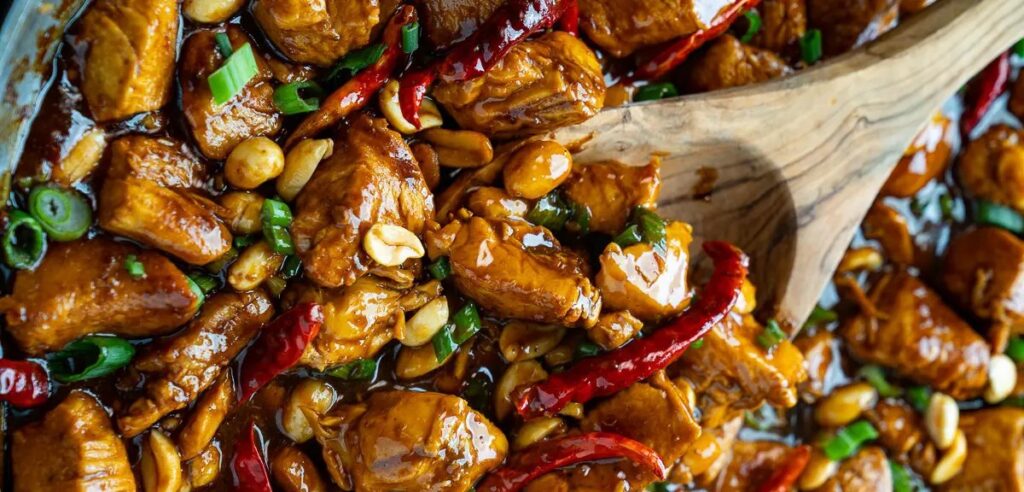
3. Kung Pao Chicken (Lightened Up)
Kung Pao chicken was the dish that made me fall for Sichuan flavors specifically — that addictive combination of savory, sweet, sour, and just enough numbing spice from Sichuan peppercorns to make your lips tingle in the best possible way. Traditional versions can be quite oily, so my at-home take uses a lighter hand with the frying oil and leans more heavily into the sauce and the crunch of roasted peanuts and dried chilies for flavor instead.
Diced chicken thighs (I find thighs stay juicier than breast here, and I’ve made my peace with that after one too many dry attempts), bell peppers, and a small mountain of dry-roasted peanuts come together in a sauce built from black vinegar, soy sauce, sugar, and a spoonful of chili bean paste if you can find it. It’s spicy, but not aggressively so — more of a warm hum than a burn. This is the dish I make when I want dinner to feel like an event, even on a random Wednesday.
4. Beef and Broccoli
I have to be honest with you — beef and broccoli is one of those dishes I used to think was basically impossible to make at home taste as good as the version from my favorite takeout spot. I was wrong, and I’m thrilled to have been wrong. The secret, again, is velveting the beef (flank steak sliced thin against the grain works beautifully) and blanching the broccoli briefly before it ever touches the wok, so it stays vibrant green and just barely crisp rather than going that sad, army-green color that overcooked broccoli always turns.
The sauce here is simple — oyster sauce, soy sauce, a touch of sugar, and beef stock thickened with a cornstarch slurry — but it’s the kind of simple that tastes expensive. There’s something so satisfying about glossy, dark sauce clinging to tender beef and crisp broccoli, all piled over rice. This is comfort food in its purest form, and it happens to be genuinely good for you too, packed with iron and vitamin C in the same bowl.
5. Mapo Tofu
Okay, I have to tell you about my first attempt at mapo tofu, because it is a genuinely humbling story. I added an entire tablespoon of chili bean paste thinking “more flavor, more better,” and ended up with something so intensely spicy that my eyes were watering by the third bite, and not in the good, tingly Sichuan way — in the “I need to drink an entire glass of milk immediately” way. Lesson learned: start with less, taste, and add more. It’s advice that applies to basically every recipe on this list, honestly, but mapo tofu is where I learned it the hard way.
Done properly, mapo tofu is silky, soft cubes of tofu in a deeply savory, mildly spicy sauce made from fermented black beans, chili bean paste, ground pork (or a plant-based crumble if you’re keeping things vegetarian), and just enough Sichuan peppercorn to give you that gentle numbing sensation on your tongue. It’s rich without being heavy, and it’s one of those dishes that tastes like it took hours of simmering when really it comes together in about twenty-five minutes. Serve it over rice and let the sauce soak in — that’s really the whole point.
6. Chicken Fried Rice (The Right Way)
I have strong feelings about fried rice, and the strongest one is this: your rice needs to be cold, ideally a day old, straight from the fridge. Fresh, hot rice turns to mush the second it hits a hot pan, and mush is not what we’re going for here. This is the number one mistake I see people make, and it’s the number one thing I wish someone had told me sooner.
Beyond that, chicken fried rice is beautifully forgiving — a bit of diced chicken, scrambled egg, peas and carrots, scallions, and rice all tossed together with soy sauce and a touch of sesame oil at the end. It’s the dish I make on Sunday nights specifically to use up leftover rice and whatever vegetables are looking a little tired in my crisper drawer. There’s a real quiet-luxury feeling to a good fried rice, honestly — it doesn’t need to shout, it doesn’t need fancy ingredients, it just needs to be made with a little patience and a hot enough pan.
7. Sweet and Sour Pork (Baked, Not Fried)
Sweet and sour pork holds a special kind of nostalgia for so many of us, but the deep-fried version can feel like a lot for a regular weeknight. My at-home version bakes cornstarch-coated pork tenderloin cubes in a hot oven until they’re golden and just crisp on the outside, then tosses them in a bright, tangy sauce made from pineapple juice, rice vinegar, ketchup, and a touch of brown sugar.
I know “ketchup” might feel like an unusual ingredient to see in a Chinese recipe, but trust me on this one — it’s actually a fairly common shortcut in home versions of sweet and sour sauce, giving that signature red-orange color and tomato depth without needing a dozen separate ingredients. Toss in some pineapple chunks and bell pepper for texture and a little pop of sweetness, and you have a dish that feels indulgent while actually being quite light, since we’ve skipped the deep fryer entirely.
8. Egg Drop Soup
There is nothing — and I mean nothing — more soothing than a bowl of egg drop soup when you’re feeling a little run down. It’s the Chinese equivalent of chicken noodle soup, in my opinion, and it takes less than ten minutes to make from a good chicken stock. The trick to those beautiful, delicate ribbons of egg is pouring the beaten egg into the simmering broth very slowly, in a thin stream, while gently stirring the broth in one direction with a fork.
I make this on nights when I’ve caught a cold, or when I’ve simply had a long day and want something warm and gentle in my stomach before bed. A little white pepper, a drizzle of sesame oil, and some chopped scallions on top, and you have something that feels like a hug in a bowl. It’s also endlessly customizable — add some corn for sweetness, some shredded chicken for protein, a handful of spinach for greens.
9. Vegetable Lo Mein
Lo mein has this reputation for being a greasy, heavy takeout indulgence, but the home version is actually wonderfully light when you make it yourself, because you control exactly how much oil goes in. Fresh lo mein noodles (or a good substitute like fresh spaghetti in a pinch, which I know sounds sacrilegious but genuinely works in a time crunch) get tossed with a rainbow of vegetables — carrots, cabbage, bell peppers, mushrooms, bean sprouts — in a simple sauce of soy sauce, oyster sauce, and a touch of sesame oil.
What I love most about this dish is how it looks on the plate. There’s something so satisfying, almost aesthetically pleasing in that clean-girl, effortlessly-put-together way, about a tangle of glossy noodles studded with bright vegetables. It photographs beautifully, and more importantly, it tastes like something you’d order from your favorite restaurant, minus the guilt and minus the delivery fee.
10. Orange Chicken (Homemade, Better Than Takeout)
I’ll admit it — orange chicken was my gateway drug into Chinese cooking. It’s sweet, it’s a little tangy, it’s got that satisfying crisp coating, and it is genuinely one of the most requested dishes whenever I have friends over for dinner. My version lightly coats chicken thigh pieces in cornstarch and pan-fries them until golden (rather than deep frying), then tosses them in a sauce built from fresh orange juice and zest, soy sauce, rice vinegar, and a touch of honey.
The orange zest is non-negotiable, in my opinion — it’s what takes this from “fine” to “genuinely craveable,” adding this bright, floral top note that cuts through the richness of the sauce. I like to serve this with steamed broccoli on the side, partly for the color contrast on the plate (that beautiful pop of green against amber-orange chicken always looks so good, whether you’re posting it or just enjoying it privately) and partly because it balances out the sweetness of the dish itself.
11. Scallion Pancakes
There’s a certain joy in making something with your hands that most people buy frozen from the grocery store, and scallion pancakes are exactly that kind of project. They require a little patience — rolling out the dough, brushing it with oil, sprinkling it with scallions and salt, then rolling it up like a cinnamon roll before coiling it into a spiral and rolling it flat again — but the payoff is enormous. Crispy, flaky, layered, with little pockets of scallion throughout.
I like to make a big batch on a lazy Sunday afternoon, the kind of day where I’ve got music playing and nowhere to be, and freeze half of them for later. There’s something meditative about the repetitive folding and rolling, almost like a craft project that happens to end in a delicious snack. Serve them with a simple dipping sauce of soy sauce, rice vinegar, and a little chili oil, and watch them disappear within minutes.
12. Chicken and Cashew Stir-Fry
This one feels a little elevated to me, in the best way — like the dish you’d order on a date night at a nice restaurant, except you made it yourself in your pajamas on a Tuesday. Diced chicken thighs, bell peppers, and a generous handful of roasted cashews come together in a savory-sweet sauce not unlike Kung Pao but a touch milder, without the chili heat, which makes it a lovely option if you’re cooking for someone with a lower spice tolerance.
The cashews add this wonderful buttery crunch that contrasts so beautifully with the tender chicken and the slight crispness of the peppers. I find myself picking out extra cashews from the pan before I even plate it, which probably tells you everything you need to know about how good this one is.
13. Hot and Sour Soup
Hot and sour soup was intimidating to me for the longest time — it felt like one of those dishes with too many components, too many textures, too much room for error. But once I actually sat down and made it, I realized it’s mostly just about building layers of flavor in a single pot, which is far more approachable than it sounds. Wood ear mushrooms, bamboo shoots, tofu, and sometimes shredded pork or chicken simmer in a broth seasoned with white pepper, black vinegar, and soy sauce, then get thickened slightly with a cornstarch slurry and finished with a beaten egg swirled in at the end, just like the egg drop soup.
The balance of hot (from white pepper, not chili, which surprised me the first time) and sour (from black vinegar) is what makes this soup so addictive, so genuinely warming in a way that goes beyond just physical temperature. I make a big pot of this at the start of flu season every year, almost as a ritual at this point, and it always feels like exactly what my body needed.
14. Sesame Chicken
If orange chicken is my gateway dish, sesame chicken is the one I make when I want something a little richer, a little deeper in flavor. The sauce leans more savory than sweet compared to orange chicken, built from soy sauce, hoisin, rice vinegar, and a generous amount of toasted sesame oil, finished with a shower of toasted sesame seeds that add this lovely nutty crunch to every bite.
I’ve started making a big batch of this on Sunday and portioning it into containers for lunches throughout the week, which has genuinely changed my relationship with weekday eating. Instead of a sad desk salad or another round of delivery, I get to look forward to something that actually tastes like I put love into it, because I did, even if it only took me thirty minutes on a lazy weekend afternoon.
15. Vegetable Fried Rice
A close cousin to the chicken fried rice above, this vegetable-forward version has become my go-to when I want something lighter, or when I’m cooking for a friend who doesn’t eat meat. Diced carrots, peas, corn, and scrambled egg get tossed with cold day-old rice, garlic, and a simple soy sauce and sesame oil combination. It’s humble, it’s quick, and it never fails to satisfy.
What I appreciate most about this recipe is how endlessly adaptable it is to whatever’s sitting in your fridge. Half a bell pepper that needs using up, a handful of spinach on its last legs, some leftover roasted vegetables from another meal entirely — it all works here. This is the dish that taught me cooking doesn’t have to be about following a recipe to the letter. It can be about using what you have and trusting your instincts a little.
16. Chinese Broccoli with Garlic Sauce (Gai Lan)
Sometimes the simplest recipes are the ones that surprise you the most, and this one is a perfect example. Chinese broccoli, also called gai lan, gets blanched briefly and then topped with a warm garlic and oyster sauce mixture that’s been sizzled in hot oil just moments before. That’s it. That’s the whole recipe, more or less, and yet it tastes so much more sophisticated than something this simple has any right to taste.
I make this as a side dish almost every time I’m cooking a larger Chinese meal, because it adds this lovely vegetal, slightly bitter contrast against richer dishes like sweet and sour pork or sesame chicken. If you can’t find gai lan at your local grocery store, regular broccolini or even standard broccoli works beautifully as a substitute — the technique is really the star here, not the specific vegetable.
17. Dan Dan Noodles (Simplified)
Dan dan noodles have this reputation for being a somewhat complex, restaurant-only dish, but I’ve simplified my home version considerably without losing what makes it so craveable — that combination of savory ground pork, a nutty, spicy sauce built from Chinese sesame paste (or peanut butter as a substitute, which works surprisingly well), soy sauce, chili oil, and Sichuan peppercorn, all tossed with wheat noodles and a scattering of chopped scallions and crushed peanuts on top.
The first time I made this, I genuinely couldn’t believe how much depth of flavor came from what felt like a fairly short ingredient list. It’s rich, it’s a little spicy, it’s got that nutty backbone from the sesame paste that makes every bite feel indulgent. This is the dish I make when I want to impress someone without actually spending hours in the kitchen — the kind of quiet confidence that comes from knowing a dish is genuinely good, no performance needed.
18. Chinese Chicken Salad
I know a salad might feel like an unexpected entry on this list, but hear me out — Chinese chicken salad is one of those dishes that manages to feel indulgent and light at the exact same time, which is a rare and wonderful combination. Shredded chicken, thinly sliced cabbage, carrots, and mandarin orange segments get tossed with crispy wonton strips and a sesame ginger dressing that’s tangy, a little sweet, and deeply savory all at once.
This is my warm-weather go-to, the dish I make when the idea of turning on the stove for a full stir-fry feels like too much, but I still want something that satisfies in that specific way only a well-seasoned Chinese dish can. There’s something so effortlessly chic about a big bowl of this salad on the table, the kind of thing you’d photograph in natural light on a linen tablecloth without even trying that hard. It just looks good, and it tastes even better.
19. Steamed Fish with Ginger and Scallion
If you’ve never tried steaming fish the Cantonese way, I need you to trust me on this one, because it changed how I think about cooking fish entirely. A whole fish (or fillets, if that feels more approachable) gets steamed gently until just cooked through, then topped with a mountain of julienned ginger and scallions before a small amount of very hot oil is poured directly over the top, causing this dramatic, fragrant sizzle. A drizzle of light soy sauce finishes it off.
The technique feels almost theatrical the first time you do it — that hiss of hot oil hitting raw ginger and scallion is genuinely satisfying in a way I didn’t expect. But beyond the drama, the result is fish that’s impossibly tender, delicately flavored, and about as healthy as protein cooking gets. This is the dish I make when I want dinner to feel a little special, a little elevated, without actually requiring much technical skill at all.
20. Pork and Chive Dumplings
Making dumplings from scratch was, for a long time, on my “someday” list — something I always meant to try but never quite got around to. When I finally did, on a rainy Saturday with absolutely nowhere to be, I realized how genuinely meditative the whole process is. Ground pork mixed with finely chopped chives, ginger, soy sauce, and sesame oil gets wrapped in store-bought dumpling wrappers (homemade wrappers are lovely but honestly not necessary for a delicious result), then either pan-fried until crispy on the bottom and steamed through, or simply boiled.
I’ve made dumplings both alone, as a quiet Sunday ritual with a podcast playing in the background, and with friends, everyone gathered around my kitchen table pleating wrappers while wine glasses slowly emptied. Both versions are lovely in completely different ways. There’s something about the repetitive folding motion, the little pleats forming under your fingers, that feels almost like a craft project — one that happens to end in the most satisfying dinner.
21. Char Siu (Chinese BBQ Pork)
Char siu was the recipe that made me feel like I’d truly leveled up as a home cook. That deep red-mahogany color, that slightly charred, caramelized edge, that sweet-savory glaze — it always felt like something only a restaurant could produce. Turns out, with a good marinade of hoisin sauce, honey, soy sauce, five-spice powder, and a touch of red fermented bean curd for color and depth, you can absolutely recreate it at home using pork shoulder or tenderloin.
The marinating time is the real secret here — give it at least a few hours, ideally overnight, and let the oven do slow, patient work with regular basting to build up that gorgeous glossy exterior. I like to slice it thin and serve it over rice with a simple side of blanched greens, or chop it up for fried rice the next day. Either way, it’s the kind of dish that makes your whole kitchen smell incredible for hours afterward.
22. Sichuan Green Beans
I used to be someone who thought green beans were, at best, a forgettable side dish. Sichuan-style dry-fried green beans completely changed my mind. The beans get fried or roasted at high heat until their skins blister and wrinkle slightly, developing this wonderful chewy-crisp texture, then tossed with ground pork, garlic, ginger, and a savory-spicy sauce built from soy sauce and chili bean paste.
This is one of those dishes that proves, over and over again, that vegetables don’t need to be an afterthought on the plate. They can be the star, genuinely craveable in their own right, not just something you eat out of obligation before getting to dessert. I make these whenever I want a green vegetable that actually feels exciting, and they disappear from the serving plate faster than almost anything else I cook.
23. Wonton Soup
There’s a particular kind of nostalgia wrapped up in a bowl of wonton soup, at least for me — it reminds me of cold days, of being taken care of, of simple things done really well. Delicate wontons filled with a mixture of ground pork, shrimp, ginger, and scallion float in a clear, fragrant broth, usually finished with a few leaves of bok choy and a drizzle of sesame oil.
Making the wontons themselves is a lovely, unhurried task — I like to do it while listening to a podcast or catching up on a phone call, folding each little parcel with a bit of care. The broth itself is where the real flavor lives, so don’t rush that part; a good homemade chicken stock, simmered gently with ginger and scallion, makes all the difference between a forgettable soup and one you’ll crave again and again.
24. Chinese Eggplant with Garlic Sauce
Chinese eggplant, the long, slender purple variety, has a completely different texture than the eggplant most of us grew up cooking with — creamier, less bitter, almost silky once cooked properly. Sliced into batons and stir-fried until tender, it gets tossed with a garlic sauce built from soy sauce, black vinegar, a touch of sugar, and doubanjiang for depth, resulting in something rich, savory, and deeply comforting.
This dish has a way of converting even the most committed eggplant skeptics, myself included, if I’m being honest about my own history with this particular vegetable. There’s something almost decadent about how the eggplant soaks up the sauce, becoming so tender it practically melts against your chopsticks. Serve it over rice and let it be the centerpiece of a simple, vegetable-forward dinner.
25. Almond Cookies (For When You Want a Little Something Sweet)
I couldn’t end this list without a little something sweet, and Chinese almond cookies felt like the perfect note to close on — simple, buttery, subtly almond-flavored, with that classic whole almond pressed into the center of each one before baking. They come together with just a handful of pantry staples: flour, sugar, butter or lard, baking soda, and almond extract.
These cookies have become something of a signature for me around the holidays — I make batches to give as gifts, wrapped in little parchment bundles tied with twine, and there’s always something so satisfying about handing someone a homemade treat that feels a little unexpected, a little different from the usual holiday cookie plate. They’re crumbly, tender, not overly sweet, and they pair beautifully with a cup of jasmine tea at the end of a long day.
How to Actually Fit This Into a Busy Life
I want to be honest with you about something — I don’t cook an elaborate, multi-dish Chinese dinner every single night. Some weeks, life is chaos, and dinner is whatever I can throw together in fifteen minutes flat. What’s changed for me isn’t that I’ve become some kind of superhuman home cook with endless time on my hands. It’s that I’ve built a small rotation of recipes, many of the ones listed above, that I can make almost without thinking, the way you might have a go-to little black dress you reach for when you don’t have the energy to plan a whole outfit.
That’s really the secret, I think. You don’t need to master all twenty-five of these recipes at once. Pick two or three that genuinely excite you — maybe the honey garlic shrimp because it feels manageable, maybe the mapo tofu because you’re craving something with a little kick — and make them until they feel effortless. Then add another. Before you know it, you’ll have a whole little repertoire, the kind of quiet, confident skill set that makes weeknight cooking feel less like a chore and more like something you actually look forward to.
A Few Final Thoughts
Cooking, for me, has become something closer to self-care than to obligation. There’s a version of me from a few years ago who would have scoffed at that sentence, who thought self-care meant a face mask and a bath, nothing to do with standing over a hot stove after a long day. But there’s something genuinely restorative about the process — the chopping, the sizzling, the smell of garlic and ginger filling up a kitchen, the quiet satisfaction of sitting down to a bowl of something you made with your own hands.
I hope this list gives you a starting point, a little map into a style of cooking that has brought so much warmth and flavor into my own life. Start wherever feels right — maybe it’s the simple garlic ginger chicken on a Tuesday, maybe it’s an ambitious Sunday spent folding dumplings with a friend. However you begin, I hope you find the same thing I found in these recipes: a reminder that good food, made at home, with a little patience and a lot of love, is one of the most quietly luxurious things we can give ourselves on any given day.
Now go turn that stove on high. Your kitchen is waiting.