
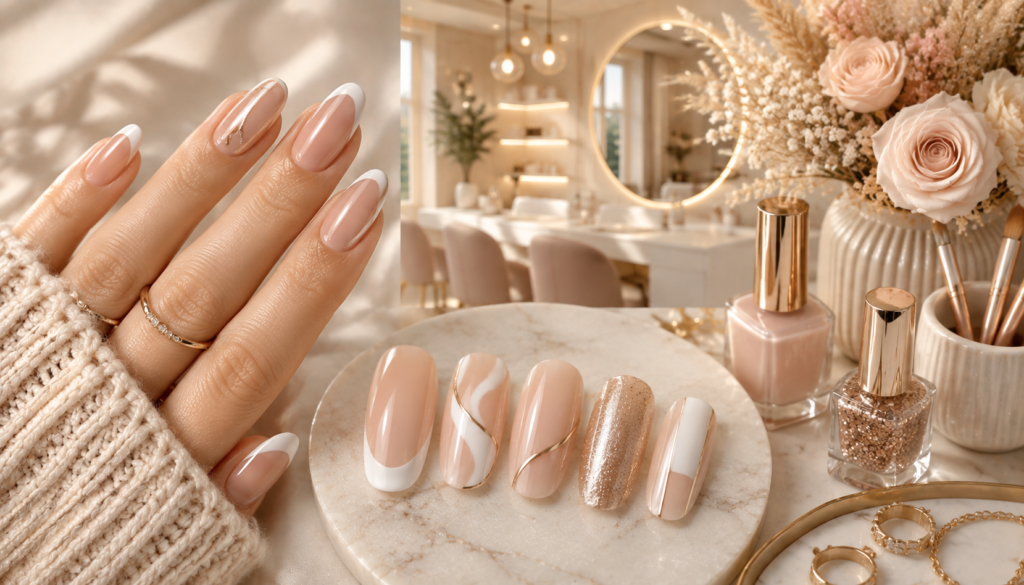
The best manicure at the party wasn’t the one with the most rhinestones. It was a short, almond-shaped set in a soft milky pink, so clean at the cuticle line that you had to look twice to notice there was polish on at all — and when she reached for her glass, the shape caught the light in a way no amount of nail art ever could. That’s the real secret of great nails: the design matters less than the fit. A manicure that suits your hand shape, your actual daily use of your hands, and the amount of upkeep you’re honestly willing to do will always look better than a more elaborate one chosen off a photo of someone else’s fingers. This guide walks through the full range — from the classic French tip and its modern descendants to minimalist looks, seasonal ideas, special-occasion nails, and the health habits that keep any of it looking good — so you can walk into your next appointment (or your own bathroom counter) knowing exactly what to ask for and why.
The French Manicure, Reconsidered
The French manicure — a natural or sheer pink base with a white tip along the free edge — has been a fixture of American nail culture since the 1970s, when it was popularized as a versatile, work-appropriate look that could go from a boardroom to a wedding without changing. Its staying power comes from a genuinely smart piece of design: the white tip draws the eye to the edge of the nail rather than the cuticle, which makes the whole nail look longer and cleaner, and the neutral base means it works with literally any outfit or occasion. It is, in the truest sense, a classic rather than a trend, which is exactly why it never fully leaves rotation even as nail styles cycle through more dramatic phases.
Idrotherapy *GET PAID ON REBILLS EACH MONTH*
Deliverable
Unlock Your Skin’s Potential With A Single Product Designed For Mature Skin
Acting without any toxicological dangers, Idrotherapy is alternative to retinol
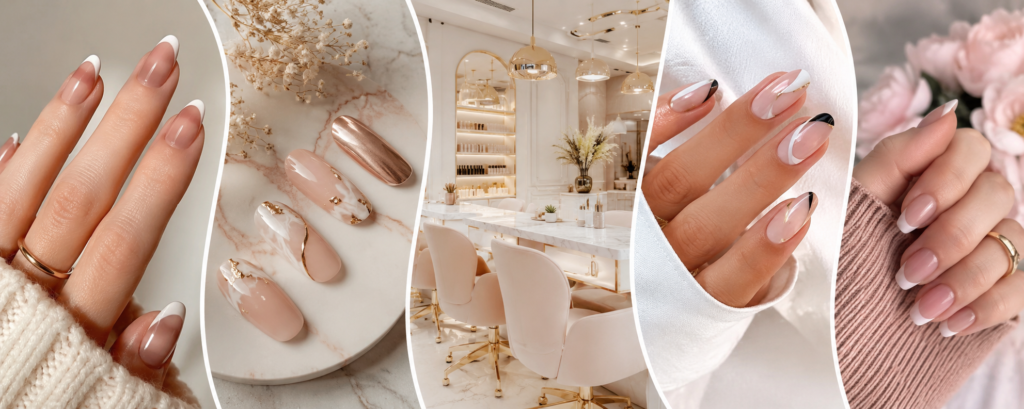
What’s changed is the palette and the proportions. The rigid, stark-white tip on a pale pink base — the version most associated with the ’90s and early 2000s — has loosened considerably. Modern French manicures play with tip color (a soft brown, a pale lavender, a barely-there beige, even a sheer black for evening), tip shape (a thinner, more delicate line rather than a thick white band), and base color (a warm nude, a cool gray-pink, or even a colored base under a contrasting tip, sometimes called a “color French”). The reverse French, where the crescent at the cuticle is colored instead of the tip, flips the whole concept and tends to read as more modern and slightly more editorial, since it draws attention to the base of the nail rather than the length.
A few variations worth knowing by name, since they’re useful vocabulary for describing exactly what you want to a nail technician: the micro French, a very thin line of color at just the very edge of the tip rather than a full band, which reads as barely-there and works beautifully on shorter, rounder nails where a thick tip can look disproportionate; the skittle French, where each nail gets a different tip color across a coordinated palette, turning a classic shape into something more playful without abandoning the structure; and the colored French, which swaps the traditional white tip for a bold color — a cherry red tip on a sheer nude base is a particularly popular version, since it keeps the elongating effect of the French shape while adding a punch of color at the point where the eye naturally lands first.
The practical appeal of French manicures, in any of these variations, is genuinely about longevity and versatility rather than nostalgia. Because the base is sheer or neutral, regrowth at the cuticle is far less noticeable than it is with a solid, opaque color, which means a French set can often go three to four weeks between fills without looking obviously grown-out — a real advantage for anyone who doesn’t want to be back in the chair every two weeks. It’s also the single easiest style to dress up or down: the exact same set works at a desk job on Monday and at a dinner reservation on Friday, which is not something you can say about most bolder nail art. If you’re choosing one “safe” style to request when you’re not sure what else you want, a modern, softened French tip remains close to foolproof.
Minimalist Nails: The Quiet Case for Less
Minimalist nails have had a real moment, and it’s worth understanding why the pared-back look — a single sheer color, a clean solid nail, one thin line of gold foil, a single small dot — has resonated so strongly against a backdrop of maximalist nail art. Part of it is practical: a minimalist set is simply lower-commitment. It doesn’t demand a particular outfit to make sense of it, it doesn’t distract in a work meeting or a job interview, and it tends to photograph well in the incidental way hands appear in everyday photos, rather than only looking intentional in a dedicated nail photo.
But the more interesting case for minimalism is that it puts real pressure on the fundamentals — shape, cuticle work, and finish — because there’s nothing else to look at. A single coat of sheer pink over a nail with uneven cuticles or a slightly wonky shape shows every flaw with nowhere to hide, in a way that a busy, multi-element design can sometimes distract from. This is why a genuinely well-done minimalist manicure often costs the same as, or reads as more expensive than, an elaborate one: the technician’s actual skill — a clean cuticle line, an even, streak-free application, a shape filed symmetrically on both hands — is the entire visible product.
A few minimalist approaches worth naming specifically: the milky nail, a barely-tinted white or “milk bath” sheer polish that reads as clean and slightly glazed rather than stark white, has become one of the most requested minimalist looks, largely because it flatters almost every skin tone and works year-round without feeling seasonal. The single-accent nail, where every nail is bare or one neutral color except a single finger carrying a small design (a thin gold line, one tiny pearl, a single dot), gives just enough visual interest without committing to a full set of patterned nails. Negative space minimalism — a small unpolished gap left deliberately within an otherwise polished nail, often a thin line down the center or a small triangle at the cuticle — plays with the idea of “less” literally, using bare nail as part of the design rather than covering the entire surface.
The other underappreciated benefit of minimalist nails is speed and cost at home. A single sheer or solid color is genuinely achievable with a home manicure in a way that intricate nail art usually isn’t, which means minimalist nails are one of the few salon-trend looks that translate almost perfectly into a DIY routine — two coats of a good quality polish, a top coat, and careful attention to cuticle prep will get you most of the way to the salon look without the salon price, which is a real reason to keep at least one bottle of a reliable sheer neutral on hand at all times.
Elegant Designs for When You Want More
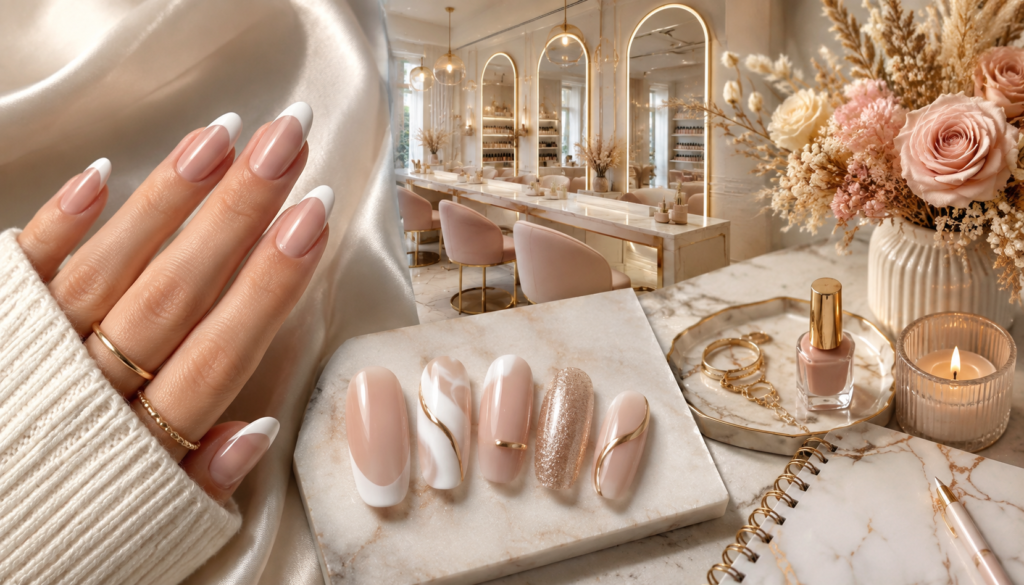
Not every occasion calls for restraint, and there’s a real, distinct category of nail design built for exactly the moments when more is the point — a wedding, a milestone birthday, a holiday party, or simply a season where you want your hands to say something. The key to these more elaborate looks staying “elegant” rather than tipping into cluttered is usually restraint in a different place: one strong technique or motif, executed cleanly, rather than several competing ideas on the same set.
Chrome and metallic finishes — a mirror-like, high-shine powder or gel applied over a base color — read as genuinely luxurious with almost no linework or painting required, since the effect comes entirely from the finish rather than a design. A chrome finish over a nude or soft pastel base is subtle and wearable; the same chrome over black or a deep jewel tone reads as more of a statement, appropriate for evening or a special event rather than daily wear. Marble and watercolor effects, created by dragging a fine brush or dotting tool through wet polish to blend two or three colors into soft, organic swirls, produce a genuinely painterly result that looks far more technically difficult than it often is, and they photograph beautifully because no two nails in the set are ever quite identical, which reads as intentional rather than inconsistent.
Fine-line nail art — thin gold or metallic lines, delicate florals, tiny abstract shapes, or a single fine swirl traced over a neutral base — has become one of the more requested “elegant but not overwhelming” categories, largely because it borrows the visual language of fine jewelry: delicate, precise, and understated rather than bold. This category rewards a steady-handed technician more than almost any other, since the entire effect depends on the lines being genuinely fine and clean rather than thick or wobbly, so it’s worth looking specifically at a salon’s or technician’s portfolio for this style before booking, rather than assuming any nail artist can execute it to the same standard.
Negative space designs at a larger scale — geometric cutouts, a French tip reimagined as a diagonal line rather than a curve, a moon manicure with a shaped cuticle crescent left bare — sit at the intersection of minimalist and elegant, using the idea of “less coverage” as the design itself rather than an afterthought. These tend to work best on nails with a clean, well-maintained natural shape underneath, since the bare sections show the nail bed directly, and any ridging, staining, or unevenness in the natural nail will be visible in exactly the areas left unpolished.
The general principle across all of these: elegant nail art almost always benefits from a limited palette (two to three colors or finishes at most) and a single clear technique per set, rather than combining chrome, marble, and fine-line art all in the same manicure. A technician’s genuine skill shows in doing one thing extremely well, and a set with too many competing ideas often reads as busy rather than special, no matter how much time went into it.
Textures and Finishes Beyond Glossy Color
Color choice gets most of the attention, but finish — the surface quality of the polish itself, independent of the actual hue — changes a manicure’s entire character just as much, and it’s worth treating as its own decision rather than an afterthought.
Glossy is the default most people picture, a high-shine, mirror-like top coat that makes color look saturated and rich; it’s the most universally flattering finish and the one that photographs most predictably under different lighting, which is part of why it remains the default recommendation for anything being photographed extensively, like a wedding.
Matte finishes trade shine for a soft, velvety surface, and they read as more modern and slightly more editorial than glossy, particularly in deep, moody colors — a matte burgundy or matte forest green in fall has a completely different, more sophisticated feeling than the same color in high gloss. The trade-off is practical: matte top coats show fingerprints, oil, and general wear more visibly than glossy ones, since there’s no shine to distract from surface imperfections, and matte manicures generally need slightly more careful handling to avoid a worn, dull look developing within just a few days.
Satin sits between the two, offering a soft sheen without either the full mirror-shine of glossy or the completely flat surface of matte — a genuinely underused finish that works particularly well for anyone who finds full gloss too flashy for daily life but full matte too dull.
Textured finishes — a fine, sand-like or velvet texture built into the polish itself, rather than a smooth surface under any top coat — are a more occasional, statement-driven choice, striking on a single accent nail or a short-term special-occasion set, but generally impractical for everyday wear, since the raised texture catches on clothing, hair, and fabric throughout the day in a way that a smooth finish never does.
Combining finishes within one set — a matte base with a single glossy accent nail, for instance, or a glossy set with one matte nail for contrast — is a simple, low-effort way to add visual interest without any actual nail art or pattern work, and it’s a technique worth specifically requesting if you like the idea of a “more” look without wanting anything painted or drawn.
Choosing a Nail Shape That Actually Works for Your Hands
Shape is the most underrated decision in the entire manicure process, and it’s also the one most people default on without really considering — they get whatever shape they already have, or whatever the technician defaults to, rather than choosing deliberately. The shape does real, visible work in how the whole hand reads, in much the same way a haircut’s shape does more than its color.
Square nails, with flat, straight edges and sharp corners, are the sturdiest shape and hold up best to daily wear and tear, which makes them a genuinely practical choice for anyone who types constantly, works with their hands, or simply breaks nails easily in other shapes. They tend to make fingers look shorter and wider by comparison, since the flat top edge visually “caps” the finger rather than extending its line. Squoval — a square shape with the corners gently softened — keeps most of that durability while looking less severe and slightly more universally flattering, and it’s become the most common “safe default” shape for exactly that reason.
Oval nails, rounded on the sides and at the tip with no flat edge at all, elongate the finger more than square or squoval shapes and tend to suit shorter or wider fingers particularly well, though the fully rounded tip is somewhat more prone to catching and chipping at the sides than a flatter shape. Almond, tapered at the sides to a rounded point (narrower than oval but not as sharp as a stiletto), is widely considered one of the most universally flattering shapes precisely because it elongates the finger dramatically while still being rounded enough at the tip to avoid looking aggressive; it’s a particularly good choice if you want a shape that reads as elegant without being extreme.
Coffin (or ballerina) nails — long, tapered sides with a flat, squared-off tip, resembling the shape of a ballet slipper or a coffin lid — offer a dramatic, editorial look with more surface area for nail art than almost any other shape, which is part of why they’re so popular for elaborate designs; the trade-off is that they require length to look proportional and are more fragile at the flat tip than a rounded shape, since the flat corners are the first point of impact in any knock or catch. Stiletto, tapered to a sharp point, is the most dramatic and least practical shape on this list — genuinely striking as a statement, but the most prone to breaking of any shape, and the least suited to anyone who needs functional hands for typing, cooking, or most manual tasks throughout the day.
The honest way to choose is to weigh two things against each other: how your fingers are actually proportioned (shorter, wider fingers generally benefit from an elongating shape like oval or almond; already-long fingers can wear square or squoval without looking stubby) and how your hands are actually used day to day (durability matters more than drama if you’re typing all day or working with your hands, while a special-occasion set can afford to prioritize the look over the practicality for a week or two). It’s also worth knowing that shape is one of the easiest things to change appointment to appointment — unlike a haircut, a nail shape you don’t love can simply be reshaped at your next fill with no growing-out period required, so it’s a genuinely low-risk place to experiment.
Choosing Color Like You Mean It
Color choice for nails gets treated as purely a matter of taste, but there are real, practical considerations worth thinking through before defaulting to whatever’s trending that season. Skin undertone is the most useful starting point: warm undertones (skin with golden, peachy, or yellow hues, where veins on the wrist tend to look greenish) generally look particularly good in coral, warm red, terracotta, and gold-toned metallics, while cool undertones (pink or bluish veins) tend to favor blue-based reds, berry tones, and silver-toned metallics. This isn’t a hard rule — plenty of colors work beautifully regardless of undertone, and personal preference matters more than any formula — but it’s a useful tiebreaker when you’re stuck between two similar shades and can’t decide which one to pick.
Occasion and longevity matter as much as color family. A very pale, sheer polish shows chips more visibly than a medium or dark shade, since any wear reveals bare nail against a color close to the natural nail’s own tone; if you’re choosing a color for something you need to last two full weeks without a touch-up, a medium-depth color (not the palest sheer, not the darkest possible shade, which can show tip-wear as a pale line at the growth edge) tends to hide both regrowth and minor chipping the longest. Dark colors, while dramatic and often flattering, show regrowth at the cuticle noticeably faster than lighter shades, simply because the contrast between the dark polish and the pale, unpolished new growth is so stark — worth knowing before committing to a near-black manicure right before a trip where you won’t have salon access for a fill.
Nail length also changes how a color reads. Bold, saturated colors and dark shades tend to look more sophisticated on shorter nails, where the color reads as a deliberate, contained choice rather than an overwhelming block; the same color on very long nails can look heavier and more attention-grabbing than intended. Pale and sheer shades, meanwhile, tend to elongate whatever length they’re on, since there’s less visual contrast to interrupt the eye’s read of the nail’s overall shape.
For anyone who genuinely can’t decide, a short list of colors that work across nearly every skin tone, occasion, and season is worth keeping in your back pocket: a warm, medium-toned nude (not too pink, not too beige — closer to a “your skin but slightly more polished” tone), a classic true red (blue-based reds tend to be the most universally flattering red family), a soft rose or mauve, and a clean, non-yellow-toned white for a crisp, graphic look. Building a rotation around these four bases, then adding a seasonal or trend-driven color on top when the mood strikes, is a genuinely reliable strategy rather than starting from scratch every time you sit down in the chair.
Seasonal Nail Ideas Across the Year
Nails, more than almost any other beauty category, respond well to being treated seasonally, since color, finish, and even shape can shift with the weather and the occasions each season brings without requiring any real commitment beyond your next fill.
Spring calls for the palette everyone already associates with it — soft pastels (lilac, baby blue, mint, buttery yellow), but the more interesting spring approach right now leans toward these colors in a sheer or milky finish rather than full, opaque saturation, which feels fresher and less like a throwback to a more literal pastel era. Delicate florals, tiny painted daisies on an accent nail, or a soft French tip in place of the classic white are all well-suited to this season, when the whole point is looking like something is just beginning to bloom rather than fully arrived.
Summer is where color gets permission to be bold — citrus orange, hot pink, cobalt blue, and clean, saturated brights all read as intentional in a way they might feel out of place in colder months. Summer is also the natural home for chrome and glazed finishes, since the shine reads as sun-kissed rather than out of place, and for nail art referencing the season literally: a single citrus slice on an accent nail, a small wave motif, or simply a French tip done in a bright coral instead of white. Because summer means more water exposure (pools, beaches, frequent hand-washing in the heat), it’s also worth choosing a slightly more durable finish — gel over standard polish, if you can tolerate the removal process — since summer activities are genuinely harder on a manicure than a typical indoor winter routine.
Fall is when the palette turns toward what nail professionals often call “moody” tones — deep burgundy, chocolate brown, burnt orange, and a return of near-black shades that feel appropriately dramatic against the changing season. This is also prime season for texture: matte finishes, which read as particularly appropriate for fall and winter, and richer, warmer metallics (bronze and copper rather than summer’s cooler silvers) both fit the mood of the season without needing any figurative motif at all — the color and finish alone do the seasonal work.
Winter leans into two directions simultaneously: the deep, jewel-toned colors (emerald, sapphire, deep plum) that read as elegant for holiday parties and events, and the crisp, clean whites and icy blues that echo snow and read as fresh against darker winter clothing. Winter is also the natural home for genuinely festive nail art if you want it — a subtle dusting of fine glitter at the cuticle, a single metallic accent nail, or delicate snowflake linework — since the season gives more social permission for a bit of shimmer than a random Tuesday in April would.
The point of thinking seasonally isn’t to feel obligated to follow every trend each quarter; it’s that a color or finish that feels slightly out of step with the season (a heavy matte burgundy in July, a bright neon in December) can read as subtly “off” in a way that’s hard to name but easy to notice, while a seasonally appropriate choice tends to feel effortlessly right even when it’s a simple, unadorned color.
Gel, Dip Powder, Acrylic, and BIAB: Knowing What You're Actually Asking For
A surprising number of manicure disappointments come down to a mismatch between the service requested and the service actually needed, since “gel,” “dip powder,” “acrylic,” and “BIAB” (builder gel in a bottle) all produce visually similar glossy, long-lasting results but work in genuinely different ways, at different price points, and with different implications for the health of the natural nail underneath.
Regular (traditional) polish is the lowest-commitment option: it air-dries rather than requiring a UV or LED lamp, it can be removed at home with ordinary polish remover, and it does the least structural work on the nail, since it’s simply color sitting on top of the natural nail with no bonding process. The trade-off is durability — traditional polish typically chips within two to five days for most people who use their hands actively, which makes it a poor choice for anyone who wants a set to last two full weeks without touch-ups.
Gel polish is cured under a UV or LED lamp, which bonds it more firmly to the nail and gives it the glassy, long-wearing finish most people mean when they say “gel manicure.” A well-applied gel set on healthy nails typically lasts two to three weeks with minimal chipping. The health consideration, discussed in the habits section above, is real: gel requires proper soak-off removal rather than peeling, and the curing light involves UV exposure worth protecting against with sunscreen or gloves.
Dip powder involves dipping the nail into a colored powder (or brushing it on) after a bonding base coat, building up several layers, then sealing with a top coat — no UV light required, which some people prefer for that reason alone. Dip powder tends to be more durable than gel for people who are genuinely hard on their nails, since the powder layers create a slightly thicker, more rigid coating, though this same rigidity means it can look and feel less natural than gel, and removal still requires an acetone soak rather than simple peeling.
Acrylic is a structural product — a liquid-and-powder mixture sculpted onto the nail, either over the natural nail or over a tip extension — used both for adding length and for strengthening nails that are too weak or damaged to grow long on their own. Acrylics are the most durable and best suited to genuinely long, dramatic shapes like coffin or stiletto, since they provide real structural support that polish alone cannot. They also require the most maintenance (fills roughly every two to three weeks as the natural nail grows out beneath the acrylic) and the most caution during removal, since acrylic that’s picked or forced off takes significant natural nail with it.
BIAB (builder gel in a bottle), a newer and increasingly popular option, is a gel-based product applied in a slightly thicker layer than standard gel polish, giving some of acrylic’s strengthening benefit without the harsher application and removal process. It’s become a popular choice specifically for people trying to grow out damaged or bitten nails, since it adds a protective, slightly rigid layer over the natural nail without the buildup or weight of a full acrylic extension.
The practical decision tree is fairly simple: choose traditional polish if you’re comfortable with more frequent touch-ups and want the gentlest option on the natural nail; choose gel or dip powder if you want two-plus weeks of durability and don’t mind either the UV exposure (gel) or slightly thicker feel (dip powder); and choose acrylic or BIAB specifically if you want added length beyond what your natural nail supports, or if your natural nails are currently too weak or damaged to hold polish well on their own and need real structural support while they recover.
Back-to-School and Everyday Practical Nails
Not every manicure needs to be built around a special occasion, and there’s a real, underserved category of nails designed specifically for ordinary, high-use days — back-to-school season, a demanding work schedule, or simply life that involves a lot of typing, cooking, and hand-washing. The priorities here shift meaningfully: durability and low daily fuss matter more than drama, and the ideal set should look put-together without needing constant touch-ups.
A shorter length (just past the fingertip, or even flush with it) paired with a square or squoval shape is the most durable combination for hands that are genuinely working all day, since there’s simply less nail to catch, bend, or chip. A solid, medium-toned color rather than a very pale or very dark one hides both regrowth and daily wear the longest, and a gel or long-wear polish, if you don’t mind the removal process, genuinely extends how long a set looks fresh compared to standard polish, which chips within days for most people who use their hands actively.
For back-to-school specifically — students, teachers, or parents managing a genuinely busy new schedule — a set that requires zero daily maintenance is worth prioritizing over one that needs frequent touch-ups: a clean, single-color gel manicure or a simple, sturdy French set in a neutral tone both fit this brief well, since neither needs attention beyond the initial appointment for weeks at a time. It’s also worth choosing a shorter length during any season involving a lot of new physical tasks — new school supplies, sports, instruments, or simply adjusting to a busier routine — since length is the single factor most likely to lead to a broken or snagged nail during a genuinely active stretch.
The other underrated practical-nail category is what might be called “meeting-proof” nails: a shape and color subtle enough not to distract in a professional context, but polished enough to look intentional rather than neglected. A clean, short almond or squoval shape in a soft neutral, rose, or classic red, without elaborate art, tends to read as put-together in essentially any professional environment, which is part of why these remain the most requested colors for job interviews, first days, and important meetings specifically — they signal effort and care without asking anyone in the room to have an opinion about your nail art.
Special-Occasion Nails: Weddings, Holidays, and Milestone Events
Special-occasion nails are the one category where it’s genuinely worth planning further ahead than usual, since the goal is for the set to look its absolute best on one specific day, weeks or months in advance of the actual appointment, not simply whatever happens to be trending the week before.
Wedding nails carry the highest stakes of any occasion category, since they’ll appear in photographs that last far longer than the manicure itself. The general guidance from most bridal nail specialists is to choose a shape and length you can commit to comfortably for the entire day — a dramatic, long stiletto shape might look stunning in a single close-up ring shot but can genuinely interfere with getting dressed, holding a bouquet, or eating throughout a long event, so comfort and practicality deserve real weight alongside the visual. Color-wise, a soft French manicure, a milky sheer, or a clean, classic solid in a soft neutral tend to be the most enduringly photograph-well choices, since they won’t clash with a white or ivory dress the way a strongly colored or heavily patterned set can in close-up hand shots. It’s also worth doing a full trial manicure a few weeks before the wedding — not just a color swatch, but the entire shape and finish — exactly the way a trial run happens for hair and makeup, since discovering you dislike a shape or length on the actual wedding day is a far worse position than discovering it weeks in advance.
It’s also worth thinking through the wedding party as a group, not just the bride individually. Bridesmaids don’t need to match exactly, and in fact a slightly varied approach — the same color family in a soft neutral or blush tone, but each person choosing their own preferred shape and length — tends to photograph better than forcing identical stiletto nails onto hands of very different sizes and shapes. If a fully coordinated look matters for the wedding’s aesthetic, a single unifying element (the same polish color, regardless of shape) is an easier ask than requiring an identical shape and length across a group of people with different nail health, hand sizes, and daily routines.
Holiday nails are where more expressive, seasonal, or even literal designs get the most social permission — a subtle red-and-green accent nail, delicate gold detailing, a rich burgundy or emerald set, or a light dusting of fine glitter all fit naturally into holiday gatherings in a way they might feel slightly out of place on an ordinary Tuesday. The practical note here is timing: book well ahead of the actual holiday, since nail salons are reliably at their busiest in the days immediately before major celebrations, and walk-in availability tends to disappear fast.
Milestone events — a significant birthday, a graduation, a big presentation, a first date you’re genuinely excited about — deserve the same thoughtful approach as a wedding, scaled down: choose based on what will make you feel most confident in photos and in person for that specific day, rather than defaulting to whatever you’d normally pick. A slightly bolder color or a bit more nail art than your everyday default is entirely appropriate for marking an occasion as distinct from ordinary life, and it’s one of the lower-cost, lower-commitment ways to mark something as special, since (unlike a haircut) a manicure is fully reset within a few weeks regardless of how bold the choice was.
Healthy Nail Habits
Beautiful nails start from a foundation of actual nail health, and the American Academy of Dermatology’s guidance on this is genuinely worth following closely, since nail damage compounds over time in a way that’s much easier to prevent than to reverse. A few habits, backed by dermatologist guidance, that matter more than any single product or design choice:
- Keep nails clean and dry. Bacteria and fungi both thrive in moist environments, so drying hands and nails thoroughly after washing, and avoiding prolonged water exposure without protection, genuinely reduces the risk of infection and weakening at the nail bed.
- Protect nails from water and chemicals. Wearing gloves for dishwashing, cleaning, and other prolonged water or chemical exposure prevents the splitting, peeling, and brittleness that repeated soaking causes — and it’s worth moisturizing hands and cuticles immediately after any water exposure, since that’s when nails are most vulnerable to drying out.
- Leave cuticles alone, mostly. Cutting cuticles removes a natural barrier against infection and doesn’t actually make nails grow better, despite the common belief; gently pushing cuticles back after a warm soak, rather than cutting them, is the dermatologist-recommended approach, and it’s worth communicating this preference directly to a nail technician if you’d rather they not cut your cuticles during a service.
- Be strategic about gel manicures. Gel polish is genuinely tough on the nail over repeated use, and the UV or LED light used to cure it emits ultraviolet radiation linked to skin aging and, with enough cumulative exposure, skin cancer risk on the hands. Dermatologists recommend applying a broad-spectrum sunscreen (SPF 30 or higher) to your hands before a gel service, or wearing UV-protective fingerless gloves during the curing process, and treating gel manicures as an occasional or special-occasion choice rather than a permanent, continuous routine, giving nails periodic breaks to recover.
- Remove gel polish properly. Peeling or picking off gel polish takes layers of the natural nail with it, which is the single most common cause of thin, weak, or damaged nails among regular gel-manicure clients. Proper removal — soaking in acetone with foil wraps or at a salon, never forcing it off — protects the nail bed underneath.
- Watch for changes that need a dermatologist, not a manicure. Persistent discoloration, thickening, separation from the nail bed, or ongoing pain are signs worth having evaluated by a board-certified dermatologist rather than covered up with polish, since nail changes can sometimes reflect a broader health issue and are far easier to treat when addressed early.
Beyond these dermatologist-backed basics, a simple weekly habit — cuticle oil applied nightly, a base coat used every single time regardless of how minimal the manicure, and a genuine break between gel services rather than back-to-back reapplication — does more for long-term nail health than any single expensive treatment, and it costs almost nothing in either time or money.
Translating Salon Inspiration Into Real Life
The gap between a saved photo and your actual manicure usually comes down to the same handful of unspoken assumptions every time: hand size and finger length aren’t accounted for, the photo shows a shape or length that isn’t practical for your actual daily activities, or the lighting and camera filter in the photo make a color look different than it will under your own bathroom light. Closing that gap starts with being specific in the same way discussed for hair — separate your inspiration by category (one photo for shape, one for color, one for any nail art or finish) so your technician isn’t guessing which single element you’re actually most attached to.
It’s worth being honest, out loud, about your daily hand use in exactly the way it’s worth being honest about your hair-styling habits: if you type all day, cook frequently, or work with your hands in any physically demanding way, say so before choosing a shape and length, since a technician who knows this will steer you toward more durable options rather than letting you commit to a stiletto shape that will chip within two days of real use. If you’re someone who picks at your polish absentmindedly, mention that too — it might point toward gel rather than regular polish, or toward a shorter length that gives you less to pick at in the first place.
On adapting elaborate salon looks for regular life: almost any dramatic technique — chrome, marble, fine-line art — can be scaled down to a single accent nail rather than a full set, which keeps the visual interest of the trend while dramatically reducing both the cost and the daily-wear risk, since one nail chipping is a minor touch-up rather than a full redo. This is a genuinely underused strategy; there’s no rule that all ten nails need to match, and a single statement nail among nine simple, solid ones often reads as more deliberate and more current than a fully matching elaborate set.
Finally, on the DIY versus salon question broadly: minimalist looks, simple French tips, and single-color manicures translate well to home application with practice and the right basic tools (a good cuticle pusher, quality base and top coats, and a steady hand or a small dotting tool for anything beyond a single color). More technical work — precise chrome application, fine-line art, structural work like acrylic or hard gel extensions, and anything requiring UV curing equipment — genuinely benefits from a trained technician’s tools and experience, and trying to replicate it exactly at home often produces a result that costs more in time and frustration than the salon visit would have. Knowing which category your desired look falls into before deciding whether to book an appointment or reach for your own polish drawer saves both money and disappointment.
Building a Simple At-Home Manicure Toolkit
Even for people who mostly rely on salon visits, a small, well-chosen set of home tools closes the gap between appointments and makes the whole manicure last noticeably longer. This is worth treating as an actual investment rather than an afterthought box of dollar-store tools, since a few items genuinely change the outcome.
- A good glass or crystal nail file, rather than a cheap emery board, files more smoothly and causes less splitting at the tip, since a rough file edge can create micro-tears in the nail that lead to peeling over time.
- A metal cuticle pusher, used gently after a warm soak, for the “push back, don’t cut” approach dermatologists recommend — this alone does more for the long-term appearance of the cuticle area than any cuticle-cutting tool.
- Cuticle oil, applied nightly, is the single highest-return, lowest-effort habit in this entire guide; dry, neglected cuticles are the fastest way to make even a fresh, well-shaped manicure look tired within days.
- A reliable base coat and top coat, used every time regardless of how simple the color, since base coat prevents staining from pigmented polishes and top coat is most of what determines how long a home manicure actually survives before chipping.
- A small dotting tool or a fine detail brush, inexpensive and genuinely useful for anything beyond a single flat color — a single dot, a thin line, or a simple accent design is achievable with practice even for someone without a background in nail art.
- 100% acetone remover, used sparingly and always followed by cuticle oil, since acetone is drying to both the nail and surrounding skin and should be treated as an occasional necessity rather than a routine step.
Between salon visits, a light touch-up routine — a fresh coat of top coat every few days to extend a manicure’s life, cuticle oil nightly, and gloves during dishwashing or cleaning — meaningfully extends how long any set, gel or otherwise, looks fresh, and it’s a far smaller time investment than most people assume once it becomes routine.
Key Takeaways
- The French manicure remains genuinely versatile because its neutral base hides regrowth well and suits nearly any occasion — modern versions play with tip color, thickness, and reverse placement rather than sticking to the stark original.
- Minimalist nails put real pressure on the fundamentals (shape, cuticle work, finish), which is why a well-done simple manicure often looks more expensive than an elaborate one.
- Elegant, more dramatic designs (chrome, marble, fine-line art) work best with a limited palette and one clear technique per set, rather than combining several ideas at once.
- Shape does as much visual work as color — almond and oval elongate fingers, square and squoval offer the most durability, and shape can be changed at every fill with no downside.
- Color choice benefits from thinking about skin undertone, occasion longevity, and nail length, not just what’s trending.
- Seasonal color and finish shifts (pastels and sheers in spring, brights and chrome in summer, moody tones and matte in fall, jewel tones and icy shades in winter) keep a manicure feeling current with minimal effort.
- Practical, everyday nails prioritize a shorter length, a durable shape, and a medium-toned color that hides both regrowth and daily wear.
- Special occasions (weddings especially) reward planning and a trial run well in advance, prioritizing comfort and longevity in photographs over the most dramatic possible option.
- Genuine nail health — proper cuticle care, sun protection during gel services, and correct polish removal — matters more to how nails look long-term than any single design choice.
Frequently Asked Questions
How long does a French manicure last compared to a solid color? A French manicure typically shows regrowth less noticeably than a solid, opaque color because the sheer or neutral base blends with new nail growth, often allowing three to four weeks between fills, versus roughly two to three weeks for a solid color before regrowth becomes visually obvious at the cuticle.
What nail shape is most flattering if I have short fingers? Oval and almond shapes tend to elongate shorter fingers most effectively, since their tapered, rounded silhouette draws the eye vertically along the nail rather than emphasizing width the way a flat, square edge can.
Are gel manicures bad for your nails? Gel manicures can weaken and thin nails with frequent, continuous use, and the curing light emits UV radiation linked to skin aging and cancer risk on the hands, so dermatologists recommend applying sunscreen to your hands before the service, treating gel as an occasional rather than constant choice, and always having gel professionally removed rather than peeled off.
What’s the most low-maintenance nail look for everyday life? A short-to-medium length in a square or squoval shape, finished with a medium-toned neutral or classic red in gel polish, offers the best combination of durability, minimal visible regrowth, and enough polish to look intentional without needing frequent touch-ups.
How far in advance should I book nails for a wedding? Book a full trial of the exact shape, length, and finish four to six weeks before the wedding to confirm you’re happy with it, then schedule the final manicure two to three days before the event itself, close enough to look fresh but with enough buffer to fix anything if needed.
Can I do salon-quality nail art at home? Simple, single-color manicures and clean French tips translate well to home application with practice and quality tools; more technical looks like chrome finishes, fine-line art, or structural extensions generally require a trained technician’s tools and experience to execute cleanly.
What’s the difference between gel and dip powder, and which lasts longer? Gel is cured under a UV or LED lamp and gives a glassy, natural-feeling finish that typically lasts two to three weeks; dip powder is built up in layers without a UV lamp and tends to be slightly more durable and rigid, which some people with active hands prefer, though it can feel thicker than gel on the nail.
Should I take breaks between gel manicures? Yes — dermatologists recommend treating gel manicures as an occasional rather than continuous choice, giving nails periodic breaks to recover from the repeated curing process and soak-off removal, both of which can leave nails thinner and more brittle with back-to-back use.
Final Thoughts
A manicure is one of the fastest, least expensive ways to change how put-together you feel, which is exactly why it’s worth choosing deliberately rather than defaulting to whatever’s trending or whatever your technician suggests without much input from you. The shape, the color, and the level of detail should answer to your actual hands, your actual week, and your actual tolerance for upkeep — everything else, from a classic French tip to an elaborate chrome set, is simply a set of tools for expressing that, not a rulebook to follow exactly.
Sources
- American Academy of Dermatology, “11 Dermatologists’ Tips for Healthy Nails” — aad.org/public/everyday-care/nail-care-secrets/basics/healthy-nail-tips
- American Academy of Dermatology, “Gel Manicures: Tips for Healthy Nails” — aad.org/media/news-releases/gel-manicures-dermatologists-share-tips-to-keep-nails-healthy
- American Academy of Dermatology, “Manicures and Pedicures” — aad.org/public/everyday-care/nail-care-secrets/basics/pedicures