
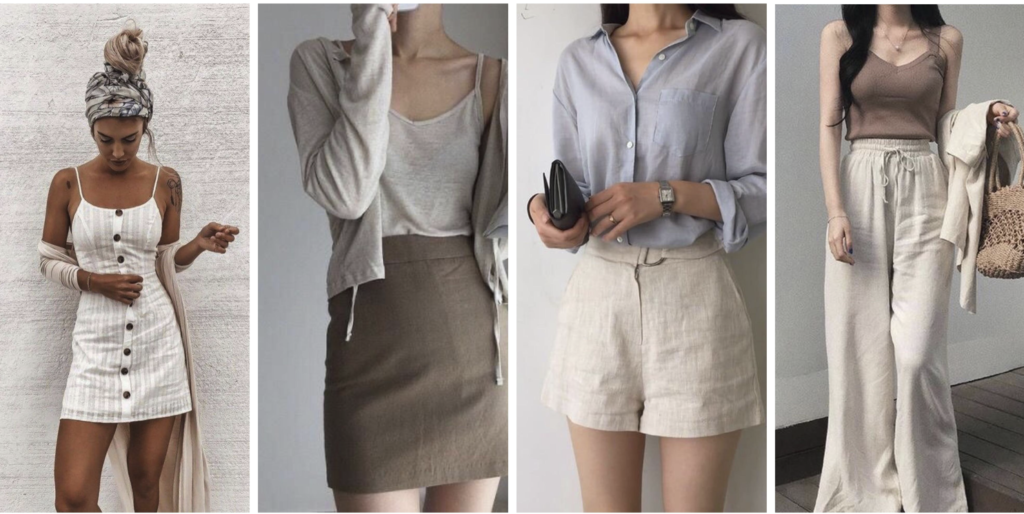
The wardrobe that gets you dressed in under two minutes, even in July.
There is a particular kind of morning that happens to every woman eventually. It is hot already — not pleasantly warm, genuinely hot, the kind that makes you slightly resent the season before 8 a.m. You are standing in front of a wardrobe that is, objectively, full of clothing. And yet somehow you are standing there in your underwear having a small existential crisis, because nothing feels right, nothing goes together properly, and you are running late and sweating already and the last thing you have patience for is a creative styling challenge.
I have had this morning more times than I care to admit. And for years, my solution was to buy more — more options, more variety, more things to potentially feel right on any given day. What I eventually, and somewhat embarrassingly late, understood is that more options do not solve the problem. They make it worse. The problem was never a shortage of clothes. The problem was a shortage of the right clothes, organized around a coherent logic, working together as a system rather than competing for attention as individual pieces.
The summer capsule wardrobe is the solution. Not as a trend, not as a minimalism aesthetic, but as a genuinely practical framework for getting dressed beautifully in a season where heat narrows your choices, your patience, and your tolerance for getting it wrong. When every piece in your wardrobe works with every other piece — when you can reach for literally anything without thinking and have it combine effortlessly with whatever else you pull — getting dressed stops being a challenge and becomes something like pleasure.
This guide is the one I wish I had had years ago. It covers everything: the specific pieces that form the foundation, the fabrics that actually perform in summer heat, the color strategy that makes everything work together, how to shop thoughtfully for gaps rather than impulsively for trends, and how to make eighteen pieces generate more real-life outfit variety than a wardrobe three times that size. Let us get into it.
Why the Capsule Wardrobe Works: The Mathematics and the Psychology
Before we talk about what to buy, I want to spend a moment on why the capsule system is worth understanding properly, because I think a lot of women approach it as an aesthetic choice — the clean, minimal wardrobe as a lifestyle statement — rather than as a functional tool. Both are valid reasons, but the functional case is stronger and more universally applicable.
An 18-piece summer capsule, built around a coherent palette and with intentional versatility, yields over 45 distinct outfit combinations. I know that sounds like marketing mathematics, but it is genuine combinatorics: when five tops each work with four bottoms, that is already twenty bottom-and-top combinations. When you add two dresses, two layers, three shoe options, and accessories, the combinations multiply quickly. The number 45 is actually conservative.
The reason this matters psychologically is what researchers call decision fatigue — the documented phenomenon by which the quality of our decisions degrades as we make more of them. Getting dressed in the morning is a series of micro-decisions, and when those decisions are easy — when any combination of what you own already works — you preserve mental energy for the parts of your day that actually require it. This is not a trivial benefit. The difference between a morning where you get dressed effortlessly and one where you stand there frustrated for fifteen minutes is a real quality-of-life difference, multiplied across every day of summer.
There is also, interestingly, a satisfaction dimension. McKinsey’s research on fashion and consumer behavior found that intentional shoppers — women who buy with a plan, who fill specific wardrobe gaps rather than making impulse purchases — report 40% higher wardrobe satisfaction than impulse buyers. This makes intuitive sense: when you own fewer things that you genuinely love and reach for consistently, your relationship with your wardrobe is characterized by pleasure rather than guilt. The pile of things bought on impulse and never quite worn is one of the most insidious small sources of daily low-grade dissatisfaction. The capsule eliminates that pile.
The Summer 2026 Capsule: Eighteen Pieces, Infinite Possibility
Let me lay out the framework clearly before we go deep on each category, because the overall architecture matters as much as the individual pieces.
The eighteen-piece summer capsule I am recommending for 2026 is organized into six categories: five tops, four bottoms, two dresses, two layers, three footwear options, and two accessories. Every category has been chosen for maximum versatility — each piece works with multiple pieces in other categories, and nothing in the capsule exists for a single, specific occasion.
The palette that makes this system work: warm white and navy as your neutrals, butter yellow and ocean coral as your 2026 accent colors. This four-color palette allows every piece to pair with every other piece. A butter yellow blouse works with white trousers, navy shorts, and a white midi skirt. An ocean coral bag lifts a white dress, a navy outfit, and a butter yellow look equally well. The logic is simple once you see it, and it eliminates the “this only works with that one specific thing” problem that plagues so many wardrobes.
The Five Tops: Building the Heart of the Capsule
The tops are where most women’s wardrobes both start and unravel. Too many tops, collected without a system, that each work with only certain bottoms, in certain situations, with certain moods. The capsule approach to tops is the opposite: five pieces that each carry their weight across multiple combinations and contexts.
Two Neutral Tanks or Tees
The foundation of the entire capsule. In cotton or Tencel — a distinction worth making carefully, because these fabrics behave very differently in summer heat. A Tencel tank has a slightly silky, fluid quality that makes it feel luxurious against skin and look elevated when tucked into a midi skirt or wide-leg trousers. A cotton tank has more casual, everyday energy that is perfect under a linen blazer or knotted at the waist above high-waisted shorts.
Both have a place in the capsule, and both should be in the warmest neutral you can find — not bright white, but the creamy, slightly warm white that photographs beautifully and flatters virtually every skin tone. These tanks are not glamorous pieces. They are the quiet foundation on which everything else rests, and their quality matters enormously. A tank with beautiful fabric and a good fit elevates everything it is paired with; a tank with cheap fabric and a mediocre fit undermines even the nicest trousers.
The specific quality markers to look for: a neckline that sits correctly without gaping or pulling. Fabric with enough weight to drape rather than cling or float. A length that is genuinely versatile — long enough to tuck properly, short enough to wear untucked without looking unfinished. Seams that lie flat. These are not complicated requirements, but they matter.
One Linen Blouse in a Summer Accent Color
This is the piece where the 2026 color direction enters the capsule — and where one thoughtful purchase can immediately update a wardrobe full of neutrals. The linen blouse in butter yellow, ocean coral, or lavender haze is the single color investment that makes the entire capsule feel current and intentional rather than simply classic.
The cut should be slightly relaxed — not oversized to the point of drowning, but with enough ease that it moves when you move and sits comfortably in summer heat without clinging. A camp collar or simple button-down front. Sleeves that are either absent or easily rolled. A length that tucks nicely into trousers or skirts without requiring excessive fabric management.
This blouse with white wide-leg trousers is a complete outfit that requires nothing else. This blouse over white shorts is a beach-town morning look. This blouse tucked into a navy midi skirt is an elevated lunch outfit. One piece, multiple contexts, all working with existing neutrals. This is the capsule philosophy in microcosm.
One Camp-Collar Shirt
I want to make a case for the camp-collar shirt as a genuine summer capsule essential, because it is a piece that gets underestimated in women’s wardrobes despite being one of the most consistently useful silhouettes for summer. The open collar eliminates the neck-coverage problem that makes regular collared shirts feel uncomfortable in heat. The relaxed fit allows air circulation. The slightly retro quality that defines the camp collar gives any outfit an effortless, considered quality that feels very much in the aesthetic spirit of summer 2026.
In white or a subtle print — a small botanical, a fine stripe, a simple geometric — the camp-collar shirt works as a layer over swimwear, as a standalone top with wide-leg trousers, as a loose open shirt over a fitted tank, as a tucked blouse with tailored shorts. It is the most versatile single top in the capsule.
One Fitted Ribbed Knit
The counterpoint to all the flowing and relaxed pieces in the capsule. A fitted ribbed knit top — in white, cream, or a soft neutral — provides the structure and closeness that some combinations require. It tucks cleanly into midi skirts. It creates a deliberate contrast with wide-leg, fluid trousers. It holds its shape through a long day in a way that woven tops and blouses sometimes do not.
In cotton or a cotton-modal blend, a ribbed knit is genuinely comfortable in summer — the texture of the rib creates micro-ventilation, and the natural fiber content prevents the heat-trapping that synthetic knits produce. This is the top you reach for when you want an outfit to look pulled-together and slightly more polished without reaching for anything truly formal.
The Four Bottoms: Proportion, Versatility, and the Right Fabrics
Bottoms are where fabric choices have the most direct impact on daily comfort, and where the 2026 direction toward natural fibers is most practically important. A beautiful pair of trousers in the wrong fabric becomes genuinely uncomfortable by midday in summer heat; the same silhouette in good linen or cotton is a pleasure to wear all day.
Wide-Leg Linen Trousers
The most important single garment in the summer 2026 capsule, and the piece I would invest the most budget in. Wide-leg linen trousers in warm white are the anchor of the entire system — they pair with all five tops, they transition from casual to professional with only a change of top and shoe, and they look genuinely beautiful in motion in a way that makes getting dressed feel like an aesthetic pleasure rather than a practical necessity.
The fit details that matter: a high waist that creates genuine proportion against the generous leg width. A waistband that lies flat without pulling or gaping. A leg width that is generous but not overwhelming — wide enough to move with real fluidity, narrow enough to maintain a clean silhouette. A length that works with both flat sandals and low heels without requiring hemming for different shoe heights.
The fabric quality is non-negotiable here. Good linen has a weight and texture that drapes beautifully; cheap linen feels thin, wrinkles unpleasantly, and loses its shape quickly. This is the piece worth spending more on, whether that means buying from a quality mid-range brand, a considered luxury house, or a vintage or secondhand source.
Tailored Cotton Shorts
The casual counterpart to the linen trousers, and a crucial piece for genuinely hot days when even wide-leg linen feels like more coverage than the weather warrants. Tailored cotton shorts — the kind with a proper waistband, a clean hem, and a cut that is neither gym-casual nor beach-casual but sits in the elegant-relaxed middle ground — are a gap in many women’s wardrobes and one worth filling deliberately.
In warm white or a very pale neutral, these shorts work with every top in the capsule. In navy, they provide the darker neutral that the color palette needs and create a slightly more nautical, classic summer reference. I would suggest one pair in each if budget allows; if choosing only one, warm white is more versatile.
Organic cotton is the fabric recommendation here — softer hand-feel than linen, slightly less breathable but well-suited to the structure that good tailored shorts require. The woven cotton holds the cut correctly in a way that linen sometimes cannot, and the softness against the skin matters when shorts are worn in maximum heat.
Well-Fitted Chinos
The professional-leaning bottom in the capsule and the one that most reliably bridges the gap between summer casual and summer work. A well-fitted pair of chinos in a warm neutral — stone, ecru, or a warm sand — works with every top in the capsule and reads as polished enough for most professional environments while remaining casual enough for weekends.
The fit on chinos is everything. A chino that fits correctly — sitting at the natural waist or just below, with a straight or very slightly tapered leg, hemmed at exactly the right length for your height — looks like a deliberate, elegant choice. A chino that fits poorly, regardless of its color or quality, looks like something you are wearing because nothing else was clean. Take these to a tailor if necessary; the cost of a simple hem alteration is minimal and the visual improvement is significant.
A Midi Skirt
The most versatile bottom in the capsule in terms of occasion range, and the piece that most clearly signals the aesthetic direction of summer 2026. A midi skirt in a fluid fabric — silk crepe, Tencel, a soft cotton voile — in navy, warm white, or a soft accent color like lavender haze works across the widest range of contexts of any piece in the wardrobe.
The midi length hits somewhere between the knee and ankle in the most flattering zone for most silhouettes, creates beautiful movement when walking, and transitions from daytime to evening more smoothly than almost any other garment. Paired with a fitted ribbed knit and flat sandals, it is a polished casual outfit. With a tucked silk camisole and low-heeled mules, it becomes a dinner-appropriate look. With a camp-collar shirt and white sneakers, it reads effortlessly weekend.
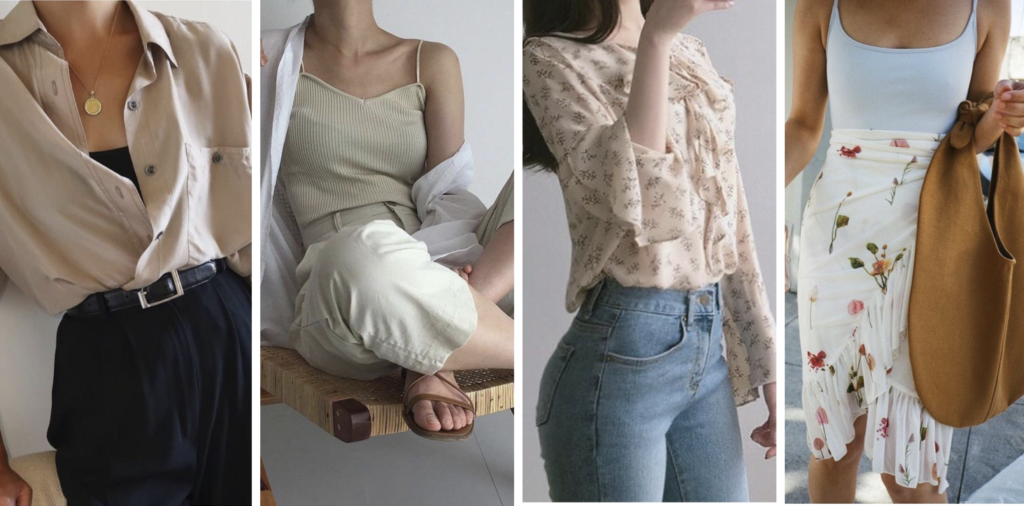
The Two Dresses: Day and Evening, Covered
The capsule approach to dresses is strategic rather than comprehensive: two pieces that between them cover the full range of summer occasions without requiring an extensive dress collection.
A Cotton Midi Dress for Day
The daytime dress in the capsule should be the most reliable, most-reached-for piece in the entire wardrobe — the thing you put on when you want to look considered without thinking too hard. In cotton or a cotton-linen blend, in warm white, butter yellow, or a soft print on a pale ground, this dress should have a silhouette that is slightly relaxed without being shapeless: a square or simple v-neckline, either sleeveless or with minimal short sleeves, a skirt that falls to a midi length with enough fullness to move.
This is the dress that goes to farmers markets and casual lunches and weekday appointments and weekend mornings. It washes and wears beautifully. It looks right with flat sandals, with white sneakers, with simple mules. It requires no styling decisions more complex than choosing a bag and shoes. It is the most democratic, most useful piece in the capsule.
A Slip Dress for Evening
The evening counterpart is the bias-cut slip dress in silk or a quality Tencel silk — in warm white, champagne, dusty rose, or pale gold. This is the dress that transforms a casual daytime wardrobe into an evening-ready one: pulled on over nothing but good undergarments, with strappy sandals and a simple piece of jewelry, it creates an effortlessly elegant look that requires perhaps three minutes to assemble.
The slip dress is also the piece in the capsule where fabric quality has the most visible impact. A slip dress in good silk or quality Tencel moves and catches light in a way that looks genuinely expensive; in a cheaper polyester satin, it loses that quality entirely and can read as underwear rather than outerwear. This is the one place in the capsule where I would consistently advocate spending more if budget allows, or taking the time to find a vintage alternative in genuine silk.
The Two Layers: The Overlooked Problem-Solvers
Layers in summer serve a specific purpose that is unglamorous but practically essential: they solve the air conditioning problem. The disparity between outdoor summer temperatures and aggressively air-conditioned offices, restaurants, and transit systems means that a summer wardrobe without layers is a wardrobe that leaves you cold half the time and overdressed the other half.
A Light Linen Blazer
The single most transformative piece in the capsule for professional and elevated casual contexts. A linen blazer in warm white or a pale neutral is essentially a jacket that weighs almost nothing, breathes as well as a garment can, and elevates whatever it is worn over by approximately three levels of perceived formality and polish.
Worn over a tank and wide-leg trousers, it creates a summer office outfit that looks genuinely considered. Worn over a slip dress, it adds the layer and coverage that makes a dressed-up evening look feel complete. Worn loosely over shorts and a simple top, it transforms a genuinely casual combination into something that reads as intentional and slightly fashion-forward. It is the most versatile single layer in the summer wardrobe, and the summer 2026 aesthetic — with its emphasis on quiet luxury and natural fibers — was essentially designed around it.
A Cotton Cardigan for Air Conditioning
The less glamorous but equally important counterpart to the linen blazer. A fine-gauge cotton cardigan in warm white or cream is the layer you reach for when the situation requires something softer than a blazer — when you are at your desk for hours and need actual warmth, or when the evening has turned cooler than expected, or when you want the visual softness of a drape over a sleeveless dress rather than the structure of a jacket.
Choose cotton rather than wool or acrylic: cotton breathes, washes easily, and does not feel heavy against summer clothing. A fine-gauge knit rather than a thick one. A length that works both as a layering piece worn open and as a functional cardigan worn buttoned or with the first few buttons closed.
The Three Footwear Options: The Pieces That Actually Change Outfits
I believe, firmly and based on considerable experience, that shoes change outfits more dramatically than almost any other variable. The same combination of trousers and top worn with flat leather sandals, white sneakers, and loafers reads as three different outfits — three different moods, three different contexts, three different versions of the woman wearing them. This is why three carefully chosen shoe options in the summer capsule generate significantly more outfit variety than the piece-count suggests.
Leather Sandals
The most summer-specific and most elegant footwear option in the capsule. Leather sandals — flat or with a small block heel, in tan, cognac, or warm white — are the shoes that elevate every outfit in the direction of effortless sophistication. They say I am put-together and I know what I am doing with a minimum of effort.
The quality of the leather matters enormously here, both for aesthetics and practicality. Good leather sandals mold gently to the foot with wear, improve in appearance with a little use, and last for years with minimal care. Cheap synthetic sandals look increasingly tired as the season progresses. This is another place in the capsule where the investment in quality pays genuine dividends over time.
A tan or cognac leather works with the warm neutrals and accent colors of the 2026 palette beautifully — it grounds white and cream outfits, complements butter yellow and coral without competing with them, and adds warmth to the cooler lavender and seafoam pieces. A warm white sandal is a beautiful alternative for a more tonal, clean aesthetic.
White Sneakers
Non-negotiable for the genuinely casual days and the days when you will be walking significantly. The white sneaker is the piece that bridges the gap between the capsule’s more elevated pieces and real-life morning errands and afternoon outings. Worn with the midi skirt and a simple tucked top, white sneakers create one of the most aesthetically successful outfit combinations in the entire summer style vocabulary — the mix of femininity and casual ease that has been a defining visual of modern women’s dressing for several seasons.
Keep them clean. This sounds obvious but the condition of white sneakers communicates significant information about your attention to detail — clean sneakers elevate an outfit, dirty ones undermine it.
Loafers
The professional-leaning shoe that transitions the capsule most seamlessly into office and more formal contexts. A leather or suede loafer in tan, cognac, or warm white works with the chinos and midi skirt particularly beautifully, and creates the slightly more polished, put-together quality that some professional environments require. In the 2026 aesthetic, loafers also carry a quiet luxury signal — they are the shoe of choice in that particular visual vocabulary of understated elegance — that resonates with the overall direction of the capsule.
A flat or very slightly heeled loafer. Leather or suede rather than synthetic. A classic silhouette without dramatic details. These are the parameters, and within them there is enormous range of price and aesthetic to suit different budgets and personal preferences.
The Two Accessories: The Finishing Touches That Do Heavy Lifting
The capsule’s two accessory slots are not about decoration — they are about completion. A well-chosen bag and one meaningful statement piece transform a good outfit into a complete, fully realized one.
A Structured Bag
The bag that does the work of signaling intentionality and polish regardless of what it is paired with. In the 2026 capsule context, the structured bag should be in warm white, tan, cognac, or cream leather — a neutral that complements the entire palette without competing with any piece in it.
The term “structured” is important: a bag with some internal architecture, that holds its shape when carried, that reads as considered rather than utilitarian. This could be a small tote, a shoulder bag with a clean silhouette, a slightly larger bucket bag with a good base. What matters is that it looks like it was chosen rather than grabbed, and that it is in good condition.
One Statement Piece
The final slot in the capsule is the one that makes it yours — the single accessory that expresses personal taste and transforms the capsule from a collection of beautiful but somewhat neutral pieces into a wardrobe with genuine personality. This might be a wide-brimmed straw hat that you are known for wearing. A vintage silk scarf in a pattern you love. A pair of earrings with real presence — sculptural gold, interesting natural stone, a design that asks to be noticed. A beautiful belt in an interesting color or texture.
The statement piece is the place in the capsule where individuality lives. Everything else is, by design, somewhat universal — versatile, cohesive, broadly flattering. The statement piece is where you communicate something specific about who you are. Choose it with genuine care and genuine love rather than trend compliance. This is the piece that, in ten years, you will still reach for.
The Color Strategy: Why Restraint Is the Most Powerful Choice
I want to come back to the color palette, because I think it is the single most important decision in building a summer capsule that actually works as a system rather than a collection of individual pieces.
The framework I am recommending — warm white and navy as neutrals, butter yellow and ocean coral as 2026 accent colors — is not the only valid approach, but it is the one with the widest versatility and the clearest internal logic for 2026. Let me explain why it works and how to apply it.
Warm white and navy are the most naturally complementary neutral pairing in the summer vocabulary. White reads as warm and summery; navy provides depth and contrast without the heaviness of black in summer heat. Together, they create a base that is simultaneously casual enough for weekend dressing and polished enough for professional contexts.
Butter yellow is the 2026 accent color with the most universal flattery and the easiest integration into existing neutral wardrobes. A single butter yellow linen blouse, paired with white trousers you already own and navy shorts you already own, immediately creates two distinctly summer 2026 outfits without requiring anything additional. The yellow reads as intentional and current; the neutrals it is paired with require no new purchases.
Ocean coral as the secondary accent works specifically as a warm counterpoint to the coolness of white and navy. As a top, it creates warmth and vibrancy. As an accessory — bag, sandal, silk scarf — it lifts any neutral combination into something that looks genuinely considered and beautiful. The coral-navy pairing in particular has a classic summer quality that works across aesthetic references, from nautical to bohemian to clean minimalism.
The restraint principle — one intentional accent, not a full palette swap — is what makes the capsule work over a full season. When you build multiple new outfit combinations around a single new color rather than buying multiple new pieces in multiple new colors, your wardrobe gains coherence rather than complexity. The butter yellow blouse you bought in June still feels right in August because it works with the same neutrals it worked with on day one.
How to Shop the Gaps: The Intentional Approach That Changes Everything
Here is where the capsule wardrobe concept becomes practically actionable rather than theoretically appealing. Most women who want to build a summer capsule do not need to buy eighteen new pieces — they already own many of the pieces the capsule requires, or close approximations. The skill is in assessment: identifying which pieces genuinely serve the capsule’s requirements and which pieces are gaps that need filling.
I would suggest doing this audit before making any new purchases, because it is almost always more revealing than expected. Most women’s summer wardrobes, when assessed against a capsule framework, reveal a pattern: an abundance of tops collected over several seasons, a shortage of bottoms that work with all of them, perhaps one or two excellent statement pieces and a shortage of the simple neutral workhorses that make everything else cohere.
The AI outfit planner available at Klodsy can map your existing wardrobe and identify exactly which capsule pieces you already own versus which gaps need filling — which means you might discover you only need three or four targeted purchases rather than a full seasonal overhaul. That targeted, intentional shopping approach is both more financially sensible and, according to the McKinsey research, demonstrably more satisfying over time.
When you do shop for gaps, the questions worth asking for each potential purchase: Does this work with at least three things I already own? Is it in the capsule palette? Is the fabric something I will actually want to wear in summer heat? Am I buying this because I genuinely love it and need it, or because it photographed beautifully in a brand’s campaign? These questions sound simple but they are remarkably effective at filtering out the impulse purchases that eventually become the wardrobe pile you never reach for.
Fabric Decisions, Revisited: The Practical Guide to Touching Before You Buy
We have talked about fabrics throughout this guide, but I want to consolidate the practical wisdom here because it is the single most important skill in building a capsule wardrobe that actually performs in summer.
The hierarchy is clear: linen at the top, followed by organic cotton and Tencel, followed by cotton-linen blends and other natural-fiber combinations. Polyester, nylon, and most synthetic blends at the bottom — not just aesthetically but physically, in terms of their thermal performance on genuinely hot days.
Linen is the gold standard. The performance data is unambiguous: it conducts heat away from the body five times faster than cotton and absorbs up to 20% of its weight in moisture before you feel damp. The wrinkles are a feature, not a flaw — they are the visual evidence of a fabric doing exactly what it should, responding to the warmth and movement of a body rather than remaining rigidly synthetic.
Organic cotton has a softer hand-feel than linen and is more versatile in structured garments where linen’s natural drape would compromise the cut. Jersey cotton works beautifully for casual, body-close pieces. Woven cotton holds structure through a professional day in a way that is appropriate for work contexts.
Tencel, made from sustainably sourced wood pulp, combines silk-like smoothness with genuine moisture-wicking performance and a sustainable production process. It is underutilized in most women’s wardrobes and worth seeking out specifically for pieces that will sit close to the body — camisoles, fitted tanks, slip dresses where the texture against skin matters most.
The in-store test that I trust more than any fabric content label: hold the piece against the inside of your wrist. Natural fibers feel cool, slightly textured, with a quality of breathing even in your hand. Synthetic fabrics tend to feel neutral-to-warm and have a smoothness that is actually the absence of the breathability you need. If a piece does not feel cool to the touch when you hold it in a temperature-controlled shop, imagine it on your body in 35-degree summer heat. Trust your hands before you trust the label. This is the single most useful shopping heuristic for summer dressing.
The Capsule in Practice: What Getting Dressed Actually Looks Like
I want to bring this out of the abstract and into the specific, because the capsule wardrobe’s most powerful selling point is how it actually feels to use it on ordinary days.
Monday morning: wide-leg white linen trousers, fitted ribbed knit tucked in, loafers, structured bag. Complete professional look assembled in under three minutes with zero decision-making.
Tuesday, working from home: cotton shorts in white, camp-collar shirt worn open over a simple tank. Simple, comfortable, looks pulled-together for video calls while being genuinely easy to wear all day.
Wednesday, lunch out: midi skirt in navy, tucked butter yellow linen blouse, leather sandals, straw hat as the statement piece. The color pairing does all the work; the outfit looks deliberately styled.
Thursday, after-work dinner: slip dress in champagne, simple strappy sandals, one piece of jewelry. Changed from the daytime outfit in perhaps four minutes. Nothing required except removing the day’s blazer and swapping shoes.
Friday, casual day: white midi dress, white sneakers, the coral crossbody bag as the day’s accent color. The ocean coral against the all-white is the only styling decision; everything else is a default.
Saturday morning errands: linen shorts, camp-collar shirt open over a tank, flat leather sandals, hair in a low bun. The uniform of a woman who has her life together and does not need to perform it.
Sunday, a day that calls for more: chinos in sand, the fitted ribbed knit, leather loafers, linen blazer for the morning cool. Polished enough for brunch with someone you want to impress, comfortable enough to wear for an entire day.
Forty-five combinations on paper. In practice, it is a rotating series of mornings where getting dressed is a small pleasure rather than a large frustration. That is the whole point.
The Summer Capsule as a Philosophy, Not Just a Wardrobe
I want to close by saying something about what the capsule wardrobe represents beyond its practical function, because I think it connects to a broader shift in how the most stylish women I know are thinking about their relationship with fashion.
The move toward capsule thinking — toward buying intentionally, wearing consistently, and building a wardrobe with coherence and longevity rather than constant newness — is part of the same cultural shift that is driving the quiet luxury aesthetic, the preference for natural fibers, and the fatigue with micro-trends. It is a recalibration of what fashion is actually for.
Fashion at its best is a form of self-expression — a way of communicating something true about who you are to the world and to yourself. A capsule wardrobe does not constrain that expression; it focuses it. When everything you own is genuinely loved, genuinely worn, and genuinely representative of your taste, the expression is cleaner and more powerful than when it is diluted by trend purchases bought impulsively and worn regretfully.
The summer of 2026 is a genuinely beautiful moment to build a summer capsule. The palette is cohesive and flattering. The fabric conversation has matured to the point where quality natural fiber options exist at multiple price points. The aesthetic direction rewards exactly the kind of thoughtful, intentional dressing that the capsule framework enables.
Eighteen pieces. Forty-five combinations. Two minutes to get dressed on the hottest morning of the year. And a wardrobe that feels like yours — entirely, intentionally, beautifully yours.
That is worth the effort of building it.