
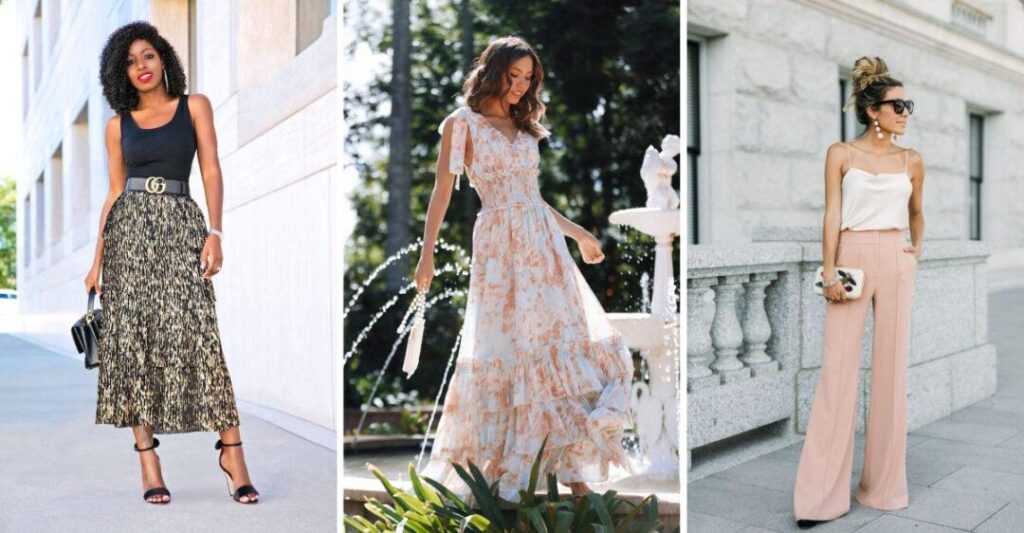
By a woman who has learned most of this the hard way.
There is a very specific kind of disappointment that happens in summer. You get dressed, you feel good, you step outside — and within twenty minutes, you are sweating through a fabric that has no business being worn in July, your accessories feel like they’re physically weighing you down, and the outfit that looked so effortlessly chic in your apartment mirror now feels stiff, uncomfortable, and somehow wrong.
We’ve all been there. And the maddening thing is that summer dressing is supposed to be the easy season. Less layering, fewer decisions, simpler silhouettes. But somehow, the warm months consistently produce the most wardrobe regret.
I’ve been thinking about this a lot lately — partly because it’s that time of year again when I start pulling things out of storage and questioning every single purchase I made in March, and partly because the way we dress in summer has genuinely shifted in 2026. The aesthetics that dominated a few years ago — maximalist resort, bright colour-blocking, fast fashion florals — have given way to something quieter, more intentional, more considered. Quiet luxury isn’t going anywhere. Neither is the clean girl aesthetic. But they’ve matured into something more personal and less performative, and that shift changes how we need to think about what we’re actually putting on our bodies when the temperature climbs.
So let’s talk about what’s not working. And more importantly — what is.
The Dark Colour Default (And Why It’s Working Against You)
I want to start here because this is the mistake I see most often, even on women with otherwise excellent taste.
There is something about dark colours that feels safe. Black especially — it’s slimming, it’s versatile, it photographs beautifully, it travels well. And so every summer, the instinct is to reach for it even as the temperature climbs past thirty degrees. A black linen midi. A black fitted tank. A black sundress that you’ve worn so many times it barely registers as a choice.
Here’s the thing: black absorbs heat. Not in a metaphorical, vague sense — in a very literal, measurable way. Light-coloured garments reflect significantly more solar radiation than dark ones, keeping the wearer noticeably cooler in direct sunlight. This isn’t new information, but it’s information that somehow never quite overrides the psychological comfort of reaching for dark fabric.
The 2026 summer palette, if you look at what’s actually trending and what’s actually being worn by women who look effortlessly put-together in thirty-degree heat, is built on a foundation of light. Not blinding whites — though a good crisp white will never not be elegant — but the softer, warmer end of the light spectrum. Butter cream. Warm oat. Sandy stone. Shell pink. Soft sage.
These are colours that do something interesting in summer light: they glow. They pick up warmth from the sun without looking harsh. They photograph beautifully without requiring a filter. And they keep you significantly cooler than their dark counterparts.
The shift also connects to a broader aesthetic movement that’s been building for a couple of years now. The quiet luxury look — that particular brand of understated elegance associated with cashmere in neutral tones, minimal jewellery, quality fabrics that hang just so — has filtered down from its Hamptons-and-Capri origins into everyday summer dressing. Light colours are central to this. You cannot do quiet luxury in a black polyester sundress. The aesthetic requires a different kind of palette.
Practically speaking: if you have an emotional attachment to dark summer pieces, I’m not telling you to abandon them entirely. A navy linen blazer for evening. A deep olive wide-leg trouser for a cooler day. But for daytime, for direct sun, for the peak heat hours between noon and four — shift toward light. Your body will thank you, and your outfit will read as more intentional.
The one colour strategy that works for everyone right now: Pick one trending accent shade and pair it with neutrals you already own. A butter yellow linen blouse with existing navy trousers reads as summer 2026 without requiring a wardrobe overhaul. Ocean coral as a bag or sandal lifts an all-white outfit into something genuinely interesting. Lavender haze in a midi skirt pairs beautifully with white or grey. The principle is restraint — one intentional colour, not a full palette swap.
The Fabric Trap: Why What You’re Wearing Matters More Than How It Looks
If I could change one thing about how most women approach summer shopping, it would be this: stop looking at clothes and start touching them.
We are very trained to evaluate clothing visually. Does the silhouette work? Is the colour right? Does the print feel fresh or dated? These are all valid questions. But in summer, the most important quality of a garment is almost entirely tactile — and it’s the one thing a photo on a website or a carefully styled editorial shoot cannot tell you.
How does the fabric feel against your skin when it’s warm?
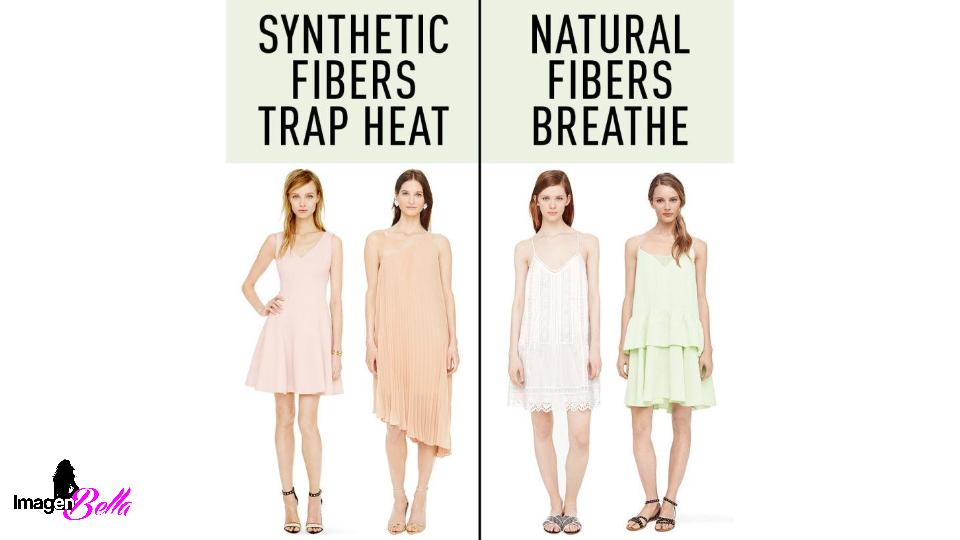
Here is the uncomfortable truth about synthetic fabrics in summer heat: polyester and nylon trap moisture and heat against skin. On a thirty-two degree Celsius day, a polyester garment can feel three to five degrees warmer than an equivalent piece in linen or cotton. That is not a small difference. That is the difference between feeling comfortable and feeling like you are slowly cooking from the inside.
The fast fashion industry has become extraordinarily good at making polyester look like natural fabric. The drape, the texture, even the hand feel in an air-conditioned shop — it’s been engineered to mimic linen, to approximate cotton, to suggest silk. But step outside into actual summer heat, and the illusion collapses. Synthetic fabric doesn’t breathe. It holds heat. It holds odour. It becomes uncomfortable within hours in a way that no amount of beautiful silhouette can compensate for.
So what actually works?
Linen is the gold standard for high summer. It’s more breathable than almost any other widely available fabric — the open weave structure allows air circulation that regulates body temperature in a way that synthetic fabrics simply cannot replicate. Yes, it wrinkles. Yes, the wrinkles are part of the charm. A slightly rumpled linen dress in warm cream, worn with minimal jewellery and good sandals, is one of the most genuinely elegant summer looks available to us right now, and it has the additional advantage of keeping you comfortable in thirty-five degree heat.
Organic cotton is softer than linen, slightly less breathable but more versatile in structured garments. Jersey cotton works beautifully for casual pieces; woven cotton holds up well in professional settings. If you’re looking for a fabric that bridges the gap between comfort and polish, a good cotton is often the answer.
Tencel (lyocell) is the sleeper pick for summer 2026. It’s moisture-wicking, has a silky texture that photographs as well as silk but at a fraction of the price, and the production process is significantly more sustainable than conventional fabrics. It’s particularly excellent for pieces that sit close to the body — a slip dress, a fitted tank, a tailored shorts suit.
Here is a simple test I do in every shop: pick the piece up and hold it for a moment. If it feels cool to the touch, it will probably feel good in the heat. If it feels neutral or slightly warm even in an air-conditioned environment, it will feel significantly worse outside in July. Trust your hands before you trust the label.
The investment principle here is straightforward: a simple linen shirt in warm white will outperform a designer polyester blouse on any day above twenty-eight degrees. The quality of your experience in clothing is determined first by what it’s made of. Everything else is secondary.
Dressing for Two Different Worlds: The Indoor-Outdoor Temperature Problem
This is the summer dressing challenge that nobody talks about enough, possibly because it sounds so mundane. But it is genuinely responsible for a significant portion of summer wardrobe frustration.
Modern summer life involves moving constantly between two radically different temperature environments. Outside, it might be thirty-two degrees, humid, full sun. Inside any restaurant, office, cinema, or shopping centre worth its lease, the air conditioning is running at a temperature that was calibrated for a body that has been sedentary indoors all day — not for a body that just walked six blocks from the tube in direct sunlight.
The gap between these two environments can easily be ten to fifteen degrees. Which means that the outfit perfectly calibrated for outdoor summer comfort — sleeveless, light fabric, minimal layers — can feel genuinely cold in an air-conditioned interior within five minutes of sitting down.
The traditional response to this problem is to carry a jacket. But a jacket is a heavy solution to a light problem, and in summer, the weight and bulk of carrying or wearing a jacket defeats the purpose of dressing lightly. It also usually looks wrong — a denim jacket over a silk slip dress has never been the elegant solution we tell ourselves it is.
The actual answer is simpler, and once you adopt it, you won’t think about it anymore: a lightweight cardigan or a large lightweight scarf that lives in your bag.
Not a thick cardigan. Not a structured blazer. A fine-gauge knit in a neutral tone — natural cotton, linen-mix, or a cashmere blend if you’re feeling luxurious — that weighs almost nothing, folds down to almost nothing, and can be draped over your shoulders or loosely knotted the moment you step into air conditioning.
The scarf version of this is equally effective and, depending on your personal aesthetic, potentially more elegant. A lightweight linen scarf in a soft neutral, loosely wrapped or draped when indoors, carried in your bag when outdoors, solves the problem beautifully while adding exactly the kind of considered, effortless layering that photographs well and signals a level of intentionality about your dressing that most people will notice without being able to articulate why.
This one small habit — a lightweight layer that lives in your bag — eliminates what I think of as the restaurant-shiver problem: that distinctly uncomfortable situation where an otherwise excellent evening is slightly marred by sitting in an air-conditioned dining room in a sleeveless top, arms crossed, trying not to look cold. It sounds minor. It isn’t. Physical discomfort bleeds into everything. Being warm is the foundational condition for feeling good in what you’re wearing.
The Accessory Overload: Why Less Genuinely Means More in Summer Heat
There is a particular aesthetic pressure in summer — I think it comes partly from social media, partly from holiday mindset, partly from the general loosening of sartorial rules that warm weather permits — to accessorise more than usual. Stacked rings. Layered necklaces. A printed scarf. Oversized earrings. A woven bag. Multiple bangles.
Each individual piece might be lovely. Together, in thirty-degree heat, they create something that reads as effortful rather than effortless, and which will make you physically uncomfortable within the hour.
Accessories add weight. They add warmth. Anything wrapped around your neck or wrists increases heat retention in those areas. Heavy bags create physical fatigue that compounds with heat fatigue. And visually, in summer’s harsh direct light, multiple competing accessories lose the impact they might have in softer seasons. Texture and detail that reads beautifully in autumn light becomes noise in July sun.
The 2026 aesthetic sensibility has been moving toward curation here in a way that feels genuinely right. The clean girl aesthetic, at its best, is not minimalist for minimalism’s sake — it’s about identifying the one or two pieces that actually earn their place, and letting them breathe. A single pair of perfectly chosen earrings. One quality watch. A single bracelet in a material that catches light.
There is a reason why the most effortlessly stylish women you’ll see this summer will almost certainly be wearing fewer accessories than the most heavily styled ones, not more. The edit is the skill. One piece that you genuinely love, worn with confidence and care, creates more visual impact than five pieces competing for attention.
Practically: before you leave the house in summer, do one pass of editing. Remove one thing. Then see how it looks. Usually it looks better. The remaining pieces have room to register.
This applies to bags as well. The large structured tote that works beautifully in cooler weather becomes a physical burden in summer heat. A smaller bag — a minimal shoulder bag, a good quality clutch, a compact crossbody in leather or woven straw — keeps you lighter and signals the same kind of curation. The bag you carry in summer says something about your relationship with comfort and your willingness to edit.
The Impulse Shopping Spiral (And Why Your Wardrobe Already Has What You Need)
Every spring, the same thing happens. The temperature starts to climb, the shops fill with new pieces in prints and colours that feel suddenly essential, and a significant proportion of the female population spends a Saturday buying summer clothes they neither need nor will wear with any frequency.
I say this as someone who has done it so many times that I have started to feel a kind of dark nostalgia for the specific experience: the optimistic shop, the confident purchase, the receipt-is-already-forgotten-by-the-time-I-get-home, and then three weeks later, the discovery that I already owned six variations of what I just bought, none of which I have worn, all of which are now vying for drawer space with the new purchase.
The ThredUp 2025 Resale Report found something that probably doesn’t surprise you but is still worth sitting with: most people already own viable summer pieces buried in their wardrobe. The problem is not a shortage of summer clothing. The problem is that we haven’t done the work of knowing what we have, and so every spring feels like starting from zero.
The only way to break this cycle — and I say this as someone who resisted it for longer than I should have — is to do the audit before you shop.
Pull everything out. Actually try it on. Not in the flattering light of a dressing room with a glass of wine, but in real daylight, with the shoes you’ll actually wear it with. Create three piles: yes, no, and not sure. The yes pile goes back into the wardrobe, organised in a way that makes the pieces visible and accessible. The no pile leaves your house. The not-sure pile gets a second look after you’ve slept on it.
What you’ll almost always find is that you already have several strong summer pieces. You might have one or two actual gaps — you need a new white linen shirt because yours has yellowed past redemption; you need a pair of good flat sandals because yours gave up last summer. These specific, identified gaps are what you shop for. Two or three strategic additions that you can actually name and justify will outperform twenty impulse purchases every single time.
The quiet luxury aesthetic that continues to shape 2026 fashion is built on this principle of restraint and quality. A capsule that actually works for your life, in fabrics that feel good and colours that suit you, with enough versatility that each piece earns its space — this is more genuinely luxurious than a wardrobe full of pieces you can’t pair with anything else.
The Oversized Everything Trap: Why Proportion Still Matters When It’s Hot
Summer invites a certain looseness in dressing. The heat naturally pushes us toward less fitted, more voluminous, more comfortable silhouettes. This makes complete sense, and I am not arguing for a return to structured, fitted summer dressing as an aesthetic ideal — I genuinely believe comfort is non-negotiable, and anything that makes you feel physically restricted in summer heat is not worth wearing.
But there is a difference between comfortable and shapeless, and it is a difference that proportion maintains.
The specific mistake I see most often in summer is the all-over-volume look: an oversized linen shirt paired with wide-leg trousers, or a floaty floral dress worn with flat sandals and no belt, or an oversized knit over full wide shorts. Each piece individually might be beautiful. Together, the effect can be unintentionally formless — not relaxed and effortless, which is the goal, but just undone.
Proportion in clothing is essentially about contrast. When one part of an outfit is loose and voluminous, the eye naturally looks for a counterpoint. One loose piece works because it sits in contrast to the body itself, or to a more fitted piece elsewhere in the outfit. When everything is loose, there is no contrast, and the outfit loses the sense of being considered.
The 2026 approach to this — and you can see it everywhere from street style photography to the way it’s being interpreted on social media — is the conscious one-loose-one-fitted rule. An oversized linen shirt works beautifully with tailored shorts. A fitted cotton tank works perfectly with wide-leg linen trousers. A voluminous midi skirt with a simple tucked-in top. The contrast between the two creates shape and intentionality without requiring anything tight or uncomfortable.
There is also the question of what the looseness is doing for you specifically. The clean girl aesthetic, at its summer best, is not about hiding your body or drowning yourself in fabric. It’s about wearing fabrics that move well and feel good, in silhouettes that have been considered rather than simply grabbed. An oversized linen shirt that’s been half-tucked, sleeves rolled, paired with slim trousers and minimal sandals, is not the same aesthetic as the same shirt left entirely untucked, worn with wide trousers, over trainers. Both might technically qualify as “oversized,” but one has been thought about.
Small adjustments — a half-tuck, a belt worn loosely at the waist, a sleeve rolled to the forearm — take two seconds and transform a formless outfit into a considered one. These are not complicated styling tricks. They are just the result of looking in the mirror before you leave and asking: does this look like I chose it, or does it look like I just put on whatever was at the front of the wardrobe?
The 2026 Summer Aesthetic: What Effortless Actually Looks Like Right Now
I want to spend some time here on what the aesthetic moment actually is, because I think the context matters. The mistakes we make in summer dressing don’t happen in a vacuum — they happen against a backdrop of what we’re seeing online, what’s being shown in editorials, what the dominant visual language of summer 2026 is telling us to want.
The Pinterest-inspired aesthetic that’s been building for the past couple of years has arrived somewhere genuinely interesting. It’s taken the precision of quiet luxury, the practicality of the clean girl aesthetic, and merged them with a kind of warm, European ease that feels less rigidly curated than it did in its earlier iterations. Think: a really excellent linen dress in a warm neutral, worn with flat leather sandals, a minimal gold ring, sunglasses with a good frame, hair pushed back. That’s it. That’s the whole look. And on the right woman, in the right light, it is absolutely devastating in the best possible way.
The key word here is quality. The quiet luxury aesthetic depends entirely on the quality of each individual piece. Not the price tag — quality and price are related but not identical — but the quality as experienced. The weight of the fabric. The way it moves. The way it holds its shape after washing. The way it photographs. These are the qualities that, when present, make a simple outfit look expensive and intentional without requiring anything loud or logo-heavy.
This aesthetic also has an interesting relationship with colour. It’s not colourless — the assumption that quiet luxury means all-beige-everything has been gently dismantled over the past year. But the colours are chosen rather than accumulated. A single piece in this season’s soft terracotta. A pair of sandals in ocean coral that picks up and amplifies an otherwise neutral outfit. A lavender haze midi that works with everything white or grey in your wardrobe. The palette is warm and considered, not chaotic.
Social media has been interesting on this front. The aesthetics that are actually performing well on Pinterest and the more considered corners of Instagram and TikTok in 2026 are not the maximalist, heavily edited, hyperreal aesthetics of a few years ago. They’re quieter. More personal. More connected to real life and real heat and real ease. The most engaging content I see is women who look genuinely comfortable and genuinely themselves — not performing a fantasy of summer but actually inhabiting one.
This shift matters for how we dress because it reduces some of the pressure to have the perfect, fully-coordinated, editorial-quality outfit every day. The aesthetic permission exists right now to dress in a way that prioritises how you feel over how you’re perceived, and to trust that feeling genuinely comfortable in well-chosen, well-made pieces will read as more elegant than forcing a look that doesn’t suit you.
The Soft Glam Summer: How Evening Dressing Has Shifted
All of the above applies primarily to daytime summer dressing. But I want to address the evening separately, because the mistakes are slightly different and the opportunities are more interesting.
Soft glam is the dominant evening aesthetic right now, and I think it’s genuinely one of the most flattering and wearable directions we’ve had in a while. It’s the middle ground between the maximalist evening looks that dominated a few years ago and the stripped-back, no-makeup minimalism that felt like the necessary corrective. Soft glam keeps femininity and a certain kind of warmth — a slip dress in a silk or satin fabric, a slightly elevated sandal, a single piece of fine jewellery, a soft beauty look — without tipping into performance or effort.
For summer evenings, the fabric rules relax somewhat. The temperatures are cooler. The indoor-outdoor gap matters less when dinner is on a terrace or when you’re moving between spaces rather than sitting in aggressive air conditioning. This is where the silk slip comes back. Where the satin midi earns its place. Where a slightly darker palette — a deep dusty rose, a warm terracotta, a soft midnight navy — works beautifully.
The mistake I see most often in summer evening dressing is treating it as a completely separate wardrobe from daytime, rather than as a continuation of the same considered aesthetic with slightly elevated pieces. The clean, minimal foundation that works for daytime translates beautifully to evening with just a few adjustments: a change of shoes, the addition of one slightly more elevated piece, a softer beauty look.
You don’t need an entirely separate evening wardrobe for summer. You need two or three pieces that shift your daytime outfits into evening territory — a slip dress that can be worn alone in the evening where it would be layered in the day; a pair of heeled sandals or mules that elevate any combination; a piece of fine jewellery with enough presence to be the whole accessory story.
What to Actually Do This Summer: The Edit, Not the Overhaul
I want to end with something practical, because I think the most useful thing this piece can do is help you make actual decisions about what you wear.
The summer wardrobe, at its best, is not a collection of trends. It is a small, considered group of pieces that suit your life, your body, your climate, and your personal aesthetic — pieces that make you feel comfortable and yourself and like you made a choice, rather than pieces that just ended up on your body because they were at the front of the wardrobe.
Here is what I’d suggest doing before shopping, before organising, before anything else:
Do the full audit first. Pull everything out. Try it on in real light with real shoes. Be honest. The piece that made you feel amazing in the shop eighteen months ago might still be right for you, or it might be exactly wrong for who you are this summer. Trust the evidence of the mirror over the memory of the purchase.
Identify actual gaps. Not aspirational gaps — not “I don’t have a great formalwear piece for summer evenings,” when you haven’t attended a formal summer evening in three years. Actual gaps, based on the life you actually lead this summer. Where do you go? What do you need to feel comfortable there? What does your wardrobe currently not provide?
Shop with specificity. If you’ve identified that you need a lightweight linen shirt in a warm neutral, go and buy the best one you can afford. One piece, purchased with intention, is worth ten pieces purchased on impulse.
Prioritise fabric over silhouette. The single decision that will most improve your summer dressing experience is choosing natural over synthetic wherever possible. Linen, cotton, Tencel — pieces in these fabrics will always outperform their synthetic equivalents in heat.
Edit your accessories. This is the free, zero-cost upgrade. You don’t need to buy anything new. You just need to wear less at once, and wear what you do wear with more deliberateness.
And finally: trust what actually makes you feel good, not what you think you should want to feel good in. The most stylish women I know are not the ones who look the most like a fashion editorial. They’re the women who have figured out what actually works for them — for their body, their lifestyle, their climate, their aesthetic sensibility — and dress from that knowledge rather than from external pressure.
Summer 2026 offers a genuine aesthetic permission to do this. The dominant mood is quieter, more personal, more connected to quality and ease than to trend-chasing. The woman who shows up to summer in a beautifully chosen linen dress, comfortable sandals, and one excellent accessory — who looks genuinely at ease in the heat because her clothes are made of the right things in the right colours — is the one who reads as effortlessly stylish.
Effortless is a word that gets used so often in fashion it has almost lost its meaning. But in summer, it has a very specific and literal truth: the woman who is not fighting her clothes, not adjusting them, not sweating through them, not carrying too much or wearing too much or feeling too much — she is the one who looks effortless. Because she is.
Dress for the heat. Dress for your actual life. Dress in things that feel good when you touch them and feel right when you see them. That is, more or less, the whole of summer style.