
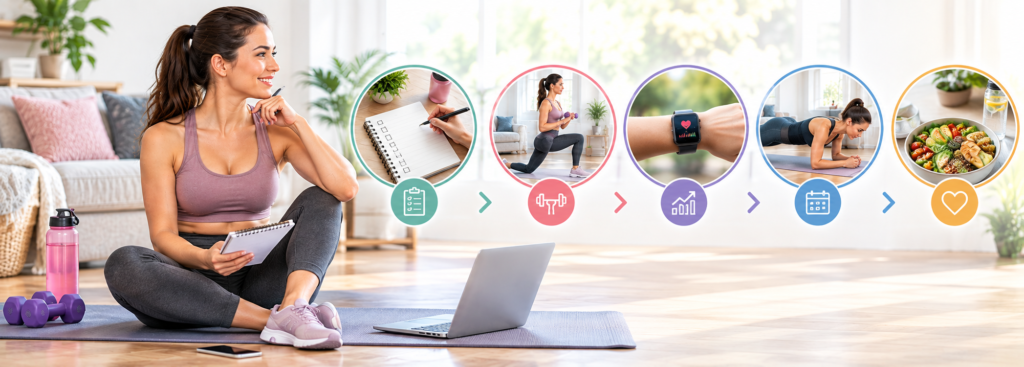
Somewhere between “I should really start working out” and actually doing it lies a graveyard of abandoned gym memberships, half-finished fitness apps, and workout plans copied from someone whose life looks nothing like yours. Starting fitness from zero isn’t complicated in principle, but it’s genuinely hard to do well without a realistic framework — one that accounts for the fact that motivation fades, life gets busy, and most beginner advice is either too vague to act on or too intense to actually sustain.
This guide is built specifically for someone starting from scratch: no gym background, no existing routine, maybe some intimidation about where to even begin. It covers what fitness actually means, how to build a routine that fits a real life, and how to keep going once the initial burst of enthusiasm inevitably fades.
What Fitness Really Means
Fitness is often reduced to appearance in popular culture, but functionally, it refers to your body’s capacity to perform physical tasks — strength, cardiovascular endurance, flexibility, and balance. A genuinely fit body isn’t necessarily a lean one; it’s one that can climb stairs without excessive fatigue, carry groceries without strain, and recover reasonably well from physical effort. Reframing fitness around function rather than appearance tends to produce both better long-term motivation and a healthier relationship with exercise overall.
How Beginners Should Approach Exercise
The most common beginner mistake is starting with the intensity of someone who’s already been training for years — an approach almost guaranteed to produce excessive soreness, discouragement, and an early exit from the whole endeavor. A better approach: start conservatively, prioritize consistency over intensity in the first several weeks, and let your body adapt gradually to a new demand it hasn’t faced before.
Setting Realistic Goals
Vague goals (“get in shape,” “lose weight”) are notoriously hard to act on day to day. More useful goals are specific and behavior-focused: “exercise three times this week,” “walk 20 minutes daily,” “learn to do a proper squat.” These process-focused goals build the habit that eventually produces the outcome-focused results (weight change, strength gains, improved endurance) that most people actually want, but they’re considerably easier to act on consistently.
Strength Training
Strength training is arguably the single highest-value activity for a true beginner, since it builds functional capacity, supports metabolic health, and — contrary to a persistent myth — doesn’t require lifting heavy weights or spending hours in a gym to be effective. A beginner strength routine built around a handful of compound movements — squats, push-ups (or a modified version against a wall or counter), rows, and hip hinges like glute bridges — covers the major muscle groups efficiently. Two to three sessions per week, with a day of rest between sessions targeting the same muscle groups, is a sensible starting frequency.
Cardiovascular Exercise
Cardio doesn’t need to mean running, especially for a beginner who finds running intimidating or physically uncomfortable at first. Brisk walking, cycling, swimming, dancing, or any activity that raises your heart rate and can be sustained for 20 to 30 minutes are all legitimate cardio options. Public health guidelines commonly cite roughly 150 minutes of moderate-intensity cardio per week as a target, which breaks down to about 30 minutes on five days — a target that’s often more achievable when split into smaller chunks throughout the day than when framed as one continuous session.
Mobility and Flexibility
Mobility work — moving joints through their full range of motion — often gets skipped by beginners eager to focus on “real” exercise, but it plays a meaningful role in reducing injury risk and improving how movement feels overall. A few minutes of stretching after a workout, or a dedicated 10-minute mobility session once or twice a week, is enough to start building this habit without requiring significant additional time investment.
Creating a Weekly Workout Schedule
| Day | Focus |
|---|---|
| Monday | Full-body strength (30 min) |
| Tuesday | Walk or light cardio (20–30 min) |
| Wednesday | Rest or gentle stretching |
| Thursday | Full-body strength (30 min) |
| Friday | Walk or light cardio (20–30 min) |
| Saturday | Optional: longer walk, hike, or recreational activity |
| Sunday | Rest |
This is a template, not a rule — the right schedule is the one that actually fits your calendar and energy levels.
How Often Beginners Should Exercise
Three to four sessions per week is a sustainable, effective starting frequency for most beginners — enough to build real momentum and see meaningful progress, without so much volume that recovery becomes a problem or burnout sets in within the first month.
How Long Workouts Should Be
Twenty to thirty minutes per session is a genuinely sufficient starting point. There’s a persistent myth that a workout “doesn’t count” unless it’s an hour long — this isn’t true, particularly for beginners, whose bodies are adapting to any new consistent stimulus, not just high-volume training.
Progressive Overload
Progressive overload — the principle of gradually increasing the demand placed on your body over time, whether through more weight, more repetitions, more sets, or more challenging exercise variations — is what drives continued improvement once your body has adapted to an initial routine. For beginners, this might look like adding a few more repetitions each week, or progressing from a modified push-up to a full push-up over the course of a month or two, rather than dramatic weekly jumps.
Rest and Recovery
Rest days aren’t optional extras — they’re when your body actually adapts to the training stimulus you’ve provided. Beginners in particular benefit from built-in rest, since a body unaccustomed to regular exercise typically needs more recovery time than one that’s been training consistently for years. Skipping rest in an eagerness to progress faster often backfires, leading to excessive fatigue, increased injury risk, and, ironically, slower progress.
Nutrition Fundamentals
Nutrition doesn’t need to be complicated to support a new fitness routine. A reasonable foundation includes adequate protein (supporting muscle repair and satiety), a good mix of vegetables and fruits, whole grains over heavily processed carbohydrates, and healthy fats. Extreme dietary restriction alongside a new exercise habit tends to backfire, since the body needs adequate fuel to recover from and adapt to new physical demands.
Hydration
Adequate hydration supports exercise performance, recovery, and overall energy levels. A general guideline of roughly 9 cups of fluid daily for women (more with exercise and heat) is a reasonable target, adjusted for individual body size and activity level.
Sleep and Recovery
Sleep is one of the most undervalued components of a new fitness routine. Poor sleep affects motivation, physical recovery, and even appetite regulation, making 7 to 9 hours of sleep a genuinely foundational piece of sustainable fitness, not an unrelated lifestyle factor.
Home Workouts Versus Gym Workouts
Both are legitimate options, and the right choice depends on preference, budget, and what actually gets used consistently. Home workouts remove barriers like commute time and cost, while gyms offer equipment variety and, for some people, a sense of accountability and structure that’s harder to replicate at home. Neither is inherently superior — the best option is whichever one you’ll actually do.
Equipment Beginners Actually Need
The honest answer: very little. A pair of comfortable athletic shoes, perhaps a set of light-to-moderate resistance bands, and access to some open floor space cover most beginner strength and mobility needs. Dumbbells are a worthwhile addition once bodyweight exercises start to feel too easy, but they’re not required to start.
Common Beginner Mistakes
The most frequent mistakes: starting too intensely and burning out within weeks, comparing progress to people who’ve been training for years, skipping rest days out of impatience, neglecting proper form in favor of lifting heavier weights too soon, and abandoning the entire effort after missing a few planned workouts rather than simply resuming where they left off.
How to Stay Motivated
Motivation is unreliable by nature — it comes and goes regardless of how committed you are to your goals. Building systems that don’t depend entirely on motivation (a consistent schedule, a workout buddy, tracking progress visibly) tends to sustain activity far better than waiting to feel like exercising before doing it.
How to Measure Progress
Progress isn’t limited to the number on a scale. Tracking strength gains (more repetitions, more weight, better form), endurance improvements (walking or running further or faster with less effort), how clothes fit, energy levels, sleep quality, and mood all offer meaningful, often more motivating signals of progress than weight alone.
What to Do When Motivation Disappears
Motivation dips are inevitable, not a sign of failure. When motivation disappears, scaling back to something minimal but consistent — a 10-minute walk instead of skipping entirely — tends to preserve the habit and identity of being someone who exercises, making it easier to build back up once motivation naturally returns.
A Practical Beginner Workout Plan
Full-body strength session (repeat 2–3x weekly):
-
Bodyweight squats: 2 sets of 10–12
-
Modified or full push-ups: 2 sets of 8–10
-
Glute bridges: 2 sets of 12–15
-
Bent-over rows (with resistance band or light dumbbells): 2 sets of 10–12
-
Plank: 2 sets, hold 20–30 seconds
Cardio days: 20–30 minute brisk walk, bike ride, or swim.
Rest days: Gentle stretching or complete rest, as needed.
Frequently Asked Questions
How many days a week should a beginner work out? Three to four days per week is a sustainable, effective starting point for most beginners.
Do I need a gym membership to get fit? No — bodyweight exercises, resistance bands, and walking can build a genuinely effective beginner fitness routine without any gym access.
How long until I see results as a beginner? Many beginners notice improved energy and mood within a couple of weeks, with visible strength and fitness improvements typically becoming noticeable within 4 to 8 weeks of consistent training.
Is it normal to be sore after starting a new routine? Yes, mild soreness (delayed onset muscle soreness) is a normal response to new physical activity and typically resolves within a few days. Sharp or severe pain is different and warrants attention.
What if I miss a few workouts? Simply resume your routine — missing workouts doesn’t erase previous progress, and treating a missed week as a reason to quit entirely is one of the most common (and avoidable) reasons beginners abandon fitness routines.