
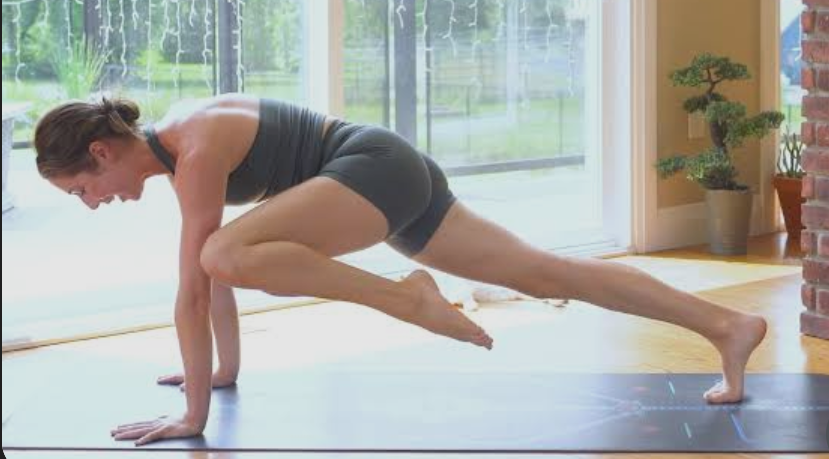
Because you deserve a body that feels strong and alive — and because that body does not require a gym, an hour you do not have, or a version of your life that is less full than it already is.
used to think busy was a temporary condition. That there would come a point — some imagined clearing in the schedule, some version of the future where things had settled — when I would finally have the time and the energy and the proximity to a good gym that would make a consistent fitness routine not just possible but inevitable. I held this belief for approximately seven years. What I got instead was seven years of intermittent guilt about not exercising, three abandoned gym memberships, and the specific kind of low-level physical dissatisfaction that comes from knowing your body is capable of more than you are asking of it.
What ended this particular cycle was not a revelation. It was a number. Twenty minutes. That was how long my physiotherapist told me, after I mentioned the seven-year situation, that I actually needed to produce meaningful physical change. Not forty-five. Not an hour. Twenty minutes of genuinely effortful movement, three to five times per week, was the minimum effective dose she described for strength, cardiovascular health, and body composition improvements in a woman my age. I told her that seemed too simple to be real. She handed me a printed summary of three clinical trials and told me to come back when I had read them.
I came back a week later a changed person. Not because I had done anything yet — I had only read the research and had the particular kind of cognitive shift that comes from realising that the story you have been telling yourself for seven years was never quite true. The barrier was not time. Time was the excuse the barrier had been wearing. The actual barrier was a belief that exercise only counted if it happened in a specific kind of place, lasted a specific minimum duration, and looked a certain way. Remove that belief and suddenly twenty minutes in your living room at six-thirty in the morning is not a compromise. It is the plan.
This article is the plan. Refined over the two years since that physiotherapist appointment into something practical, evidence-based, and — most importantly — actually executable by a woman with a genuinely full life. I am going to give you the science that explains why it works, the complete programme that tells you exactly what to do, the structure that makes the habit stick even during the weeks when everything is competing for your attention, and the honest account of what changes and when. By the time you reach the end, the question will not be whether this is possible. It will be which morning you are starting.
✦
The Lie That Kept You Out of the Gym — and How to Stop Believing It
Let me describe the lie precisely, because naming it clearly is the first step to dismantling it. The lie is this: that meaningful physical change requires significant dedicated time — typically conceived as forty-five minutes to an hour, three to five times per week — in a dedicated space with dedicated equipment, accessed through a dedicated membership that represents a dedicated financial commitment, all of which requires a schedule with sufficient flexibility to accommodate the travel, the changing, the workout itself, and the return journey without these things consuming more time than most busy women actually have available.
This lie did not originate from scientific research. It originated from the gym industry, which has a clear financial interest in convincing you that a monthly payment for access to their facility is a necessary condition of physical improvement. It was reinforced by fitness culture more broadly, which amplified the idea through decades of magazine covers and aspirational content and the association between seriousness about fitness and the ownership of specific equipment and memberships. And it was completed by the wellness and activewear industries, which together built an aesthetic around gym-going that made it feel like a specific lifestyle identity rather than simply a physiological practice available to everyone.
The research says something much more democratic. Exercise is a stimulus, and the body’s response to that stimulus — improved strength, improved cardiovascular fitness, improved body composition, improved mood and cognitive function — is physiological rather than institutional. Your muscles do not know whether the squat was performed in a CrossFit box or your kitchen. Your cardiovascular system does not distinguish between an elliptical at a gym and a high-intensity interval performed on your living room floor. The adaptation is the same. The result is the same. The only thing that differs is the scenery and the monthly direct debit.
“Busy is not an excuse not to move. Busy is the exact condition that home fitness was designed for. Twenty intentional minutes beats sixty aspirational ones that never happen.”— On realistic fitness for real lives
There is also a compounding advantage to home fitness that the gym narrative consistently undervalues: the activation energy required to begin a session is dramatically lower when the gym is your living room. The specific friction of the gym — the commute, the parking, the changing room, the slight social performance of exercising in front of strangers — represents a psychological and logistical barrier that compounds over time. Every morning when the session does not happen, that friction is part of the explanation. Remove the friction, and the barrier between “I should exercise today” and “I am exercising right now” collapses almost entirely. This is not trivial. Behaviour change research consistently shows that reducing the activation energy of a desired behaviour is more effective than increasing motivation. Home fitness reduces the activation energy to almost zero.
✦
The Science That Makes Twenty Minutes Real
I want to make a specific case for the research here, because I think many women have absorbed a version of the research that is incomplete in ways that matter. The question is not whether exercise produces physical change. Everyone agrees that it does. The question is how much exercise, of what type, at what intensity, produces meaningful change — and the answers are more encouraging than most people realise.
20
Minutes
Minimum for cardiovascular and metabolic benefit per session
3×
Per week
Frequency needed for measurable strength and composition changes
4–6
Weeks
When neurological and energy-level changes first become noticeable
8–12
Weeks
When visible physical changes in definition and composition appear
0
Equipment
Required for significant strength gains in the first 12–16 weeks of training
The twenty-minute threshold is real and well-supported. High-intensity interval training research — which has been one of the most productive areas of exercise science for the past two decades — consistently shows that sessions of fifteen to twenty-five minutes, when performed at sufficient relative intensity, produce cardiovascular fitness gains comparable to moderate-intensity sessions of twice the duration. The key phrase is “sufficient relative intensity,” which means working at a level that is genuinely demanding for your current fitness level — not conversation pace, but the level where maintaining the effort requires real focus.
The bodyweight strength research is equally encouraging. Resistance training with bodyweight — using the full body mass as load, through movements like squats, push-ups, hip thrusts, rows, and planks — produces measurable hypertrophy (muscle growth) and strength gains in previously untrained individuals that are comparable to gym-based resistance training for the first twelve to sixteen weeks of consistent practice. After that point, external load becomes helpful for continued progress. But for the months in which most people are building their foundational fitness and habit — the months that matter most — no equipment is required.
The mood and energy research deserves special mention because it is the category most relevant to busy women and the one least discussed in fitness content. Regular moderate-to-vigorous exercise reduces cortisol levels, increases serotonin and dopamine production, improves sleep architecture, and enhances cognitive performance across the day. These benefits are not week-twelve bonuses — they appear within the first two to three weeks of consistent training and are often the first changes that practising women notice. Before the physical changes are visible, the way you feel is already different. More settled. Clearer. More capable of handling the demands of a full schedule with something left over. This is not incidental to the programme. It is one of the primary reasons to do it.
✦
What You Actually Need: Space, Time, and a Decision
I want to be specific about the physical requirements, because over-specification of equipment is one of the subtle ways that fitness content recreates the same barrier it claims to remove. Here is what you need for this programme, in full:
Four square metres of clear floor space. Not a dedicated room, not a home gym, not anything that requires rearranging furniture permanently — just the ability to clear enough space before a session to move freely. A yoga or exercise mat, if you prefer the feeling and grip of one under your hands and feet, though a carpeted floor works equally well for most exercises. A resistance band in medium resistance, which typically costs less than fifteen pounds and is the single most valuable piece of home fitness equipment available. Optionally, one pair of moderate-weight dumbbells for exercises where added load accelerates progress.
That is the complete equipment list. If you own none of it, start with no equipment and buy the band when the bodyweight work becomes consistently manageable — which will likely be within four to six weeks for most exercises.
The time requirement is twenty to thirty minutes per session. This is a non-negotiable minimum not because the research suggests less is ineffective (some research supports much shorter bouts) but because the warm-up, the actual session, and the cool-down together occupy approximately this window at the minimum, and the habit is more durable when it occupies a defined slot rather than an indefinite one. Twenty-five minutes. That is one scroll through social media in the morning. Two cups of coffee at slightly brisk pace. The difference between getting up at six and getting up at six-thirty. The time exists. The decision to protect it is the requirement.
The Environment Design Principle
Sleep in your workout clothes. Or lay them out the night before, directly beside your bed, so that the first decision of the morning requires minimal cognitive load. Make the water bottle ready. Have the mat in the space you use. Pre-select the playlist. Each of these micro-decisions that you make the night before is one you do not have to make at six in the morning when resistance is highest. The architecture of habit formation is mostly about removing friction from the start of the behaviour, not about motivating yourself through it.
✦
The Programme: Your Complete Weekly Structure
The programme runs across five movement days and two rest days per week, alternating between strength-focused sessions, cardiovascular conditioning, and active recovery work. The structure is designed for maximum effectiveness within minimum time, with each session targeting a complete functional stimulus rather than an isolated muscle group approach. This means every session is a full-body investment, which is the most time-efficient way to train when time is genuinely limited.
Monday
Full Body Strength — Lower Emphasis
28 minutes. Squat pattern, hinge pattern, core stability. The session that builds the foundation of lower body strength and postural integrity.
Tuesday
HIIT Conditioning
22 minutes. High-intensity interval work with full-body compound movements. Cardiovascular stimulus and metabolic conditioning in minimal time.
Wednesday
Active Recovery
15–20 minutes optional. Walk, gentle yoga, light stretching. Recovery is not doing nothing — it is doing less so the body can adapt.
Thursday
Full Body Strength — Upper Emphasis
28 minutes. Push pattern, pull pattern, core rotation. The session that builds shoulder definition, back strength, and postural confidence.
Friday
Metabolic Circuit
25 minutes. A flowing circuit of compound movements performed with minimal rest. The session that produces the most significant metabolic afterburn.
Saturday
Mobility and Mindful Movement
20–25 minutes. Deliberate mobility work, full-body stretching, breath-focused movement. As important as any other session in the programme.
Sunday
Complete Rest
Rest is a training variable, not a failure of discipline. The body rebuilds on rest days. Protect Sunday and the whole programme works better.
Total committed training time per week: approximately 103 minutes across the four full sessions, with the Saturday mobility session adding a further twenty-two. That is less than two hours of intentional movement distributed across a week to produce the physical changes described in this article. The rest of the week — the other one hundred and sixty-six hours — is entirely yours.
✦
The Sessions in Detail: Exactly What to Do and Why
Monday: Full Body Strength — Lower Emphasis
The Monday session is the one that most directly shapes the physical changes that matter most to most women — the posterior chain (glutes, hamstrings, lower back), the quadriceps, and the core stability that makes everything else function correctly. The session follows a three-round circuit format with four exercises, performed with sixty-second rest between rounds.
A
Squat Pattern
Slow Squat with Pause
3 rounds · 12 reps4 sec down · 2 sec hold · 1 sec upAdd band above knees when easy
The tempo is everything here. A four-second descent produces time under tension that makes a bodyweight squat legitimately challenging and produces genuine hypertrophy in the quadriceps and glutes. Feet hip-width, toes slightly out, chest up, hips push back before knees bend. At the bottom, the two-second pause eliminates the elastic energy that most people use to bounce out of the bottom of a squat — it makes the ascent purely muscular. When this feels manageable by rep twelve, add a resistance band just above the knees to increase glute activation and extend the challenge without adding weight.
B
Hinge Pattern
Single-Leg Hip Hinge
3 rounds · 10 reps each legFlat back throughoutHold water bottle for progression
Stand on one leg, soft knee, and hinge forward at the hip — not the waist — pushing the non-standing leg behind you as a counterbalance while your torso tips toward the floor. The standing leg’s hamstring and glute work to control the descent and produce the return. This is the exercise that most consistently produces the hamstring and glute definition that transforms how jeans and fitted skirts look on the body — the specific posterior chain development that the hip thrust builds from the front and this exercise builds from the back. The balance challenge is a bonus: single-leg work produces ankle stability and proprioceptive awareness that have implications for every other movement you do.
C
Glute Isolation
Elevated Glute Bridge Pulse
3 rounds · 15 full reps + 20 pulsesShoulders on sofaBand above knees
Shoulders resting on the edge of the sofa, feet flat and hip-width, resistance band above the knees pressed outward. Fifteen full hip thrusts with a two-count hold at the top and a slow lower, followed immediately by twenty small pulses at the top of the range. The pulse set is what makes this exercise extraordinary — after fifteen full reps, the glutes are already working, and the pulses at peak contraction produce metabolic fatigue in a way that changes the shape of that muscle group faster than any other approach I know of. It is uncomfortable in exactly the way that produces results. Stay with it.
D
Core Stability
Dead Bug with Reach
3 rounds · 8 reps each sideLower back flat throughoutBreathe out on the reach
On your back, arms reaching to the ceiling, knees bent at ninety degrees in the air. Simultaneously lower the opposite arm and leg toward the floor while exhaling and pressing your lower back into the mat. Return and repeat on the other side. The exhalation is the technique cue most often missed and most important: it activates the deep transverse abdominis, which is the muscle responsible for the flat, integrated core that looks and functions completely differently from the six-pack-chasing crunch approach. Eight reps each side, slowly, with perfect lower back contact throughout — this is a quality exercise, not a volume one. Do it perfectly or not at all.
Tuesday: HIIT Conditioning — The Twenty-Two Minute Miracle
The Tuesday session is the one that most people are initially most daunted by and subsequently most attached to, because it produces the most immediate and most dramatic post-session feeling. That particular combination of exhaustion and exhilaration — the metabolic flush, the endorphin release, the specific physical satisfaction of having genuinely pushed — is one of the most compelling reasons busy women stay consistent with home training once they begin.
The format is a Tabata-inspired protocol: eight rounds of twenty seconds on, ten seconds off, completing four exercise pairs in sequence, with ninety seconds of rest between pairs. The total working time is approximately sixteen minutes; warm-up and cool-down bring the session to twenty-two.
Pair 1 — Lower Body + Core
Squat Jump / Plank Hold
Explosive squat to jump (or squat pulse for low impact), alternating with a forearm plank hold. Eight rounds total.
Pair 2 — Full Body
Reverse Lunge / Mountain Climber
Alternating reverse lunges with controlled tempo, alternating with mountain climbers at a pace that maintains form. Eight rounds.
Pair 3 — Upper Body + Push
Push-Up / Tricep Dip
Any push-up variation performed with full range, alternating with tricep dips off the sofa edge. Eight rounds.
Pair 4 — Cardio + Core
High Knees / Hollow Hold
High knees at maximum pace (or step variation), alternating with a hollow body hold for core stability. Eight rounds.
The “maximum effort” instruction in HIIT is not rhetorical. The physiological benefits of high-intensity interval training are proportional to the relative intensity achieved during the work intervals — which means the benefit is proportional to how hard you actually push, not how hard the exercise theoretically could be performed. A twenty-second squat jump performed at eighty percent of maximum effort produces significantly less cardiovascular and metabolic stimulus than the same interval performed at ninety-five percent. Give the twenty seconds fully. Rest the ten seconds fully. This is the whole technique.
Thursday: Full Body Strength — Upper Emphasis
The Thursday session is the one that most directly transforms posture, shoulder definition, and the way your back looks and functions. Pulling exercises — the rowing movements that strengthen the muscles between the shoulder blades — are chronically underperformed by most women and consistently produce the most visible and most practically useful upper body changes when trained consistently. This session prioritises them.
A
Pull Pattern
Resistance Band Row
4 sets · 15 repsAnchored at door handle2 sec squeeze at top
Band anchored at waist height. Hinge slightly forward, arms extended, and pull the band toward your lower ribs by driving your elbows backward and squeezing your shoulder blades together. The two-second contraction at the top is the most important part of the exercise — it is the sustained contraction of the rhomboids and middle trapezius that produces the structural change in how you hold your shoulders. After six weeks of consistent rowing, other people will notice your posture before you do. It is that kind of change — visible, significant, and produced by an exercise that requires a twelve-pound resistance band and a door handle.
B
Push Pattern
Push-Up Progression
3 sets · 8–12 repsFull range every repIncline version for modification
Whichever push-up variation you can perform with complete range of motion — chest to the floor, fully extended at the top, body in a straight line throughout — for the prescribed reps. The most common push-up error is partial range: stopping three inches above the floor, bypassing the hardest part of the movement and consequently the part of the movement that produces the most adaptation. Full range every rep, even if full range means fewer reps. The modification — hands elevated on a counter or wall — is entirely legitimate and produces the same developmental stimulus with reduced load, allowing progressive building toward the floor version.
C
Shoulder
Band Pull-Apart Superset
3 sets · 20 pull-aparts + 15 face pullsMedium band held at shoulder heightArms straight for pull-apart
Hold the resistance band at shoulder height with both hands and pull it apart by opening the arms out to the sides, squeezing the shoulder blades together at the end of the movement. This directly targets the rear deltoid and rhomboids. Immediately follow with fifteen face pulls — band at face height, pulling toward the face with external rotation of the shoulder — which adds the rotator cuff stability component that protects the shoulder joint and improves the quality of every other upper body exercise. This superset is the single most impactful combination for the shoulder and upper back aesthetic that makes strapless dresses and off-shoulder tops look the way they deserve to.
D
Core Rotation
Side Plank with Thread-Through
3 sets · 10 reps each sideHips elevated throughoutControlled rotation
From a side plank on the forearm, reach the top arm through the space between your body and the floor — rotating the torso toward the floor — then return to the plank position and reach the top arm to the ceiling. This thread-through movement works the obliques through a full rotational range that static side planks cannot provide. The waist definition produced by consistent rotational core work is distinct from what anterior core exercises produce — it is the lateral narrowing that changes how clothes sit through the midsection. Ten reps each side, controlled, with full range of motion.
✦
Making It Stick: The Psychology That the Programme Cannot Provide for You
I want to be honest with you about the part of this that is not about exercises, because I think it is the part that determines whether the exercises change your life or sit unused in a bookmarked tab. The physical programme is complete. What follows is the psychological infrastructure that keeps the physical programme running when life — being what it is — makes friction inevitable.
The Two-Minute Rule for Exercise
On the hardest mornings — when you are tired, overwhelmed, and the workout feels like one demand too many — make a single commitment: two minutes. Put on your workout clothes, step onto the mat, and do two minutes of movement. If after two minutes you genuinely want to stop, stop without guilt. The evidence is that this almost never happens — the physiological activation of beginning movement produces enough momentum to continue. But the psychological value of lowering the threshold to two minutes is that it removes the paralysis of contemplating the full session. Begin. The beginning is the hardest part, and two minutes is all the beginning requires.
The Identity Reframe
The most durable fitness habit is built on identity rather than motivation. Not “I want to get fit” — a motivation statement that is conditional on continued wanting — but “I am a person who moves regularly.” Identity statements are self-reinforcing: every time you follow through on the workout, you add a piece of evidence to the case for that identity. Every time you skip without rescheduling, you add evidence against it. Choose which case you are building. The habit is easier when the habit is who you are.
The Missed Session Protocol
You will miss sessions. This is not a prediction of failure — it is an acknowledgment of reality. The question is not whether you will miss sessions but how you respond when you do. The protocol: never miss twice in a row. One missed session is a pause. Two missed sessions is a pattern. Three is an abandoned habit. The rule is simple and the rationale is simple: the session that happens the day after the missed one is not a make-up session. It is the proof that the habit survived the disruption. That proof is the most important session in any given month.
The Weekly Review
Five minutes on Sunday evening. Look at the week behind and the week ahead. Note how many sessions happened, how they felt, what the week ahead holds that might require schedule adjustment. The weekly review converts a passive fitness habit into an active one — one that you are consciously managing and adjusting rather than hoping happens by default. Women who do a weekly review of their exercise habits maintain consistency at a significantly higher rate than those who do not. The data is so consistent on this point that it borders on the most actionable single piece of fitness advice available.
The Aesthetic Motivation — Fully Permitted
Fitness culture has developed a peculiar ambivalence about aesthetic motivation — the desire to look better as part of the reason for exercising. There is pressure to frame all fitness motivation in terms of health and strength and energy, with aesthetic goals treated as somehow less legitimate. I disagree with this framing, though I understand its origins. Wanting to feel confident in your clothes, wanting to look strong and capable, wanting to inhabit your body with ease — these are real and legitimate motivations that pull in exactly the same direction as the health motivations. Use all of them. The goal is to move consistently; whatever mixture of reasons keeps you doing that is the right mixture.
✦
The Aesthetic of Home Fitness in 2026
Something has shifted in how home fitness looks and feels culturally over the past two years, and I think it is worth acknowledging because it matters to the women reading this — women who care about aesthetics, who have strong opinions about the environments they inhabit and the clothes they wear, and for whom the visual dimension of a practice is not separate from its substance but part of it.
The clean girl wellness movement — which began as a beauty and skincare aesthetic and has expanded thoroughly into fitness and daily movement culture — has done something genuinely useful: it has rehabilitated the home workout as an intentional, even quietly luxurious practice rather than a compromise or a fallback. The Pinterest boards and the Substack newsletters and the corners of Instagram that document this aesthetic show women moving in clean, uncluttered spaces, in coordinated fitness sets in muted sage and warm cream and soft terracotta, with the kind of deliberate simplicity that is the visual language of quiet luxury applied to physical practice.
This aesthetic is not aspirational in the unattainable sense. It is achievable and — more importantly — it is psychologically supportive of the habit it depicts. Research in environmental psychology consistently shows that people engage more consistently with practices that occur in environments they find appealing. A cleared corner of your bedroom with a good mat, a small speaker, morning light, and workout clothing you genuinely look forward to wearing is not a trivial upgrade to a home fitness practice. It is an environmental design investment in the habit’s sustainability.
The activewear aesthetic of 2026 specifically deserves a moment, because it has become one of the most interesting fashion-wellness crossover territories in current culture. The elevated athleisure movement — seamless high-waist sets in tone-on-tone neutrals, fitted but not tight, in fabrics that feel like a second skin and photograph like a fashion editorial — has made the experience of dressing for a home workout genuinely pleasant in a way it was not when the only options were graphic-heavy technical fabrics designed for a performance context. You do not need expensive activewear to have an effective workout. But wearing something that makes you feel good — that belongs to the aesthetic identity you are building — makes the beginning of the session slightly easier every time.
On Fitness and the Woman You Are Becoming
The physical changes from consistent training are real and they will come. But the change I find most worth describing — the one that happens alongside the visible physical transformation and that I hear about most often from women who have been consistent for three months or more — is quieter. It is a shift in the relationship to capability. The accumulated evidence of doing hard things and completing them. The body that you now know — genuinely, physically, from the inside — rather than the body you were managing or apologising for or trying to change at arm’s length. There is an ease that comes from inhabiting a body you have trained. A confidence that is physical in origin but extends into every room you walk into. That is the real return on twenty minutes in your living room at six in the morning. And it compounds daily.
Recovery, Sleep, and the Parts Nobody Glamorises
Every honest fitness guide must include a section on recovery, because the gap between the training stimulus and the physical result is not filled by more training — it is filled by the conditions in which the body converts that stimulus into adaptation. The workout is the request. Sleep and recovery are the response. Without adequate recovery, the request accumulates without being answered, and the result is not accelerated progress but its opposite: fatigue, impaired performance, and the increased injury risk that comes from asking a body to repair and perform simultaneously without adequate support for either.
Sleep is the primary recovery modality, and it is the one most commonly sacrificed by busy women in favour of the additional productivity hours that a full schedule seems to demand. The specific mechanisms by which sleep supports physical adaptation are well established: growth hormone — the primary driver of muscle repair and anabolism — is released in its greatest quantities during deep sleep cycles, with peak secretion occurring in the first ninety minutes of sleep. Cortisol, which impairs muscle protein synthesis and promotes fat storage when chronically elevated, is regulated primarily by sleep quality and duration. Inflammatory responses generated by training sessions resolve faster in adequate sleep than in restricted sleep, producing faster recovery between sessions.
Seven to nine hours is the research-supported range for adults, and there is no meaningful population of people who perform better on less without a documented physiological difference in sleep need. The women who feel fine on five hours are, in most cases, adapted to a chronically sleep-restricted baseline rather than genuinely thriving on it. The adaptation is real. The performance deficit, compared to the adequately rested version, is also real — it is simply less visible from within the deficit than from outside it.
“Training is the conversation. Sleep is where the body writes back. Every session you do is a letter that only gets answered if the envelope of sleep is sealed and sent.”
Beyond sleep, the active recovery day deserves more respect than it typically receives. Tuesday’s active recovery option — the walk, the gentle yoga, the light stretching — is not a lesser version of a real workout. It is a different physiological stimulus: light movement increases blood flow to fatigued muscle tissue, accelerating the clearance of metabolic waste products and delivering the nutrients needed for repair. The active recovery session between harder training days consistently produces better performance in the subsequent session than complete rest. It is, in other words, part of the training. Treat it as such.
✦
The Closing Question: What Are You Actually Waiting For?
I want to end this article with the question I asked myself after that physiotherapist appointment, standing in the car park with a printed summary of three clinical trials and the uncomfortable realisation that I had no answer. I had spent seven years waiting for conditions that were, I now understood, never going to arrive. The quiet schedule. The gym nearby. The version of my life that made all of this easier than it currently was. None of it was coming. The life I had — full, complicated, genuinely busy and genuinely valuable — was the only context in which the fitness I wanted was ever going to happen. And the fitness I wanted was available within that context, on a mat in my living room, in twenty minutes, starting the following Tuesday.
What followed was not a transformation montage. It was one session, and then another, and then a missed session and a return to the next one, and the gradual, sometimes halting accumulation of a practice that eventually became simply part of who I was. A woman who moves regularly. Who has a body she knows and trusts. Who gets dressed in the morning from a place of ease rather than careful management. None of this happened quickly. All of it happened because I started.
The programme in this article is complete. The research that supports it is real. The time it requires is available to you — not easily, not without the deliberate protection of those twenty-five minutes against the competing demands of a full life, but genuinely available. The equipment is minimal and inexpensive. The space required is four square metres of floor that you already have.
The only remaining variable is the decision. And decisions, unlike gym memberships, require nothing but making them.
Start Tuesday. Or start tomorrow morning. Or start tonight, with the workout clothes laid out beside the bed and the alarm set twenty-five minutes earlier. The version of you that is stronger, clearer, more capable, and more at ease in her own body is waiting patiently on the other side of the decision. She has been waiting, it turns out, far less time than you thought.