
Meta description: From chicken and salmon to tofu and tempeh, here’s how to use an air fryer to build fast, balanced, high-protein meals for any time of day. Primary keyword: high protein air fryer meals Secondary keywords: high protein air fryer recipes, easy high protein meals, air fryer meal prep protein, high protein dinner ideas, quick high protein meals
Somewhere between the meal-prep containers lined up on Sunday and the reality of a Tuesday night with no energy left to cook, most people’s high-protein ambitions quietly fall apart. It’s not that the goal is unreasonable — it’s that a lot of high-protein cooking advice assumes more time, more equipment, and more enthusiasm than most people actually have on a given weeknight. This is where the air fryer earns its keep. It’s genuinely one of the lowest-effort ways to get a well-browned, satisfying, protein-forward meal on the table, across an impressively wide range of ingredients, without much active cooking time or cleanup.
This guide walks through the full range of high-protein ingredients that work well in an air fryer, how to build them into actual balanced meals rather than just piles of protein, and enough practical structure — for breakfast, lunch, dinner, snacks, and meal prep — to make this a genuinely usable reference rather than an abstract list of ideas.
Why the Air Fryer Is Well-Suited to High-Protein Cooking
Most high-protein foods — meat, poultry, fish, tofu, tempeh — benefit from dry, relatively high-heat cooking that develops a browned, flavorful exterior while keeping the interior tender. That’s precisely what an air fryer’s circulating hot air is good at, and it does it faster than a conventional oven and with considerably less mess and oil than pan-frying. It’s also remarkably forgiving across ingredient types, handling everything from delicate fish to sturdy chicken thighs to plant-based proteins with only minor adjustments to time and temperature.
Chicken
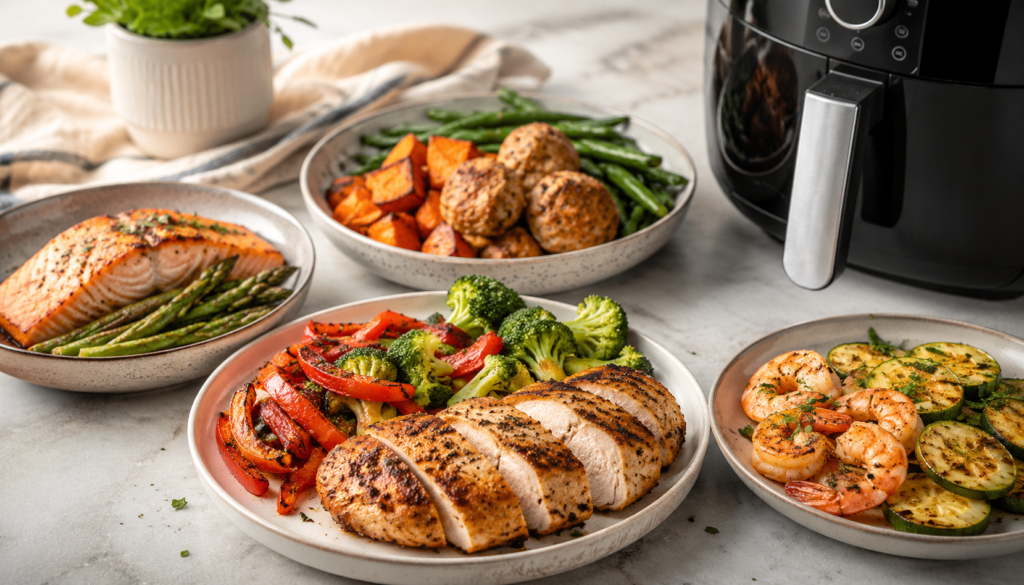
Chicken is probably the most common high-protein air fryer staple, and for good reason — it’s affordable, versatile, and cooks reliably well. Boneless, skinless chicken breasts (seasoned simply with salt, pepper, and garlic powder, plus a light coating of oil) cook at 380°F for about 18 to 22 minutes, flipped halfway, until reaching an internal temperature of 165°F. Chicken thighs, with their higher fat content, are somewhat more forgiving of slight overcooking and cook well at 400°F for 20 to 25 minutes. Chicken tenders or cut-up chicken pieces cook faster, typically 10 to 12 minutes at 400°F, and are a fast option for busy nights.
Turkey
Ground turkey can be formed into meatballs or patties and air fried at 375°F for roughly 12 to 15 minutes, checking for an internal temperature of 165°F, since ground poultry needs to reach this temperature throughout (unlike whole cuts, where some variation is acceptable). Turkey breast cutlets, pounded thin, cook quickly — around 8 to 10 minutes at 380°F — and make an easy, lean protein for a fast dinner.
Salmon
As covered in more depth elsewhere, salmon fillets cook beautifully at 400°F for 7 to 10 minutes depending on thickness, delivering roughly 25 to 34 grams of protein per standard fillet along with beneficial omega-3 fatty acids that many other protein sources don’t offer.
Tuna
Fresh tuna steaks, seared briefly in the air fryer at a high temperature (400°F for just 4 to 6 minutes total, flipped once) can achieve a nicely seared exterior with a rare to medium-rare center, similar to a quick stovetop sear — tuna is best not overcooked, since it dries out and becomes notably less tender well before the doneness point that’s appropriate for something like chicken.
Shrimp
Shrimp is one of the fastest-cooking proteins in this entire list, typically ready in 6 to 8 minutes at 400°F, tossed with a bit of oil and seasoning beforehand. It’s an excellent option for genuinely quick meals — grain bowls, tacos, or a simple shrimp scampi-style dish — since there’s minimal prep and an extremely short cooking window.
Eggs Where Appropriate
While eggs aren’t traditionally associated with the air fryer, hard “boiled” eggs can actually be made in one: whole eggs placed directly in the basket and air-fried at 270°F for about 15 to 17 minutes produce a result very similar to traditional hard-boiled eggs, once cooled in an ice bath. This is a genuinely useful trick for batch-prepping eggs for salads, snacks, or breakfast without heating a pot of water on the stove.
Tofu
Extra-firm tofu, pressed and coated lightly in cornstarch and oil, crisps up beautifully at 400°F in 15 to 20 minutes, delivering 15 to 20 grams of protein per standard block — a genuinely satisfying plant-based option covered in much greater detail in a dedicated tofu guide, but worth including here as a core high-protein air fryer staple.
Tempeh
Tempeh, made from fermented whole soybeans, has a firmer, denser texture than tofu and a naturally nutty, slightly earthy flavor. It doesn’t require pressing the way tofu does, but it does benefit from a brief marinade (15 to 20 minutes in a soy-based or savory marinade) since its dense texture doesn’t absorb seasoning as readily on its own. Sliced or cubed tempeh air fries well at 375°F for about 10 to 12 minutes, delivering close to 18 to 20 grams of protein per 3-ounce serving — notably higher than tofu by volume, since less water dilutes the protein content.
Beans and Legumes Where Suitable
While beans themselves aren’t typically air-fried as a primary cooking method (they’re usually cooked separately by boiling or using canned varieties), crispy chickpeas are a genuine air fryer success story: canned chickpeas, drained, patted very dry, tossed with oil and seasoning, and air-fried at 400°F for 15 to 18 minutes (shaken periodically) become wonderfully crunchy, delivering fiber and a respectable 6 to 7 grams of protein per half-cup serving — a great high-protein, high-fiber snack or salad topping.
Other Practical High-Protein Foods
Beyond the primary categories above, a few other high-protein foods work well in an air fryer: firm white fish like cod or halibut (cooked similarly to salmon but generally needing slightly less time given their leaner composition), pork tenderloin (cooked at 375°F for about 20 to 25 minutes to an internal temperature of 145°F), and even certain plant-based meat alternatives, many of which are specifically designed with air fryer cooking instructions on their packaging.
Building Balanced High-Protein Meals
A protein source alone isn’t a complete, satisfying meal — pairing it thoughtfully with vegetables, a carbohydrate source, and a healthy fat rounds out both the nutrition and the overall satisfaction of the plate. A useful mental framework: fill roughly half the plate with vegetables, a quarter with a protein source, and a quarter with a whole-grain or starchy carbohydrate, finished with a small amount of healthy fat (olive oil, avocado, nuts) for flavor and satiety.
Breakfast Ideas
High-protein air fryer breakfasts might include air-fried eggs in silicone muffin cups (seasoned and mixed with vegetables, cooked at 300°F for about 8 to 10 minutes), turkey sausage patties, or reheated leftover protein (like diced chicken or tofu) added to a breakfast bowl with eggs and vegetables. Air-fried breakfast potatoes alongside a protein of choice round out a more substantial morning meal.
Lunch Ideas
Lunch options benefit particularly from meal-prepped proteins: a grain bowl with pre-cooked chicken or tofu, roasted vegetables, and a sauce comes together in minutes if the protein is already prepared. A quick air-fried shrimp salad, or a wrap built around leftover salmon, are similarly fast options for a midday meal that doesn’t require starting from scratch.
Dinner Ideas
Dinner is where the air fryer’s speed advantage is most noticeable: a full protein (chicken thighs, salmon, tofu) alongside a vegetable that can cook simultaneously or immediately after (using residual heat in the basket) delivers a complete, high-protein dinner in well under 30 minutes for most combinations.
Quick Meals
For genuinely fast meals — think 15 minutes or less from start to plate — shrimp, thin chicken cutlets, or pre-marinated tofu are the fastest-cooking options in this guide, all finishing well within that window.
Family Meals
Chicken tenders, meatballs (turkey or a plant-based alternative), and simple seasoned chicken breasts tend to be broadly appealing across different ages and preferences, making them practical choices for family dinners where multiple people’s tastes need to be accommodated.
Meal-Prep Meals
Batch-cooking a protein (a large batch of chicken breast or thighs, or a double batch of tofu) at the start of the week, then portioning it out with different vegetables, grains, and sauces across several days, is one of the most time-efficient uses of an air fryer for anyone trying to maintain consistent high-protein eating without cooking from scratch every single day.
Budget-Friendly Meals
Chicken thighs, canned chickpeas, eggs, and tofu are among the most budget-friendly high-protein options in this guide, all considerably less expensive per serving than salmon, shrimp, or specialty plant-based products, while still delivering meaningful protein content.
Low-Effort Meals
For nights when even moderate effort feels like too much, pre-seasoned or marinated proteins (either homemade in advance or store-bought) require almost no prep beyond placing them in the basket, and pairing them with a simple side like frozen vegetables (which also air fry well) keeps total effort minimal.
Vegetarian Options
Tofu, tempeh, crispy chickpeas, and eggs together offer enough variety to build a genuinely satisfying vegetarian high-protein rotation, without relying on any single ingredient too heavily across the week.
High-Protein Snack Ideas
Crispy chickpeas, hard “air-fried” eggs, or small portions of leftover protein (a few pieces of chicken or tofu) all work well as high-protein snacks that don’t require additional cooking beyond what’s already been prepared.
Protein-Rich Vegetables and Sides
While vegetables generally contain far less protein than the categories above, a few offer a modest boost: edamame (steamed rather than air-fried, but a useful side), Brussels sprouts, and broccoli all contain small but meaningful amounts of protein that contribute to a meal’s overall total.
Grain Bowls
A reliable formula: a base grain (rice, quinoa, farro), a protein (any of the options above), a vegetable component (roasted or fresh), and a sauce, assembled in a bowl for a complete, customizable meal that works equally well for meal prep or a fresh dinner.
Wraps
Sliced or shredded protein, wrapped with vegetables and a sauce in a tortilla or large lettuce leaf, makes for a portable, high-protein lunch that requires minimal additional preparation once the protein is already cooked.
Salads
Adding a cooked protein transforms a simple side salad into a full meal — grilled or air-fried chicken, salmon, shrimp, or crispy tofu are all excellent options that add substance and staying power to what would otherwise be a lighter dish.
Protein Plates
A straightforward “protein plate” — a cooked protein, a simple vegetable side, and perhaps a small starch — is a genuinely underrated meal format, particularly for anyone who finds elaborate recipes exhausting to plan; sometimes a well-seasoned piece of chicken and some air-fried broccoli is entirely sufficient.
Chicken Recipes
A simple, versatile approach: season chicken breasts or thighs with salt, pepper, garlic powder, and paprika, coat lightly with oil, and air fry at 380°F (breasts) or 400°F (thighs) until reaching 165°F internally, checked with a thermometer given how much thickness and starting temperature can affect timing.
Salmon Recipes
Refer to the seasoning variations and core technique covered in dedicated salmon guides — the short version: pat dry, season simply, cook at 400°F for 7 to 10 minutes depending on thickness, and verify doneness with a thermometer.
Tofu Recipes
Press extra-firm tofu for at least 20 minutes, cut into cubes, toss with cornstarch and a light coating of oil, season, and air fry at 400°F for 15 to 20 minutes, shaking every 7 to 8 minutes for even crisping.
Shrimp Recipes
Toss peeled, deveined shrimp with oil, garlic powder, paprika, and a pinch of salt, then air fry at 400°F for 6 to 8 minutes, shaking once, until opaque and just cooked through — shrimp overcooks quickly, so checking a bit early is worthwhile.
Common Mistakes
Across all of these proteins, the most common mistakes are similar: overcrowding the basket (which prevents proper browning and extends cooking time unpredictably), skipping a thermometer check for proteins like chicken and pork where food safety depends on reaching a specific internal temperature, using too little oil (resulting in sticking) or too much (resulting in greasiness rather than crispness), and not patting proteins dry before cooking, which affects browning across nearly every ingredient in this guide.
Storage
Most cooked proteins keep well in airtight containers in the refrigerator for 3 to 4 days, making batch cooking at the start of the week a genuinely practical strategy for maintaining consistent high-protein meals without daily cooking.
Reheating
The air fryer itself is often the best tool for reheating previously air-fried proteins, since a few minutes at a moderate temperature (325 to 350°F) tends to restore some of the original texture and crispness better than a microwave, which can make many of these proteins rubbery or soggy.
Key Takeaways
-
The air fryer works well across an unusually wide range of high-protein foods — meat, poultry, fish, and plant-based options alike — with only minor adjustments to time and temperature.
-
Building a balanced meal means pairing protein with vegetables and a carbohydrate source, not relying on protein alone.
-
Batch-cooking proteins at the start of the week substantially reduces daily cooking effort while maintaining consistent high-protein eating.
-
Food safety matters most for poultry and pork, both of which require verified internal temperatures (165°F for poultry, 145°F for pork) rather than time-based guessing.
-
Simple, repeatable seasoning approaches (salt, pepper, garlic powder, a light coating of oil) work well as a base across nearly every protein in this guide.
Frequently Asked Questions
What’s the easiest high-protein meal to make in an air fryer? Shrimp is among the fastest and easiest — a quick toss with oil and seasoning, then 6 to 8 minutes in the air fryer, delivers a substantial protein source with minimal effort.
Can I cook multiple proteins at once in an air fryer? It depends on your air fryer’s basket size and the specific proteins — overcrowding leads to uneven cooking, so it’s often better to cook proteins with similar cooking times together and reserve others for a separate batch.
Is air fryer cooking actually healthier than other methods? Air frying generally uses significantly less oil than pan-frying or deep-frying, which can reduce overall fat and calorie content, though the healthfulness of any meal depends on the full range of ingredients used, not the cooking method alone.
What temperature should chicken reach in the air fryer? Chicken should reach an internal temperature of 165°F, verified with an instant-read thermometer, regardless of the specific cut or cooking time used.
Can plant-based proteins like tofu and tempeh really deliver enough protein? Yes — a standard block of tofu provides roughly 15 to 20 grams of protein, and tempeh offers slightly more per serving, both of which are meaningful contributions to a balanced, high-protein meal.
Final Thoughts
High-protein cooking doesn’t have to mean elaborate meal prep or complicated recipes — the air fryer’s speed and consistency make it genuinely easy to build satisfying, balanced meals around a wide range of protein sources, whether that’s a quick weeknight chicken breast, a batch of crispy tofu, or a few minutes of shrimp between arriving home and sitting down to eat. The goal here isn’t perfection or rigid meal planning; it’s simply making high-protein eating a realistic, low-friction part of an ordinary week.