
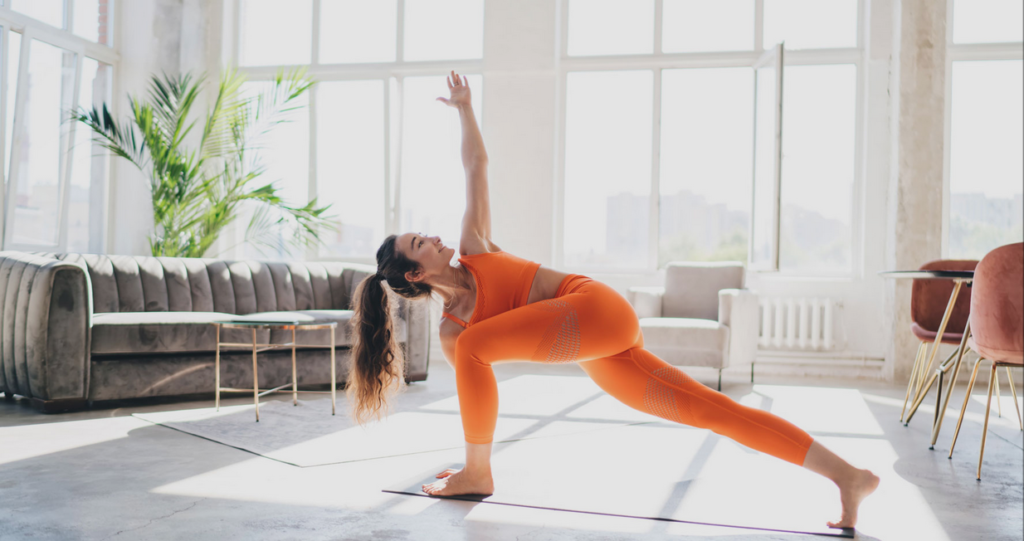
On building a body that feels genuinely strong and alive — not through hours you do not have, but through intelligent, intentional movement woven into the life you are already living.
or roughly three years, I had a gym membership I used four times. Not four times a week — four times total. It sat on my credit card statement like a small, monthly monument to my own good intentions, and every time I saw it I felt the particular kind of guilt that comes not from doing something wrong but from repeatedly not doing something right. The gym was twenty minutes from my flat, which meant forty minutes of travel for what, on a genuinely busy week, was a forty-minute workout. The maths never worked. The guilt always did.
What finally ended the cycle — the membership, the guilt, and the particular exhaustion of aspiring to a fitness routine I was never actually going to maintain — was a conversation with my doctor at a routine check-up during which I mentioned, somewhat shamefacedly, that I was not exercising as consistently as I should be. She asked why not. I gave her the gym story. She asked why it needed to be the gym. I did not have a good answer. I had assumed, without ever quite examining the assumption, that real exercise required dedicated space, dedicated equipment, and dedicated time blocks of at least forty-five minutes to qualify as worthwhile. She told me that the research said something quite different. And then she sent me home to look it up.
What I found when I looked it up genuinely surprised me and subsequently changed everything about my relationship with movement. The evidence for short, consistent, intelligent exercise done at home is robust, credible, and consistently ignored by a fitness industry with significant financial interest in convincing you that you need their space, their equipment, their membership, their classes, and their infrastructure to get meaningfully fit. You do not. What you need is a plan, some floor space, and the willingness to prioritise twenty to thirty minutes several times a week in a way that you will actually follow through on.
This is that plan. Built from research and from years of iterating my own home routine, designed for the woman whose life is genuinely full, who does not have the luxury of treating fitness as a separate appointment she keeps with a gym across town, but who absolutely does have the capacity to be stronger, more energised, more physically vital than she currently is. The fitness routine that will actually change things for you is the one you will actually do. Let us build that.
✦
Why Most Fitness Routines Fail Busy Women — And What to Do Instead
The standard fitness advice — go to the gym three to five times a week, follow a progressive programme, take rest days, track your macros, get eight hours of sleep — is not wrong exactly. It describes the conditions under which significant fitness improvements happen for people who have the time, the schedule flexibility, the childcare, the energy surplus, and the proximity to a gym that makes that advice executable. For a lot of women, most of that list is simply not available most of the time. Which does not mean they cannot get fit. It means they need a different approach.
The specific failure mode of most fitness routines for busy women is not lack of commitment — I want to say this clearly, because the fitness industry has a habit of reframing structural problems as personal motivation failures. When you stop going to a gym across town because your schedule imploded and you could not make the time work, that is not a motivation problem. It is a logistics problem. And logistics problems require logistics solutions, not inspirational quotes about discipline.
The logistics solution for most busy women is home fitness. Not as a compromise or a fallback — as a genuinely superior strategy given the actual conditions of their actual lives. Here is why the home advantage is real:
Zero commute time means the thirty minutes you have available are thirty minutes of movement, not twenty minutes of movement bracketed by fifteen minutes of travel in each direction. Elimination of the “getting ready” variable — the shower, the gym outfit, the locker situation — means the activation energy required to begin is dramatically lower. No class times, no booking systems, no cancelled classes, no equipment queues. And the compounding psychological effect of having your workout space be your home: you are already there. The barrier between deciding to exercise and actually exercising is a closed laptop and a cleared floor rather than a closed laptop, a car journey, a parking space, and a building with a door code you can never remember.
“The best workout programme is not the most sophisticated one. It is the one you will actually do, consistently, in the life you are actually living — not the idealised version.”— On realistic fitness for real lives
The other thing the research is very clear about — and this is the thing that most surprised me when my doctor pointed me toward it — is the effectiveness of shorter, more frequent bouts of exercise compared to longer, less frequent sessions. Ten-minute movement breaks done three times across a day produce measurable cardiovascular and metabolic benefits. Twenty-minute high-intensity sessions produce significant strength and conditioning improvements when done consistently over weeks. The forty-five-minute minimum that most of us have internalised as the threshold at which exercise “counts” is not grounded in physiology. It is grounded in gym culture, which requires people to show up and stay long enough to justify the journey.
✦
Before the Workouts: Building the Foundation That Makes It Stick
I want to spend time here before we get to the actual exercises, because the foundation — the mindset, the environment design, the practical logistics — is the thing that determines whether this routine becomes a genuine habit or another enthusiastic start that fades within three weeks. I have started enough fitness routines with enthusiasm and abandoned them with disappointment to know exactly where the points of failure are, and I want to address them before they find you.
The Environment Question
You do not need a home gym. You do not need a dedicated room, a rack of dumbbells, a yoga studio in your spare bedroom, or the kind of tastefully minimal fitness space that has been flooding aesthetics accounts since the wellness-meets-quiet-luxury era began in earnest. What you need is approximately four square metres of floor space that you can access without significant rearrangement most days of the week.
The designated spot matters more than the designated equipment, because location is a habit cue. When you have a specific place in your home where you exercise — the cleared living room floor, the end of the bedroom with the rug pushed back, the spare room corner — your brain begins to associate that place with the behaviour of movement. The environmental cue makes the habit easier to initiate because the association is already there. Exercise wherever is convenient, but exercise in the same wherever consistently.
The equipment that is genuinely worth owning for a serious home routine is minimal: a single resistance band (a medium-resistance loop band and a longer flat band together cost less than one month of most gym memberships), a yoga mat if you prefer the feel of one under your hands and knees, and ideally a single pair of adjustable dumbbells or two fixed-weight dumbbells in a moderate weight that feels challenging by the end of a set. That is genuinely it. Everything else is optional.
The aesthetic dimension of your workout space matters more than fitness culture traditionally acknowledges. The clean girl and quiet luxury movements in interior and lifestyle aesthetics have given many women a new relationship with their home environment — a sense that every space should be intentional and somewhat beautiful, that surroundings affect mood and motivation in real and consequential ways. This is true. An exercise space that feels inviting — cleared of visual clutter, with natural light if possible, with a small speaker for music, with a mat that is pleasant to stand on — is a space you will want to use. One that feels functional but unloved is one you will mentally categorise as a chore.
The Schedule Question
The most common scheduling mistake in home fitness is the vague commitment: “I will work out three times this week.” This is not a plan. It is an intention, and intentions without specific implementation details — when, where, immediately following or preceding which other habit — fail at a significantly higher rate than specific plans do. This is not speculation; it is from the implementation intention research in behavioural science, which consistently shows that specifying when and where you will do something approximately doubles the likelihood that you will actually do it.
The most reliable home workout scheduling strategy I have found is what habit researchers call habit stacking — attaching the new behaviour to an existing one that already occurs at the right time. You already do something every morning or every evening that is non-negotiable. Make your workout the thing that happens immediately before or after that anchor habit. Before the shower. After the coffee. Before getting dressed. After the school run. The anchor habit pulls the workout behaviour into its orbit, and after enough repetitions, both habits feel like one continuous sequence rather than two separate things requiring two separate decisions.
The Minimum Effective Dose
Research consistently shows that 20–30 minutes of moderate-to-vigorous exercise three to five times per week produces significant improvements in cardiovascular fitness, muscular strength, mood regulation, cognitive function, and metabolic health. This is the minimum effective dose — the smallest amount of consistent exercise that produces meaningful results. Build your home routine around this number, not around the aspirational 60+ minutes that most fitness programmes suggest and most busy women cannot realistically maintain.
The Weekly Structure: Your Seven-Day Blueprint
This is the framework I have landed on after significant iteration, and it reflects what I know about sustainable home fitness for women with genuine schedules. It is five days of movement and two days of rest, with the movement days divided between strength-focused sessions and shorter, more active recovery work. The total time commitment per week, including warm-up and cool-down, is approximately two and a half to three hours — less than half a day. This is achievable. It is also, when done consistently, genuinely transformative.
Monday
Lower Body Strength
25–30 minutes
Squats, lunges, hip hinges, glute bridges. The foundation of functional lower body strength.
Tuesday
Active Recovery
15–20 minutes
Light yoga, walking, stretching. Movement without load. Let the muscles repair.
Wednesday
Upper Body + Core
25–30 minutes
Push-ups, rows, shoulder work, planks, and rotational core exercises.
Thursday
Rest Day
—
Genuine rest. Walk if you want to. The adaptation happens during recovery, not during the session.
Friday
Full Body HIIT
20–25 minutes
Short, intense intervals that work the whole body and produce significant cardiovascular and metabolic benefit in minimal time.
Saturday
Mobility & Stretch
20–25 minutes
Dedicated mobility work, yoga flow, or Pilates-inspired movement. For the body and the mind equally.
Sunday
Rest Day
—
Rest is training. The women who progress fastest are the ones who recover deliberately.
A note on flexibility within this structure: the specific days matter less than the pattern of alternation between harder sessions and recovery. If Wednesday is actually impossible this week, shift it to Thursday and push the rest day forward. The structure is a framework, not a sentence. What matters is hitting the five movement days across the week in roughly the alternating pattern — hard, easy, hard, rest, hard, easy, rest — not hitting them on the exact days I have listed.
✦
The Workouts in Detail: What You Are Actually Doing
Now for the specific sessions. I want to give you enough detail that you can begin without any additional research or resources — the exercises, the structure, the progressions, the modifications. Each session below can be done in the space described (approximately four square metres of clear floor), with the equipment described (optional resistance band, optional light to moderate dumbbells), and in the time described.
Session One: Lower Body Strength — The One That Will Change Your Legs
The lower body session is structured as a circuit of five exercises, performed for the prescribed reps, rested for sixty seconds between rounds, and repeated three times. This structure produces both muscular endurance and genuine strength in the glutes, quadriceps, hamstrings, and calves — the muscles responsible for the posture and the physical ease in movement that is so immediately visible in how a woman carries herself.
01
Compound Movement
Bodyweight Squat to Banded Squat
3 sets12–15 reps60 sec rest between sets
Stand with feet hip-width apart, toes slightly turned out. Lower until your thighs are parallel to the floor or as deep as your mobility comfortably allows, keeping your chest up and your weight in your heels. Drive through the heels to stand. When this becomes easy — and it will within two weeks — add a resistance band just above the knees, which increases glute activation dramatically and makes a bodyweight squat genuinely challenging again. The progression to holding a single dumbbell at the chest extends the challenge further. This is the primary lower body exercise, and it rewards consistency more than any other.
02
Unilateral Strength
Reverse Lunge
3 sets10 reps each legControlled tempo
From standing, step one foot directly behind you and lower the back knee toward the floor, keeping the front shin vertical. Drive through the front heel to return to standing. The reverse lunge is superior to the forward lunge for most people because it places less shear force on the knee and creates more glute activation — and it is significantly easier to do well in a small space. Three seconds down, one second pause at the bottom, two seconds up. The tempo is where the work lives. When bodyweight becomes easy, hold a dumbbell in each hand.
03
Hip Hinge — Posterior Chain
Romanian Deadlift
3 sets12 repsHeavy as you can manage with good form
This is the exercise that changed my hamstrings and glutes more than any other single movement. Stand holding dumbbells in front of your thighs. Hinge at the hips — not the waist, the hips — pushing your hips backward as the dumbbells travel down your legs. Keep your back flat, your chest up, your shoulder blades engaged. When you feel a significant stretch in the hamstrings, drive the hips forward to return to standing. The hip hinge is a movement pattern that most women have never been taught and that produces rapid, visible results in the back of the body when trained consistently. If you own only one set of dumbbells, make them heavy enough to make this exercise challenging.
04
Glute Isolation
Glute Bridge to Hip Thrust
3 sets15–20 repsResistance band optional but recommended
Lie on your back with knees bent, feet flat on the floor hip-width apart. Drive through your heels to lift the hips toward the ceiling, squeezing the glutes hard at the top. The banded version — with a resistance band just above the knees — forces the knees out against the band’s resistance and dramatically increases glute activation. Hold for two counts at the top of every rep. When the floor version becomes easy, elevate your shoulders on a sofa or sturdy chair for a full hip thrust, which produces significantly greater range of motion and correspondingly greater muscle activation.
05
Calves + Balance
Single-Leg Calf Raise
3 sets15 reps each legSlow and controlled
Stand on one foot, holding a wall or the back of a chair lightly for balance. Rise onto the ball of the foot as high as possible, hold for one count, lower slowly for three counts. The slow lowering — the eccentric phase — is where the calf strengthening happens. Single-leg makes this significantly more challenging than the bilateral version and adds a balance component that improves ankle stability over time. This is the exercise that, after eight weeks, will make you notice your calves look completely different. Which is a genuinely pleasant surprise.
Session Two: Upper Body and Core — Building the Strength That Changes Your Posture
The upper body session is the one that produces the most visible postural changes and the most significant impact on how you carry yourself — the shoulders-back, chest-open quality of a woman who moves with genuine physical confidence. The session pairs pushing exercises (that work the chest and triceps) with pulling exercises (that work the back and biceps) in an alternating structure, which allows higher volume without fatigue compromising form.
01
Push — Chest and Triceps
Push-Up Progressions
3 sets8–12 repsFull range every rep
The push-up is one of the most effective upper body exercises available and one of the most poorly performed. Start with whatever variation allows you to maintain a completely straight body from head to heels (or head to knees in the modified version) for the full set. The modification that actually works for building toward full push-ups is an incline push-up — hands on a sturdy chair or kitchen counter — which allows the correct movement pattern with reduced loading. As strength builds, reduce the incline progressively until you reach the floor. The progression can take four to six weeks. It is completely worth the patience.
02
Pull — Back and Biceps
Dumbbell or Banded Row
3 sets12 reps each sideSqueeze at the top
Hinge forward at the hips until your torso is roughly parallel to the floor, holding a dumbbell in one hand, supporting yourself on a chair or table with the other. Pull the dumbbell toward your hip, leading with your elbow, squeezing the back muscles at the top. The squeeze at the top is the thing most people skip and the thing that produces the result. Pulling exercises are the single most impactful category of movement for improving posture — they strengthen the muscles that hold the shoulders back and the chest open, which are chronically weak in most women who spend significant time at desks.
03
Shoulders
Overhead Press + Lateral Raise
3 sets10 press + 12 lateral raiseLight dumbbells, controlled tempo
Shoulder work is the category most responsible for the physical silhouette that makes clothes hang and move differently — the slightly squared, held shoulders that are not about rigid posture but about actual muscular strength in the deltoids and upper trapezius. Overhead press done standing, with dumbbells pressed directly overhead until arms are extended, then lowered slowly. Followed immediately by lateral raises — arms raise out to the side to shoulder height, no higher, and lower slowly. Use lighter weights than you think you need for lateral raises. The shoulder lateral head fatigues quickly and the form deteriorates with heavy weight in a way that is not useful.
04
Core — Stability
Plank Variations
3 rounds30–45 sec holdsFocus on quality not duration
The plank done well is one of the most comprehensive core exercises available — it trains the deep stabilisers (the transverse abdominis and the multifidus) that provide spinal support and contribute directly to the lower back health that makes everything else possible. A plank done poorly is almost useless. Hips level with the shoulders, not elevated; lower back flat, not arched; the full body engaged from heels to crown. Progress through forearm plank, high plank, side plank, and eventually plank with shoulder taps as capacity increases. Quality of position always matters more than duration.
05
Core — Movement
Dead Bug
3 sets8 reps each sideSlow and deliberate
Lie on your back, arms extended toward the ceiling, knees bent at ninety degrees in the air. Simultaneously extend the opposite arm and leg toward the floor while pressing your lower back firmly into the mat and exhaling. Return and repeat on the other side. The dead bug is the core exercise that physical therapists most frequently recommend for developing anti-extension core stability — the capacity to keep the lower back flat and the pelvis stable under load. It looks simple and is not, done correctly. The key is the lower back staying flat throughout. If it lifts off the floor, the range of motion is too large. Reduce the range and maintain the contact.
The Twenty-Minute HIIT Session: Where Efficiency Becomes Almost Unfair
Friday’s full-body HIIT session is the one that feels most dramatic in the moment and produces the most significant cardiovascular and metabolic adaptations over time. High-intensity interval training — alternating between short bursts of maximum effort and brief recovery periods — is one of the most well-researched exercise modalities in sports science, and the finding that has remained consistent across decades of study is that it produces cardiovascular fitness gains comparable to much longer moderate-intensity sessions, in a fraction of the time.
The structure is a Tabata-inspired four-minute circuit repeated four times with a ninety-second rest between rounds. Four minutes is eight twenty-second intervals alternating between two exercises at maximum effort for twenty seconds and ten seconds rest. This produces a cardiovascular stimulus, a metabolic response, and a full-body muscular demand in a package that is both efficient and, if you are doing it correctly, genuinely humbling.
0:20
Work
Maximum effort. Every second counts.
0:10
Rest
Breathe. Prepare. The next interval is coming.
×8
Per Round
Eight intervals complete one four-minute round.
1:30
Recovery
Between rounds. Walk. Breathe. Do not sit down.
×4
Total Rounds
Four rounds plus warm-up and cool-down = 20 minutes.
The exercise pairs for the four rounds, chosen to work different muscle groups and allow partial recovery within each interval structure:
Round 1: Jump squats (or squat pulses for a lower-impact option) alternated with push-up plank hold. Round 2: Alternating reverse lunges alternated with mountain climbers at a pace that maintains form. Round 3: Lateral shuffles alternated with tricep dips off a chair. Round 4: High knees or jumping jacks alternated with glute bridges at pace.
The “or lower-impact option” note is important and not a concession to taking it easy. High-impact movement — jumping, running — is not accessible or appropriate for everyone, and the physiological benefits of HIIT come from the intensity relative to your capacity, not from the specific presence of impact. If joint health or other considerations make jumping inappropriate, simply increase the pace and depth of the low-impact version to the point where your effort level matches what a jump squat would require. Intensity is the variable. Impact is just one way of achieving it.
✦
The Saturday Mobility Session: The Work That Everything Else Depends On
Mobility work is the least glamorous and most underestimated component of any fitness routine, and it is consistently the first thing that busy women drop when time is tight. This is exactly backwards. Mobility — the active range of movement available at each joint — is the foundation that makes all other movement better, reduces injury risk, accelerates recovery between harder sessions, and produces the specific quality of ease in the body that is the most visible hallmark of genuine physical health.
The woman who moves with the graceful, effortless quality that makes you watch her — who sits and stands and reaches and turns with an ease that looks natural but is actually earned — is almost certainly someone who does some form of consistent mobility work. It is not an accident. It is a practice.
The Saturday session follows a full-body flow format: five to eight minutes of gentle movement to warm the joints and tissues, followed by twelve to fifteen minutes of deeper mobility work targeting the areas that carry most of the restrictions from a typical week of desk work, driving, and the natural tightening patterns that accumulate in a body that spends more time sitting than moving. The final five to seven minutes are dedicated stillness — a yin yoga-inspired deep hold or a simple savasana — that allows the nervous system to shift genuinely into recovery mode.
The areas worth prioritising in a mobility routine for the average busy woman: hip flexors (chronically shortened by sitting), thoracic spine (rounded by desk work and phone use), shoulders (internally rotated by the same), and ankles (restricted by the combination of sitting and heel-wearing, both of which shorten the calf complex over time). Addressing these four areas consistently will produce changes in posture and movement quality that are visible within four to six weeks and that continue to improve for as long as the practice continues.
✦
The Mindset Dimension: Making It Last Beyond the First Enthusiastic Fortnight
Every fitness guide includes the workouts. Fewer include an honest account of the psychological terrain of building and maintaining a home fitness habit, which is significantly more complex and more interesting than the exercise prescription itself. Here is what I know about the mental dimension of this particular project — from experience, from research, and from watching enough women start and stop fitness routines (including myself) to understand exactly where the failure points live.
The Identity Shift Is the Goal
The most durable fitness habit is not one built on motivation — motivation is variable, contingent on mood and energy and circumstance. The most durable habit is one built on identity: the simple, settled belief that you are a person who moves regularly, who exercises as a matter of course, who does this because it is part of who you are. This shift takes time. It happens through repetition, through showing up when you do not feel like it, through the gradual accumulation of evidence that you are in fact the kind of woman who does this. You are not waiting to feel like the person who exercises. You become her by exercising.
Consistency Over Perfection, Every Single Time
The single most important rule of home fitness for busy women: a ten-minute workout is infinitely superior to no workout. When the thirty minutes you planned becomes ten minutes available, do the ten minutes. When you miss a session because life intervened, acknowledge it and continue with the next scheduled session without guilt, self-recrimination, or the catastrophic “I’ve ruined it” narrative that causes a skipped Tuesday to become an abandoned programme. The programme is not ruined by one missed session. It is ruined by the decision to treat one missed session as meaningful evidence about whether you can do this. You can. Continue.
Track Process, Not Just Outcome
Fitness outcomes — weight, measurements, visible muscle definition — change slowly and unevenly in ways that are discouraging if they are your only metric of progress. Track process alongside outcome: how many sessions this week, how many weeks in a row you have hit your minimum, how a specific exercise that was difficult four weeks ago now feels manageable. Process tracking provides the positive reinforcement that sustains motivation during the weeks when the outcome metrics are not moving as quickly as you want them to. They will move. The process is what guarantees it.
The Aesthetic Dimension Is Real and Allowed
The fitness world has, in recent years, developed a somewhat anxious relationship with aesthetic motivation — the desire to look better as part of the reason for exercising. There is pressure to frame fitness purely in terms of health, strength, energy, and other internally-focused motivations. I understand the reasons for this pressure and I do not entirely disagree with them. But I also think it is honest to acknowledge that wanting to feel good in your clothes, to carry yourself with physical confidence, to like what you see in the mirror — these are real and legitimate motivations, and they are allowed to coexist with the deeper, more durable ones. Use all of them. They are all pulling in the right direction.
On Fitness and the Elegant Woman
There is a specific quality that consistent physical training produces — over months, not weeks — that has nothing to do with a particular body shape or size and everything to do with how a woman inhabits her body. A groundedness. An ease of movement. The way she sits, stands, gestures. The way she picks something up without thinking about it. Physical training builds not just muscle and cardiovascular capacity but a proprioceptive intimacy with your own body — a sense of knowing where you are in space, of trusting your body to do what you ask of it. This quality is immediately visible. It is what makes a simple outfit look considered, what makes the most casual movement look graceful. It is the physical equivalent of confidence, and it comes from exactly the same source: consistent practice.
✦
What to Expect and When to Expect It
One of the most demoralising aspects of beginning a fitness routine is the gap between expectation and reality in the early weeks — the period when you are working consistently and hard and the results are not yet visible in the ways you might expect them to be. Understanding what is actually happening in your body during this period, and when the different kinds of changes typically become apparent, is one of the most useful things I can offer you alongside the workouts themselves.
In the first two to three weeks, the changes are primarily neurological rather than structural. Your nervous system is learning the movement patterns — becoming more efficient at recruiting the right muscles in the right sequence, reducing the unnecessary co-contraction that makes new exercises feel clumsy and effortful. During this period, the exercises will feel significantly harder than they should based on the actual load involved. This is normal. The apparent difficulty is about pattern acquisition, not about your physical capacity. By the end of week three, the same exercises will feel measurably easier — not because you have built significant new muscle, but because your nervous system has become better at the patterns. This is the first kind of progress, and it happens before anything you can see in a mirror.
Between weeks four and eight, structural changes begin. Muscle protein synthesis increases in response to the progressive overload of the training. The cardiovascular adaptations — lower resting heart rate, improved oxygen efficiency, faster recovery between intervals — become apparent in how you feel during the sessions. Sleep quality often improves during this period, sometimes dramatically, because physical training is one of the most effective interventions available for sleep architecture. Energy levels across the day begin to stabilise in ways that have nothing to do with how tired the workout makes you feel immediately afterward.
The visible aesthetic changes that most women are hoping for — improved muscle definition, postural changes, changes in body composition — become apparent between eight and twelve weeks of consistent training. This timeline is not variable based on intensity or enthusiasm. It is physiological. Muscle tissue takes time to remodel. The women who see results consistently are the ones who understand this timeline and do not abandon the programme during the gap between when they hoped to see results and when the results actually arrive.
“Give your body the respect of time. It is rebuilding itself, quietly and consistently, even on the days when you cannot see it happening. Eight weeks of consistency produces changes that no amount of effort concentrated into a shorter period can replicate.”
The Nutrition Piece: What Supports the Work Without Becoming Another Full-Time Job
I want to address nutrition in the context of a home fitness routine for busy women because it is impossible to ignore and because the nutrition advice that typically accompanies fitness content — track your macros, meal prep on Sundays, eat six small meals, count your protein to the gram — is almost as disconnected from most women’s actual lives as the gym-membership-and-hour-a-day fitness prescription.
Here is what I believe about nutrition and exercise, based on the research and on practical experience: the relationship between diet and fitness outcomes is real and significant, and it does not require obsessive tracking or dietary perfection to be productive. The principles that consistently make the biggest difference for women doing the kind of programme described in this article are simple enough to state in three paragraphs.
Protein is the macronutrient that matters most in the context of a strength training programme. It provides the raw material for muscle protein synthesis — the process by which training stimulus is converted into actual new muscle tissue. Most women eating a typical Western diet are getting less protein than would optimally support muscle building. This does not mean supplementing with protein powders (though they are a convenient option for anyone who finds it difficult to meet targets through food alone). It means including a meaningful source of protein — eggs, fish, chicken, legumes, dairy, tofu — at every meal, which for most women represents a modest increase in intentionality rather than a dramatic dietary overhaul.
Consistent hydration — genuinely adequate water intake, not performative water-carrying — affects energy levels, workout performance, recovery speed, and skin quality in ways that are immediate and measurable. In a home fitness context specifically, where you do not have the social cues of a gym environment prompting you to drink, it is worth making water accessibility deliberately easy: a full bottle visible and within reach at your desk, a glass by the kettle, a habit of drinking before and after sessions rather than during them if you find mid-workout hydration uncomfortable.
Food timing around workouts matters less for most women doing home fitness than the fitness industry suggests. The anabolic window — the period immediately post-workout during which protein consumption is supposedly maximally effective — is significantly wider and more flexible than the traditional “thirty minutes or it does not count” advice indicates. If you eat adequate protein across the day and your total nutrition is broadly supportive of the training you are doing, the precise timing of individual meals matters very little. Eat when you are hungry. Include protein. Eat mostly things that grew in the ground or swam in the sea or walked on the land. That is sufficient guidance for the vast majority of busy women doing home fitness.
✦
The Last Thing: Permission to Begin Imperfectly
I want to close this article the way I wish every fitness guide I ever read had closed — not with a motivational flourish or a list of final takeaways, but with something more honest and more useful than either.
You are going to start this routine and miss sessions. You are going to have weeks where life intervenes so comprehensively that the carefully planned five movement days becomes two, or one, or zero. You are going to do the push-up modification and feel briefly self-conscious about it, as though the modification represents a failure rather than intelligent adaptation. You are going to have a session that feels terrible — where your energy is low and your form is off and the whole thing feels significantly harder than it should — and you are going to have to decide whether that session means something about the programme’s suitability for you or whether it means you had a difficult week and your body knew it. It means the latter. Always.
What makes the difference, ultimately, is not the quality of the programme. It is not the sophistication of the exercises or the precision of the periodisation or any of the fitness science that I have tried to make accessible in this article. What makes the difference is the decision, repeated over months, to continue. To show up for the imperfect session. To do the ten minutes when thirty is not available. To treat the missed week as a pause rather than a termination.
The woman with the strong, capable, gracefully moving body that you may be imagining as you read this did not get there in a single motivated month. She got there by continuing. By not treating imperfection as failure. By understanding that the relationship between effort and result in fitness is one of the most patient, most consistent, and most ultimately reliable relationships available to a human body. Give it the time. Do the work. Miss sessions and come back to the next one. In eight weeks you will not believe the same body is yours. In a year, you will not remember who you were before you started.
That is the promise. The home workout programme is how you collect on it.