
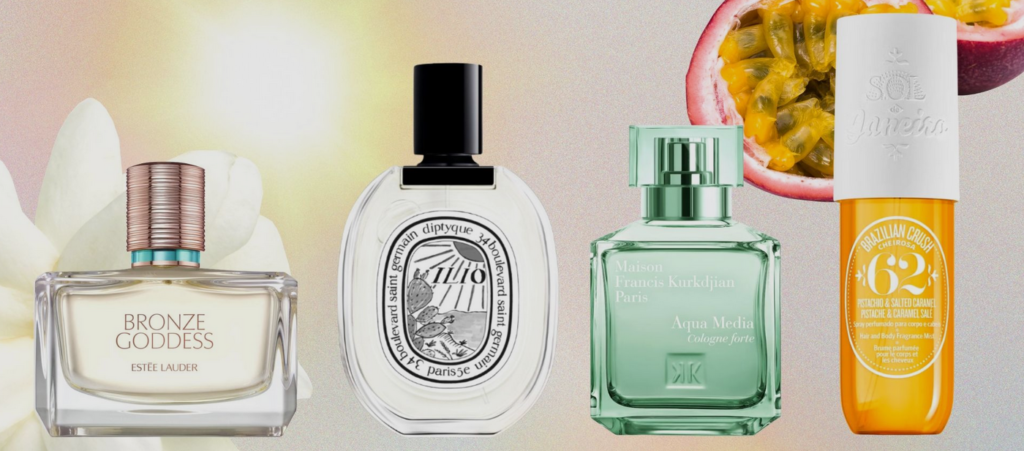
How a lazy Saturday morning experiment with three perfume bottles completely changed the way I think about getting dressed — and why I’ll never go back to wearing just one scent again.
It started with an accident. I’d run out of my usual summer perfume — the one that lived on my vanity for two years and had basically become my olfactory identity — and in a slightly chaotic morning rush, I grabbed two bottles instead of one. A floral I’d been ignoring, and a musky body oil I usually saved for evenings. I spritzed one on my wrists, dabbed the other on my collarbone, and walked out the door without thinking twice about it.
By 10 AM, three people had stopped me to ask what I was wearing.
That was the moment I properly understood what perfume layering actually means — not in the vague theoretical sense I’d read about in beauty magazines, but in the visceral, real, oh, this changes everything way. I’d stumbled onto something that fashion girls on Pinterest and fragrance collectors on YouTube had been quietly obsessing over for years, and I was just now arriving at the party.
Since then, I’ve gone deep. I’ve spent the better part of eighteen months experimenting with combinations, reading about fragrance families, haunting department store perfume counters, building an embarrassingly large collection of samples and mini bottles, and — most importantly — finding the layering combinations that genuinely feel like me. Specifically the summer versions of me: the version who wears linen and gold jewelry and drinks iced coffee on a warm terrace, who moves between elegant and effortless without really trying.
This post is everything I’ve learned. My actual favorites, the ones I come back to every single summer, the ones I recommend to friends, the ones that photograph beautifully in my mind even when I can’t see them. And because I know not everyone has the same taste, I’ve organized them by mood and aesthetic so you can find the combinations that suit your particular version of summer.
Let’s start at the beginning, though — because understanding why layering works makes it so much easier to do it well.
Why Perfume Layering Is the Most Underrated Beauty Ritual of Our Time
There’s a reason niche fragrance brands have exploded over the last decade, and it’s not just because people suddenly have more money to spend on luxury goods (though that’s part of it). It’s because the era of the single-note, one-dimensional “signature scent” that you spritz from a department store bottle and wear forever is slowly giving way to something much more personal, much more layered — literally and figuratively.
The modern woman’s relationship with fragrance is the same as her relationship with fashion: it’s not about finding one perfect outfit and wearing it forever. It’s about dressing for the moment, for the mood, for the particular version of yourself you want to inhabit that day. And layering perfumes is exactly that — a way to compose something that’s entirely, uniquely yours.
Middle Eastern fragrance culture has known this for centuries. The tradition of bakhoor (scented wood chips burned in the home) and the layering of perfume oils over amber and oud was never about restraint — it was about abundance, complexity, and the idea that scent is a language. That philosophy is finally making its way into mainstream Western beauty culture, and honestly? It’s about time.
What I love about summer specifically is that it’s the easiest season to layer. The heat amplifies fragrance — your skin is warmer, your pores are more open, and scent molecules diffuse more readily into the air around you. This means you need less product to create more impact, and the interactions between layered fragrances happen quickly and beautifully. Things that might smell a bit muddy or indistinct in January bloom into something lush and multidimensional in July.
✦
The other thing that’s changed — and I think this is genuinely important — is the aesthetic landscape we’re all living and dressing in right now. The quiet luxury aesthetic that took over fashion in 2024 and hasn’t really loosened its grip since has given us a whole new framework for thinking about personal style. It’s understated but expensive-feeling. It’s effortless but intentional. It’s the aesthetic of someone who knows exactly who she is and doesn’t need to announce it loudly.
Fragrance layering is the olfactory equivalent of that. A beautifully composed signature scent built from two or three complementary perfumes says something that a single bottle off a shelf simply cannot say. It says: I thought about this. I know my taste. I’m not wearing what everyone else is wearing.
And in summer, when everyone is reaching for the same clean musks and citrus soliflores, your layered combination is your secret weapon.
The Basics of Layering Perfumes (A Quick Primer Before We Get to the Good Part)
I promise this won’t be a chemistry lesson. But there are a few principles I wish someone had told me before I started experimenting, because they would have saved me some truly terrible scent combinations and at least one morning where I had to change my top because I smelled like a candle shop during a wildfire.
The first thing to understand is fragrance families. All perfumes belong to one or more scent families — floral, woody, oriental, fresh/citrus, gourmand, aquatic, chypre, fougère, and so on. Layering works best when you’re either working within the same family (building depth and complexity within one aesthetic) or pairing complementary families that share common notes (like floral over musk, or citrus over vetiver).
Opposing families can work, but they take more skill. Pairing a very sweet gourmand with a very sharp green or aquatic note, for example, can either be genius or a disaster depending on the specific fragrances. When you’re starting out, I’d recommend complementary before contrasting.
The second thing is application order and placement. The general rule is: apply heavier, longer-lasting fragrances first, and lighter ones on top. Musk bases, wood accords, and oriental notes go on first — these anchor the composition and slow down the evaporation of everything else. Then you layer your florals, fresher notes, and any citrus elements on top, knowing they’ll fade faster and let the deeper notes emerge over time. The result is a fragrance that evolves throughout the day, which is genuinely one of the most beautiful things about layering.
Third — and this one is counterintuitive but important — less is almost always more. When you’re layering, you’re potentially doubling or tripling the amount of fragrance on your skin. Start lighter than you think you need to. A single spray of the base and two sprays of the top layer is usually enough. You can always add more; you cannot take it away.
Your layered scent should feel like your most expensive outfit — the kind where people can sense the quality before they can identify exactly what it is.— On the art of a true signature scent
And finally, the best piece of advice I received from a perfumer I spoke to at a fragrance event last autumn: trust your nose, not the rules. The rules are a starting point. Your personal chemistry, your preferences, your skin’s natural scent — all of these will affect how combinations smell on you specifically. What smells divine on your best friend might not work on your skin chemistry at all. This is why samples and experimentation are non-negotiable. Never buy full bottles of something you haven’t worn for a full day.
My 7 Favorite Summer Perfume Layering Combinations — And the Stories Behind Them
Now we get to the actual heart of this post. These are the combinations I return to every summer, the ones I feel most myself in, the ones I build outfits and moods around. I’ve organized them by aesthetic and feeling rather than by fragrance family, because that’s honestly how I think about scent — not as chemistry, but as atmosphere.
01
The White Dress Moment
Sun-warmed skin, linen, bare shoulders — the scent of a perfect afternoon
Maison Margiela Replica — Beach Walk
+
Glossier You
This combination is responsible for more compliments than anything else in my fragrance wardrobe, and it’s deceptively simple. Beach Walk on its own is lovely but slightly linear — it’s that iconic ozonic, coconut-tinged, salty air scent that everyone immediately recognizes. Alone, it can smell a little like everyone else at the beach. But layer it under Glossier You, and something magical happens.
Glossier You is one of those rare fragrances that genuinely smells different on every person — it’s designed to amplify your own natural skin scent, to smell like you but better. It brings warmth and a soft, slightly musky ambrette and iris base that makes the Beach Walk suddenly feel like your beach day rather than a generic one. The ozonic freshness of Beach Walk becomes your top note; the You settles into something intimate and warm underneath it.
Application note: Layer the Glossier You body lotion first if you have it — apply it generously right after a shower while your skin is still slightly warm. Then mist Beach Walk over the top from about 20cm away. The combination of the moisturized skin and the layering creates a sillage that lasts hours.
I wear this one with white linen dresses, no-makeup makeup, and gold hoop earrings. It pairs with the clean girl aesthetic that still holds strong in 2026 — minimal, effortless, impeccably put-together without looking like you tried. It’s the scent of someone who woke up like this, which is to say, someone who has a very good morning routine and excellent skin.
If you’re the kind of woman who gravitates toward neutral tones, elevated basics, and the kind of easy elegance that photographs beautifully on a cobblestone street in southern Europe, this combination was made for you.
02
The Soft Glam Evening
When the sun goes down and your perfume needs to keep up with your ambition
Tom Ford — Black Orchid
+
Jo Malone — Peony & Blush Suede
This one surprised me. I’d always thought of Black Orchid as a winter scent — something to wear with velvet and dark lipstick when the days are short and you want to feel dangerous. And it is that. But in small amounts, used as a base layer under something lighter and floral, it transforms into something extraordinary for summer evenings.
The trick is restraint. One spray of Black Orchid on your chest, allowed to dry and settle for about three minutes, creates a deep, dark foundation — all that rich patchouli, truffle, and black fruit — that blooms upward when you layer Peony & Blush Suede over it. The peony is airy and feminine; the suede note in the Jo Malone gives everything texture and a sense of luxury. What you end up with is something that smells like a woman who is going somewhere important and knows exactly who she is when she gets there.
Application note: This combination has serious sillage — it will arrive before you do and linger after you leave, which is the intention. Use a light hand. One spray of Black Orchid to the sternum, two spritzes of the Peony & Blush Suede to wrists and neck. Do not reapply unless you’ve been somewhere very cold for several hours.
I reach for this combination when I’m wearing a silky slip dress, strappy heels, and doing something that requires me to feel like the best version of myself. A dinner party. A gallery opening. A first date where you want to make a memory. It aligns with soft glam energy — the 2025–2026 iteration of glamour that’s feminine and polished without being overdone, that sits comfortably in the territory between romantic and powerful.
03
The Terrace Breakfast
Fresh, luminous, vitamin-C-for-your-nose energy
Atelier Cologne — Clémentine California
+
Le Labo — Santal 33
If a combination can embody a lifestyle, this one embodies the life I aspire to: slow mornings, good coffee, somewhere with a lot of natural light and a view of something beautiful. Clémentine California is basically sunshine in a bottle — bright, juicy, genuinely cheerful citrus that smells like the moment you peel a fresh clementine and the spray hits your face. It’s one of the most mood-lifting fragrances I’ve ever encountered.
On its own, it fades within an hour (this is the nature of citrus — all the joy, none of the longevity). But layered over Santal 33 — that iconic woody, leathery, cardamom-and-cedarwood base that has become one of the defining scents of a certain kind of modern aesthetic sensibility — and the citrus suddenly has somewhere to land. The Santal 33 extends and deepens it, anchors it in warmth and wood, and the result is a combination that starts sharp and cheerful and slowly mellows throughout the morning into something earthy and comfortable.
Application note: Apply Santal 33 first — this is your base, and it has enough sillage to fill a room. Apply to inner wrists and behind the ears. Allow 5 minutes to dry down. Then apply Clémentine California generously: it evaporates quickly so this is one of the few cases where I’ll use 3–4 sprays. Reapply the citrus around midday if you want to refresh.
This combination is for slow mornings that stretch into lovely days. It suits the quiet luxury aesthetic perfectly — Santal 33 is one of those scents that signals cultural fluency and good taste without announcing itself, and the Atelier Cologne adds a freshness and brightness that keeps it from feeling heavy or serious. Wear it with good denim, a cashmere knit (yes, even in summer — a lightweight one), and your best jewelry.
04
The Garden Party
Florals for grown women — lush, green, complex, and impossibly romantic
Diptyque — Do Son
+
Byredo — Blanche
+
Maison Margiela — Flower Market
This is my only three-fragrance combination, and it took me the longest to get right. I call it the Garden Party because that’s exactly what it smells like: standing in a well-maintained garden at the height of summer, surrounded by roses and tuberose and something green and slightly dewy, with warm skin underneath it all.
Diptyque’s Do Son is the lushest, most romantic tuberose scent I’ve ever worn — rich without being heavy, feminine without being cloying. Byredo’s Blanche adds a clean, almost powdery white rose note that lifts everything and prevents the tuberose from becoming overwhelming. And then a single spray of Maison Margiela’s Flower Market (which smells exactly like a fresh-cut bouquet, green stems and all) gives the whole composition a sharp, realistic edge that makes it smell genuinely alive rather than like perfume.
Application note: This requires precision. Blanche goes first — lightly, to create a white floral base. Do Son second, to the warmest points of your body (inner elbow, behind the knees if you’re wearing something short). Flower Market last, only on the wrists, used very sparingly. The green note is strong and can overpower if you’re heavy-handed.
I wear this to any occasion that has outdoor floral elements — garden parties obviously, but also rooftop dinners, weddings, afternoon tea, or any time I’m wearing something floral myself and want the scent to match the aesthetic. It’s feminine in the most sophisticated, adult sense: it doesn’t smell young or sweet, it smells like a woman who knows what she likes and has very good taste in flowers.
05
The City Girl on Holiday
Urban edge softened by warmth — streetwear-adjacent, elevated, effortlessly cool
Comme des Garçons — 2 Man
+
Ellis Brooklyn — Bee
I know, I know — Comme des Garçons 2 is technically a men’s fragrance. I don’t care and neither should you. Some of the most interesting, unexpected, and frankly gorgeous perfumes exist in the men’s section, and the modern fragrance conversation has moved far beyond gendered scent categories. This combination is exactly the kind of thing you’d wear with wide-leg trousers, a tailored blazer, chunky loafers, and that studied nonchalance that defines elevated streetwear dressing.
CdG 2 is an abstract, almost conceptually interesting fragrance — it smells like the idea of freshness rather than a specific fresh thing. Ink, aldehyde, soft patchouli. It’s cool and slightly strange in the best possible way. Layered with Ellis Brooklyn’s Bee — a gorgeous honey and benzoin fragrance with warm beeswax and sandalwood — and it suddenly gains a depth and warmth it lacks alone. The contrast between the cool abstraction of the CdG and the golden warmth of the Bee creates something that smells genuinely like a person rather than a perfume. Skin-like but better. Real but elevated.
Application note: This combination leans into contrast, so placement matters. CdG 2 on the wrists — where it will project outward and create your initial impression. Bee on the neck and chest — where it will radiate warmth from your body heat and become the longer-lasting, more intimate note people discover when they’re close to you. It’s a two-part story.
This is my signature combination for the version of summer that involves cities rather than coastlines — travelling, exploring, wearing beautiful clothes through interesting streets, feeling like a character in the kind of film where the fashion is as interesting as the plot. It aligns with the elegant streetwear aesthetic that I think about a lot: the idea that high fashion and street-level cool are not opposites but partners, that effortless and expensive can coexist, that you can be the most stylish person in the room without it looking like you tried.
06
The Hammam Fantasy
Warm, sensual, amber-drenched — your skin but turned up to eleven
Amouage — Reflection Woman
+
NUXE — Huile Prodigieuse body oil
This one breaks the rules slightly because one of the components is technically a body oil rather than a perfume — but it’s one of the most fragrant body oils on the market and a beloved layering tool in the fragrance community for good reason. The Huile Prodigieuse from NUXE smells of dry florals, vanilla, and a kind of golden, sun-baked warmth that makes skin look luminous and smell incredible even before you add any perfume.
Applied generously all over the body post-shower, it creates a base that is already beautiful on its own. But layer Amouage Reflection Woman over it — one of the most complex and refined feminine fragrances in the luxury market, all white florals, neroli, and rose over a musky base — and you have created something that smells impossibly luxurious and intimate. The oil slows the evaporation of the Amouage, extending its remarkable sillage for hours. The florals from the Amouage add structure and elegance to the warm, slightly gourmand quality of the Huile Prodigieuse. Together they smell like beautiful, expensive skin — which is perhaps the most desired scent of the moment.
Application note: This is a body-first combination. Apply the NUXE oil generously while your skin is still warm from the shower, massaging it in well. Allow it to absorb for 5–10 minutes. Then apply Reflection Woman to pulse points. The fragrance will smell very different over an oiled body than over bare or moisturized skin — richer, warmer, and much more long-lasting.
I reach for this combination when I want to feel truly feminine and luxurious — beach days that turn into dinners, holidays, those summer days when you have nowhere specific to be but you want to smell extraordinary anyway. It’s aspirational without being inaccessible, which is the thing about layering with body oils: even if you can’t justify the full Amouage bottle, a small decant over an accessible body oil creates a finished result that rivals anything.
07
The Early Evening Ritual
Green, woody, slightly unexpected — the one that makes perfume lovers stop and ask
Hermès — Un Jardin sur le Nil
+
Serge Lutens — Féminité du Bois
I saved my most unusual combination for last, because I think it’s the most rewarding to discover. Un Jardin sur le Nil is one of those perfect summer fragrances that somehow manages to smell simultaneously of Egypt, green mango, lotus, and the earthy warmth of a riverbank at dusk. It’s a Hermès fragrance, so it has that particular quality of effortless, intelligent elegance that is completely consistent across the entire Hermès universe. But alone, for my skin chemistry, it fades a little quickly and lacks weight.
Serge Lutens’ Féminité du Bois is one of the great woods fragrances — it smells of cedarwood and plum and spice and that particular warmth of polished furniture in a warm room. It’s considered a landmark fragrance, one that essentially invented the genre of feminine woody perfumery. Together, these two create a combination that smells like a very sophisticated woman who grew up surrounded by beautiful things and has traveled widely. The green, watery, riverbank quality of the Nil becomes even more interesting against the warm cedar of the Féminité du Bois. The plum note adds a quiet fruitiness that bridges them. It’s complex in the best possible way — the kind of scent that reveals something new every time someone leans in.
Application note: Apply Féminité du Bois sparingly — this is a significant fragrance and you need only one or two sprays to the chest. Allow it to settle completely (5 minutes minimum). Then layer Un Jardin sur le Nil more generously, as its lighter construction sits beautifully over the heavier base. The combination evolves dramatically over 6–8 hours, starting fresh and green and settling into something deeply warm and woody by evening.
The Art of Building a Wardrobe of Layers
Reading through all seven combinations, you might be thinking: this is a lot of perfumes. And you’re not wrong — the collection that enables this kind of layering experimentation does require investment. But I want to share how I actually think about building a layering wardrobe, because it’s different from building a traditional fragrance collection.
When I buy perfume for wearing as a single scent, I’m looking for complete, satisfying compositions that I love from first spray to dry-down. When I buy perfume for layering, I’m often looking for something simpler: a fragrance that does one thing exceptionally well and can act as either a base or a top layer in multiple combinations.
Some of the most useful fragrances in my layering wardrobe are ones I’d never wear alone — they’re too linear or too simple as standalone scents, but as components in a combination, they’re extraordinary. Glossier You is a perfect example of this. It’s lovely on its own but somewhat unremarkable in isolation. As a layer over almost anything, it transforms the composition into something personal and skin-like in a way nothing else quite replicates.
My advice for building a layering wardrobe on a budget: start with two anchors. One musk or skin-like base (Glossier You, Ellis Brooklyn Bee, or a good musk oil) and one wood or amber base (Santal 33 or a simple cedarwood fragrance). These will layer with almost anything and act as foundations for countless combinations. Then collect your top layers — a citrus, a floral, a fresh/aquatic — knowing they’ll work with your anchors. You can have a surprisingly diverse layering wardrobe for less than you’d spend on two full-size niche perfumes.
My Golden Rules for Perfume Layering in Summer
1
Always start lighter than you think you need. Heat amplifies fragrance dramatically. What feels like a gentle application in an air-conditioned room will be much stronger outside. Start with half as much as you think you need and assess after five minutes.
2
Layer your skincare as the first fragrance layer. Scented body lotions, oils, and creams are the foundation of great layering. Your NUXE oil, your Kiehl’s lotion, your Chanel body cream — these all create a fragrant canvas that everything else builds on. Never skip this step.
3
Test combinations on the back of your hand before committing. When you’re discovering a new combination, try it on one hand first. Walk around for an hour and observe how it develops. Your skin chemistry interacts differently with different molecules; a combination that sounds beautiful in theory might not work on you specifically.
4
Keep notes, even informal ones. I have a notes app on my phone called “Scent Experiments” where I record what I tried, when, what I was wearing, and how it performed. It sounds obsessive, but it’s saved me from repeating bad experiments and helped me identify patterns in what works for me.
5
Don’t mix too many fragrance families in one combination. Generally, two complementary families create depth. Three different families often create confusion. The exception is if one of the layers is a very neutral, skin-close base (like Glossier You) that doesn’t impose a family of its own but simply amplifies what’s around it.
6
Allow each layer to settle before applying the next. The molecules need a few minutes to bond with your skin and begin their dry-down before you introduce a new layer. Rushing this process produces a different — usually worse — result than taking the time to let each layer settle.
Summer Fragrance Aesthetics: Matching Your Scent to Your Visual Identity
One of the things I find most fascinating about fragrance is its relationship with visual aesthetics — how certain scents align almost perfectly with certain fashion aesthetics, and how wearing the right scent can reinforce and complete the visual story you’re telling with your clothes.
This is something the fashion and beauty industries have always known but rarely articulate directly. When a luxury house creates a perfume, they’re creating an olfactory version of their visual identity. Chanel No. 5 is not just a beautiful perfume; it’s the scent equivalent of a Chanel tweed jacket — classic, refined, unmistakably French, slightly untouchable. Maison Margiela’s Replica line is the olfactory equivalent of their deconstructed fashion — taking familiar things apart and reassembling them into something that’s simultaneously nostalgic and entirely new.
In 2026, we’re living in a particularly interesting moment for fragrance aesthetics because the dominant visual aesthetics are themselves in dialogue with each other in complex ways.
🌿
The Quiet Luxury Nose
Understated, expensive, and effortlessly sophisticated. Think: Santal 33, Frédéric Malle Portrait of a Lady, Byredo Gypsy Water. Minimal application, maximum quality. Never loud, always present. The fragrance equivalent of a cashmere coat in camel.
🌸
The Clean Girl Scent
Fresh, luminous, skin-like. The scent of clean skin amplified. Think: Glossier You, Maison Margiela Replica Flower Market, clean musks and white florals. Pairs with minimal makeup, glowing skin, gold hoops, linen. The 2026 version of effortless.
🌙
The Soft Glam Signature
Romantic, polished, deliberately feminine. Rich florals over warm musks. Think: Jo Malone Peony & Blush Suede, Amouage Reflection, Tom Ford Black Orchid (lightly). Pairs with slip dresses, strappy heels, evening events where you want to be remembered.
🏙️
The Elevated Streetwear Edit
Cool, unexpected, slightly androgynous. Woody, abstract, skin-like but with edge. Think: CdG 2, Santal 33, Ellis Brooklyn Bee, Byredo Bal d’Afrique. Pairs with tailored pieces, luxury sneakers, that studied nonchalance that takes years to perfect.
The reason I think about this relationship so consciously is that I believe the most powerful personal style — in fashion and in fragrance — comes from coherence. When everything you’re putting on your body is in conversation with everything else, the effect is exponentially more powerful than when things are simply coexisting. Your layered scent should feel like a fifth garment — invisible but present, completing the picture without any single element of it announcing itself.
The Trend Side: What’s Happening in Summer Fragrance Right Now
I can’t write a post about summer fragrance in 2026 without acknowledging what’s actually happening in the fragrance world right now, because it’s genuinely exciting and deeply relevant to the layering conversation.
The most significant trend of the past two years — one that shows absolutely no signs of slowing down — is what the industry is calling “skin scents”: fragrances specifically designed to smell like amplified, idealized skin rather than like a distinct, projecting perfume. This trend is deeply aligned with the clean girl aesthetic and the broader cultural preference for things that appear natural while actually being very intentional. These fragrances are difficult to detect from a distance but intensely, intimately beautiful up close.
From a layering perspective, skin scents are extraordinary tools. Use them as bases and everything you layer on top becomes intimate and personal in a way it simply wouldn’t be over a conventional base. Use them as finishing layers over heavier florals or woods and they smooth everything together into something that smells coherent and skin-like rather than perfume-y. The best examples of the moment include Glossier You, Byredo’s Blanche, and a new wave of amber-based skin scent oils coming from smaller, independent perfume houses.
The second significant trend is the continued rise of fragrance oil and oud-based layering — an expansion of the Middle Eastern fragrance philosophy into mainstream Western luxury fragrance. Concentrated perfume oils applied to the skin or clothing before spraying a conventional perfume on top create a depth and longevity that is genuinely remarkable. The oud and amber tradition, once considered exotic or niche, is now a central part of the way serious fragrance lovers in Europe and North America think about their practice.
I’d also note the Pinterest-driven revival of vintage and classic fragrances as bases for layering. There’s a whole corner of fragrance TikTok and Pinterest dedicated to “vintage fragrance layering” — using older, discontinued, or rediscovered classics as the base for modern combinations. Thierry Mugler’s Alien used as a base under clean modern florals. Cacharel’s Anais Anais layered under contemporary woody fragrances. The combination of vintage depth with modern lightness creates something genuinely unique that you simply cannot buy in a single bottle.
The women who fascinate me most are always the ones who smell like something you can’t quite place — something beautiful, personal, and impossible to replicate. That’s never an accident. That’s layering.
Finally — and this is something I feel strongly about as someone who genuinely cares about both fragrance and fashion — there’s a growing conversation about fragrance as sustainability. Buying fewer, higher-quality fragrances and learning to layer them instead of constantly purchasing new ones is genuinely more sustainable than the churn of newness that the beauty industry typically encourages. A collection of eight excellent fragrances that can combine into dozens of unique compositions is infinitely better — economically, environmentally, and aesthetically — than a collection of forty single-use bottles you cycle through and discard.
Beyond the Bottle: The Full Sensory Experience of a Summer Scent Ritual
There’s something I want to say about the ritual dimension of fragrance that I think gets lost when we focus purely on the technical or the trend-driven aspects. Layering perfumes — done properly, thoughtfully, with attention — is one of the most genuinely pleasurable beauty rituals you can develop. It’s slow. It requires presence. It asks you to be in your body and to pay attention to how things smell and feel on your skin in a way that most other beauty rituals simply don’t.
I have a morning ritual in summer that I genuinely look forward to. After my shower, while my bathroom is still slightly warm and steamy (which is actually the ideal environment for fragrance application, by the way — the humidity helps the molecules bloom), I apply a scented body oil first. Then, while I’m doing my skincare, I decide what mood I’m in, what I’m doing that day, what I’m wearing. By the time I’m dressed, I know what combination feels right. I apply the base layer, wait, apply the top layer, wait, check in with how it’s evolving. The whole process takes maybe five extra minutes compared to just grabbing a bottle and spritzing, but those five minutes set a tone for the whole day in a way that’s hard to articulate but very easy to feel.
This is the thing that the clean girl aesthetic, and the slow beauty movement, and the quiet luxury conversation all gesture toward but rarely name directly: the most powerful self-care is not the most elaborate or expensive version. It’s the most present version. It’s the version where you pay attention, where you make considered choices, where you treat the ordinary act of getting dressed as worthy of genuine thought.
Fragrance is uniquely suited to this kind of ritual because it engages the most emotionally immediate of the senses. Smell bypasses the intellectual brain and goes straight to memory and emotion. When you walk out of your door wearing a beautifully composed layered scent — something that smells uniquely, unmistakably like you — you carry that emotional resonance with you all day. People respond to it, even if they can’t articulate why. You respond to it, catching a drift of your own scent on a warm breeze and feeling for a moment like the very best version of yourself.
How to Find Your Own Summer Layering Combinations
I’ve shared my favorites, but the whole point of this post is ultimately to encourage you to find yours. The combinations I love are an expression of my specific taste, my skin chemistry, my aesthetic sensibilities, and my life. Your combinations should express yours.
Here’s how I’d actually approach finding them, based on everything I’ve learned through this process.
Start with what you already love. If you have a fragrance you reach for constantly and love deeply, that’s your anchor. Everything else in your layering wardrobe should be chosen with the question: what does this add to, or subtract from, that anchor? A fragrance that lifts and brightens your anchor, extends its longevity, adds depth it lacks, or makes it smell more like your skin — that’s a candidate for your collection.
Visit a perfume counter with an agenda. Don’t go to smell everything. Go with a specific question: “I’m looking for something with a strong citrus note to layer over a woody base” or “I need a floral that can work with both clean and oriental fragrances.” The people at specialist counters, especially at stores that stock niche fragrances, are usually knowledgeable and enthusiastic about layering, and they can make suggestions based on your specific goal.
Invest in samples before bottles. This bears repeating because it’s really the most important practical advice I can give. Fragrance samples and decants are widely available — Luckyscent, Scentbird, and many indie fragrance retailers sell them, and most luxury houses will provide samples of their fragrances on request. Wear a combination for a full day before deciding whether it’s worth the investment in full bottles. Never, ever buy a full bottle of something you’ve only smelled on a paper strip.
Pay attention to when your skin chemistry is best. This sounds strange but it’s true: your skin chemistry actually varies depending on your hydration level, what you’ve eaten, and where you are in your hormonal cycle. Most people find their fragrances smell best when their skin is clean, well-hydrated, and they’re fully rested. I notice that certain florals that work beautifully on my skin in the morning sometimes smell slightly off on days when I’m tired or stressed. This isn’t a problem to fix — it’s just useful information about when to wear which combinations.
Don’t be intimidated by the rules. I gave you a bunch of principles earlier in this post, and they’re genuinely useful as starting points. But some of my best-loved combinations shouldn’t technically work — they break the rules about fragrance families, or they combine things that have no obvious connection, or they layer in the “wrong” order. The rules are a map, not the territory. Your nose is the territory.
A Note on Buying Fragrance Ethically and Sustainably in 2026
I mentioned sustainability briefly earlier, but I want to come back to it because I think it’s genuinely important and increasingly central to how thoughtful women are approaching beauty consumption.
The fragrance industry has a complicated relationship with sustainability. Many of the most coveted fragrance ingredients — oud, sandalwood, musks, certain floral absolutes — have historically involved practices that are environmentally and sometimes ethically problematic. Deforestation for sandalwood, over-harvesting of oud from threatened Aquilaria trees, the use of animal-derived musks — these are real issues that the industry has been slowly addressing but has not yet fully resolved.
The good news is that things are genuinely improving. Many of the houses I’ve mentioned throughout this post — Maison Margiela, Diptyque, Byredo, Hermès — have made significant commitments to sustainably sourced ingredients and responsible supply chain practices. Many niche houses are built on principles of transparency and sustainability from the ground up.
From a layering perspective, sustainability arguments actually favor building a smaller, higher-quality collection. If you can create twenty distinct, personal, complex signature scents from a curated collection of eight excellent fragrances, you’re consuming far less than if you’re constantly buying new bottles. The art of layering is inherently a practice of getting more from less — which is, in a fragrance context, genuinely more sustainable.
I’d also gently encourage you to explore smaller, independent fragrance houses alongside the luxury names I’ve mentioned. The world of independent perfumery is genuinely extraordinary right now, and many of the most interesting, creative, sustainable fragrances being made are coming from small operations where the perfumer controls every aspect of production. Following fragrance accounts on Instagram and YouTube, reading communities like Fragrantica and BaseNotes, and exploring independent boutiques in your city are all wonderful ways to discover these makers.
Final Thoughts: Your Signature Scent Is Not One Thing
I started this post with an accident — two bottles grabbed in the wrong order on a rushed morning — and I want to end it by returning to that idea, because I think there’s something genuinely important in it.
The concept of a “signature scent” as something singular and fixed is fundamentally at odds with the reality of human identity, which is multiple, contextual, and always evolving. I am not the same person at a rooftop dinner in a silk dress as I am on a Saturday morning at a farmers market in a linen set, and why should my scent be? The clothes tell a different story. The makeup tells a different story. The jewelry, the bag, the whole composed image tells a different story. Why should the fragrance be exempt from this kind of intentional variation?
A layered signature scent — or rather, a repertoire of layered signature scents for different moods and occasions and aesthetics — is the most honest and sophisticated approach to fragrance I’ve found. It’s also genuinely more interesting, more personal, and more likely to make other people notice and remember you than anything you could spray from a single bottle.
The seven combinations in this post are my summer anchors. Some I’ve been wearing for years; others are newer discoveries. All of them feel, to varying degrees, like a version of me — or the version I want to be in that particular moment, which is perhaps even more powerful.
I hope you find yours. I hope you experiment and fail and discover accidentally, as I did. I hope someone stops you on the street and asks what you’re wearing. And I hope the answer, when it comes, is: it’s a combination — let me tell you about it.
The Fragrance Layering Vocabulary Every Woman Should Know
I’ve used a lot of fragrance terminology throughout this post and I want to close with a proper glossary — not because I think you need a lecture, but because understanding a handful of key concepts genuinely changes how you approach layering and makes the whole process more intentional. Consider this less of a glossary and more of a love letter to the language of scent.
Sillage
Pronounced see-yazh, this French word means the trail or wake that a fragrance leaves behind you as you move through a room or down a corridor. It’s one of the most seductive qualities in a perfume — that moment when you sense that a beautifully dressed woman has just walked past, and you’re left with a lingering impression that something extraordinary was there. High sillage fragrances project and travel. Low sillage (sometimes called “skin scents”) stay close to the body and are only really perceptible when someone is near you.
In layering, understanding sillage helps you balance your combination. If your base layer has very high sillage, you’ll need to use your top layer sparingly to avoid overwhelming it. If both layers are skin-close, you can apply more generously since they’re not going to project into the room. The ideal layered combination usually has a balance: one element that projects and creates your initial impression, and one that stays intimate and reveals itself at close range.
Dry-Down
The dry-down is what a fragrance smells like after the initial burst of top notes fades and the middle and base notes settle into your skin — usually around 30 to 60 minutes after application. The dry-down is the truest expression of a fragrance on your specific skin chemistry, and it’s the phase that determines whether a fragrance is really “you” or not.
For layering, the dry-down phase is when the magic really happens. The interaction between your layered fragrances during dry-down often produces something more interesting and more personal than either fragrance alone. This is why it’s so important to wear combinations for a full day before judging them — what smells wonderful as a first impression might completely transform during dry-down, for better or worse, and what seems unremarkable at first spray might evolve into something extraordinary.
I cannot overstate this: test combinations during dry-down, not just on first smell. I’ve fallen in love with and then abandoned many combinations based solely on what they smelled like for the first twenty minutes, only to revisit them later and discover that the dry-down — what they became over hours — was completely different from what I’d been judging.
Longevity vs. Projection
These are two separate qualities that we often conflate when evaluating a fragrance. Longevity refers to how long a fragrance lasts on your skin — how many hours you can still detect it. Projection refers to how far from your body the fragrance travels and how strongly it announces its presence to the room.
A fragrance can have high longevity but low projection — it clings to your skin for twelve hours but only someone very close to you will be able to smell it. Alternatively, a fragrance might project powerfully for the first few hours and then fade to almost nothing. Understanding the longevity and projection profiles of your individual fragrances helps you build combinations that are balanced and intentional.
In summer, in my experience, most fragrances project more strongly than in cooler months because the heat activates them. So you often need to compensate by applying slightly less than you normally would. Longevity, however, is the opposite for most people — summer heat also accelerates the evaporation of lighter molecules, meaning your citrus and fresh top notes will fade faster, and you may need to refresh them midday.
Skin Chemistry
This is the variable that makes fragrance so deeply personal and so completely non-transferable. Your skin’s pH level, its natural oils and moisture content, its microbiome — all of these interact with fragrance molecules in ways that are unique to you and produce a slightly, or sometimes dramatically, different result than the same fragrance on a different person. This is why reviews are useful for identifying candidates but useless for making final decisions, and why wearing something on your own skin before buying is non-negotiable.
Some people are “fragrance amplifiers” — their skin chemistry intensifies and extends most fragrances beautifully. Others find that fragrances fade quickly or smell slightly different than expected. If you’re in the latter category, layering is actually your best friend: using a base layer of fragrance oil or a scented moisturizer before your perfume gives the molecules something to bond to and dramatically improves both longevity and projection.
The Note Pyramid
Every fragrance is structured around a note pyramid consisting of top, middle (heart), and base notes. Top notes are what you smell immediately — the first impression, usually bright, volatile, quick to evaporate. Middle notes emerge as the top notes fade, usually florals, spices, or herbs — these form the character of the fragrance. Base notes are the deepest, most persistent elements: musks, woods, resins, amber — they anchor everything else and are what you smell hours after application.
For layering, it helps to think about whether your fragrances are primarily top note fragrances like citrus and fresh scents, or base note fragrances like musks, woods, and orientals, because this determines how they’ll interact and how they should be applied. A fragrance that’s primarily a top note experience is a natural candidate for the final layer; a fragrance that’s primarily base notes is a natural candidate for the first layer. When you have two fragrances that are both primarily top notes, layering them tends to create a muddled, overwhelming initial impression that fades quickly. When you have one base-heavy and one top-heavy fragrance, you naturally get a beautifully structured combination that evolves over time exactly as you intended.
✦
The Seasonal Mindset Shift: Why Summer Perfume Deserves Its Own Philosophy
I want to end with something that might sound slightly philosophical but that I genuinely believe changes the way you approach fragrance in the warmer months.
In winter, we wear fragrance partly as armor. The cold makes us want to wrap ourselves in warmth and comfort, and heavier perfumes with oriental bases and woody hearts do exactly that — they’re olfactory cashmere, surrounding us with something rich and enveloping. There’s a defensive quality to winter fragrance that I’ve always found both beautiful and slightly melancholy.
Summer fragrance should be the opposite: expansive rather than protective, generous rather than guarded, an opening out toward the world rather than a withdrawal into warmth. The best summer fragrances — and the best summer fragrance combinations — smell like possibility. They smell like someone who has somewhere beautiful to be and is genuinely enjoying the journey there.
This is, I think, why the layering approach works so particularly well in summer. A single perfume, however beautiful, has a fixed character. It doesn’t change with the light or the heat or the particular quality of a summer afternoon. But a layered combination evolves — it’s different in the morning cool than at the peak of midday heat, different in a garden than in a city, different when you’ve just arrived somewhere than at the end of a long, golden day. It’s alive in a way that reflects the season itself.
If there’s one thing I’d want you to take from this post, it’s this: your summer scent is a decision worth making thoughtfully. Not with anxiety or overthinking, but with the same pleasure and intentionality that you bring to choosing what to wear, how to do your hair, which jewelry to reach for. These choices are the texture of your days. They’re what people remember about you when you leave a room. And in summer especially — when everything is a little more vivid, a little more sensory, a little more alive — the choice of how you want to smell in the world is one of the most interesting and most beautiful choices you can make.
Make it intentionally. Make it beautifully. Make it entirely, unmistakably yours.