I never planned to become a homeschooling mother. If I’m being completely honest, it wasn’t some beautifully mapped-out vision of slow mornings, curious children gathered around the kitchen table, and meaningful, hands-on learning. It started out of necessity, not inspiration. Back in 2007, I was simply trying to meet the needs of one child who didn’t quite fit into the traditional school system. He was bright, curious, intense in a way that classrooms didn’t always know how to hold. And like so many mothers do, I followed that quiet instinct that said: there has to be another way.
What I didn’t know then was that this “temporary solution” would turn into nearly two decades of homeschooling—and that I would eventually graduate three of my children from a path I once doubted I could even sustain for a year.
When we moved to Northern Virginia about ten years ago, I remember feeling both hopeful and completely overwhelmed. Moving always resets everything—your routines, your support system, your sense of belonging. And homeschooling without a community? That can feel incredibly isolating.
So like many parents in my position, I went searching.
I tried co-ops. Several of them, actually. On paper, they all sounded wonderful—shared learning, community, enrichment. But in reality, something always felt just slightly off. Some were too rigid, others too loosely structured. Sometimes the expectations didn’t match our family rhythm, or the environment didn’t quite click with my children. And when you’re a homeschooling parent, you learn quickly that “almost right” isn’t enough. You need a place where your children feel seen—and where you, as a parent, don’t feel like you’re constantly trying to fit into someone else’s mold.
So we kept going, quietly doing our own thing, building our own version of education at home.
Then 2021 happened.
It’s funny how life changes sometimes—not through big, dramatic decisions, but through something as simple as a Facebook post.
I remember scrolling one afternoon, probably half-distracted between tasks, when I saw a post looking for teachers for a homeschool enrichment program. It was being held at The nZone—a place that already felt familiar to us. My kids had taken P.E. classes there, we had spent hours on those fields during practices, and it was one of the few spaces that already felt like a small piece of home in a new place.
But this was different. They weren’t just offering physical activities anymore—they were building something more. A space where homeschoolers could come, learn, explore, and—this part mattered more than I realized at the time—connect.
I hesitated for a moment. Not because I didn’t want to do it, but because stepping into something new always carries that quiet question: Will this actually work for us?
Still, I applied.
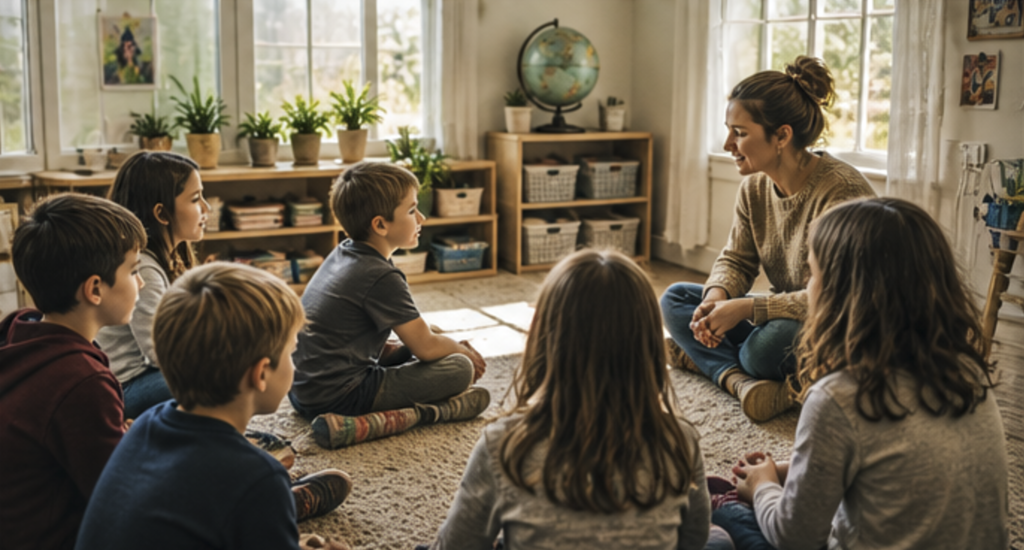
That fall, I walked into the program not just as a homeschooling mom, but as a creative writing teacher. And I remember that first day so clearly—the mix of nerves and excitement, the sound of kids settling into unfamiliar spaces, the hopeful energy that comes with new beginnings.
For the first time in a long time, something felt… right.
My son dove into the experience in his own way. He gravitated toward theater, P.E., art—anything that allowed him to move, create, and interact. I still smile when I think about how excited he was about a quilling lesson he took. It wasn’t something I would have introduced at home, but that’s exactly the beauty of these environments—they open doors you didn’t even know were there.
He wasn’t quite as enthusiastic about my writing class. In his words, it felt “too much like home.” And honestly, I couldn’t argue with that. But even then, something important was happening beneath the surface. He was forming friendships, engaging in conversations, learning how to express his thoughts in a group setting.
And that matters just as much as any curriculum.
My daughter’s experience looked different. She chose to volunteer, to step into a more supportive role, connecting with other students, helping where she could. Watching her build those relationships—quietly, naturally—was one of those moments where you realize growth doesn’t always come from structured lessons. Sometimes it comes from simply being part of something.
And me?
For the first time in years, I had small pockets of time to myself.
It sounds like such a simple thing, but if you’ve ever been a full-time homeschooling parent, you understand how rare—and valuable—that is. After teaching my class, I could run errands alone. I could grocery shop without rushing. I could sit in my car for a few extra minutes in silence if I needed to.
I could breathe.
Those few hours each week became a reset button I didn’t know I needed.
What started as a small step—just teaching a class—slowly grew into something much bigger. Over time, I became more involved, more connected, more invested in the families and students around me. Relationships formed, not just between the kids, but between parents who were walking similar paths.
And somewhere along the way, without me fully realizing it at first, I stepped into a new role.
Today, I serve as the director of education.
Even now, saying that out loud feels a little surreal. Because if you had told me years ago, when I was just trying to figure out how to teach math at the kitchen table without losing my patience, that I would one day be helping guide a community of homeschooling families—I probably would have laughed.
Or cried.
Maybe both.
But here’s what I’ve learned along the way: homeschooling was never meant to be done in isolation.
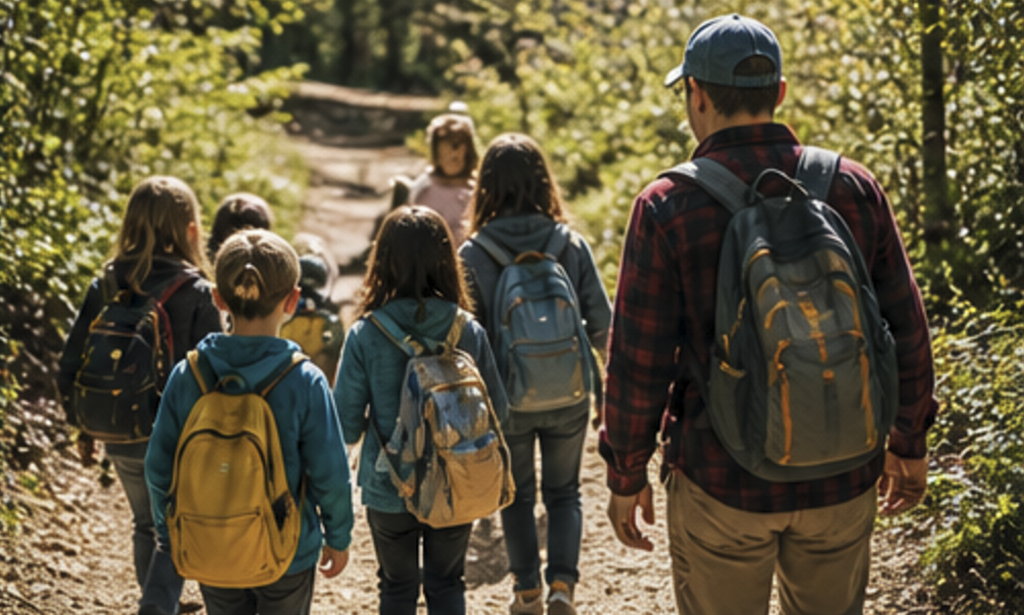
In its simplest form, a homeschool co-op is about shared responsibility and shared experience. Historically, many of them were parent-led—families coming together to teach different subjects, organize activities, and support one another. I remember those early co-op days back in Pennsylvania, where our focus wasn’t even on formal academics. We planned field trips, explored nature trails, visited farms and museums. Learning happened organically, through experience, through curiosity.
And honestly, those were some of the most beautiful learning moments we had.
But over time, especially in places like Northern Virginia, the concept has evolved. There are now programs where experienced educators lead classes, where children can be dropped off and immersed in structured, hands-on learning environments.
For many families, that shift has been life-changing.
It allows parents to work, to rest, to focus on other children—or simply to take a break—while still maintaining the flexibility and values of homeschooling.
And for the children, it offers something equally important: community.
Because no matter how strong your home environment is, children benefit from interacting with others. They learn collaboration, communication, conflict resolution. They form friendships that exist outside of their immediate family circle.
I’ve seen it over and over again—the shy child who slowly opens up, the energetic one who finally finds a space where that energy is welcomed, the creative thinker who discovers a passion they didn’t know they had.
That’s the heart of a good co-op.
It’s not about replicating school at home. It’s about expanding what learning can look like.
One of the things I appreciate most is how personalized the experience can be. Smaller group sizes mean teachers can actually see the children in front of them—not just as part of a class, but as individuals. Lessons can be adapted, interests explored, curiosity encouraged.
And sometimes, that learning looks a little unconventional.
Like measuring distance by rolling out toilet paper across a field.
Or turning a simple craft into a deep exploration of patience and creativity.
Or yes—making a complete mess in the name of science.
I’ll admit, I was never the “messy activity” mom. I had my limits. Glitter? Absolutely not. Dyeing eggs? Only if I could mentally prepare for the cleanup. Pumpkin carving? Let’s just say I avoided it whenever possible.
But in a co-op setting, something shifts.
Your children get to experience those things without the stress falling entirely on you. They get messy, they experiment, they explore—and you don’t have to spend the next three weeks finding glitter in places it should never be.
It’s a small thing, but it matters.
And maybe even more importantly, it allows you to say yes more often.
Yes to experiences.
Yes to creativity.
Yes to learning that feels alive.
Looking back, I realize that what I was searching for all those years wasn’t just the right curriculum or the perfect structure.
I was looking for connection.
For a place where my children could grow—not just academically, but socially, emotionally, creatively. A place where I didn’t feel like I had to carry everything on my own. A place where learning felt shared.
And that’s what we found.
Not perfectly. Not instantly. But gradually, over time.
If you’re a homeschooling parent reading this and feeling that familiar sense of uncertainty—the wondering if you’re doing enough, if your children are missing out, if there’s something more you should be offering—I want you to know this:
You don’t have to do it all alone.
There are spaces out there—communities, co-ops, programs—where your children can explore new interests, build friendships, and learn in ways that complement what you’re already doing at home.
And maybe, just maybe, you’ll find something for yourself in the process too.
Because somewhere between the lesson plans, the grocery runs, the car rides, and the quiet moments of watching your children grow, you might discover a version of yourself you didn’t expect.
I know I did.