
I want to tell you about the morning everything clicked for me, because I think about it more than I probably should. It was early February, the kind of grey Tuesday that makes you want to crawl back under the duvet, and I was running to grab coffee before a meeting I hadn’t prepped for. I threw on an oversized cashmere-blend hoodie in oatmeal, straight-leg trousers that pooled just slightly at the ankle, my dad’s old aviators, and the kind of sneakers that look expensive because they are quietly, unmistakably expensive. No makeup except a tinted balm and a swipe of cream blush I did with my fingers in the elevator mirror.
A woman stopped me on the street. Not for directions. She just said, “Okay, where is that hoodie from,” with the specific urgency of someone who has been personally offended by how good you look doing nothing.
That’s the moment I understood something I’d been circling around for years without naming it: the most powerful style statement right now isn’t a statement at all. It’s the absence of effort that somehow reads as the most effortful thing in the room. It’s streetwear that’s been quietly polished until it stops looking like streetwear and starts looking like wealth. And underneath all of it, holding the whole look together, is skin and energy that looks lit from within rather than painted on.
This is the world we’re living in for 2026, and honestly, I think it’s the best style era we’ve had in a long time, because it finally rewards the things that actually matter — good fabric, good posture, good sleep, and a face that looks like yours, just better.
So let’s talk about it properly. Not in a checklist, not in a “10 tips” kind of way that makes you feel like you’re being handed a worksheet. I want to walk you through how elegant streetwear and a genuinely radiant, natural glow have merged into one aesthetic, why that merger is happening right now, and how you build it for yourself without spending your rent money or your sanity.
Why Streetwear Suddenly Got Elegant (And Why Nobody Saw It Coming)
If you’d told me five years ago that the girls obsessing over quiet luxury — the Row bags, the cashmere basics, the “old money” Pinterest boards — would eventually start wearing cargo pants and oversized hoodies, I would have laughed. Streetwear and quiet luxury used to live on opposite ends of the style spectrum. One was about logos, hype drops, and being seen. The other was about disappearing into beautiful, unbranded fabric.
But somewhere between the tail end of the logomania era and the rise of “stealth wealth” dressing, these two worlds collided, and what came out the other side is honestly the most flattering, most livable aesthetic I’ve worn in my adult life.
Here’s what actually happened, as far as I can tell from watching it unfold in real time on my feed, in stores, and on actual humans on actual sidewalks. The streetwear crowd got tired of shouting. After years of bold graphics and obvious branding, there was a fatigue that set in — a desire to look expensive rather than look loud. At the same time, the quiet luxury crowd got tired of being stiff. All that tailoring, all those structured blazers and prim little flats, started to feel a bit costume-y for actual daily life, especially once remote work and softer schedules made comfort non-negotiable.
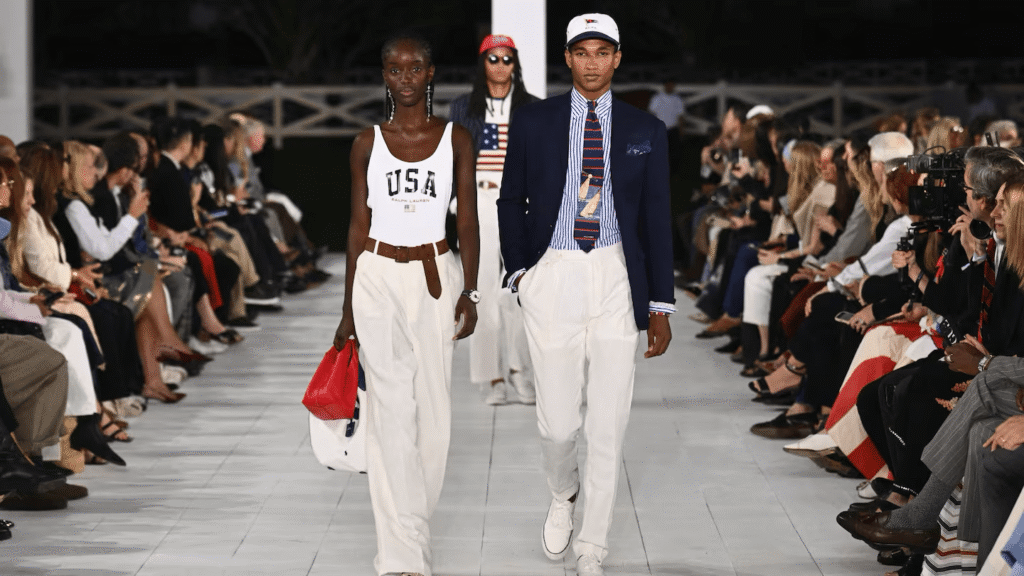
So the two camps met in the middle. You started seeing baggy trousers paired with a perfectly cut trench. Oversized knits worn with sharp tailored shorts. Chunky white sneakers under wide-leg suiting. Hoodies elevated with statement gold jewelry and a leather tote that costs more than some people’s cars. This is elegant streetwear — comfort-first dressing that still whispers money, taste, and intention.
And the thing that ties the whole look together, that makes it look curated rather than thrown-on, isn’t actually the clothes at all. It’s the skin underneath them. A woman in head-to-toe luxury streetwear with dull, stressed-out, over-made-up skin looks like she’s trying too hard. A woman in the exact same outfit with glowing, healthy, barely-there makeup looks like she didn’t try at all — which, paradoxically, is the most try-hard look there is, in the best possible way.
The Clean Girl Aesthetic Grew Up, and I’m Obsessed With Where It Went
Remember when “clean girl” first hit everyone’s feed? Slicked-back buns, gold hoops, glossy lips, glowing skin, minimal everything. It was beautiful, but if I’m being honest, it also felt a little young to me — a little bit like a uniform for nineteen-year-olds discovering skincare for the first time.
What’s happened since is that clean girl aesthetic has matured into something I’d call soft luxury minimalism, and it’s a much richer, more interesting place to exist style-wise. The slicked bun is still there, but now it’s paired with face-framing pieces that soften it. The gold hoops got bigger, chunkier, more architectural. The glossy lip evolved into something more nuanced — a stained, just-bitten color that looks like it happened naturally rather than something applied with a brush.
And the skin underneath all of it had to actually deliver. This is the part that I think gets lost when people talk about trends — they focus on the clothes and the makeup, but the entire aesthetic collapses if your skin doesn’t look genuinely healthy. You can’t fake your way through this one with a full face of foundation, because the whole point is that less is visible. Every pore, every dry patch, every dull moment shows up under this kind of minimal styling in a way it simply doesn’t when you’re wearing a heavier, more “done” face.
I learned this the hard way during a stretch last winter when I was sleeping terribly and eating mostly toast and anxiety. I’d put on my elegant little streetwear uniform — the wide trousers, the cropped puffer, the delicate gold necklace layered just so — and look in the mirror and think, something is off. It wasn’t the outfit. It was my skin. Tired, papery, a bit grey around the edges. The clothes were doing their job perfectly. My face just wasn’t keeping up.
That’s when I really started treating my skin like part of the outfit, not separate from it. Which brings me to the part of this whole equation that I think matters more than any single piece of clothing you’ll ever buy.
Your Skin Is the Most Expensive Accessory You Own (And You Already Have It)
I say this a little bit as a joke and a little bit completely seriously: the most luxurious thing you can wear with a head-to-toe streetwear look is bare, glowing, healthy skin. Not because makeup is bad — I love makeup, I’ll talk about my favorite soft glam tricks in a minute — but because the entire 2026 aesthetic is built on the idea that you look this good naturally. The clothes are casual on purpose. The hair is undone on purpose. So the skin has to read as genuinely cared-for, not concealed.
This is where I think a lot of people get the order of operations backward. They spend hundreds on the perfect oversized blazer or the right pair of relaxed denim, and then they’re surprised when the whole look falls a little flat, when something feels slightly “off” even though every piece is technically right. Nine times out of ten, when I really look closely, it’s because the skin isn’t telling the same story as the clothes. The clothes say effortless wealth. The skin says exhausted and stressed. Those two messages clash, and your eye picks up on the dissonance even if your brain can’t name it.
So let’s actually talk about what builds that genuine glow, the kind that holds its own next to beautiful tailoring and expensive-looking basics, because I promise you it’s simpler and more boring than the skincare industry wants you to believe.
The Boring Truth About Glowing Skin That Nobody Wants to Hear
I wish I had a more exciting answer for you here. I really do. I wish I could tell you there’s a serum, a device, a fourteen-step Korean routine that will hand you that lit-from-within radiance overnight. And look, some of those things help at the margins — I’ll get into specific products and routines in a bit, because they genuinely do matter. But the foundation, the thing that actually moves the needle more than anything you can buy, is so unglamorous that influencers barely talk about it.
It’s sleep. It’s water. It’s not smoking, or smoking less, or at least being honest with yourself about how visibly your skin punishes you for it. It’s eating enough protein and enough good fats that your skin barrier has the raw materials to actually repair itself instead of just sitting there, dehydrated and reactive. It’s managing stress in some real, sustained way instead of just doing a ten-minute face mask and calling it self-care while your cortisol stays through the roof.
I went through a phase — and I think a lot of women go through this phase — where I was buying increasingly expensive skincare to compensate for a lifestyle that was working directly against my skin. I’d drop real money on a glow serum and then go to bed at 1am after three glasses of wine and call it balance. My skin knew the difference even when my bank account didn’t.
The shift happened for me almost by accident. I started prioritizing sleep not for my skin but because I was just exhausted in a way that scared me a little. Seven to eight hours, consistently, no negotiating. And within about three weeks, people started commenting on my skin in a way they hadn’t in years. Not “your makeup looks nice.” Just “you look so good lately,” that vague, slightly confused compliment people give when something has changed but they can’t quite identify what.
That’s the glow we’re actually chasing. Not a filter. Not a highlighter. An actual physiological state of being well-rested and well-hydrated that shows up on your face whether you’re wearing makeup or not.
Building the Routine: My Actual Morning, Not the Pinterest Version
I want to be honest with you about what my mornings actually look like, because I think the curated “5am morning routine” content that floods every platform right now does women a disservice. Nobody’s life looks like that, and pretending it does just makes everyone feel like they’re failing at something that was never realistic to begin with.
My real morning starts somewhere between 6:45 and 7:30, depending on how badly I want to die that day. The first thing I do, before anything skincare-related, is drink a full glass of water sitting by my bed, because I learned that starting the day even slightly dehydrated makes my skin look noticeably flatter by midday. It sounds almost too simple to matter, but I genuinely notice the difference on the mornings I skip it and reach straight for coffee instead.
Then comes the actual face routine, which I keep deliberately short because elaborate routines are the first thing to die when life gets busy, and I’d rather have five steps I actually do every single day than fifteen steps I do for two weeks and then abandon entirely.
I cleanse with something gentle — nothing that strips or tingles aggressively, because that “squeaky clean” feeling is actually a sign your barrier just got compromised, not a sign of cleanliness. Then a hydrating toner or essence, patted in rather than wiped, because I want the moisture going into my skin, not lifted off with a cotton pad. Vitamin C in the morning, because it genuinely does brighten and protect against the environmental damage that ages skin faster than almost anything else. A moisturizer suited to whatever my skin is doing that particular week, because hormones and seasons change what my skin needs, and pretending otherwise just means fighting against my own biology. And then, non-negotiably, SPF.
I cannot stress this last one enough, and I say that as someone who ignored sun protection for most of my twenties because I thought I was somehow exempt. I am not exempt. None of us are. If you want one single change that will protect the glow you’re building everywhere else, it’s daily SPF, even on cloudy days, even when you’re inside most of the day, even in winter. The UV damage that ages skin, that creates the uneven tone and texture that makes you reach for heavier coverage, happens slowly and invisibly over years, and sunscreen is the cheapest insurance policy you’ll ever buy for your face.
That’s it. That’s the whole routine. Five steps, maybe seven minutes, and it’s the foundation that lets everything else — the makeup, the styling, the whole elegant streetwear aesthetic — actually land the way it’s supposed to.
Soft Glam: The Makeup Language of 2026
Now let’s talk about makeup, because even though the whole ethos here is “looking like you woke up like this,” there is absolutely a technique involved, and I’d be lying if I said I walk out the door with literally nothing on my face. What’s changed is the philosophy behind the makeup, not the absence of it.
Soft glam, as a term, has been around for a few years now, but the way it’s being interpreted right now feels different from even eighteen months ago. The early version of soft glam still had a fairly heavy hand underneath the “soft” — lots of base, carefully blended but still present, with the softness coming mainly from the eye look and the overall color palette. The 2026 version goes lighter on actual product while somehow looking more polished, which sounds contradictory until you understand the trick.
The trick is texture, not coverage. Instead of building up layers of foundation to create an even, “perfected” base, the focus has shifted to skin prep that’s so good the foundation barrier is barely needed. A tinted serum or skin tint that evens tone without sitting on top of the skin like a mask. Cream products instead of powder, because cream catches light the way real skin does, while powder flattens it and reads as makeup from across a room.
Blush has become almost shockingly central to this whole look, more than I think people realize. The right blush, placed high on the cheeks and blended up toward the temples rather than swept along the cheekbone in that older, more contoured placement, mimics the exact flush that shows up on your face after a brisk walk or, frankly, after good sex — that slightly overheated, alive-looking color that reads as health rather than makeup. I use a cream blush almost every single day now, dabbed on with fingertips, sometimes on top of moisturizer before any base product at all, so it melts into the skin rather than sitting on top of it.
Brows have softened too, which I’m genuinely relieved about after the era of sharp, heavily filled, almost drawn-on brows that dominated for years. The current approach is brushed-up, slightly textured, filled in just enough to look intentional without looking architectural. It’s brows that look like yours, just slightly groomed, the same philosophy that’s driving every other part of this aesthetic.
Eyes have gone warm and soft — bronzy, terracotta, soft brown tones blended with no hard edges, sometimes with just a tiny flick of shimmer in the inner corner to catch light when you blink. The dramatic, heavily lined cat-eye still exists for going out, but for daily wear, the eye look has gotten almost imperceptibly simple, often just a cream shadow swept across the lid with a finger and a coat of mascara.
And lips, finally, have moved toward what I’d call the “stained” finish — a tint that looks like the natural color of your lips just slightly enhanced, often applied and then blotted, so it looks like you bit into something deep red an hour ago rather than like you just applied lipstick. Gloss is still around, but it’s used more sparingly now, often just dabbed in the center of the lower lip for dimension rather than slicked across the whole mouth.
The overall effect of all of this, when you put it together, is makeup that takes real skill and real product but reads as no makeup at all. Which, again, is the whole philosophy of this entire era of style — maximum effort hidden underneath maximum naturalness.
The Streetwear Pieces That Actually Earn Their Place in an Elegant Wardrobe
Okay, let’s get into the clothes, because I know that’s a huge part of why you’re here. Building an elegant streetwear wardrobe isn’t about buying every trending piece you see on your feed. It’s about understanding which silhouettes and fabrics carry that “quiet luxury meets street” energy and investing in the ones that actually suit your life and your body, rather than chasing every micro-trend that flashes across Pinterest for three weeks before disappearing.
The oversized hoodie is, without question, the anchor piece of this entire aesthetic, but there’s a massive difference between an oversized hoodie that looks elegant and one that just looks like you raided a teenager’s closet. The elegant version is almost always in a heavier, more substantial fabric — a thick French terry or a cashmere blend rather than thin cotton — in a neutral color, with clean lines and minimal branding. The fit matters enormously too. You want oversized through the body but with some shape, not a shapeless sack. A hoodie that’s been cropped slightly, or one with a dropped shoulder that still narrows toward the cuff, reads completely differently from one that’s just universally huge.
I own maybe four hoodies that I actually reach for, and they’re all in colors I’d describe as “expensive neutrals” — oatmeal, stone, a deep chocolate brown, and a soft sage green that somehow goes with almost everything else I own. None of them have logos. All of them are slightly cropped. And every single one of them gets worn with something that elevates it, because a hoodie alone, even a beautiful one, still reads as loungewear unless you style around it intentionally.
Wide-leg and straight-leg trousers have completely taken over from the skinny jeans that dominated for so many years, and honestly, I don’t think they’re going anywhere for a long while. There’s something about the way a wide-leg trouser moves, the way it skims the body rather than clinging to it, that just reads as more sophisticated, more put-together, even when the fabric itself is casual. I’ve become genuinely obsessed with finding the right length — they should graze the top of your shoe or break slightly at the ankle, never pooling into a puddle of fabric that makes you look shorter and messier than you are.
Cargo pants deserve a special mention here because they’ve had the wildest glow-up of any single piece in this whole aesthetic. A few years ago, cargo pants were almost exclusively a streetwear signifier — pockets everywhere, baggy through the leg, very much in the “skater” or “early 2000s” lane. The elegant version that’s everywhere right now keeps the pocket detailing but tailors everything else — a higher rise, a slightly tapered or straight leg, fabric with actual structure and drape rather than stiff canvas. Worn with a fitted top and heeled boots, elegant cargo pants look genuinely sophisticated in a way that would have seemed impossible a decade ago.
Outerwear is where this whole aesthetic really gets to shine, because the coat or jacket you choose does so much of the heavy lifting in signaling “quiet luxury” even over an otherwise casual outfit. A great trench coat, a structured wool coat in camel or black, a puffer that’s been cut with actual shape instead of looking like a sleeping bag with arms — these pieces instantly elevate whatever’s underneath them. I genuinely believe that if you only have budget for one investment piece this year, it should be outerwear, because it’s the piece that gets seen first, gets seen longest, and does the most work convincing people your whole look is intentional.
Sneakers have become almost a category of luxury in their own right, which felt absurd to me at first and now feels completely obvious. The right pair of clean, minimal sneakers — leather, low-profile, in white or a soft neutral — paired with elegant tailoring reads as confidence rather than laziness. It says “I know the rules well enough to break them.” I rotate between two or three pairs depending on the outfit, but I’ve noticed the ones that get the most compliments are always the simplest, least logo-heavy options. The streetwear “hype” sneaker, the loud colorway, the obvious branding — that’s not really part of this aesthetic anymore. It’s about sneakers that could pass for incredibly expensive minimalist design, because often, they are.
Knitwear is the soul of this wardrobe, honestly. A beautiful, slightly oversized knit sweater or cardigan, in a rich, substantial yarn, does more for the “quiet luxury” feeling of an outfit than almost anything else you can wear. I look for pieces with visible texture — a cable knit, a ribbed pattern, something with actual dimension rather than flat, thin knitwear that looks cheap regardless of price. Layered over a simple white tee or under a sharp blazer, a great knit sweater can carry an entire outfit on its own.
Layering: The Skill That Separates “Put Together” From “Just Got Dressed”
If there’s one technical skill that separates the women whose elegant streetwear looks effortlessly chic from the women whose outfits feel slightly off without anyone being able to say why, it’s layering. Not layering in the sense of “wear more clothes,” but layering in the sense of building visual interest and proportion through how pieces interact with each other.
The basic formula I keep coming back to, almost embarrassingly often, is fitted-loose-fitted or loose-fitted-loose. If you’re wearing wide-leg trousers (loose), pair them with something more fitted on top, like a cropped knit or a tucked-in tee (fitted), and then throw a third, looser piece over that, like an open blazer or oversized coat (loose). The eye reads this kind of contrast as intentional styling rather than just throwing clothes on, even though once you understand the formula, it takes about thirty seconds longer than just grabbing whatever’s clean.
Proportion matters enormously here too, and it’s the thing that I think trips people up most when they try to recreate looks they’ve seen online without understanding why they worked. If you’re wearing something voluminous on the bottom, like wide trousers or a flowing skirt, you generally want to balance it with something more fitted on top, so you’re not drowning in fabric from head to toe. Conversely, if you’re in an oversized hoodie or sweater, a more fitted or straight-leg bottom usually balances the silhouette better than another loose piece.
I think about this constantly when I’m getting dressed, almost unconsciously now after doing it for so long, but I remember how confusing it felt at first, staring at two pieces I genuinely loved separately and not understanding why they looked wrong together. The answer was almost always proportion. Two oversized pieces together, no matter how beautiful each one is individually, usually just look like you’re wearing a costume rather than an outfit.
Texture layering is the more advanced version of this skill, and it’s the thing that elevates an outfit from “nice” to “expensive-looking” almost instantly. Mixing a slouchy knit with structured tailoring, or a soft, fluid trouser with a stiff leather jacket, creates visual richness that a monotone, single-texture outfit just can’t achieve. I try to include at least two distinctly different textures in every outfit I put together — something soft against something structured, something matte against something with a slight sheen — because that contrast is doing a huge amount of the “this looks expensive” work even when none of the individual pieces are actually expensive.
Jewelry: Going Bigger While Saying Less
The jewelry trends right now feel like they’re in conversation with the rest of the aesthetic in a really satisfying way. Delicate, dainty jewelry — the tiny gold chains, the barely-visible studs — had a long, dominant moment, but what’s happening now is bigger, more sculptural pieces that still somehow read as understated rather than flashy.
Chunky gold hoops have become almost a uniform piece at this point, but the chunky-ness matters — thin hoops feel a bit dated next to a streetwear-inspired outfit, while a substantial, architectural hoop instantly elevates even the most basic tee-and-jeans combination. I wear the same pair almost daily now, and they’ve genuinely become part of how I think about my own face when I look in the mirror, the way a signature scent becomes part of how you think about yourself.
Layered necklaces in mixed lengths, all in the same warm gold tone, create that “old money meets street” effect that I think defines this whole moment so well. The key is keeping the metal consistent even while varying the chain styles and pendant sizes — mixing gold and silver together tends to look more chaotic than intentional, at least for daily wear, even though I know plenty of people who pull off mixed metals beautifully for more directional looks.
Statement rings, particularly chunky signet-style rings or sculptural gold bands, have become a quiet power move in this whole aesthetic. There’s something about a strong ring on a hand that’s otherwise unadorned that reads as confidence, almost like the jewelry equivalent of the “quiet luxury” wardrobe philosophy overall — one strong piece rather than many small ones competing for attention.
Hair: The Effortless Looks That Actually Take Effort
I want to be transparent about something, because I think it matters for managing expectations. The “I just woke up like this” hair that’s everywhere right now — the slightly undone waves, the slept-in texture, the bun that looks like it happened by accident — almost never actually happens by accident. There’s real technique behind it, even if the final result is supposed to look like there wasn’t.
The slicked-back bun, which has become almost a uniform piece of this whole aesthetic, requires more product and more patience than people assume from how simple it looks. A good texturizing or gel product, worked through damp hair, then pulled back tightly enough to look intentional but not so tightly it looks severe, finished with a silk scrunchie rather than a plain elastic to avoid creasing and breakage. The “baby hairs” laid down at the hairline, which look so casually undone, are usually the result of a small toothbrush and a tiny bit of gel, applied with way more precision than the final look suggests.
Beachy, undone waves have similarly evolved from the obviously curled, slightly crunchy texture of older trend cycles into something looser and more natural-looking, usually achieved with a wide-barrel curling iron used in large, loose sections, then brushed through with fingers rather than a brush to break up the curl pattern entirely. The goal is hair that looks like it air-dried after a day at the beach, not hair that looks like it went through a curling iron an hour ago.
The half-up style, particularly with a slightly messy, slightly volumized crown, has had real staying power because it works with almost every outfit in the elegant streetwear category. It softens the more structured pieces, like a sharp blazer or tailored coat, while still feeling pulled-together enough to wear with the more elevated end of the aesthetic.
What I’ve noticed across all of these styles, regardless of the specific technique, is that healthy-looking hair has become just as important as healthy-looking skin to this overall aesthetic. Hair that looks dry, damaged, or overly processed undermines the whole “natural glow” story in the same way tired, stressed skin does. I’ve started treating my hair with the same seriousness I treat my skincare — regular trims to keep ends healthy, a genuinely good conditioning treatment at least weekly, heat protectant religiously whenever I do use hot tools, and trying, with mixed success, to actually let my hair air-dry more often than I style it with heat.
The Pinterest Effect: How a Mood Board Became a Wardrobe Philosophy
I think it’s worth talking honestly about how much of this entire aesthetic has been shaped by Pinterest specifically, as opposed to other platforms, because the way Pinterest works has genuinely changed how a lot of us, myself included, think about getting dressed.
Pinterest isn’t really about individual outfits the way Instagram or TikTok often is. It’s about collecting a feeling, a mood, a color story, across dozens or hundreds of images until your brain absorbs a kind of aesthetic logic without you ever consciously deciding what the “rules” are. I have a board — embarrassingly large at this point — that’s basically just become my visual vocabulary for what I want to look like. Camel coats. Cream knits. Gold jewelry on tanned skin. Slicked buns. Coffee cups held by hands with simple, clean nails. Cobblestone streets that definitely aren’t where I actually live.
What’s interesting is that this board has shaped my actual purchasing decisions far more than any single influencer or store window ever did, because it’s not selling me one outfit — it’s teaching me a color palette, a silhouette logic, a general feeling I’m trying to recreate in my own closet with my own life and my own budget. When I’m shopping now, even in person, I find myself mentally checking new pieces against that accumulated, half-unconscious sense of what belongs in “my” aesthetic and what doesn’t, even when I couldn’t necessarily articulate the rule out loud.
This is also, I think, part of why the elegant streetwear and natural glow aesthetics have merged so completely online. They photograph so well together, and they photograph well specifically because they’re built around the same underlying values — soft, neutral color stories, natural light, genuine-looking texture rather than artificial polish, the sense of a real woman living a real, beautiful life rather than a stylized fashion shoot. The whole visual language reinforces itself across thousands of images until it stops looking like a trend and starts looking like just… how things are supposed to look.
Building a Capsule Wardrobe Around This Aesthetic Without Going Broke
I know how easy it is to read all of this and start spiraling into a shopping list that would bankrupt most of us. I’ve done that spiral myself, more than once, usually around 11pm after scrolling too long. So let me talk practically for a minute about how to actually build toward this look without needing a trust fund.
The single most important shift in mindset, for me, was realizing that this aesthetic rewards fewer, better pieces far more than it rewards a closet stuffed with trend items. Because the whole point is quality fabric, clean lines, and pieces that look expensive through cut and material rather than logos or obvious newness, a smaller, more carefully chosen wardrobe actually serves the aesthetic better than a huge one ever could.
I started by identifying the handful of pieces that show up in almost every outfit I genuinely love — for me, that ended up being one great trench coat, three or four substantial knits in neutral colors, two pairs of well-cut wide-leg trousers, one pair of elevated cargo pants, a couple of oversized hoodies in elevated fabrics, simple tees in good cotton, and one really excellent pair of sneakers. That’s a remarkably short list when you actually write it out, but those dozen-ish pieces, mixed and layered using the proportion principles I mentioned earlier, generate dozens of distinct outfits.
Where I spend money matters more than how much money I spend, generally. Outerwear and knitwear are where fabric quality is most visible and most felt — a cheap coat looks cheap from across a room in a way that a cheap basic tee often doesn’t. So those are the categories where I save longer and buy less often but buy better. Basics like plain tees, simple trousers in seasonal colors, or trend pieces I suspect I’ll tire of within a year or two are where I let myself shop more affordably, because the cost-per-wear math just doesn’t justify a major investment for something I might not love in eighteen months anyway.
Secondhand and resale platforms have become a genuinely huge part of how I build this wardrobe now, and I say that without any embarrassment at all, because frankly, some of my most-complimented pieces are secondhand finds — a beautiful camel coat that another woman clearly took excellent care of before deciding it wasn’t for her anymore, a chunky knit that would have cost three times as much new. There’s something almost meditative about the hunting involved, and it fits the whole “quiet, intentional” philosophy of this aesthetic far better than fast fashion ever could, both ethically and aesthetically.
The Skincare Ingredients Actually Worth Your Money (And the Ones That Aren’t)
I promised I’d get more specific about products and ingredients, so let’s actually do that, because I think a lot of skincare marketing relies on people not understanding what they’re buying well enough to push back on inflated claims.
Vitamin C is genuinely worth the hype, in my experience and based on the research I’ve looked into over the years. It brightens, it helps protect against environmental damage, and over time it can meaningfully even out tone and texture. The catch is that vitamin C is notoriously unstable — it degrades with exposure to light and air — so the formulation and packaging matter enormously. A vitamin C serum in a clear bottle that’s been sitting on a sunny shelf has probably lost most of its potency by the time you’re using it, regardless of how good the original formula was.
Retinoids, in some form, are probably the single most well-evidenced category of skincare ingredient for genuinely changing skin texture and tone over time, but they’re also the ingredient most likely to cause irritation if you go in too aggressively. I learned this the hard way in my mid-twenties when I started using a strong retinol every single night because I was impatient for results, and ended up with skin so irritated and flaky that I had to stop entirely for a month just to recover. The right approach is slow — once or twice a week initially, building up gradually, always at night, always followed by a good moisturizer, and never, ever skipping sunscreen the next morning, because retinoids make skin significantly more sun-sensitive.
Hyaluronic acid is wonderful for hydration but gets misunderstood constantly. It’s a humectant, meaning it draws moisture toward itself, which means using it in a genuinely dry environment without sealing it with a proper moisturizer afterward can actually make skin feel drier, because it pulls moisture from the air, and if there isn’t enough moisture in the air, it can pull from deeper layers of your skin instead. Layer it under a moisturizer, ideally on slightly damp skin, and it works beautifully.
Niacinamide has become almost ubiquitous in the last few years, and largely for good reason — it’s genuinely versatile, helping with everything from oil regulation to barrier support to gradually evening tone, and it tends to play nicely with almost every other ingredient, which makes it an easy, low-risk addition to most routines.
What I’ve become genuinely skeptical of, after years of buying into marketing claims I probably shouldn’t have, are most “glow” or “radiance” products that promise instant, dramatic transformation through one single product. Glow is rarely the result of any single magic ingredient. It’s the cumulative effect of consistent, basic skincare combined with the lifestyle factors I talked about earlier — sleep, hydration, nutrition, stress management. The serums and treatments help at the margins, sometimes meaningfully, but they’re optimizing on top of a foundation, not creating that foundation from nothing.
Nutrition and the Glow: What Actually Shows Up on Your Face
I hesitate slightly to wade into nutrition advice, because I think the wellness and beauty space has a long, complicated history of moralizing food in ways that aren’t actually healthy or helpful. So let me just share what I’ve genuinely noticed in my own body, while being clear that everyone’s skin and biology are different.
Omega-3 fatty acids — the kind found in fatty fish, walnuts, flaxseed — seem to make a real, visible difference to how hydrated and plump my skin looks, in a way that topical moisturizer alone never quite achieves. There’s something about that internal lipid support that shows up on the surface in a way I can’t fully explain scientifically but can absolutely see in the mirror.
Protein intake has mattered more than I expected, mostly because collagen production, the stuff that keeps skin looking firm and bouncy, requires adequate protein as raw material. I went through a period of under-eating protein, mostly out of busyness rather than any deliberate choice, and I genuinely think my skin looked less resilient during that stretch, slightly more prone to looking tired even on nights I slept well.
Sugar and very processed foods, in large quantities and over sustained periods, do seem to correlate with more inflammation and breakouts for me personally, though I want to be careful not to present this as some universal rule, because skin reactions to diet vary enormously between individuals based on genetics, gut health, hormones, and a dozen other factors that have nothing to do with willpower or virtue.
And water, again, unglamorously, seems to matter more than almost anything else on this list. I notice the difference in my skin’s texture and bounce within a day or two of drinking significantly more or less water than usual, which is honestly a little annoying, because it would be much more satisfying if the secret to glowing skin were something more exciting than “drink the water.”
Sleep: The Beauty Treatment Nobody Wants to Hear About
I keep coming back to sleep throughout this whole piece, and I want to talk about it a bit more directly, because I genuinely think it’s the most underrated, overlooked factor in how someone’s skin and overall presence look, and I think it gets dismissed precisely because it’s free and doesn’t come with a satisfying unboxing experience.
During deep sleep, your body does an enormous amount of repair work — cell turnover increases, blood flow to skin increases, growth hormone release increases, all of which directly support the kind of skin renewal that shows up as that “glow” everyone’s chasing. Chronic sleep deprivation, even relatively mild and sustained over time, shows up visibly as duller skin, more pronounced fine lines, under-eye puffiness and darkness that no amount of concealer fully corrects, and a generally more sallow, tired complexion.
I started taking sleep seriously not for vanity reasons initially but because I genuinely felt unwell — foggy, irritable, exhausted in a way that coffee couldn’t fix. But the skin benefits arrived as this unexpected, genuinely thrilling side effect. Within a few weeks of consistent, adequate sleep, my under-eye circles, which I’d basically accepted as a permanent feature of my face for years, visibly lightened. My skin looked plumper, more even, less reactive to the products I was already using.
The practical changes that actually got me there, for what it’s worth, were less about elaborate sleep hygiene rituals and more about boring consistency — going to bed and waking up at roughly the same time even on weekends, getting genuine daylight exposure earlier in the day to support my circadian rhythm, and being honest with myself about how late-night scrolling was eating into hours I desperately needed. I’m not perfect at any of this. I still have weeks where everything falls apart and I’m running on five hours of sleep and pure spite. But the baseline matters more than perfection, and even a partial, imperfect commitment to better sleep has changed my skin more than any product I’ve ever purchased.
Confidence as a Beauty Tool (Yes, Really)
This might sound like a strange thing to include in an article about streetwear and skincare, but I genuinely believe confidence and posture are underrated beauty tools, maybe the most underrated tools in this entire conversation, and I want to explain why before you roll your eyes at me.
The same outfit, worn by the same woman, looks completely different depending on how she’s holding her body and how she’s holding her face. Shoulders back, chin slightly lifted, a relaxed rather than anxious expression — these things change how clothes drape, how light catches your face, how the whole silhouette reads to someone glancing at you across a room. I’ve watched myself in mirrors and in photos enough times now to know this isn’t just a feel-good platitude. It’s visibly, measurably true.
A huge part of why the elegant streetwear aesthetic works as well as it does is that it’s typically worn with a kind of relaxed, unbothered confidence rather than the slightly anxious, overly arranged energy that can come with more obviously “dressed up” outfits. The whole point is that you look like you didn’t try, which means you have to actually carry yourself like you didn’t try, rather than walking around stiffly self-conscious about every element of your outfit.
I genuinely think part of building this whole look, for myself, has been building the internal confidence to wear it the way it’s supposed to be worn — loosely, comfortably, without constantly adjusting and second-guessing. That part took longer for me than finding the right hoodie ever did, if I’m honest. Some of it came with age. Some of it came from just deciding, somewhat deliberately, to stop performing perfection and start performing ease instead, even on the days I didn’t fully feel it.
Seasonal Transitions: Keeping the Aesthetic Alive Year-Round
One thing I think doesn’t get discussed enough is how this whole elegant streetwear and natural glow philosophy translates across seasons, because what works beautifully in a cool, crisp autumn doesn’t automatically translate to a humid August afternoon, and pretending otherwise just leads to either being miserably uncomfortable or abandoning the aesthetic entirely for a few months a year.
In colder months, the silhouette gets to really shine, honestly — substantial knits, structured coats, the kind of layering I described earlier all work beautifully with cooler weather’s natural need for more clothing. The glow factor shifts slightly too; skin tends toward drier in colder months, especially with indoor heating, so the skincare routine usually needs richer moisturizers and sometimes an extra hydrating step, like a facial oil layered over moisturizer at night.
Warmer months require more creativity to maintain the same aesthetic without melting into a puddle of sweat by 10am. Lighter-weight knits, in linen or a lightweight cotton blend, can replicate the texture and visual weight of a heavier sweater without the heat. Trousers in lighter fabrics, still wide-leg for the silhouette, but in linen or a cotton-linen blend rather than heavier wool blends. The oversized hoodie gets swapped for an oversized linen shirt, worn open over a simple tank, which gives a similar relaxed, layered silhouette without the same heat retention.
Skin tends toward oilier and more reactive in heat and humidity, so summer skincare usually means lighter formulations, gel-based moisturizers instead of creams, and an even more religious commitment to SPF given the increased sun exposure that comes with warmer weather and more time outside.
I’ve found that thinking about each season as requiring a “translation” of the same underlying principles, rather than an entirely different aesthetic, has made my wardrobe and routine feel much more cohesive and intentional year-round, rather than feeling like I’m starting from scratch every few months.
The Social Media Trends Actually Worth Paying Attention To
I want to talk honestly about which social media beauty and fashion trends I think are genuinely worth incorporating versus which ones I think are more noise than substance, because the sheer volume of trend content right now makes it almost impossible to know what actually matters without some kind of filter.
Skin cycling, the practice of rotating active ingredients across a structured weekly schedule to avoid overloading or irritating skin, has genuinely useful logic behind it, even if the specific schedules promoted online are often more rigid than necessary for most people. The underlying principle — not using every active ingredient every single day, giving skin recovery time — is sound dermatological advice dressed up in trend language, which I think is actually a great example of social media doing something genuinely useful by packaging good advice in an accessible, memorable format.
“Slugging,” the practice of sealing in moisture with an occlusive layer like petroleum jelly overnight, works well for genuinely dry, compromised skin barriers but can be a disaster for oilier or more acne-prone skin types, which is the kind of nuance that often gets lost when a trend goes viral and everyone tries the exact same thing regardless of whether it suits their actual skin.
The obsession with “glass skin,” the extremely dewy, almost translucent-looking finish popularized initially through Korean skincare content, has been hugely influential on the overall aesthetic we’ve been discussing throughout this whole piece, but I think it’s worth noting that genuinely achieving that look usually requires fairly significant product layering and isn’t actually as “natural” as it often gets framed, even though the end result does look remarkably skin-like rather than makeup-like.
What I’m more skeptical of, generally, are trends built around extreme before-and-after transformations, particularly anything promising dramatic results from a single product or device within days. Real skin improvement, the kind that actually holds up and looks good in regular daylight rather than just under a ring light, almost always happens more gradually than viral content suggests, and I think that mismatch between trend-content timelines and biological reality sets a lot of women up for disappointment and unnecessary product-hopping.
Putting It All Together: A Few Outfit Formulas I Actually Wear
Let me get concrete for a moment and walk you through a few specific outfit combinations that embody everything we’ve talked about, because I think sometimes the theory is easier to absorb with real examples attached.
For a casual daytime look, I’ll often reach for wide-leg cream trousers, a chocolate brown ribbed knit tucked loosely in, my chunky gold hoops, a slicked-back bun with those carefully undone baby hairs, and clean white leather sneakers. Skin-wise, that’s tinted moisturizer, cream blush dabbed high on the cheeks, brushed-up brows, mascara, and a tinted lip balm in a warm berry tone. The whole thing takes about ten minutes to put together once you’ve done it a few times, and it photographs beautifully in that soft, natural way that fits the whole Pinterest-inspired aesthetic we’ve discussed.
For something slightly more elevated, maybe a dinner or a daytime event, I’ll layer a structured camel coat over a simple black tank and the same wide-leg trousers, swap the sneakers for a low block heel, add a few more layered necklaces, and let my hair down in those loose, undone waves instead of the bun. Makeup gets slightly more done — a touch more definition on the eyes, a deeper, more pigmented version of that stained lip, maybe a subtle highlight on the high points of the face to catch evening light.
For a genuinely lazy day where I still want to feel put-together walking out the door, the oversized oatmeal hoodie, straight-leg jeans, my dad’s old aviators, the same chunky hoops because they truly go with everything, and the same white sneakers. Minimal makeup — just SPF, cream blush, brow gel, and lip balm. This is the outfit, more or less, from that morning I described at the very beginning, the one that started this whole train of thought for me, and it remains one of my most-worn combinations precisely because it requires almost no decision-making while still looking intentional.
A Few Honest Confessions About Trying to Live This Aesthetic Daily
I don’t want to wrap this up without being honest about the gap between the curated version of all this and the messier reality of actually living it day to day, because I think that honesty matters, and I think a lot of content in this space pretends the gap doesn’t exist.
There are days my “effortless glow” is genuinely just concealer and a prayer. There are days the slicked bun looks more “didn’t have time” than “intentionally undone,” and I know the difference even if nobody else does. There are mornings I reach for the same oversized hoodie three days in a row because laundry didn’t happen and decision fatigue won.
What I’ve come to believe, after years of caring about this stuff probably more than is strictly necessary, is that the aesthetic works best as a flexible framework rather than a rigid standard you’re failing to meet. Some days I nail every element — the skin, the hair, the outfit, the whole cohesive vision. Most days I get maybe sixty percent of the way there, and that’s genuinely fine, because sixty percent of this aesthetic still looks considerably better than zero percent of it, and considerably more relaxed than a hundred percent of some other, more demanding aesthetic would feel.
The whole point, ultimately, the thing underneath all the specific products and silhouettes and styling tricks, is building a relationship with how you look and how you dress that feels sustainable, that feels like it’s actually you rather than a costume you’re performing. The elegant streetwear aesthetic resonates with so many of us right now, I think, precisely because it’s built around comfort and authenticity rather than restriction and performance, even while it still cares, deeply, about looking genuinely beautiful.
That woman who stopped me on the street that grey February morning wasn’t responding to a perfectly executed, flawlessly photographed look. She was responding to something that read as real — comfortable, confident, quietly put-together in a way that didn’t look like it cost me anything in terms of effort, even though, as you now know, it absolutely did. That’s the whole secret, if there is one. Not perfection. Just the patient, ongoing work of building habits and a wardrobe that let you walk out the door looking like the best, most rested, most genuinely yourself version of you — and then not thinking about it again until tomorrow.
That, more than any single product or styling trick, is the glow we’re all actually chasing.