
I need to tell you about the exact moment I cancelled my gym membership, because I think about it almost as often as I think about that street-style moment that changed how I dress. It was a Saturday in early May, ninety-something degrees outside already even though summer hadn’t technically started, and I was sitting in my car in the gym parking lot for the third morning in a row, just… not going in. Engine running, sunglasses on, watching other women walk in with their cute little gym sets and their water bottles, and feeling this specific, exhausting dread settle into my chest.
It wasn’t that I didn’t want to move my body. I did. I wanted that, badly, actually — the energy, the strength, the way my clothes fit when I was consistent. What I didn’t want was the production of it all. The drive. The parking. The slightly judgmental energy of certain corners of every gym I’d ever joined. The waiting for equipment. The fluorescent lighting that makes everyone, even genuinely beautiful people, look exhausted and grey.
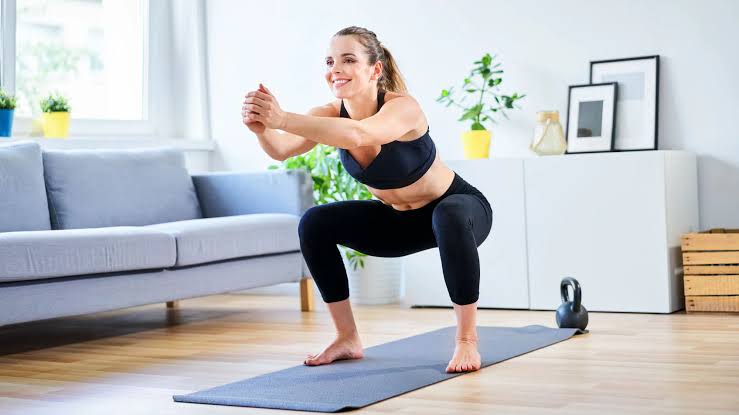
So I drove home, made an oat milk latte, sat on my living room floor, and thought, okay, what if I just… didn’t do that anymore. What if the version of fitness that actually worked for my life wasn’t happening in a building with my name on a key fob, but happening right here, on this rug, in the eleven minutes before my first meeting?
That decision, which felt almost rebellious at the time, completely changed my relationship with my body over the following months. Not because home workouts are secretly superior to gym workouts in some objective sense — I don’t think they are, necessarily — but because removing every single piece of friction between me and moving my body meant I actually, consistently, joyfully did it. And consistency, it turns out, beats almost everything else when it comes to actually seeing change.
This is the story of that summer. Not a clinical breakdown of macros and rep ranges, though we’ll get into some of that too, because I do think the details matter. Mostly, I want to walk you through what it actually felt like to build a body and an energy I was proud of, entirely within the four walls of my own home, while still somehow ending up looking — and I say this with zero shame — genuinely good in every mirror selfie I took along the way.
Why Home Fitness Became the Defining Wellness Trend of the Decade
I think it’s worth pausing on why this shift happened at all, because it’s not just my personal story — it’s a much bigger cultural moment, and understanding it helps explain why home fitness isn’t some lesser, consolation-prize version of “real” exercise anymore.
The gym, as an institution, was built around a particular rhythm of life that genuinely doesn’t match how a lot of us live anymore. Rigid commute-adjacent hours, a one-size-fits-all approach to community and motivation, a culture that for decades quietly rewarded intensity and intimidation over sustainability and joy. For a long time, that was just the deal. If you wanted to get strong, get lean, get visibly fit, you accepted the friction because there wasn’t really an alternative.
What changed, gradually and then suddenly, was the quality of what’s available at home. The content got smarter, more genuinely well-programmed, less gimmicky. The equipment got smaller, prettier, more affordable, and more effective — you don’t need a home gym that looks like a CrossFit warehouse anymore to get a genuinely challenging workout. And maybe most importantly, the whole cultural conversation around fitness shifted away from punishment and toward something that finally felt aligned with how I actually wanted to live — strength as self-respect, movement as mood medicine, a body that feels capable rather than a body that’s been beaten into a particular shape.
There’s also something quietly, beautifully aligned between this home-fitness moment and the broader aesthetic shift we’ve all watched happen across fashion and beauty over the last couple of years — that same quiet luxury, soft glam, clean girl energy that’s taken over everyone’s Pinterest boards. The woman doing pilates on a sunlit living room floor in matching cream-colored sets, hair in a slicked bun, green juice on the side table — that image has become as aspirational, as aesthetically coded, as any street-style photo. Home fitness isn’t hiding anymore. It’s not the thing you do because you can’t afford or access “real” fitness. It’s become its own elevated, deeply photogenic lifestyle category, and I think that cultural permission to find it genuinely aspirational rather than just convenient has made an enormous difference in how seriously people, myself very much included, take it.
The Mental Shift That Had to Happen Before Any Physical One Could
I want to be honest about something before we get into the workouts and the routines, because I think skipping this part does a disservice to anyone reading this hoping for real, lasting change rather than another two-week burst of motivation that fizzles by June.
The physical transformation, as real and visible as it ended up being, was genuinely the easier part. The harder part, the part that took actual work, was untangling my relationship with exercise from years of treating it as punishment, as the price I paid for eating, as this grim debt I owed my body for existing in it imperfectly.
I’d done the gym thing for years, on and off, always with this slightly frantic, slightly self-punishing energy underneath it — workouts chosen based on calories burned rather than how they felt, a running mental tally of what I’d “earned” the right to eat, a kind of low-grade contempt for my own body that I genuinely didn’t realize I was carrying until I started trying to build something different.
The shift, when it finally happened, came from a strange place — I started following women on social media who talked about movement as a celebration rather than a correction. Women who lifted weights because it made them feel powerful, not because it would shrink them. Women who did slow, gentle pilates flows and talked openly about loving their bodies exactly as they were while still wanting to get stronger, which felt like a genuinely new idea to me at the time, even though I’m sure it’s not new at all. The two things — loving yourself now and wanting to grow — had always felt contradictory to me before that. Watching other women hold both at once, without apparent conflict, cracked something open.
So before I bought a single resistance band, I did a kind of internal inventory. Why did I actually want to do this? Not the performed answer, the one I’d give if someone asked at a dinner party, but the real, slightly uncomfortable answer. And the honest truth was a mix of things — I wanted more energy, I wanted to feel strong carrying my own groceries up three flights of stairs, I wanted my clothes to fit the way I liked, and yes, somewhere in there, I wanted to look good, and I’ve decided I’m done feeling ashamed of that particular truth. Wanting to look good and wanting to feel good were never actually in conflict. I’d just been taught, somewhere along the way, that admitting the first one made the second one less legitimate.
Once I let myself want both things honestly, the whole project became so much easier to sustain, because I wasn’t white-knuckling through workouts out of guilt. I was choosing them, most days, because I’d built a version of fitness that actually felt good to do.
Designing a Home Space That Actually Makes You Want to Work Out
Let’s talk about the physical setup, because I genuinely believe the environment you’re working out in matters more than people give it credit for, especially at home, where the line between “workout space” and “the rest of your life” can blur into nothing if you’re not intentional about it.
My first attempt at a home workout space was, frankly, depressing — a yoga mat shoved in the corner of my bedroom next to a pile of laundry I kept meaning to deal with, a resistance band tangled in a drawer, dumbbells I’d bought once in an ambitious mood and then promptly forgotten existed. I’d glance at that corner most days and feel a small, specific guilt, which is exactly the opposite of what a workout space should make you feel.
The shift happened when I started treating my workout corner the same way I treat the rest of my home aesthetically — which is to say, with actual intention, rather than as an afterthought relegated to whatever ugly leftover space happened to be available. I cleared a section of my living room near the window, where the light is genuinely beautiful in the late morning. I bought a mat in a color I actually love, a soft sage green that goes with absolutely nothing else functional about it but makes me happy every single time I unroll it. I got a simple woven basket to corral the resistance bands and small dumbbells so they’re not visually chaotic, tucked away but still accessible, the same way I’d organize any other part of my home.
This sounds almost frivolous to mention in a fitness article, I know, but I think it matters enormously, and here’s why — the aesthetic of a space genuinely affects whether you want to be in it. A beautiful, intentional corner of your home invites you in the way a cluttered, ignored one repels you. I’ve watched my own consistency improve measurably since I made this small shift, and I don’t think that’s a coincidence, even though I can’t prove causation in any scientific sense. It just feels true, the way certain things in life feel true even before you have the evidence to back them up.
Natural light matters too, more than I expected. I deliberately schedule most of my home workouts for times when sunlight is actually coming through that window, partly because good light makes everything — including a sweaty workout — feel more pleasant, and partly, if I’m being fully honest, because good natural light makes for a genuinely better mirror selfie afterward, and that small, slightly vain reward has become part of my motivation in a way I’ve stopped pretending it hasn’t.
The Equipment That Actually Earns Its Place (And What You Genuinely Don’t Need)
I want to save you some money and some closet space here, because the home fitness equipment market is enormous, and a huge percentage of it is genuinely unnecessary for the vast majority of people building a sustainable home routine.
Resistance bands have become, without question, the single most valuable piece of equipment in my whole setup, and they cost almost nothing compared to basically everything else on this list. A good set of loop bands and a set of longer bands with handles can replicate an enormous percentage of what you’d do with gym machines — glute work, upper body resistance training, mobility work — in a fraction of the space and cost. They’re also just genuinely pleasant to use once you understand proper form, which took me embarrassingly longer to figure out than I’d like to admit.
A pair of adjustable dumbbells has been worth every penny, even though the upfront cost felt significant at the time. Rather than buying a dozen different weight pairs and slowly filling a closet, one adjustable set lets you progress as you get stronger without needing to buy new equipment every few months, which matters a lot if, like me, you genuinely do get stronger over a summer of consistent training and need heavier weights by August than you needed in May.
A simple mat, obviously, but I’d encourage spending slightly more here than feels necessary, because a thin, cheap mat that slides around or doesn’t cushion your joints properly will quietly undermine your motivation in a way that’s hard to trace back to the actual cause. You’ll just feel vaguely like working out is uncomfortable, without realizing the mat is half the problem.
A set of sliders — those little discs that go under your hands or feet to add an unstable, low-impact resistance element to bodyweight exercises — has become a surprisingly beloved part of my routine, mostly because they make core and lower body work feel genuinely different and challenging without any impact on my joints, which matters more to me now than it did in my early twenties.
What I genuinely don’t think most people need, at least starting out, is anything large, expensive, or motorized. The treadmills and bikes and elaborate multi-function machines that take over entire rooms and cost thousands of dollars sound appealing in theory but, in my experience and in the experience of basically every woman I’ve talked to about this, tend to become very expensive clothing racks within a few months unless you were already deeply committed to that specific style of cardio before buying them. Start small, start cheap, and only invest in bigger equipment once you’ve genuinely proven to yourself, through months of consistency with the basics, that you’ll actually use it.
Building the Routine: What My Actual Week Looks Like
Let me get specific about structure, because I think the vagueness around “just move your body” that floats around wellness content can actually be paralyzing rather than liberating. Having some kind of framework, even a loose one, made an enormous difference for me in actually following through day after day.
My week, in its current, evolved form after a full summer of trial and error, looks roughly like this, though I want to be clear this took months to settle into and didn’t arrive fully formed. Monday and Thursday are strength-focused, working through a combination of resistance bands and dumbbells, targeting different muscle groups each day so I’m not redoing the exact same movements and risking burnout or overuse. Tuesday and Friday are lower-impact, more flow-based movement — pilates-inspired sequences, mobility work, the kind of session that leaves me feeling lengthened and calm rather than depleted. Wednesday is genuinely just a walk, often a long one, sometimes with a podcast, sometimes with nothing but my own thoughts, which I’ve come to treasure more than almost any other part of the week. Saturday is whatever I feel like, genuinely intuitive movement, sometimes a dance-based cardio session because they’re fun and I never expected to enjoy cardio this much. Sunday is rest, full stop, no negotiating.
What I think matters more than the specific split, though, is the underlying principle behind it — variety, recovery built in deliberately rather than happening only when I’m too exhausted to continue, and a genuine mix of intensity levels throughout the week so I’m not constantly pushing at maximum effort, which I learned the hard way leads to burnout and eventually quitting altogether.
The duration of each session has also evolved meaningfully over the summer. I started with workouts that were, looking back, way too long and ambitious for where I actually was — forty-five minutes to an hour, which sounds reasonable on paper but in practice meant I dreaded starting because the time commitment felt enormous on busy days. I scaled back to sessions that are mostly twenty to thirty minutes now, and the counterintuitive thing I’ve learned is that shorter, more consistent sessions have produced better results than the longer, more sporadic ones ever did. There’s something almost magical about removing the size of the commitment as a barrier — a twenty-minute workout feels achievable even on a chaotic day in a way a sixty-minute one simply doesn’t.
Strength Training at Home: The Thing That Actually Changed My Body
If I had to point to the single biggest factor in the physical changes I saw over the summer, it would be strength training, full stop, more than any cardio, more than any specific diet change, more than anything else on this list. And I think this is genuinely underappreciated, especially among women who’ve absorbed decades of cultural messaging that pushed cardio as the “real” path to a leaner body while treating weights as optional or secondary.
I started lifting at home almost reluctantly, mostly because I’d read enough to know I should, rather than out of any genuine desire. The early sessions felt awkward — figuring out proper form from videos rather than a trainer correcting me in real time, second-guessing whether I was doing movements correctly, starting with embarrassingly light weights because I genuinely didn’t trust my form enough to load more onto unfamiliar movements.
But something shifted, probably around the six-week mark, where the movements stopped feeling foreign and started feeling like mine. I could feel, with real specificity, which muscles were working during a given exercise, rather than just generally sensing that something was happening somewhere in my body. And once that connection clicked, the actual physical changes accelerated in a way that felt almost unfair compared to how slowly the early weeks had moved.
The aesthetic result of consistent strength training, the thing nobody quite prepared me for, wasn’t really about getting smaller, which had always been my unconscious, default goal with exercise in the past. It was about getting shaped — visible definition in my shoulders and arms that made even simple tank tops look more interesting, a glute and hamstring development that changed how my favorite jeans fit in a way I genuinely hadn’t anticipated, a core strength that improved my posture so dramatically that several people commented on it without knowing anything about my workout routine, just noticing that I somehow looked taller, more put-together, more confident.
This connects, I think, really beautifully back to that whole quiet luxury, elegant streetwear aesthetic that’s dominated style conversations recently. A strong, well-postured body genuinely changes how clothes hang, how an oversized blazer drapes across actual shoulder definition rather than collapsing on a frame with no structure underneath. The body underneath the clothes has become, in this current style moment, almost as important as the clothes themselves, and strength training is, I’d argue, the single most effective way to build that underlying structure.
Pilates: The Trend That Actually Deserved the Hype
I want to talk specifically about pilates, because it’s become such a dominant force in the wellness and aesthetic conversation over the past few years that I went into it almost skeptically, assuming it was more about the cute branded sets and the Pinterest-worthy studio aesthetics than about genuine physical results. I was wrong, and I want to be honest about being wrong, because I think a lot of women dismiss pilates for the same reason I almost did.
What pilates actually does, when you do it consistently and with real attention to form rather than just going through motions, is build this deep, foundational core strength that affects everything else about how your body moves and looks. Posture improves. The waist seems to define itself more, not through any spot-reduction magic, which isn’t real, but through genuinely strengthened obliques and transverse abdominal muscles that pull everything in and up in a way that changes your silhouette meaningfully.
I started with home pilates videos, which felt initially like a poor substitute for the reformer-based studio sessions everyone online seemed to be doing, but mat-based pilates, done well, with genuine focus on the small, precise movements rather than rushing through for the sake of finishing, has produced results I genuinely didn’t expect from something that often looks, from the outside, almost too gentle to be effective.
The mind-body element of pilates also surprised me. There’s a slowness to it, a required presence, that I initially found almost frustrating — I wanted to move faster, sweat more, feel like I was “really” working out in the way I’d been conditioned to associate with effort. But the slower I went, the more genuinely challenging certain movements became, and the more I started to understand why this particular style of movement has captured so much cultural attention recently. It rewards control rather than just intensity, which feels like a quietly radical idea in a fitness culture that’s spent decades equating exhaustion with effectiveness.
Cardio Without Dread: Finding the Movement That Doesn’t Feel Like Punishment
I have a complicated history with cardio, and I suspect a lot of women reading this do too. For years, my relationship with cardio was almost entirely punitive — running on a treadmill I hated, watching a clock that seemed to move backward, treating the whole experience as a kind of penance rather than anything resembling enjoyment.
What changed everything for me was discovering dance-based cardio, somewhat by accident, through a video that showed up in my feed during a particularly low moment when I genuinely didn’t think I could make myself do another traditional cardio session. It was silly, almost embarrassingly so at first, just moving to music in my living room with no real choreographic skill required, but within about ten minutes I was genuinely sweating, genuinely smiling, and genuinely shocked that cardio could feel like this.
I think this connects to something important about sustainable fitness generally — the specific modality matters so much less than whether you actually enjoy doing it, and the fitness industry, for whatever reason, has historically pushed a fairly narrow definition of what “real” cardio looks like that doesn’t account for how varied human enjoyment actually is. Some women genuinely love running, find it meditative and freeing, and that’s wonderful for them. I am not that woman, and pretending otherwise for years cost me a lot of unnecessary suffering and a lot of abandoned routines.
Jump rope sessions became another unexpected favorite, mostly because they’re so compact and so genuinely challenging in short bursts that even a ten-minute session leaves me legitimately breathless in a way that feels satisfying rather than draining. Stair climbing, when I have access to stairs, scratches a similar itch. The common thread across everything that’s actually stuck for me is intensity in short, manageable windows rather than sustained, moderate-effort sessions that stretch on for what feels like forever.
The Skin and Energy Glow That Comes From Inside the Workout
I want to talk about something that doesn’t get discussed nearly enough in fitness content, which is how dramatically consistent movement changed my actual appearance in ways that have nothing to do with muscle definition or weight — specifically, my skin, my energy, the entire quality of how I present myself day to day.
There’s a specific kind of glow that comes from genuinely good circulation, the kind that consistent exercise builds over time, and it’s different from any topical skincare glow, however good your routine is. My skin, over the course of that summer, took on this flushed, healthy quality that I genuinely couldn’t replicate with any blush or highlighter, because it was coming from actual increased blood flow and oxygenation rather than reflected light from a product.
The sweat itself, somewhat counterintuitively, seemed to help too — I noticed fewer of the small, stress-related breakouts I’d dealt with for years once I started moving consistently, which makes sense when you think about how directly stress hormones affect skin, and how effectively regular movement helps regulate those hormones over time. I still cleanse properly after every workout, because letting sweat sit on skin for extended periods can absolutely cause issues, but the actual act of sweating regularly seemed to support my skin rather than harm it, once I was managing the aftercare properly.
Energy is the other piece of this that I think gets underestimated. There’s a particular kind of vibrancy, a liveliness in how someone carries themselves, that comes from a body that’s being used regularly and well, and I genuinely believe people can sense this, even if they couldn’t articulate exactly what they’re responding to. The same woman, in the same elegant streetwear outfit, with the same skincare routine, simply reads differently when she’s moving through the world with the kind of energy consistent exercise builds versus when she’s depleted and sedentary. It’s not about the visible muscle, necessarily. It’s something more diffuse than that, something about presence and aliveness that’s harder to name but unmistakable once you’ve experienced both states in your own body.
Nutrition That Supports the Work Without Becoming Its Own Obsession
I want to tread carefully here, because I think diet culture has done genuine harm in the fitness space, and I don’t want to contribute to that by presenting nutrition advice as some rigid, moralized system. But I also think pretending food doesn’t matter at all to how this whole transformation unfolded would be dishonest, so let me talk about it the way it actually played out for me, with all the appropriate caveats about individual variation.
Protein became the thing I paid the most genuine attention to, mostly because the strength training simply doesn’t produce the results you want without adequate protein intake to support muscle repair and growth. I didn’t track obsessively, which I know works for some people but never has for me psychologically, but I did become much more intentional about including a real protein source at most meals rather than treating it as an afterthought, the way I had for most of my adult life before this summer.
Hydration mattered more than I expected, again, the same boring truth that shows up in basically every wellness conversation I’ve ever had. Workouts felt measurably harder, recovery felt measurably slower, on days I hadn’t been drinking enough water, and the difference was significant enough that I started treating water intake as seriously as I treated the actual workouts themselves.
What I deliberately avoided, after some early missteps, was any kind of restrictive eating pattern built around “earning” food through exercise, the exact mentality I described untangling myself from earlier in this piece. The moment exercise becomes currency for food, in my experience, the whole project becomes unsustainable and starts to corrode the genuine joy I’d worked so hard to build into the process. I eat to support the training now, not to punish myself for having trained insufficiently, and that distinction, subtle as it sounds, made an enormous difference in how sustainable the whole summer ended up being.
Recovery: The Underrated Half of the Equation
I think recovery is probably the most undervalued aspect of any fitness transformation, home-based or otherwise, and I genuinely didn’t understand its importance until I’d pushed through a stretch of overtraining that left me exhausted, irritable, and seeing worse results despite working out more, not less.
Sleep, predictably, sits at the center of recovery in a way that nothing else quite matches. Muscle repair, hormone regulation, the actual physiological processes that turn a workout into visible results — all of it depends heavily on genuinely adequate sleep, and I learned this the hard way during a few weeks of poor sleep where I was training just as hard but seeing noticeably worse results, more soreness that lingered longer than it should have, less strength progression than the weeks before.
Stretching and mobility work, which I’d dismissed for years as an optional add-on rather than a real component of fitness, became genuinely essential once I started taking it seriously. A simple ten-minute stretching routine after harder strength sessions made a measurable difference in how I felt the next day, and the increased flexibility itself started showing up in small, satisfying ways — movements in my strength training that felt easier, a posture that felt more open and less restricted throughout daily life.
Rest days, taken genuinely rather than as guilt-laced “cheat” days I felt I needed to apologize for, became something I started to protect fiercely. There’s a particular kind of wisdom in understanding that a body needs genuine downtime to actually adapt and grow stronger from training stress, and I think a lot of fitness culture, even now, in this gentler, more wellness-oriented era, still carries an undercurrent that frames rest as laziness rather than as an essential, active part of the process. I’ve had to consciously work against that internalized voice more than once.
The Pinterest-Worthy Aesthetic of a Home Workout Practice
I’d be lying if I said the visual, aesthetic dimension of all this didn’t matter to me, and I think pretending it doesn’t would be dishonest given everything else I’ve shared throughout this piece. There’s a genuine pleasure in building a home fitness practice that’s beautiful to look at, that photographs well, that feels coordinated with the rest of my aesthetic life rather than existing as some separate, utilitarian category.
My workout sets have become an actual point of consideration, not just an afterthought grabbed from whatever’s clean in the drawer. Matching sets in soft, elevated neutrals — sage, cream, that deep chocolate brown that seems to show up in every part of my wardrobe lately — feel like an extension of the same quiet luxury aesthetic I’ve built into my actual clothes. There’s something genuinely motivating about looking put-together even while sweating on my living room floor, which I know sounds slightly absurd written out loud but has been true for me regardless of how it sounds.
The whole “girl who works out at home in beautiful light wearing a beautiful set” image has become such a dominant aesthetic across social platforms recently, and I think it’s worth acknowledging both the genuine appeal and the slight pressure embedded in that imagery. It’s inspiring in a way that’s gotten me off the couch on plenty of mornings I might otherwise have skipped a session. It’s also, if I’m honest, occasionally exhausting in the way any heavily aestheticized version of an authentic practice can become, when the curated image starts to feel like a standard rather than just inspiration.
I’ve tried to hold both truths at once — genuinely enjoying the aesthetic pleasure of a beautiful workout space and a cute set, while also reminding myself, especially on the days that don’t look anything like the Pinterest version, that the actual work matters infinitely more than how it photographs. The summer I built the body and energy I’m proud of wasn’t always pretty. Plenty of sessions happened in old t-shirts with my hair a disaster, sweating through movements that felt genuinely hard, with absolutely no camera anywhere nearby. Those unglamorous sessions did just as much work, probably more, than any of the ones that happened to look good enough to share.
Tracking Progress Without Becoming Obsessive About Numbers
I want to talk about how I measured whether any of this was actually working, because I think the relationship between progress-tracking and mental health in fitness is genuinely fraught, and I navigated it imperfectly throughout the summer in ways worth sharing honestly.
I stepped away from the scale almost entirely, which was a genuinely difficult decision given how deeply ingrained that particular metric had been in my understanding of progress for most of my life. The scale, in my experience, captures so little of what actually matters — water retention, hormonal fluctuation, the weight of muscle I was actively trying to build — while creating an outsized emotional response that often had nothing to do with anything meaningful happening in my body.
What I used instead, and what I’d genuinely recommend to anyone building a similar practice, was a combination of how my clothes fit, progress photos taken in the same lighting and pose every few weeks, and, maybe most importantly, how I actually felt — energy levels, strength in specific movements, sleep quality, mood stability. These measures felt slower to register change initially, which was occasionally frustrating, but they ended up being far more accurate reflections of genuine progress than any single number on a scale ever was.
The progress photos, specifically, became this strange, quietly powerful record over the summer. Looking back at the very first one against where I ended up by August showed changes I genuinely hadn’t perceived in the day-to-day, because change that happens gradually, in your own body, in the mirror you see every single day, becomes almost invisible to you even as it’s happening. The photos caught what my daily perception couldn’t.
The Setbacks Nobody Talks About in the Highlight Reel
I want to be honest about the parts of this summer that didn’t go smoothly, because I think the curated transformation narrative — straight line from point A to point B, consistent improvement, no real struggle — does a genuine disservice to anyone trying to build something similar in their own life.
There was a stretch in late June where I genuinely lost motivation entirely, for about ten days, during a particularly stressful period at work that ate up the mental bandwidth I’d normally bring to my workouts. I didn’t beat myself up about it, eventually, though I want to be honest that my first instinct was the old, familiar self-punishment — the voice that said I was failing, that this proved I couldn’t actually sustain change, the same voice I thought I’d already untangled myself from months earlier.
What got me back wasn’t some dramatic motivational breakthrough. It was just deciding, on the eleventh day, to do five minutes. Not a full session, not some ambitious return to form, just five genuinely minimal minutes of movement, because I knew from experience that starting small was the only way back in once momentum had genuinely broken. That five minutes turned into fifteen once I’d started, and within a few days I was back to my regular rhythm, but I think the lesson there — that recommitting doesn’t require some dramatic gesture, just the smallest possible return to the habit — mattered more than almost anything else I learned that summer.
There was also a period of real frustration around the six-week mark where progress seemed to plateau entirely, where I was doing everything “right” by my own standards and not seeing the changes I expected. This is, I now understand, an almost universal experience in any consistent training practice, the body’s tendency to adapt and then briefly stall before the next round of visible change, but in the moment it felt discouraging in a way that tested my commitment to the whole project more than almost anything else.
What Actually Changed By the End of the Summer
I want to talk about outcomes honestly, without either undersells or overselling what actually happened, because I think both extremes do a disservice to anyone hoping to build something similar.
Physically, the changes were real and visible, though they unfolded more gradually than any of the dramatic before-and-after content I’d consumed online had led me to expect. Visible muscle definition in my arms and shoulders that changed how certain clothes fit and looked. A stronger, more defined core that improved my posture noticeably enough that multiple people commented on it without any context about what I’d been doing. Improved cardiovascular endurance that I noticed most clearly in unexpected, everyday moments — climbing stairs without getting winded, keeping up with friends on a hike that would have left me struggling months earlier.
But honestly, the changes that mattered most to me by the end of the summer weren’t really the visible ones, even though I won’t pretend those didn’t matter too. They were the changes in how I felt moving through my own life — a baseline energy level that made everything from work to socializing feel easier to sustain, a relationship with my own body that had shifted from something closer to adversarial toward something closer to partnership, a confidence that showed up not just in how I looked in clothes but in how I carried myself through rooms entirely unrelated to fitness.
That confidence, I think, connects back to everything we’ve talked about throughout this piece — the elegant streetwear, the soft glam, the whole aesthetic language of quiet, effortless luxury that’s defined this style moment. A body that feels strong and capable changes how you wear everything else in your life, not just literally, in terms of how clothes drape over a more defined frame, but in some harder-to-name way that affects posture, presence, the specific quality of confidence that reads, to anyone watching, as genuine rather than performed.
Building This Into Your Own Life, Starting Smaller Than You Think You Should
If you’re reading this feeling inspired but also slightly overwhelmed — and I genuinely understand that feeling, because I felt it myself before I started — I want to leave you with the thing I most wish someone had told me at the very beginning of this whole process.
Start dramatically smaller than feels reasonable. Smaller than your ambition wants you to start. I wasted months, in earlier attempts at building a home fitness practice, on overly ambitious plans that collapsed within weeks because they demanded more time, more intensity, more perfection than my actual life could sustain. The version that finally worked, the version that turned into an entire transformed summer, started with literally ten minutes a day, no equipment required, no specific program, just a commitment to move my body for ten minutes regardless of how I felt about it on any given day.
That tiny, almost laughably modest commitment built the consistency that everything else eventually grew from. The equipment came later, once I’d proven to myself I’d actually use it. The more structured programming came later, once I understood my own preferences and limitations well enough to build something genuinely suited to me rather than copied wholesale from someone else’s routine. The aesthetic, beautiful workout corner came later, once the practice itself was solid enough to deserve the investment.
I think about that morning in the gym parking lot often, the version of me who felt so defeated by the friction of a fitness routine that wasn’t actually serving her, who drove home and sat on the floor and decided to try something different. I don’t think she knew, sitting there with her latte, how completely that small decision would reshape not just her body but her entire relationship with movement, with her own capability, with the particular kind of confidence that comes from building something real and consistent entirely on her own terms, in her own space, at her own pace.
If there’s a version of you sitting somewhere right now, maybe in a parking lot of your own, metaphorical or otherwise, feeling that same specific exhaustion with a fitness routine that isn’t working — I hope this gave you some sense of what’s possible when you stop trying to force yourself into someone else’s framework and start building one that’s genuinely, sustainably yours. The glow, the strength, the energy, all of it is available to you, right there in your own living room, whenever you’re ready to begin.
Dressing for the Workout Itself, Not Just the After Photo
There’s a part of this whole journey I haven’t touched on yet, and it’s a small thing on paper but it ended up mattering more than I expected — what I actually wear while I’m doing all of this. I don’t mean the cute matching set for the mirror selfie, though we’ve already covered that. I mean the unglamorous, practical question of what fabric actually performs well through a sweaty pilates flow or a jump rope session, because getting this wrong quietly sabotaged my consistency more than once before I figured it out.
Early on, I worked out in whatever leggings I happened to own, mostly cheap, thin ones I’d bought years earlier for reasons that had nothing to do with actual training. They rolled down during squats. They went sheer in ways I only discovered later, mortifyingly, from a photo. They held heat in a way that made even a fifteen-minute session feel unbearable by July. None of this is dramatic, but all of it added a tiny, cumulative layer of friction to a practice I was already working hard to protect, and I think it’s worth naming because nobody really talks about how much your actual gear affects whether you show up the next day.
What changed things was investing, slowly and not all at once, in a small handful of pieces built for actual movement rather than just the aesthetic of movement. A few pairs of leggings in a compression-style fabric that genuinely stayed put through everything from deep lunges to floor work. Sports bras with real support, which sounds obvious but took me years to actually prioritize, having spent most of my twenties assuming discomfort was just part of the deal. A couple of soft, breathable tanks in those same elevated neutral tones I already loved everywhere else in my wardrobe, so the workout pieces didn’t feel like a separate, lesser category of clothing but an actual extension of how I already liked to dress.
I noticed something interesting once I made this shift — feeling genuinely comfortable and put-together during the workout itself, not just after it, changed how present I was able to be in each session. There’s a specific kind of self-consciousness that creeps in when you’re constantly adjusting a waistband or tugging at something that’s riding up, and removing that low-grade distraction let me actually focus on form, on breath, on the muscle I was supposed to be feeling work, rather than on the clothing fighting against me the entire time.
This is, I think, a small but real example of something larger that ran through this whole summer — the idea that the aesthetic and the functional don’t have to live in separate categories, that you can build a fitness practice that looks beautiful and performs beautifully at the same time, without one canceling out the other. Quiet luxury isn’t just about the coat you wear to dinner. It’s also, in its own modest way, about the leggings that don’t betray you mid-lunge.
The Quiet Confidence That Followed Me Into Every Other Part of My Life
I want to close with something a little less practical and a little more personal, because I think it’s ultimately the truest thing I have to say about this whole experience. The most unexpected outcome of an entire summer spent transforming my fitness without ever leaving my house wasn’t really about my body at all, in the end. It was about a kind of quiet, settled confidence that started showing up in completely unrelated corners of my life.
I noticed it first in small, almost silly ways. Standing a little taller in a meeting. Not shrinking quite as automatically in social situations where I used to default to making myself smaller. Saying yes to things — a dinner with people I barely knew, a trip I’d normally have talked myself out of — with a kind of ease that felt new, even though I couldn’t point to any single workout that had caused it.
I think what actually happened is something more cumulative than that. Every single day I showed up for that ten-minute commitment, even on the days I didn’t want to, even on the days it would have been so easy to skip, I was quietly proving something to myself about my own reliability. That I keep promises to myself. That I follow through, even when nobody’s watching, even when there’s no audience and no accountability beyond my own sense of integrity. That kind of evidence accumulates over a summer in a way that’s hard to overstate and even harder to fake through any other means.
This is the part of the transformation that doesn’t show up in a before-and-after photo, but I’d argue it’s the part that matters most. The strength training changed my shoulders. The pilates changed my posture. The cardio changed my endurance. But the consistency itself, the simple, unglamorous act of showing up for myself in that little corner of my living room, day after day, through motivation and through its absence, changed something underneath all of it — the quiet, settled sense that I am someone who does what she says she’s going to do, for herself, without needing anyone else to witness it.
That, more than any visible muscle or any number on any measurement, is the thing I’m most proud of from that whole summer. And it’s the thing I’d most want for you, too, if you’re standing at the beginning of your own version of this story, wondering whether it’s really possible to build something real without ever stepping foot in a gym. It is. It just starts smaller, and quieter, than you probably expect — right there on your own floor, in your own light, on your own terms.