
I get asked the same question more than almost any other, usually by a friend catching me in the kitchen mid-protein-shake or sliding into my DMs after seeing a progress photo I’d half-forgotten I’d posted: “okay but what’s the actual plan?” Not the philosophy, not the mindset talk, though I love all of that and I’ll never stop wanting to talk about it. The plan. The structure. What did you do, on which days, for how long, and why.
So that’s what this is. If the last piece I wrote was the heart of the story — the parking lot, the mental shift, the slow unlearning of punishment-based exercise — this is the spine of it. The actual scaffolding I built my summer around, week by week, the thing I’d hand you if you sat across from me at brunch and said, “just tell me what to do.”
I want to say upfront that this isn’t a rigid, immovable program carved in stone, because nothing that worked for me over an entire summer was ever that inflexible. Real life doesn’t cooperate with rigid plans, and the moment a program demands perfection, most of us quietly abandon it the first time life gets messy. What I’m giving you instead is a living, breathing structure — phases that build on each other, specific workouts I returned to again and again, the actual logic behind why I sequenced things the way I did, and enough flexibility built in that you can bend this around your own life rather than forcing your life to bend around it.
This is the plan that took me from someone who dreaded a fitness routine entirely to someone who genuinely, unironically looks forward to her living room floor most mornings. Let’s get into it properly.
The Philosophy Underneath the Plan, Because Structure Without Reason Falls Apart
Before I hand you the actual weekly breakdown, I want to explain the logic holding the whole thing together, because I think plans that you understand at a deeper level are infinitely more sustainable than plans you just follow blindly because someone told you to.
The core principle this entire summer was built around is something I’d describe as progressive, varied consistency. Progressive, meaning the demands on my body gradually increased over the weeks rather than starting at maximum intensity and trying to sustain that forever, which is, in my experience, the single fastest route to burnout and injury. Varied, meaning I deliberately rotated through different types of movement — strength, low-impact flow work, higher-intensity cardio bursts — rather than doing the exact same thing every single day, both to avoid the staleness that kills motivation and to give different muscle groups and energy systems appropriate recovery time. Consistent, meaning the actual non-negotiable was showing up, even in modified, smaller form, rather than chasing perfect execution every single day.
I also built the whole plan around a four-phase structure across roughly twelve weeks, which mapped reasonably well onto an actual summer’s length, though you can absolutely stretch or compress this depending on your own timeline and starting point. Phase one was about building the habit and the foundational movement patterns. Phase two introduced real intensity and load. Phase three pushed harder, with more complex movements and shorter rest periods. Phase four was about refining, maintaining, and genuinely enjoying the strength and capability I’d built, rather than constantly chasing more.
This phased approach matters enormously for the “burn fat, build strength” promise in the name of this whole project, because those two goals, contrary to a lot of confusing fitness content out there, aren’t actually in tension with each other the way people often assume. Strength training builds and preserves the muscle that keeps your metabolism efficient and your body composition changing in the direction most women are actually hoping for, while a smart combination of training intensity and recovery creates the conditions for fat loss to happen alongside that strength-building, rather than working against it. You don’t have to choose between getting strong and getting leaner. Done right, over a long enough runway, they happen together.
What You Actually Need Before You Start
Let me be efficient about this part, because I know from experience that the gap between “deciding to start” and “actually starting” widens with every piece of equipment you feel like you need to acquire first, and I don’t want that gap to swallow your motivation before you’ve even begun.
You genuinely need very little. A set of resistance bands, ideally both the small loop style and a longer set with handles, will carry an enormous percentage of this entire plan. A pair of dumbbells, adjustable if your budget allows, though even one moderate, fixed pair will do for the first several weeks while you’re building foundational strength and learning proper form. A mat, for comfort and grip during floor work. That’s genuinely the equipment list. Everything else — the sliders, the jump rope, the heavier kettlebell I eventually added — came later, once I’d proven to myself through actual consistent use that I’d benefit from the investment.
Space-wise, you need roughly a six-by-six-foot clear area, enough room to lie down with arms extended overhead and still have a little room to spare for lateral movements. That’s it. I did this entire plan in a corner of my living room that also, at various points throughout any given day, served as a reading nook, a place where my cat naps, and the occasional overflow seating for guests. The workout space doesn’t need to be permanent or precious. It just needs to be available when you need it.
Time-wise, this plan assumes you can find somewhere between twenty and forty minutes, four to five days a week, depending on the phase. That’s the honest commitment. If your available time is smaller than that most weeks, the plan still works — everything here scales down gracefully, and a shorter, consistent version of this plan will beat an ambitious version you only complete half the time, every single time.
Phase One: Weeks One Through Three, Building the Foundation
The first phase is, deliberately, the least intense phase of the entire plan, and I want to be honest that this surprised and slightly frustrated me when I built it, because I wanted to feel like I was doing more, working harder, seeing faster results. But this foundational phase exists for a genuinely important reason — your body, especially if it’s been a while since consistent training, needs time to relearn movement patterns properly before loading them with real intensity, and skipping this step is exactly how people end up injured and discouraged within the first two weeks.
During this phase, I trained four days a week, alternating between full-body strength sessions and lighter, flow-based movement days, with at least one full rest day built in deliberately.
A typical strength session during these weeks looked like this: a five-minute warm-up of gentle dynamic movement — arm circles, leg swings, a few bodyweight squats just to wake everything up — followed by three rounds of a simple circuit. Bodyweight squats, twelve to fifteen reps, focusing entirely on depth and control rather than speed. Resistance band rows, pulling the band toward your ribs with elbows tucked, fifteen reps, really focusing on squeezing the shoulder blades together at the top of each pull. Glute bridges, fifteen to twenty reps, pausing for a full second at the top of each one. Modified push-ups, either on knees or with hands elevated on a sturdy surface depending on your starting strength, aiming for eight to twelve reps with genuinely good form rather than sacrificing form for a higher number. And a plank hold, building from twenty seconds up toward forty-five over these first three weeks.
That’s the entire circuit, repeated three times through with about a minute of rest between rounds. It sounds almost too simple when written out, and I remember feeling slightly skeptical myself during week one, wondering if this was really enough to produce any meaningful change. But this foundational phase isn’t really about the immediate burn or the immediate visible change — it’s about building the movement competency and base-level strength that everything in phases two and three will be built on top of. Skipping or rushing through this phase is the single most common mistake I see women make when starting a home fitness journey, myself included in earlier, less patient attempts.
The lower-intensity flow days during this phase focused on mobility and gentle core work — a simple ten to fifteen minute pilates-inspired sequence, lots of controlled breathing, movements like dead bugs, bird dogs, and gentle spinal rotations that build core stability without any real impact or strain. These days felt almost suspiciously easy at the time, but I noticed, looking back, that they laid groundwork for core strength that made every single subsequent phase of strength training feel more stable and controlled.
Phase Two: Weeks Four Through Six, Introducing Real Intensity
This is where things started to feel genuinely different, both in terms of difficulty and in terms of the early signs of visible change that kept me motivated to continue. By week four, my body had built enough foundational strength and movement competency that I could meaningfully increase the load and complexity without the injury risk that would have come from jumping here straight from week one.
Training frequency increased slightly here, to five days a week, structured as three strength-focused days and two cardio or flow-focused days, still with one full rest day protected.
The strength sessions got more demanding in a few specific ways. I added actual dumbbell weight to movements that had been bodyweight-only before — goblet squats holding a dumbbell at chest height, dumbbell rows replacing the resistance band version, a proper push-up progression moving toward full push-ups for those who’d started on modified versions. I also introduced supersets, pairing two exercises back to back with minimal rest between them before resting properly, which increased the metabolic demand of each session significantly without extending the total time much at all.
A typical phase-two strength session looked like this: warm-up as before, then four rounds of a superset pairing. Dumbbell goblet squats paired immediately with dumbbell shoulder presses, twelve reps each, no rest between the two exercises, then sixty to ninety seconds of rest before starting the next round. Dumbbell romanian deadlifts paired with bent-over rows, twelve reps each, same structure. Walking lunges, ten per leg, paired with a thirty-second plank hold. This kind of pairing kept my heart rate genuinely elevated throughout the session, adding a cardiovascular, fat-burning dimension to what was still fundamentally a strength-focused workout, which is exactly the combined effect this whole “burn fat, build strength” approach is designed around.
The cardio days during this phase introduced actual intervals for the first time — twenty to twenty-five minutes total, alternating forty-five seconds of higher-intensity movement, things like jump squats, mountain climbers, or fast-paced jump rope, with thirty to forty-five seconds of active recovery, like a slow march in place or gentle stretching. This interval structure produces a genuinely effective cardiovascular and fat-burning stimulus in a relatively short window, which matched perfectly with my actual available time most days, and it kept cardio from feeling like the dreaded, endless slog I’d associated with it for most of my adult life.
By the end of this phase, around week six, I started noticing the first genuinely visible changes — a bit more definition in my shoulders, my jeans sitting slightly differently, a noticeable increase in how much weight I could comfortably lift compared to where I’d started just three weeks earlier. These early markers of progress mattered enormously for sustaining motivation into the harder phases ahead.
Phase Three: Weeks Seven Through Nine, The Real Work
I’ll be honest — this was the phase that tested me most, both physically and mentally, and I think it’s important to name that honestly rather than pretending the whole journey was a smooth, linear climb. This is the phase where the plan asks the most of you, and it’s also, not coincidentally, the phase where the most dramatic changes tend to happen, provided you can stay consistent through the genuine difficulty of it.
Training frequency stayed at five days, but the structure shifted slightly — I split strength training into upper-body-focused and lower-body-focused days rather than full-body sessions, which allowed for genuinely more volume and intensity in each specific session since I wasn’t trying to hit every muscle group in one workout.
A lower-body day during this phase, for example, might look like this: warm-up, then five rounds of a tri-set, meaning three exercises performed back to back with no rest before the full recovery period. Dumbbell sumo squats, twelve reps, immediately followed by single-leg glute bridges, twelve reps per leg, immediately followed by lateral band walks, fifteen steps in each direction, then ninety seconds of rest before repeating. This kind of tri-set structure, by this point in the program, genuinely challenges both strength and cardiovascular capacity simultaneously, and I distinctly remember the specific, satisfying exhaustion of finishing these sessions, a feeling entirely different from the slight tiredness of phase one’s circuits.
An upper-body day followed similar logic — push-up variations, dumbbell rows, overhead presses, bicep curls, and tricep work, structured into supersets and tri-sets that kept intensity high throughout a twenty-five to thirty minute window.
The cardio days in this phase got more demanding too, introducing longer work intervals and shorter rest periods — a full twenty minutes of one minute of high-intensity movement followed by just twenty to thirty seconds of rest, repeated through the entire session. I won’t pretend these sessions were enjoyable in the moment, exactly, though I did come to appreciate the specific mental toughness they built, the experience of pushing through genuine discomfort and discovering I could handle more than I assumed.
This was also the phase where recovery mattered most, where I had to be most disciplined about sleep, about stretching, about genuinely resting on my rest day rather than squeezing in “just a little extra” out of some misplaced sense that more was always better. I learned, somewhere around week eight, that skipping recovery during this harder phase didn’t make me progress faster — it made me progress slower, through nagging fatigue and minor aches that lingered longer than they should have. The body needs the hard work and the recovery in roughly equal measure to actually transform, and this phase taught me that lesson more viscerally than any other part of the summer.
Phase Four: Weeks Ten Through Twelve, Refining and Maintaining
By the time I reached this final phase, something had genuinely shifted in how the whole practice felt. The earlier phases had real elements of struggle, of pushing against resistance, of building something that didn’t yet feel natural. By phase four, the movements felt like mine. My body had adapted enough that what once felt impossibly hard now felt merely challenging, in a way that was deeply satisfying to notice.
This phase is less about pushing new intensity and more about refining technique, adding small amounts of complexity and variety to keep things interesting, and beginning to settle into a sustainable, maintainable rhythm that could genuinely continue beyond the structured twelve weeks rather than being some short-term sprint with an inevitable crash at the end.
I kept the same basic structure — strength-focused days split between upper and lower body, cardio and flow days mixed in — but started incorporating more advanced variations of movements I’d mastered. Single-leg deadlifts instead of the two-legged version. Push-up variations with a deeper range of motion or added instability through the sliders I’d picked up by this point. Longer, more flowing cardio intervals that blended strength and cardio elements together, like a circuit alternating kettlebell swings with jump rope intervals.
This phase also became, somewhat unexpectedly, the most genuinely enjoyable part of the entire summer, because the relationship between effort and reward had become so clear and so immediate. I could feel exactly which muscles a movement was working. I understood my own pacing well enough to push myself appropriately without overdoing it. The whole practice had stopped feeling like a program I was following and started feeling like something closer to a relationship I’d built with my own body, full of genuine fluency rather than effortful translation.
A Closer Look at the Movements That Did the Most Work
I want to slow down for a moment and talk specifically about a handful of exercises that, across all four phases, delivered the most consistent, visible results for me, because I think it’s worth understanding not just the structure of the plan but the specific movements worth prioritizing if you’re building something similar yourself.
Squats, in their various forms across the twelve weeks, did more for my lower body shape than almost any other single movement. The visible change in my glutes and thighs by the end of the summer traced back, more than anything else, to consistent, progressively loaded squat variations — bodyweight, then goblet, then sumo, then single-leg. I learned to genuinely respect depth and control over speed and weight here, because rushed, shallow squats simply don’t deliver the same results regardless of how heavy the dumbbell in your hands is.
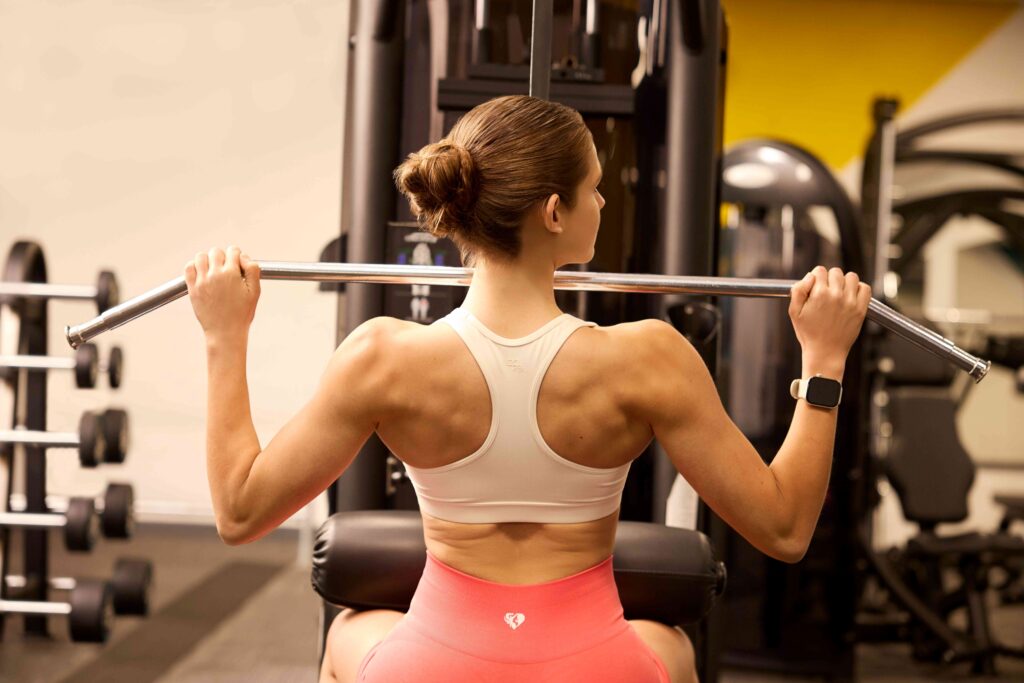
Rows, in their various forms, transformed my upper back and posture in a way I genuinely didn’t anticipate when I started. There’s something about pulling movements specifically — as opposed to pushing movements like push-ups, which get so much more attention in popular fitness content — that builds the kind of back strength that visibly improves posture, which in turn changes how every single outfit you wear actually looks on your body. I’d argue rows are the single most underrated exercise in most home fitness routines, and I made sure they showed up in some form in nearly every strength session across all twelve weeks.
Glute bridges and their progressions did quiet, consistent work throughout the entire plan, and I think they’re worth highlighting because they require no equipment at all yet deliver genuinely significant results when done with real attention to the squeeze at the top of the movement, rather than just going through the motion. Single-leg variations, introduced in the later phases, increased the difficulty significantly while still requiring nothing more than a floor and a body.
Planks and their variations built the deep core stability that, as I mentioned earlier, ended up affecting basically everything else about how my training felt and how my body looked. A strong core isn’t really about visible abs, in my experience — though some increased definition did show up over the summer — it’s about the stability that lets every other movement, every squat and row and press, happen with better control and therefore better results.
How Eating Fit Into the Plan, Without Letting It Take Over
I touched on nutrition in the broader sense in an earlier piece, but I want to get slightly more specific here, since this article is explicitly framed around a structured plan, and food genuinely is part of that structure, whether we like to admit it or not.
I didn’t follow any named diet or rigid eating system throughout this entire twelve weeks, mostly because I know myself well enough to know that rigid systems eventually provoke a kind of rebellion in me that undoes any progress they initially produce. What I did instead was build a few consistent, flexible habits around food that supported the training without becoming their own separate, obsessive project.
Protein at most meals, as I mentioned before, mattered enormously, particularly as the training intensity increased through phases two and three. I didn’t count grams obsessively, but I did become much more intentional about including a real source — eggs, greek yogurt, chicken, fish, tofu, whatever fit a given meal — rather than treating protein as an afterthought the way I had for most of my life before this summer.
I also paid more attention than I ever had before to eating enough overall, which sounds like a strange thing to emphasize in an article about fat loss, but undereating relative to the demands of this kind of consistent training backfired on me more than once during earlier, less informed attempts at fitness in my twenties. A body that’s chronically underfed doesn’t have the resources to build muscle or recover properly, and the fat loss that people chase through restriction alone tends to come at the cost of muscle, energy, mood, and ultimately sustainability. The version of fat loss this plan is actually built around isn’t restriction-driven. It’s activity-driven, supported by adequate, not excessive, food.
Hydration, again, boringly, mattered more than almost anything else on this list, particularly as workouts intensified through the later phases. I noticed measurable differences in workout performance and recovery on days I’d been properly hydrated versus days I hadn’t, consistently enough that it stopped feeling like a coincidence and started feeling like simple cause and effect.
The Aesthetic Side: Making This Plan Feel Like Part of Your Beautiful Life
I don’t think it’s shallow to care about how a fitness practice fits into the broader aesthetic of your life, and I want to talk about that honestly here, the same way I did in the piece before this one, because I think it genuinely affects adherence and enjoyment, not just vanity.
I built small rituals around this plan that made it feel like an intentional, elevated part of my day rather than an interruption to it. A specific playlist, curated and genuinely loved rather than some generic workout mix, that I only listen to during these sessions, which has created a kind of Pavlovian association between that music and the focused, energized state I want to be in when I train. A particular candle, lit before flow days specifically, because the slower, more mindful pace of those sessions paired beautifully with a bit of ambient scent in a way that made even mobility work feel like a small luxury rather than an obligation.
The clothes mattered here too, the same way I described in detail previously — sets that genuinely performed well and looked good, in colors that fit the broader soft, elevated aesthetic I’d built into the rest of my wardrobe and home. There’s a particular satisfaction in a workout space and practice that feels cohesive with the rest of your life’s aesthetic, rather than existing as some separate, unglamorous category you tolerate rather than enjoy.
This connects, I think, to a genuinely important truth about why some fitness plans succeed where others fail despite similar effectiveness on paper — the plans that get woven into the actual fabric of how someone wants to live, how they want their space to feel, how they want to experience their own mornings, tend to stick far longer than plans that exist as a separate, joyless obligation bolted onto an otherwise pleasant life.
Tracking Through the Twelve Weeks Without Losing Your Mind
I want to revisit progress tracking specifically in the context of this structured plan, because having an actual program with phases and weeks made tracking feel more natural and useful than it had in my more freeform earlier attempts at home fitness.
I kept a simple log, nothing elaborate, just a note on my phone listing the date, the workout completed, and the weights or reps used for the main strength movements. This let me see, in very concrete terms, the progressive overload happening across the weeks — the goblet squat that started at a light dumbbell in week four sitting at a noticeably heavier weight by week nine, the push-up progression moving from modified to full somewhere around week seven.
I took progress photos every two weeks, same lighting, same basic pose, same time of day relative to eating and workouts to keep the comparison genuinely useful rather than skewed by water retention or bloating. I also kept loose notes on energy and mood, which ended up being some of the most valuable data points in the whole log, because the physical changes, real as they were, unfolded more slowly and subtly than the shifts in how I actually felt moving through daily life.
What I deliberately avoided, again, was daily weighing, because I know from extensive personal history that this particular habit does more damage to my motivation and mental state than any benefit it provides in actual useful information. The scale, especially during a phase of genuinely building muscle alongside losing fat, can be a deeply misleading, demoralizing metric that doesn’t reflect the real changes happening in your body composition at all.
What to Do When the Plan Doesn’t Go Perfectly, Because It Won’t
I want to address this directly, because I think pretending a twelve-week plan unfolds without disruption does everyone a disservice. Life happened throughout this summer, the way it always does. I traveled for ten days in the middle of phase two and didn’t have access to my usual equipment. I got a stomach bug during phase three that knocked out an entire week. There were ordinary, unglamorous weeks where work stress ate into my available time and I genuinely only managed three short sessions instead of the planned five.
None of these disruptions derailed the overall plan, and I think understanding why is genuinely important if you want this structure to actually work for your real, messy life rather than some idealized, frictionless version of it.
When traveling, I simply did a scaled-down, bodyweight-only version of whatever phase I was in — squats, push-ups, lunges, planks, the same fundamental movement patterns without the dumbbells or bands I couldn’t bring along. This kept the habit and the movement pattern alive even without the full intensity, which mattered more for long-term consistency than perfectly maintaining the planned progressive overload during that specific week.
When I was sick, I simply rested, genuinely, without any guilt, and resumed roughly where I’d left off once I’d recovered, rather than trying to make up for “lost” workouts by cramming extra sessions into the following week, which I’ve learned from experience tends to backfire into overtraining and additional setbacks rather than actually compensating for anything.
During the stressful, low-bandwidth weeks, I simply did the smaller version — three sessions instead of five, shorter sessions when even that felt like too much — and reminded myself, repeatedly, that a diminished version of the plan still moved me forward, while abandoning it entirely moved me nowhere at all. This flexibility, built into how I thought about the plan rather than into the plan’s actual written structure, is probably the single biggest factor in why I completed this twelve weeks at all, compared to the several previous, more rigid attempts that collapsed at the first sign of disruption.
The Results, Specifically, By the Numbers and Beyond Them
I want to be concrete here, because I think specificity is more useful than vague reassurance when you’re trying to decide whether a plan like this is worth your genuine commitment.
Strength-wise, the increases were dramatic relative to where I started, though I want to contextualize that against a genuinely low starting point after years of inconsistent training. My squat went from bodyweight only to a goblet squat with a substantial dumbbell. My push-ups went from modified, knee-supported versions to full push-ups, multiple sets of eight to ten. My rows nearly doubled in weight across the twelve weeks. These numbers matter less in some absolute sense than in what they represented — a body that had become measurably, undeniably more capable than it was twelve weeks earlier.
Visually, the changes were real but, true to how actual bodies actually change, more gradual and subtle week to week than any “transformation” content online tends to suggest. Shoulders and arms with visible definition that changed how sleeveless tops and the kind of cropped knits I love wearing actually looked. A waist that seemed more defined, mostly through genuine core strength rather than any actual measurement change, though there was some of that too. Glutes and thighs with visible shape and lift that changed how my favorite jeans fit in a way that felt like a genuinely lovely, unexpected bonus on top of everything else.
But the thing I keep returning to, the thing that mattered more by the end than any specific number or visible change, was the underlying capability and energy this plan built. I felt different moving through my own life by the twelfth week — sturdier, more energized, more confident in a way that had very little to do with how I looked in any specific mirror and everything to do with how I felt simply existing in my own body day to day.
Taking This Plan and Making It Genuinely Yours
I want to close by saying something I believe deeply, which is that this exact plan, exactly as written, isn’t actually the point. The point is the underlying logic — progressive overload, genuine variety, built-in recovery, flexibility for real life, and a structure substantial enough to provide real direction without being so rigid it shatters at the first disruption.
Take this framework and bend it toward your own life, your own starting point, your own preferences. Maybe you genuinely love running and want to swap my dance-cardio sessions for that instead. Maybe your available time is fifteen minutes most days rather than thirty, in which case scale everything down proportionally rather than abandoning the structure altogether. Maybe you start at an even more foundational level than phase one describes, which is completely fine and, honestly, probably wise if you’re returning to movement after a long break or genuine injury.
What I’d encourage you to hold onto, regardless of how you adapt the specifics, is the phased, progressive logic underneath it all, and the radical, freeing idea that consistency over twelve genuine weeks, even an imperfect, disrupted, real-life version of those twelve weeks, will transform your body and your relationship with movement more thoroughly than any single perfect week ever could. That’s the whole secret, if there is one. Not perfection. Just the patient, structured, repeated act of showing up for yourself, week after week, until one day you look back and realize the body and the strength you were chasing have quietly, undeniably arrived.
The Mistakes I Made So You Don’t Have To
I think it’s worth being specific about where this plan can quietly go wrong, because I made nearly every one of these mistakes myself, in this attempt or in earlier, less successful versions of trying to build a home fitness practice, and I’d rather hand you the shortcut than let you discover them the slow, frustrating way.
The first mistake, and probably the most common one I see, is skipping phase one entirely because it feels too easy. I understand the impulse completely — when you’re motivated and energized at the start of something new, restraint feels almost insulting, like the plan doesn’t trust you. But the foundational phase isn’t there because you’re not capable of more. It’s there because your joints, your connective tissue, and your nervous system’s coordination with new movement patterns adapt on a slower timeline than your enthusiasm does, and front-loading intensity before that adaptation happens is exactly how promising starts turn into nagging knee pain or a tweaked lower back by week three. I jumped straight into a phase-three-style intensity during an earlier attempt, years before this particular summer, and ended up sidelined for two weeks with an aggravated old ankle injury that simple patience would have prevented entirely.
The second mistake is treating rest days as optional or, worse, as something to feel guilty about. I had a stretch during phase three, mentioned briefly earlier, where I talked myself into “just a quick extra session” on what was supposed to be a rest day, reasoning that a little more couldn’t hurt. It absolutely could, and did — that week ended in noticeably worse performance across the board, a kind of flat, heavy fatigue that took longer to shake off than the single skipped rest day would have cost me if I’d just respected it in the first place. Rest isn’t the absence of progress. It’s an active, necessary part of how progress actually happens, and treating it that way mentally took real, ongoing effort for me.
The third mistake, and maybe the sneakiest one, is chasing the burn instead of chasing the movement quality. There’s a specific kind of fatigue that comes from doing an exercise correctly, with full control through a proper range of motion, and a different kind that comes from rushing through reps with sloppy form just to feel maximally exhausted by the end. The second kind feels satisfying in the moment and produces almost nothing in terms of actual strength or shape change over time. I had to consciously slow myself down repeatedly throughout this plan, especially during phases two and three when the temptation to just move faster and feel more depleted was strongest, reminding myself that a controlled, properly executed set of ten beats a rushed, sloppy set of twenty almost every single time.
The fourth mistake is comparing your week four to someone else’s week four, especially someone whose starting point, body, hormones, sleep, stress levels, and life circumstances are entirely different from your own. I fell into this trap more than once, scrolling through transformation content and feeling a hollow, discouraged comparison creep in despite genuinely good progress happening in my own body on my own timeline. The plan works. The timeline it works on is yours, specifically, and measuring it against anyone else’s is a reliable way to manufacture discouragement out of what should feel like genuine pride.
Why This Particular Kind of Strength Reads as Quiet Confidence
I want to circle back to something I touched on earlier and sit with it a little longer, because I think it’s genuinely the most compelling reason to commit to a structured plan like this rather than just moving your body vaguely and hoping for the best. There’s a specific quality to the strength this kind of training builds, and it shows up in a way that I think aligns beautifully with everything else happening in fashion and beauty right now.
The current moment in style, the one defined by quiet luxury and soft glam and that whole elegant, understated aesthetic that’s taken over every Pinterest board and every well-curated feed, rewards a body that looks capable rather than merely thin. The oversized blazer hangs differently across shoulders that have actual definition underneath them. The wide-leg trouser, cinched at the waist, makes more visual sense on a frame with some genuine core strength holding the silhouette together. Even the most minimal, unbothered-looking outfit benefits from the posture that comes from a strong back and strong glutes, the kind of effortless-looking uprightness that no amount of styling alone can fake.
This is, I think, part of why home strength training specifically has become such a culturally resonant practice right now, beyond just the convenience factor. It’s not chasing the smaller, more restrictive body that dominated style conversations in earlier decades. It’s building something more substantial, more structurally impressive, that happens to look extraordinary in exactly the kind of clothes that define this current aesthetic moment — the elevated streetwear, the soft tailoring, the relaxed but intentional silhouettes that need a body with genuine presence underneath them to really land.
I noticed this shift in myself somewhere around phase three of this plan, the specific way certain outfits I already owned started looking different on me, not because the clothes had changed but because what was underneath them had. A coat that had always looked slightly shapeless on me suddenly had somewhere to land across my shoulders. A pair of trousers that had always felt like they were just hanging there started to actually follow the line of my body in a way that felt, frankly, thrilling the first time I noticed it in a mirror.
This is the quiet, compounding gift of a plan like this one — it doesn’t just change isolated numbers on a log or isolated measurements on a tape. It changes the entire visual and felt experience of being in your own body, in your own clothes, moving through your own life. And once you’ve felt that shift, even briefly, it becomes remarkably easy to understand why showing up for these twelve weeks, messy and imperfect as they inevitably are, is worth every bit of the effort it asks of you.
A Real Week From Phase Three, Laid Out Exactly As I Lived It
I think the clearest way to make all of this feel tangible rather than theoretical is to walk you through one actual week, taken from roughly the middle of phase three, because by that point the plan had settled into its real rhythm and I’d stopped second-guessing the structure enough to just live inside it.
Monday started with a lower-body strength session, the tri-set structure I described earlier, done first thing before my brain had fully caught up with what my body was doing, which I’d learned by this point in the summer was genuinely the easiest way to guarantee I actually completed a workout rather than letting the day’s accumulating obligations slowly crowd it out. Twenty-eight minutes, start to finish, including the warm-up, and I remember that particular Monday because I hit a new personal best on my sumo squat weight and spent an embarrassing amount of the rest of my morning feeling disproportionately proud of myself over it.
Tuesday was a cardio interval day, the one-minute-on, thirty-seconds-off structure, done in the late afternoon that week because a morning meeting had eaten into my usual window. I want to be honest that this particular session felt genuinely hard, the kind of hard where I caught myself negotiating with the timer, wondering if anyone would really know if I cut the last two rounds short. I didn’t cut them short, and the small, private satisfaction of finishing exactly what I’d planned, with nobody watching and nothing to prove to anyone but myself, stuck with me longer than the workout itself did.
Wednesday was upper-body strength, the superset and tri-set structure focused on push, pull, and arm work, plus a longer stretch and mobility cool-down afterward because my shoulders had been feeling tight all week from an unrelated stretch of too much time hunched over my laptop. This is the kind of small, responsive adjustment I made constantly throughout the plan — sticking to the overall structure while listening closely enough to my own body to add what it specifically needed in any given week.
Thursday was meant to be a flow and mobility day, but that particular week it became, instead, an unplanned full rest day, because I’d slept terribly the two nights before and woke up Thursday with the specific, recognizable heaviness that told me my body needed recovery more than it needed even gentle movement. I took the rest, genuinely, without negotiating myself into “just ten minutes,” and resumed the plan the following day without any sense that I’d failed at something.
Friday, then, became lower-body strength again, slightly adjusted from the original Monday session to keep things from feeling repetitive, swapping in single-leg deadlifts and lateral lunges for variety. This is one of the small flexibilities built into how I actually lived this plan rather than how it looked on paper — the days shifted around real life constantly, but the underlying weekly balance of strength, cardio, flow, and rest stayed intact even when the specific calendar didn’t.
Saturday was the dance-cardio session I genuinely looked forward to by this point in the summer, twenty minutes of pure, slightly ridiculous joy in my living room with the windows open and the volume too loud, which felt less like training and more like the kind of movement I’d have chosen even without any fitness goal attached to it at all.
Sunday, full rest, exactly as planned, spent mostly reading on the same mat I trained on all week, which had become one of my small favorite rituals — using that same beautiful, intentional corner of my home for stillness as readily as I used it for effort.
I share this specific week not because it’s some perfect, idealized example, but precisely because it isn’t. It has a missed session, a moved session, a genuinely hard cardio day I almost quit early, and a Saturday that felt more like play than work. That mixture, that real, slightly improvised texture, is what twelve consistent weeks of this plan actually looked like in practice, far more than any clean, color-coded calendar ever could capture. And it’s exactly that kind of imperfect, adaptable consistency that I’d encourage you to aim for, rather than some flawless version of this plan that exists only in theory.
The Questions I Get Asked Most, Answered Honestly
Before I let you go and actually start building this into your own life, I want to address a few of the things people ask me most often, because I think the honest answers matter more than the polished ones.
People ask whether they really need all twelve weeks before seeing results, and the truthful answer is that you’ll likely notice small shifts in energy and strength within the first two to three weeks, visible physical changes somewhere around week five or six, and the more dramatic, undeniable transformation closer to week ten or eleven. Patience, as unglamorous as it sounds, is genuinely the most important ingredient in the entire plan, more important than any specific exercise or rep count.
People ask whether this plan works if you’re starting from a place of very little prior fitness experience, and I want to be reassuring here because I think this fear keeps a lot of women from starting at all. Phase one was built precisely for this — gentle, foundational, genuinely accessible regardless of your starting point. I’d encourage anyone starting from true scratch to simply spend a little longer in phase one than the three weeks I’ve outlined, extending it to four or five weeks if needed, before progressing onward. The plan bends. Let it bend for you.
People ask whether they can do this alongside other forms of movement they already love, like a weekly yoga class or an existing running habit, and the answer is generally yes, with a little thoughtful adjustment to avoid accidentally overtraining by stacking too much on top of an already full week. I’d suggest treating this plan as the primary structure and folding in one additional beloved activity per week, rather than trying to do everything at full intensity simultaneously.
And people ask, more than anything else, whether it’s really possible to get genuinely strong, genuinely changed, without ever setting foot in an actual gym. I can tell you, from an entire summer spent proving it to myself one session at a time, on one small rug, in one quiet corner of my own home, that the answer is an unreserved, wholehearted yes. The body you’re hoping to build, and the strength and confidence that come along with it, are closer and more available than you think — closer, even, than the front door you don’t need to walk through to find them.