
There’s a moment every athlete knows well.
It usually arrives somewhere near the end of a difficult training session, during the final repetitions, the last kilometres, or the closing minutes of a demanding game. Your muscles feel heavier than they did twenty minutes ago. Your breathing is less controlled. Focus starts slipping just enough to notice it.
And then your energy disappears faster than you expected.
Not gradually. Not politely.
Just gone.
For many athletes, this is where the cycle begins: another coffee, another pre-workout, another energy drink promising explosive focus, clean energy, and peak performance. The result is often predictable—a temporary lift followed by an equally dramatic drop.
The problem isn’t that athletes lack motivation or discipline. Most already have both. The real challenge is maintaining stable physical and mental energy over time.
That’s exactly why more athletes have started paying attention to matcha.
Once mostly associated with tea rituals and wellness culture, matcha has quietly become popular among runners, gym enthusiasts, cyclists, yogis, martial artists, and even professional athletes looking for something more reliable than sugar-heavy energy products.
And unlike many performance trends, this one actually makes sense.
Matcha isn’t trying to shock your system into temporary alertness. It works differently. The energy feels smoother, more controlled, and noticeably more sustainable.
That difference matters far more than people realise.
Athletic Performance Is More Than Just Physical Output
When people think about sports performance, they often focus on obvious physical metrics.
Strength. Speed. Power. Endurance.
Those are important, of course. But performance is never purely physical.
Athletes are also managing focus, reaction time, decision-making, emotional regulation, and fatigue tolerance—all at once.
A tennis player isn’t just swinging harder. They’re reading movement patterns under pressure.
A runner isn’t simply moving forward. They’re pacing, managing breathing, monitoring body signals, and staying mentally engaged through discomfort.
A football player isn’t only sprinting. They’re making rapid decisions while physically exhausted.
This is why energy quality matters just as much as energy quantity.
Having more stimulation isn’t always better.
Sometimes what athletes need most is consistency.
Not a sharp spike.
Not a dramatic crash.
Just reliable output.
That’s where matcha becomes interesting.
Why Matcha Feels Different From Coffee
At first glance, matcha and coffee seem similar.
Both contain caffeine.
Both increase alertness.
Both are widely used for energy.
But the experience is very different.
Coffee often hits quickly. For many people, this is part of the appeal. You drink it, and within a relatively short time, you feel noticeably more awake.
The downside is equally familiar.
The energy can feel sharp, sometimes jittery, and occasionally unstable. For some people, coffee improves performance beautifully. For others, it introduces nervous energy, digestive discomfort, or an eventual crash.
Matcha works differently because caffeine is only part of the equation.
Matcha naturally contains L-theanine, an amino acid found in tea leaves that changes how caffeine is experienced.
L-theanine is known for promoting calm alertness.
Instead of stimulating the nervous system aggressively, the combination of caffeine and L-theanine tends to create a smoother state of focus.
People often describe matcha energy as cleaner.
Less frantic.
More sustained.
More mentally stable.
That distinction matters in sports.
An athlete rarely benefits from feeling overstimulated or mentally scattered.
Calm focus is usually far more useful than raw stimulation.
Stable Energy Is a Competitive Advantage
One of the biggest reasons athletes turn to matcha is energy consistency.
This sounds simple, but it has practical implications.
A stable energy curve means:
more controlled pacing,
better concentration,
less perceived fatigue,
more consistent training quality.
Instead of peaking early and fading later, many athletes report feeling more even throughout training.
This can be especially valuable in endurance-based activities.
Long-distance runners, cyclists, swimmers, hikers, and hybrid athletes often struggle less with the mental volatility associated with energy spikes.
Even strength athletes can benefit.
Heavy lifting requires focus, motor coordination, and nervous system readiness.
Being highly caffeinated but mentally scattered is not ideal when attempting technical lifts.
Matcha’s steadier energy profile can feel more compatible with controlled physical performance.
Mental Clarity Under Fatigue Matters More Than People Think
Physical fatigue is obvious.
Mental fatigue is quieter—but equally dangerous.
As training continues, attention naturally declines.
Reaction times slow.
Technique becomes less precise.
Small mistakes become more likely.
This is often where performance breaks down.
Not because the athlete is incapable, but because their mental sharpness has started to erode.
Matcha may help here through the interaction between caffeine and L-theanine.
Research suggests L-theanine can support attention, working memory, and stress resilience when combined with caffeine.
In practical terms, this may translate to:
better concentration during training,
improved task focus,
less mental noise,
greater composure under pressure.
Athletes frequently describe this as being “locked in.”
Not hyper.
Not buzzing.
Just focused.
That state is valuable whether you’re sparring, sprinting, lifting, climbing, or doing mobility work that requires body awareness.
Matcha Contains Antioxidants That Support Recovery
Performance is only half the equation.
Recovery is where adaptation actually happens.
You do not get stronger during training.
You get stronger after training—assuming recovery is adequate.
This is where matcha becomes useful beyond caffeine.
Matcha is rich in catechins, particularly EGCG (epigallocatechin gallate), a well-known antioxidant.
Intense exercise increases oxidative stress.
This is a normal part of training adaptation, but excessive oxidative load can contribute to fatigue, inflammation, and slower recovery.
Antioxidants help the body manage this stress.
Matcha is especially interesting because, unlike steeped tea, you consume the entire powdered leaf.
That means higher concentrations of beneficial compounds.
While matcha is not a miracle recovery tool, it can fit well into a broader recovery strategy that includes:
sleep,
hydration,
protein intake,
carbohydrate replenishment,
stress management.
Think of it as supportive rather than magical.
No green powder is replacing recovery fundamentals.
But matcha can complement them.
A Cleaner Alternative to Energy Drinks
Many commercial energy drinks are built around immediate stimulation.
They often combine:
high caffeine doses,
large amounts of sugar,
artificial sweeteners,
flavouring agents,
stimulant blends.
This isn’t automatically disastrous, but it can be inefficient.
Sugar-heavy drinks may create rapid energy changes that feel useful initially but less helpful later.
For athletes training consistently, daily reliance on these products can feel unsustainable.
Matcha offers a simpler alternative.
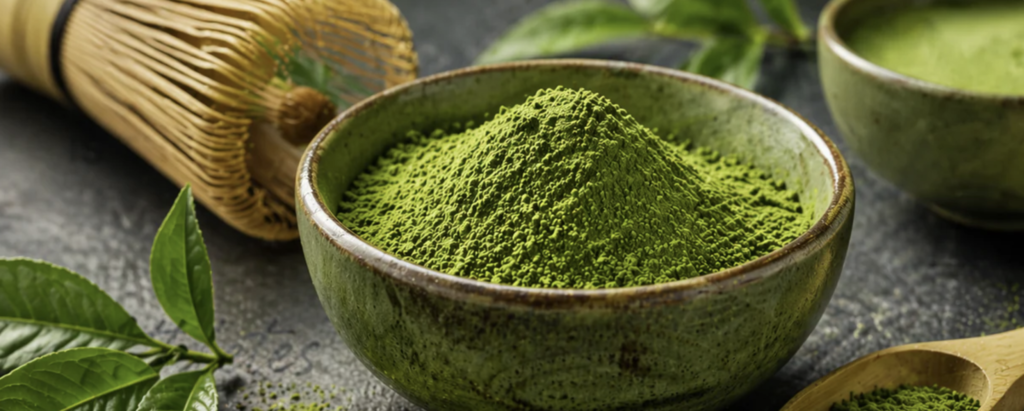
Pure matcha is essentially one ingredient: powdered green tea leaves.
No synthetic stimulant stack.
No neon colour chemistry experiment.
Just tea.
That simplicity appeals to athletes increasingly interested in cleaner nutrition habits.
Not because “natural” automatically means superior, but because fewer variables often means better control.
You know what you’re consuming.
That matters.
How Athletes Actually Use Matcha
One reason matcha works well for active lifestyles is flexibility.
It fits into multiple parts of a routine.
Some athletes prefer matcha first thing in the morning as a replacement for coffee.
This can create a calmer start to the day while maintaining alertness.
Others use it pre-workout.
A common timing strategy is 30–60 minutes before training.
This allows enough time for caffeine absorption while preserving the smoother energy profile.
For longer sessions, iced matcha can work well.
Prepared properly, it becomes a refreshing mid-session drink that feels lighter than many commercial alternatives.
Post-workout matcha is also common.
Not necessarily for stimulation, but as part of recovery nutrition.
Many people add matcha to smoothies with:
protein powder,
banana,
berries,
Greek yogurt,
plant milk.
This combines antioxidants with recovery nutrients in one easy format.
Does Matcha Improve Endurance?
Athletes often ask this directly.
The honest answer is nuanced.
Matcha is not a direct endurance enhancer in the way marketing language sometimes suggests.
It will not suddenly transform aerobic capacity.
But it may indirectly support endurance performance through several mechanisms:
stable energy,
mental focus,
fatigue management,
reduced perception of effort,
consistent caffeine delivery.
In endurance sports, psychological fatigue is often as limiting as physical fatigue.
Anything that helps maintain steadier concentration can become surprisingly valuable over time.
This is especially true in longer efforts where discipline and pacing matter.
Taste Matters More Than You Think
This sounds trivial, but it isn’t.
Athletes are creatures of routine.
If something tastes unpleasant, consistency becomes harder.
Many people try poor-quality matcha and assume the drink itself is the problem.
Bad matcha can taste bitter, dull, grassy, or aggressively vegetal.
Good matcha is very different.
Higher-quality matcha is typically:
smoother,
slightly sweeter,
creamier,
more balanced.
This matters because habit adherence is practical, not philosophical.
If you enjoy your routine, you repeat it.
That consistency is what produces results.
Choosing Better Matcha Makes a Difference
Not all matcha is suitable for drinking straight.
Athletes looking to integrate matcha regularly should pay attention to quality.
Look for matcha that is:
vibrant green,
fresh-smelling,
fine-textured,
smooth rather than harsh.
Lower-quality powders are often better suited for baking or mixing.
Higher-quality matcha is more enjoyable for regular drinking.
This becomes important if matcha is replacing coffee or energy drinks in your daily system.
Taste, texture, and experience all influence long-term use.
Final Thoughts
Athletic performance is rarely improved by dramatic hacks.
It’s built through systems.
Better sleep.
Smarter nutrition.
Consistent training.
Recovery discipline.
Mental resilience.
Matcha fits surprisingly well into this philosophy.
It does not promise explosive energy or instant transformation.
Instead, it offers something often more valuable: steadier focus, more controlled energy, antioxidant support, and a cleaner alternative to the overstimulation many athletes have come to normalise.
That’s why so many active people are making the switch.
Not because matcha is trendy.
But because it solves a practical problem.
Athletes need energy they can trust.
Not just energy that shows up loudly and disappears early.
And sometimes, the best performance upgrade isn’t adding more intensity.
It’s choosing something more sustainable.
Matcha happens to be very good at that.