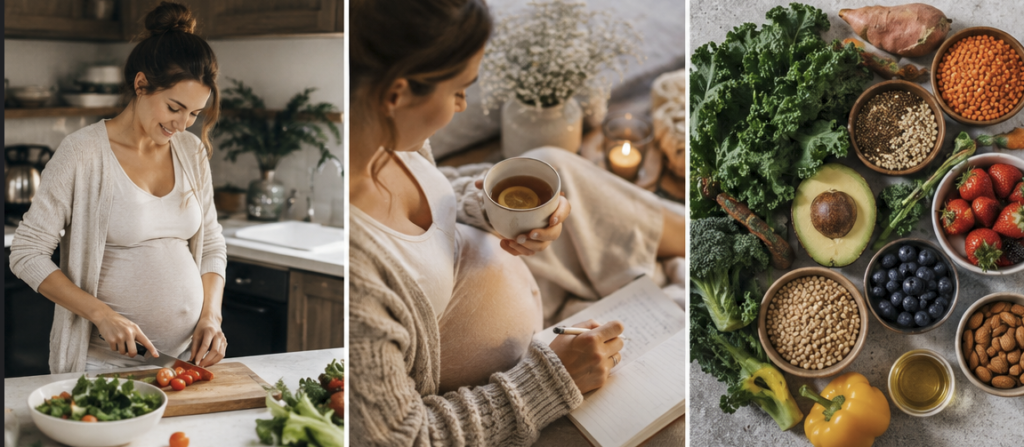
Pregnancy changes everything. Your body, your routines, your emotions, even your relationship with food. One day you’re craving strawberries at midnight, the next day the smell of coffee suddenly feels unbearable. And somewhere between all the advice from family members, internet articles, and social media videos, it becomes almost impossible to know what’s actually true anymore.
I remember standing in my kitchen during my first trimester, exhausted and nauseous, staring at a plate of food while hearing everyone repeat the same sentence: “You need to eat for two now.” Honestly? That sentence alone made me anxious. I was already trying my best just to keep crackers down, and suddenly it felt like I was responsible for feeding an entire second person perfectly every single day.
The truth is, pregnancy nutrition doesn’t have to feel overwhelming. It doesn’t have to be strict, joyless, or filled with fear. Over time, I learned that taking care of myself during pregnancy wasn’t about perfection — it was about balance, listening to my body, and finding reliable information instead of scary myths.
And there are so many myths.
Some are harmless old sayings passed down from generation to generation. Others can create unnecessary guilt and stress during a time when women already carry enough emotional weight. So I want to talk honestly about some of the most common pregnancy nutrition myths — not like a textbook, but like one woman sharing what she learned along the way.
The “Eating for Two” Pressure
This is probably the most famous pregnancy myth of all time.
The moment people find out you’re pregnant, suddenly everyone watches your plate. If you eat a burger, someone jokes that the baby wanted it. If you eat salad, someone says you’re not eating enough. And if you’re hungry more often, people immediately encourage you to double your portions because you’re “feeding two people now.”
At first, I believed this too. I thought pregnancy meant constantly eating huge meals. But reality felt very different. During the first trimester, I was tired and nauseous most of the time. Large meals actually made me feel worse.
What surprised me most was learning that pregnant women don’t actually need double the calories. The body becomes more efficient during pregnancy, and calorie needs only increase moderately — especially later in pregnancy. In the beginning, the increase is very small.
That changed my perspective completely.
Instead of focusing on eating more, I started focusing on eating better. I paid attention to nutrients instead of numbers. Protein-rich breakfasts helped my energy levels. Healthy fats kept me fuller longer. Fruits became my lifesaver during nausea because they felt refreshing and easy to digest.
And honestly, once I stopped pressuring myself to “eat for two,” meals became enjoyable again.
Pregnancy already puts enough pressure on women physically and emotionally. Food shouldn’t become another source of guilt.
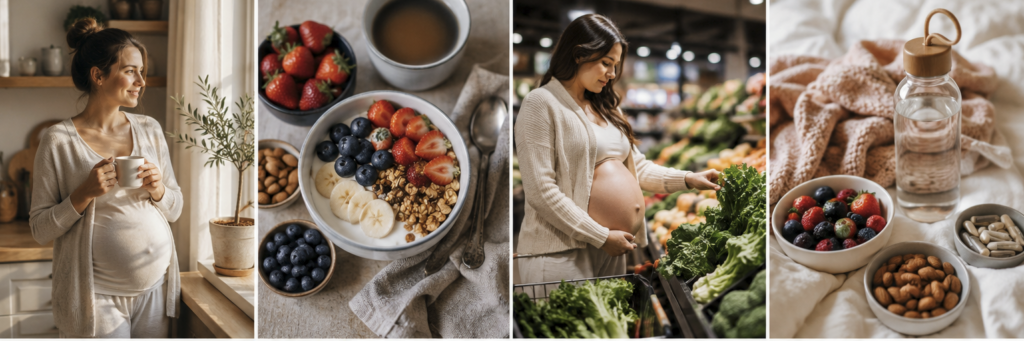
Morning Sickness Isn’t About Weakness
Nobody truly prepares you for pregnancy nausea.
Movies make it look almost cute — one dramatic moment of running to the bathroom and then everything continues normally. Real life can feel completely different. Sometimes the nausea lasts all day. Sometimes water tastes strange. Sometimes your favorite foods suddenly become impossible to tolerate.
I remember crying once because I couldn’t even smell eggs without feeling sick. Meanwhile, people kept giving random explanations:
“Your baby must hate eggs.”
“You’re craving carbs because the baby needs them.”
“It means you’re having a girl.”
Pregnancy comes with endless theories.
But morning sickness is mostly linked to hormonal changes, especially rising levels of hCG and estrogen in early pregnancy. It’s not your body failing, and it’s not your baby sending secret food messages.
That realization helped me stop feeling guilty.
Some days, all I could eat were plain crackers and fruit. Other days I wanted soup at strange hours. I learned to stop fighting my body and instead work with it. Smaller meals throughout the day helped. Ginger tea sometimes eased nausea. Keeping snacks beside the bed in the morning actually made a difference.
And most importantly — prenatal vitamins helped cover nutritional gaps during difficult weeks.
There’s so much pressure online to have the “perfect” pregnancy diet, but sometimes survival mode is enough. If you’re eating what you can tolerate and staying hydrated, you’re already doing more than you think.
The Fear Around “Bad Foods”
Pregnancy can make eating feel strangely scary.
Suddenly every food has warnings attached to it. One article says cheese is dangerous. Another says fish is unsafe. Someone online claims pineapple causes labor. Another person says coffee harms the baby. After a while, it becomes exhausting.
I went through a phase where grocery shopping actually stressed me out because I felt like every choice might somehow hurt my baby.
But eventually I learned something important: pregnancy nutrition is not about fear — it’s about awareness.
Yes, there are foods pregnant women should avoid or limit. Raw fish, unpasteurized dairy, undercooked meat, and high-mercury fish carry real risks. Food safety matters during pregnancy because the immune system changes.
But many online food fears are exaggerated.
Most foods are completely safe when properly prepared and eaten in moderation. Fruits, vegetables, grains, dairy products, proteins — they all play important roles in supporting both mother and baby.
The bigger picture matters more than obsessing over individual foods.
Instead of constantly focusing on restrictions, I started focusing on what I could add to support my body:
-
More iron-rich foods for energy
-
More calcium for bone support
-
Folate-rich meals during early pregnancy
-
More hydration throughout the day
-
Protein snacks to stabilize blood sugar
That mindset felt healthier emotionally too.
Pregnancy should not feel like nine months of fear around food.
Coffee Guilt Is Very Real
I’ll admit it — one of my biggest pregnancy worries involved coffee.
Before pregnancy, my mornings always started with a warm cup in silence before the day began. It was comforting, familiar, calming. So when I got pregnant and immediately read articles saying caffeine was dangerous, I panicked.
Did I need to quit completely?
Would one cup harm the baby?
The internet made it sound terrifying.
But after speaking with healthcare professionals and reading evidence-based recommendations, I learned that moderate caffeine intake is generally considered safe during pregnancy. Most guidelines recommend staying below around 200 mg of caffeine per day.
That doesn’t mean unlimited iced coffees all day long — but it also doesn’t mean one small morning coffee makes you a bad mother.
Honestly, letting go of that guilt helped me emotionally more than I expected.
Pregnancy already involves giving up and sacrificing so much. Sometimes keeping small comforts — safely and moderately — matters too.
Some days I switched to decaf. Other days I drank herbal tea. And occasionally, I enjoyed my normal coffee slowly and without guilt.
Balance matters.
Pregnancy Is Not the Time for Restrictive Diets
Social media can make pregnancy incredibly confusing.
One video promotes keto during pregnancy. Another encourages extreme low-carb eating. Someone else swears by cutting out entire food groups. Everywhere you look, people claim to know the “perfect” way to eat.
But pregnancy is not a weight-loss phase.
Your body is building organs, supporting blood volume increases, developing a placenta, growing an entirely new human being. That requires nourishment.
And honestly, pregnancy already changes body image enough without restrictive diet culture making women feel guilty for gaining weight naturally.
I had moments where I struggled with the physical changes too. Watching your body transform so quickly can feel emotional and unfamiliar. But over time, I started viewing food less as something to control and more as support for both me and my baby.
Carbohydrates gave me energy when exhaustion hit hard.
Protein helped me stay full and supported growth.
Healthy fats became important for overall development.
Iron-rich meals helped combat fatigue.
Hydration became essential constantly.
Instead of restriction, I focused on variety.
Simple meals often worked best:
-
Toast with avocado and eggs
-
Yogurt with berries
-
Rice bowls with vegetables and protein
-
Soups during nausea days
-
Smoothies when solid food felt difficult
Nothing looked “perfect” like on Instagram. But it was realistic, nourishing, and sustainable.
And honestly? That matters more.
The Emotional Side of Pregnancy Nutrition Nobody Talks About
One thing I didn’t expect during pregnancy was how emotional food would become.
Some days I felt empowered cooking healthy meals and taking care of myself. Other days I cried because I was too tired to prepare anything complicated. Sometimes cravings made me laugh. Sometimes body changes made me uncomfortable.
Pregnancy nutrition isn’t only physical — it’s deeply emotional too.
There’s pressure everywhere:
-
Pressure to gain the “right” amount of weight
-
Pressure to eat perfectly
-
Pressure to avoid every possible risk
-
Pressure to “bounce back” before birth even happens
It’s exhausting.
And many women silently feel like they’re failing if they crave fries instead of spinach.
But pregnancy is not about perfection.
A healthy pregnancy diet is built over time through overall patterns, not one single snack or one emotional craving. Your body is already doing something extraordinary every single day.
Learning to trust myself more during pregnancy became just as important as learning about nutrition itself.
What Actually Helped Me Feel Better During Pregnancy
Instead of obsessing over rules, these small habits genuinely made my pregnancy feel easier and healthier:
Eating Smaller Meals More Often
Large meals sometimes worsened nausea and heartburn. Smaller portions throughout the day helped stabilize energy.
Keeping Easy Snacks Nearby
Crackers, fruit, yogurt, nuts, smoothies — simple snacks became lifesavers during busy or nauseous days.
Staying Hydrated
Pregnancy dehydration can happen surprisingly fast. Carrying water constantly helped with headaches, fatigue, and overall energy.
Listening to My Body
Some days I needed heavier meals. Other days I needed lighter foods. Learning flexibility helped reduce stress.
Ignoring Social Media Perfection
Real pregnancy rarely looks aesthetically perfect. And that’s okay.
The Most Important Thing I Learned
Pregnancy nutrition is not about being perfect every day.
It’s about supporting yourself gently during one of the most physically and emotionally demanding experiences a woman can go through.
Some days you’ll eat beautifully balanced meals. Other days you’ll survive on toast and fruit because nausea wins. Both realities can exist in the same pregnancy.
The biggest change for me happened when I stopped treating pregnancy nutrition like a list of strict rules and started viewing it as self-care.
Because that’s what it really is.
Feeding yourself well during pregnancy is not about control, punishment, or fear. It’s about nourishment, compassion, and supporting both your body and your baby with the best information you can.
And honestly, sometimes the healthiest thing you can do is stop listening to every myth online and trust that you’re already trying your best.