
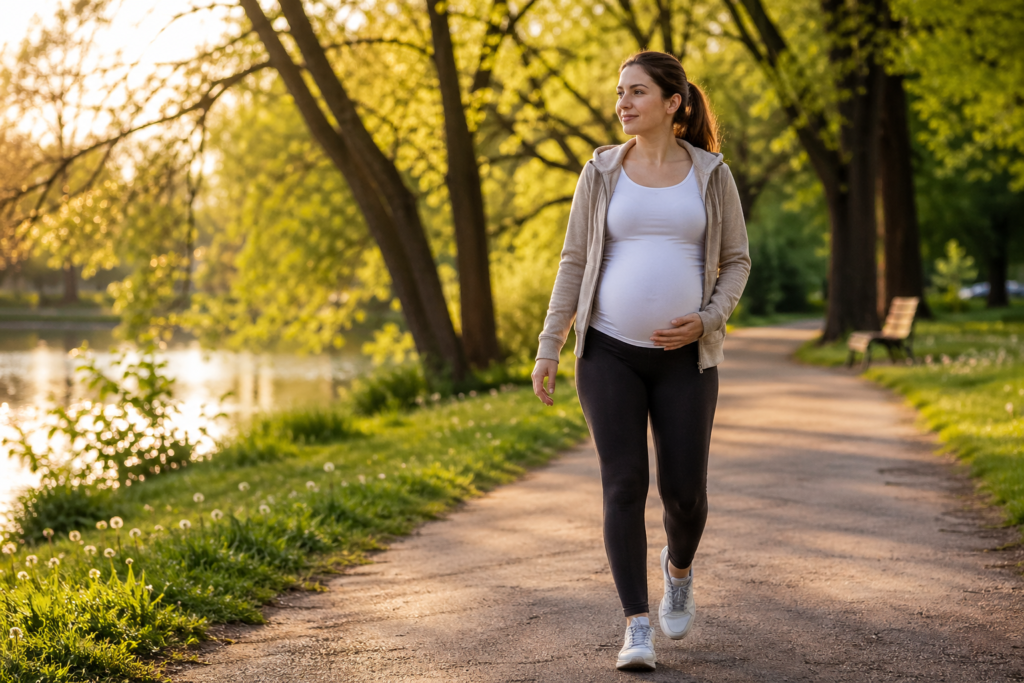
Safe Walking During Pregnancy: A Gentle Way to Stay Active and Connected
There’s something beautifully simple about walking.
No pressure. No expectations. Just one step after the other.
And during pregnancy, when everything in your body and life is changing, that simplicity becomes incredibly valuable.
For many women, movement used to mean structure—workouts, plans, goals. But pregnancy shifts that perspective. Suddenly, it’s less about performance and more about feeling safe, supported, and in tune with your body.
That’s where walking comes in.
It’s one of the most natural, accessible, and safe ways to stay active during pregnancy. But more than that, it becomes a quiet ritual—a moment to breathe, to slow down, and to reconnect with yourself in a time that can feel overwhelming.
This isn’t about doing more. It’s about doing what feels right.
Why Walking Feels Different During Pregnancy
Before pregnancy, you might have gone for a walk to burn calories, hit a step goal, or “get it done.”
Now, it feels different.
Your body is no longer just yours—it’s working around the clock to support your baby. Your energy shifts daily. Some mornings feel light and easy, while others feel heavier, slower.
Walking meets you exactly where you are.
It doesn’t demand intensity. It adapts to your energy. And that’s exactly why it works so well during pregnancy.
Physically, it supports circulation, which becomes especially important as your blood volume increases. It can help reduce swelling in your legs and feet, ease stiffness, and gently keep your muscles engaged without strain.
Mentally, it creates space.
A short walk can clear your mind, reduce stress, and bring a sense of calm that’s hard to find in a busy day. Especially if you step outside, even for just a few minutes, the fresh air and change of scenery can shift your entire mood.
And emotionally, it becomes grounding.
There’s something deeply reassuring about moving your body in a way that feels safe, steady, and supportive—especially when everything else feels new.
Starting Without Overthinking It
One of the biggest mistakes many expecting mothers make is thinking they need a perfect plan before they begin.
You don’t.
You don’t need a schedule printed out or a step counter telling you what’s enough.
You just need to start.
If you haven’t been active recently, begin with something small. A 10-minute walk is more than enough. Maybe it’s around your block, maybe it’s just up and down your street.
What matters isn’t the distance—it’s the habit.
If you’ve been more active before pregnancy, you can continue walking regularly, but even then, it’s worth softening your expectations. Your body is doing something extraordinary. It’s okay if your pace changes.
Think of walking not as a task, but as a pause in your day.
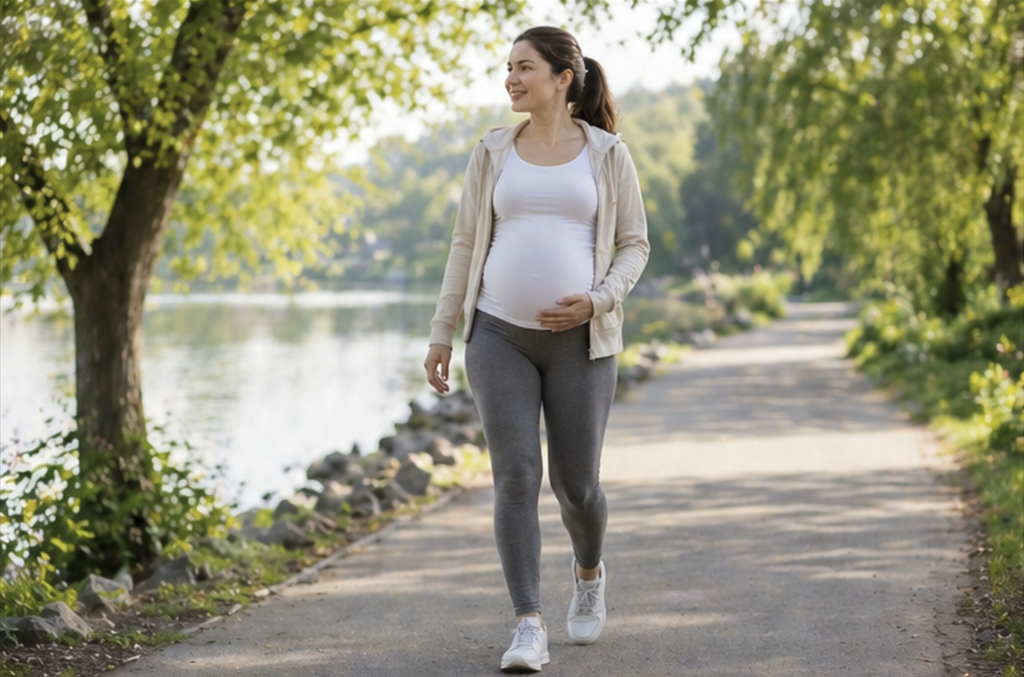
Finding a Comfortable Rhythm
There’s no “perfect” walking pace during pregnancy, but there is a simple way to know if you’re doing it right.
You should be able to talk.
Not in short, breathless sentences—but comfortably. If you can imagine walking next to a friend and having an easy conversation, you’re in the right zone.
Some days, that pace will feel natural. Other days, even that might feel like effort.
Listen to that.
Your body is constantly adjusting—your posture, your breathing, your center of gravity. Walking should support those changes, not challenge them.
And here’s something important: slowing down is not a step backward.
It’s a sign that you’re paying attention.
Building Consistency Without Pressure
Consistency during pregnancy doesn’t come from discipline. It comes from flexibility.
Instead of setting rigid rules, try weaving walking gently into your day.
Maybe it’s a short walk after breakfast, just to wake up your body.
Maybe it’s a quiet moment in the afternoon when you need a break from sitting.
Or maybe it becomes part of your evening routine—a slow walk after dinner to unwind.
Some days you’ll walk for 20–30 minutes. Other days, 10 minutes will feel like enough.
Both count.
What matters most is the rhythm you create over time.
Making It Part of Your Everyday Life
The easiest way to stay consistent with walking is to stop treating it like something extra.
It doesn’t have to be a separate activity you “fit in.” It can simply be part of how you move through your day.
You might choose to walk to a nearby store instead of driving.
Or take your phone call while walking slowly around your neighborhood.
Or even just step outside for a few minutes when you feel overwhelmed.
These small moments add up.
And more importantly, they make movement feel natural—not forced.
Creating a Safe and Comfortable Experience
As your pregnancy progresses, comfort becomes everything.
The right shoes can make a huge difference. Your feet may change shape slightly, and swelling is common, so supportive, well-fitting shoes are essential.
Clothing matters too. Breathable, flexible fabrics will help you stay comfortable as your body temperature changes more easily.
And then there’s your environment.
Flat, even surfaces are your best choice. Parks, sidewalks, or quiet streets are ideal. Uneven terrain might have felt fine before, but now it can increase the risk of losing balance.
Safety doesn’t mean limiting yourself—it means choosing what supports you best.
Listening to Your Body—Really Listening
This might be the most important part of all.
Pregnancy teaches you to listen in a different way.
Not to push through discomfort, but to respond to it.
If you feel tired, slow down.
If something feels off, stop.
If your body asks for rest, give it.
There’s no benefit in pushing past your limits right now. Walking should leave you feeling better—not drained.
And remember, every day will feel different.
That’s not inconsistency. That’s pregnancy.

How Walking Changes Through Each Trimester
Your relationship with walking may shift as your body changes—and that’s completely normal.
In the first trimester, fatigue can be strong. You might not feel like moving much at all. Short, gentle walks are enough.
In the second trimester, many women feel a return of energy. Walking may feel easier, more natural. This is often when a steady routine begins to form.
By the third trimester, your body becomes heavier, your balance shifts, and even simple movement can feel more demanding. This is where slowing down becomes essential.
Shorter walks. More breaks. A softer approach.
There’s no need to maintain the same pace throughout your pregnancy. Adapting is part of the process.
Turning Walking Into a Moment for Yourself
One of the most overlooked benefits of walking during pregnancy has nothing to do with physical health.
It’s the mental space it creates.
Life doesn’t slow down just because you’re pregnant. There are still responsibilities, decisions, and often a constant stream of thoughts.
Walking gives you a pause.
A moment without screens. Without pressure.
Just you, your breath, and your steps.
Some women use this time to think. Others use it to clear their minds completely.
There’s no right way to do it.
But over time, it can become something you look forward to—not because you “should” do it, but because it feels good.
Letting Go of Perfection
It’s easy to fall into the trap of thinking you need to do things perfectly.
The right number of steps. The right pace. The perfect routine.
But pregnancy isn’t about perfection.
Some days you’ll skip your walk. Some days you’ll feel too tired. Some days, life will simply get in the way.
That’s okay.
What matters is the overall pattern—not individual days.
Walking is there to support you, not to become another expectation.
A Gentle Reminder
You don’t need to do intense workouts to have a healthy pregnancy.
You don’t need to push your limits to feel strong.
Sometimes, the most powerful thing you can do is something simple, consistent, and kind to your body.
Walking is exactly that.
It meets you where you are. It adapts with you. It supports both your physical and emotional well-being in a way that feels natural.
And in a time when so much is changing, that kind of stability matters.
In the End, It’s About How You Feel
At its core, walking during pregnancy isn’t about steps, time, or performance.
It’s about how you feel while doing it—and after.
If it helps you breathe easier, think clearer, or simply feel a little more like yourself, then it’s doing exactly what it should.
So take it one step at a time.
Slowly. Gently. Without pressure.
You’re not just moving your body—you’re taking care of it in one of the most important seasons of your life.
And that’s more than enough.