
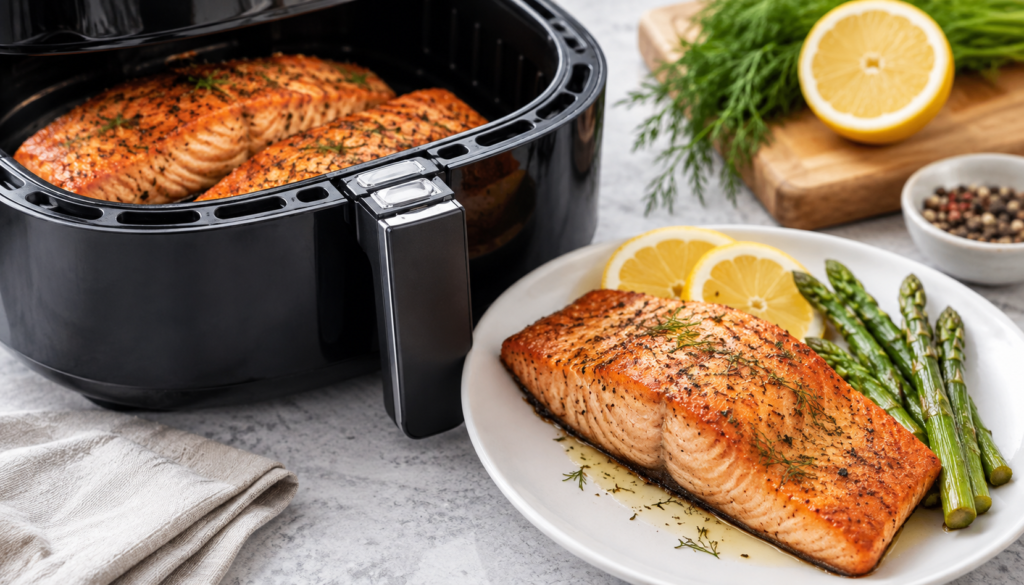
Meta description: Discover why air fryer salmon comes out moist, flaky, and perfectly cooked every time. Learn the science, timing, and techniques behind foolproof results. Primary keyword: air fryer salmon Secondary keywords: why air fryer salmon is good, perfect air fryer salmon, how to cook salmon in air fryer, crispy salmon air fryer, moist salmon air fryer
There’s a specific kind of kitchen disappointment reserved for salmon: the fillet that looked beautiful going into the pan and came out dry, chalky, and sad. It happens to experienced cooks and beginners alike, because salmon has a narrower window of “done” than almost any other protein — a minute or two of overcooking is the difference between silky and sawdust. This is precisely why the air fryer has become something of a secret weapon for home cooks who’ve struggled with salmon on the stovetop or under the broiler. It’s not magic. It’s a combination of consistent heat, efficient airflow, and a cooking method that’s genuinely easier to control than most alternatives. Here’s exactly why it works, and how to make it work for you every time.
Why Air Frying Is Suitable for Salmon
Salmon is a fatty fish — richer in oil than lean white fish like cod or tilapia — which actually makes it well-suited to high-heat, dry cooking methods. That internal fat bastes the fish from within as it cooks, helping it stay moist even at fairly high temperatures, provided it isn’t left in the heat too long. Air frying takes advantage of this: the hot, circulating air cooks the surface quickly enough to develop good color and, in skin-on fillets, genuine crispiness, while the enclosed, relatively small cooking chamber heats the fish through efficiently without requiring the extended cooking time that might dry it out.
Compare this to pan-searing, where uneven stovetop heat and the need to flip the fillet can lead to inconsistent cooking, or oven-baking, which tends to take longer and doesn’t develop the same surface browning without a separate broiling step. The air fryer essentially combines the speed of a hot pan with the even, hands-off cooking of an oven, which is a genuinely useful combination for a protein as failure-prone as salmon.
How Hot Circulating Air Affects Salmon
The mechanism worth understanding here is convection. In a standard oven, heat radiates from the elements and rises, but air movement is relatively passive. An air fryer forces air movement with a fan, which means heat is transferred to the food’s surface far more efficiently and evenly — every side facing the airflow is being actively heated, not just passively warmed by ambient temperature. This is why air fryer cooking times are often notably shorter than conventional oven times at the same temperature: the food is genuinely receiving heat faster.
For salmon specifically, this efficient heat transfer means the exterior can reach browning temperatures (necessary for the flavorful, slightly caramelized crust many people want) in a relatively short window, while the interior — protected somewhat by the fish’s own moisture and fat content — has less time to overcook before the whole piece is done. It’s a favorable balance that’s harder to achieve consistently with other methods.
Choosing the Right Salmon
Not all salmon at the grocery store is equal, and understanding your options helps set realistic expectations for the final result.
Wild-caught salmon (sockeye, king, coho) tends to be leaner and more intensely flavored than farmed salmon, with a firmer texture. Because it’s leaner, it can be slightly more prone to drying out if overcooked, which makes precise timing more important.
Farmed Atlantic salmon, the most widely available option in most grocery stores, has a higher fat content, a milder flavor, and a generally more forgiving texture — it’s somewhat more resistant to overcooking than leaner wild varieties, which makes it a good choice for anyone newer to cooking fish.
Neither option is objectively “better” — it’s largely a matter of preference, budget, and availability — but knowing which type you’re working with helps you calibrate your expectations and adjust cooking time slightly if needed.
Fresh Versus Frozen Salmon
Fresh salmon, ideally purchased the same day or the day before cooking, offers the best texture and requires no advance planning beyond a trip to the store. That said, high-quality frozen salmon — particularly if it was flash-frozen shortly after being caught, which is standard practice for much of the salmon sold frozen — is a perfectly good option and, in many cases, indistinguishable from fresh once cooked.
If cooking from frozen, thaw the fillets in the refrigerator overnight for the most even results; a rushed thaw under cold running water works in a pinch but can leave the fish slightly waterlogged if it thaws unevenly. Patting the fillets thoroughly dry after thawing is especially important, since frozen fish tends to release more surface moisture than fresh.
Fillet Thickness
Thickness is arguably the single biggest variable affecting cooking time, more so than weight or overall size of the fillet. A thin, tail-end piece of salmon (perhaps ¾ inch thick) will cook noticeably faster than a thick center-cut piece (1.5 inches or more), even if their total weight is similar.
For the most even, predictable results, try to choose fillets of similar thickness when cooking multiple pieces together, and if you’re working with mixed thicknesses, check the thinner pieces for doneness first, removing them from the air fryer earlier if needed while the thicker pieces continue cooking.
Skin-On Versus Skinless Salmon
Skin-on salmon offers a genuine textural bonus: when cooked skin-side down, the skin crisps up in the air fryer’s dry heat, creating a satisfying contrast to the tender flesh above it — and it also acts as a bit of a buffer, protecting the flesh directly above it from the most intense heat, which can make skin-on fillets slightly more forgiving.
Skinless fillets cook a bit more uniformly since there’s no skin layer affecting heat transfer on one side, and they’re a practical choice for anyone who simply doesn’t enjoy fish skin or is serving a dish where the skin would be discarded anyway. Either option works well in an air fryer; the choice mostly comes down to preference.
Preparing Salmon
Preparation for air fryer salmon is refreshingly simple compared to some other cooking methods. Start by removing the fillets from the refrigerator about 10 to 15 minutes before cooking, allowing them to lose some of their chill — cooking from a slightly less cold starting point supports more even cooking throughout the fillet. Check for pin bones (small, thin bones sometimes left in fillets) by running a finger along the flesh and removing any with clean tweezers or fish bone pliers.
Removing Excess Moisture
Patting the salmon dry with a paper towel before seasoning is a small step that makes a real difference. Surface moisture interferes with browning — the air fryer’s hot air needs to evaporate that moisture before the surface can actually start to brown, which both extends cooking time slightly and can result in a paler, less appealing crust. A thorough pat-dry, especially for skin-on fillets where crisp skin is the goal, sets up much better results.
Seasoning
Salmon’s rich flavor pairs well with a wide range of seasonings, and simplicity often serves it best. A straightforward approach — salt, black pepper, a light drizzle of oil, and perhaps garlic powder or smoked paprika — allows the fish’s natural flavor to shine while still delivering a well-seasoned bite. Fresh or dried herbs (dill, parsley, thyme) are classic pairings that complement rather than compete with the fish.
Marinades
Marinating salmon adds flavor but requires a bit of care, since acidic marinades (those containing citrus juice or vinegar) can begin to “cook” the fish’s surface proteins if left too long, resulting in a slightly mushy texture — a process similar to what happens in ceviche, but usually unwanted here. For most marinades, 15 to 30 minutes is plenty of time to build flavor without compromising texture; longer marinating times aren’t necessary and can work against you.
A simple, reliable marinade: 2 tablespoons olive oil, 1 tablespoon lemon juice, 1 clove minced garlic, and a pinch of salt and pepper, combined and poured over the fillets for 15 to 20 minutes before cooking.
Oils
A light coating of oil — brushed or lightly sprayed onto the fillet — supports browning and prevents sticking. Olive oil, avocado oil, and other neutral or mild oils all work well; there’s no need for more than a teaspoon or two per fillet, since salmon’s own fat content contributes significantly to its moisture and richness during cooking.
Temperature
400°F (200°C) is the standard, well-tested temperature for air fryer salmon, and it’s a good default for most recipes and most air fryer models. This temperature is hot enough to develop good color and, for skin-on fillets, crispy skin, within a reasonably short cooking window that minimizes the risk of drying out the interior.
Some cooks prefer a slightly lower temperature (around 380°F) for very thick fillets, reasoning that a slightly gentler heat gives the interior more time to cook through evenly before the exterior overcooks — this is a reasonable adjustment for fillets over 1.5 inches thick, though 400°F remains a reliable choice for most standard fillets.
Cooking Time
At 400°F, a standard salmon fillet (about 1 inch thick) typically takes 7 to 10 minutes, with no need to flip for thinner fillets, since the air fryer’s circulating heat cooks fairly evenly from all sides in a compact basket. Thicker fillets (1.25 to 1.5 inches) may need 10 to 12 minutes, while thinner tail pieces might be done in as little as 6 to 7 minutes.
As with all air fryer cooking, these times are estimates that vary by model, fillet thickness, and starting temperature of the fish. Checking a few minutes before the estimated time and using a thermometer (discussed next) is far more reliable than following any fixed time exactly.
How to Determine Doneness
The most reliable way to check salmon for doneness is an instant-read thermometer inserted into the thickest part of the fillet. The USDA recommends cooking fish to an internal temperature of 145°F (63°C), though many chefs and home cooks prefer to pull salmon slightly earlier, around 125 to 130°F, and let it rest for a few minutes, during which residual heat carries the temperature up to a still-safe, but noticeably more moist and tender, finished result — a technique often called carryover cooking.
Visually, properly cooked salmon should flake easily with a fork but still appear glossy and moist inside, rather than dry and opaque throughout. If you’re unsure, a thermometer removes the guesswork entirely and is a worthwhile investment for anyone who cooks fish regularly.
How to Prevent Dry Salmon
Dry salmon almost always comes down to one issue: too much time in the heat. The single most effective countermeasure is checking doneness a couple of minutes before you think the fish will be ready, since it’s much easier to add another minute or two than to reverse overcooking. Using a thermometer rather than relying solely on visual cues or a fixed cooking time is the most reliable way to avoid this common mistake.
How to Keep Salmon Moist and Tender
Beyond avoiding overcooking, a few additional habits support moist, tender results: don’t skip the light coating of oil, which helps the surface retain moisture during the initial high-heat cooking; avoid pounding or otherwise damaging the fillet’s structure before cooking; and let the fish rest for 2 to 3 minutes after removing it from the air fryer, which allows the juices to redistribute throughout the fillet rather than running out immediately when cut.
Crispy Edges
The thin, tapered edges of a salmon fillet cook faster than the thicker center portion, which naturally produces slightly crisper, more well-done edges alongside a more tender center — a textural contrast that many people specifically enjoy. If you prefer more uniform doneness throughout, you can trim the thinnest edge portions and cook them separately for a shorter time, though this is generally unnecessary for most home cooking.
Skin Crispiness
For genuinely crispy skin, a few specific steps help: pat the skin thoroughly dry before cooking (excess moisture is the biggest obstacle to crisp skin), place the fillet skin-side down in the basket, and consider a very light additional brush of oil directly on the skin. Starting with cold, dry skin against hot air produces a noticeably crisper result than skin that’s been left damp.
Different Seasoning Combinations
Lemon and herb salmon: Season with salt, pepper, a drizzle of olive oil, chopped fresh dill or parsley, and lemon zest, finishing with a squeeze of fresh lemon juice after cooking.
Garlic butter salmon: Brush fillets with a mixture of melted butter, minced garlic, and a pinch of salt before cooking, or brush the same mixture on partway through for a richer flavor.
Honey garlic salmon: Combine 2 tablespoons honey, 1 tablespoon soy sauce, and 1 clove minced garlic, brushing over the salmon during the last few minutes of cooking to avoid burning the honey’s natural sugars.
Teriyaki salmon: Marinate briefly in a teriyaki sauce (store-bought or homemade with soy sauce, brown sugar, ginger, and garlic), then brush additional sauce on during the last 2 to 3 minutes of cooking.
Spicy salmon: Rub fillets with a blend of chili powder, cumin, smoked paprika, garlic powder, and a pinch of cayenne before cooking, finished with a squeeze of lime.
Mediterranean-style salmon: Top with a mixture of chopped olives, sun-dried tomatoes, capers, and a drizzle of olive oil, added either before cooking or as a fresh topping afterward.
High-Protein Meal Ideas
A standard 4- to 6-ounce salmon fillet delivers roughly 25 to 34 grams of protein, making it an excellent centerpiece for a high-protein meal. Pairing it with a fiber-rich carbohydrate (quinoa, brown rice, roasted potatoes) and a vegetable side rounds out a balanced, satisfying plate that typically lands well over 30 grams of protein per serving.
Side Dishes
Vegetables: Air-fried or roasted asparagus, broccoli, or green beans are classic, quick-cooking companions that can often be prepared in the same air fryer, either before or after the salmon.
Rice: Simple steamed rice, a lemony rice pilaf, or a quick fried rice all pair naturally with salmon’s richness.
Potatoes: Roasted baby potatoes, mashed potatoes, or air fryer fries offer a heartier, more filling side.
Salads: A simple green salad with a light vinaigrette provides a refreshing contrast to salmon’s richness.
Sauces
Beyond the seasoning blends already discussed, a few finishing sauces elevate the dish further: a simple dill yogurt sauce (Greek yogurt, fresh dill, lemon juice, and a pinch of salt), a quick beurre blanc for special occasions, or a simple soy-ginger drizzle for an Asian-inspired plate.
Meal Preparation
Salmon can be portioned, seasoned, and refrigerated up to a day in advance, ready to go straight into the air fryer when needed — a genuinely time-saving strategy for busy weeknights. Cooking a larger batch of plain salmon for use across a few days’ worth of meals (added to salads, grain bowls, or reheated as a main) is another practical approach, though salmon is generally best enjoyed fresh from the air fryer when possible, given how much its texture benefits from being served immediately.
Storage
Cooked salmon keeps in an airtight container in the refrigerator for 3 days. Store it separately from sauces if you plan to reheat it, since sitting in sauce can affect texture over time.
Reheating
Reheating salmon gently is important to avoid drying it out further. A low oven (around 275°F) for 10 to 15 minutes, or a brief stint in the air fryer at a lower temperature (around 300°F for 3 to 5 minutes), tends to preserve moisture better than a microwave, which often overcooks the edges before the center is even warmed through. Alternatively, cold leftover salmon works beautifully flaked into a salad or grain bowl, sidestepping the reheating question entirely.
Common Mistakes
The most frequent salmon mistakes: overcooking (by far the most common issue, usually from not checking doneness early enough or relying on a fixed cooking time without verification), skipping the pat-dry step, using too little oil (resulting in sticking and poor browning) or too much (which can make the exterior greasy rather than crisp), overcrowding the basket with multiple fillets touching each other, and cutting into the fish immediately after cooking rather than allowing a brief rest.
Troubleshooting
Salmon is dry: Almost always overcooking; reduce cooking time and use a thermometer for your next attempt, pulling the fish at 125 to 130°F and letting residual heat finish the job.
Salmon isn’t browning: Likely insufficient oil or moisture that wasn’t patted dry before cooking; both fixes are simple for next time.
Skin isn’t crispy: Check that the skin was thoroughly dried before cooking and that it’s placed directly against the basket surface, skin-side down.
Salmon sticks to the basket: A light spray of oil directly on the basket, in addition to the fillet itself, usually resolves this.
Key Takeaways
-
Air frying works well for salmon because efficient, circulating heat cooks the surface quickly while the fish’s natural fat content helps keep the interior moist.
-
400°F for 7 to 10 minutes is a reliable starting point for a standard 1-inch fillet, adjusted for thickness.
-
An instant-read thermometer, targeting 125–130°F with a brief rest (or 145°F per USDA guidance), is the most reliable way to avoid overcooking.
-
Patting the fish dry before cooking supports better browning and, for skin-on fillets, crispier skin.
-
Simple seasoning often works best, letting salmon’s natural richness shine through.
Frequently Asked Questions
Do I need to flip salmon in the air fryer? Generally no — most air fryers cook standard fillets evenly enough without flipping, thanks to circulating air reaching all exposed surfaces. Very thick fillets may benefit from a flip partway through.
What temperature is safe for cooked salmon? The USDA recommends an internal temperature of 145°F. Many cooks prefer pulling salmon slightly earlier, around 125–130°F, and allowing a short rest, resulting in a more tender texture — this is a personal preference regarding doneness, not a food-safety recommendation, so use a thermometer and your own judgment.
Can I cook frozen salmon directly in the air fryer? Yes, though it typically requires several additional minutes of cooking time and can cook less evenly than thawed fillets. Thawing overnight in the refrigerator generally produces more reliable results.
Why does my salmon stick to the air fryer basket? Usually insufficient oil on either the fish or the basket itself. A light coating on both typically resolves the issue.
How do I get crispy skin on air fryer salmon? Pat the skin very dry before cooking, place it skin-side down in the basket, and use a light additional brushing of oil directly on the skin.
Final Thoughts
Salmon’s reputation for being finicky mostly comes down to one variable: time in the heat. The air fryer’s efficient, even cooking makes that variable considerably easier to control than a stovetop or conventional oven, which is why it’s become such a reliable go-to method for home cooks. Get comfortable with checking doneness a bit early, invest in an inexpensive instant-read thermometer if you don’t already have one, and you’ll likely find that perfectly cooked salmon becomes far less of a gamble and far more of a reliable weeknight staple.