
How quiet luxury, warm textures, and a little seasonal courage completely changed the way I feel inside my own home — and how you can do it too.
There’s a particular moment every year, usually somewhere in late April, when I walk through my apartment and feel it — that restless, low-hum kind of dissatisfaction that has nothing to do with anything tragic and everything to do with the fact that my home still smells like January. The candles are wrong. The throws are too heavy. The whole atmosphere is still bracing for a cold that left weeks ago, and I am not.
This year, I decided to actually do something about it. Not a renovation, not a mood board that lives and dies on Pinterest, and not another impulse purchase from a homeware brand that photographs beautifully and delivers cardboard. I mean a real, intentional seasonal shift — the kind where you walk into a room and genuinely exhale. The kind that makes you want to stay home on a Saturday instead of going out just to feel somewhere beautiful.
What I discovered along the way is that summer home decor in 2026 has evolved far beyond the predictable nautical stripes and white-everything aesthetic that dominated the early 2020s. It’s more nuanced now. More layered. There’s a real conversation happening between quiet luxury interior aesthetics, the clean girl lifestyle movement translated into living spaces, and a renewed appreciation for natural materials that feel expensive without performing it. And honestly? It’s the most excited I’ve been about home styling in years.
So pour yourself something cold and settle in, because I’m going to take you through every room, every decision, every “why did I wait so long to do this” moment that made my summer home transformation one of the most satisfying projects I’ve taken on all year.
First, Let’s Talk About the Mood
Before you move a single throw pillow, the most important thing to get right with summer home decor is the feeling you’re chasing. Not the aesthetic — the feeling. Because aesthetics without emotion are just Pinterest boards, and Pinterest boards don’t change how your mornings feel.
For me, the mood I wanted this summer was what I can only describe as warm, unhurried elegance. That particular quality of a late afternoon where the light is doing something extraordinary through gauzy curtains and the room smells like clean cotton and something faintly botanical. I wanted my home to feel like a long exhale. Like the kind of European summer home you imagine existing in the pages of a magazine, where there are always fresh flowers and the windows are always open and somehow everything looks effortless even though someone definitely thought about it very carefully.
What I didn’t want was the hyper-curated, every-object-is-a-statement kind of approach that I associate with the early Instagram interior era. The homes that looked beautiful but felt like they couldn’t actually be lived in. That aesthetic had its moment, and it was gorgeous, but 2026 is asking for something different. It’s asking for softness. Authenticity. The kind of home that says I live beautifully rather than I styled for a photoshoot.
“The homes that move me most right now are the ones that feel genuinely inhabited — layered with warmth and intention, but never trying too hard.”
The quiet luxury movement, which migrated from fashion into interiors with a kind of inevitability, has been the most useful lens I’ve found for this. It’s the interior design equivalent of wearing a perfectly cut linen dress with no visible branding — the quality is evident, the taste is undeniable, but it never announces itself. It trusts you to notice.
The Color Story: Beyond White, Into Warmth
If there’s one design conversation that dominated the first half of this decade, it was the great debate between all-white interiors and everything-else. The clean white walls, the white linen, the white ceramic objects — it was beautiful, surgical, aspirational. And then, gradually, it started to feel a little cold. A little clinical. Like living inside a very tasteful operating theatre.
The summer palette of 2026 is the correction. It’s warm without being heavy. It’s earthy without being rustic. It pulls from the landscape of the Mediterranean in late July — sun-bleached terracotta, the particular pale green of olive leaves, aged parchment, river sand, the underside of driftwood, warm stone warmed further by afternoon sun.
I repainted my living room this spring in a color I can only describe as warm fog — it’s almost grey, but not quite, because there’s too much warmth in it. Against morning light it reads cream. In the late afternoon it goes almost rose-tinged. It changes with the hour in a way that feels alive, and I genuinely didn’t know paint could do that until I started paying attention.
What makes these tones work for summer, specifically, is how they interact with natural light. Unlike the cooler greys and blues that feel right in winter (they have an almost cocooning quality that makes sense when it’s dark at 4pm), these warm earthy hues are activated by sunlight. They expand. They breathe. A terracotta cushion in February looks heavy and seasonal; the same cushion in July looks like someone placed the sun inside your living room on purpose.
For accent colours, I’ve been drawn to a kind of faded sage — not the bright botanical green that felt everywhere a couple of years ago, but something quieter. More aged. The green of plants that have been in full sun all season and are a little tired from it, in the most beautiful way. Paired with warm off-white and the occasional note of deep walnut or aged brass, it feels genuinely sophisticated without working too hard.
The Terracotta Moment We’re All Still Having
I know, I know. We’ve been talking about terracotta for what feels like years. But here’s my defence of the colour: it’s lasted because it’s right. There’s a reason that ancient civilisations built with it, that Italian and Spanish architecture has been wearing it for centuries, that it looks equally at home in a Moroccan riad and a modern London flat. It’s one of those colours that exists in harmony with human beings in a way that isn’t entirely rational but is absolutely real.
The way terracotta is showing up in 2026 interiors is slightly different from the saturated, statement version we were doing a few years ago. It’s quieter now. More integrated. Less “terracotta accent wall” and more “terracotta appears throughout the room in different textures and saturations until the room itself feels warm.” It’s in the unglazed ceramic vases. It’s in the warm undertone of the linen throw. It’s the cushion that isn’t quite orange and isn’t quite brown. It’s the warm-toned candle in the afternoon light.
The Living Room: Where the Season Actually Lives
The living room is where I spend the most intentional time — mornings with coffee, evenings with a book, the occasional long afternoon where I don’t do anything productive and refuse to feel guilty about it. It’s the room that most directly affects how my home feels, which means it’s also the room I was most anxious about getting right.
The single most transformative thing I did was swap out the heavy velvet cushions I’d been living with since October for a set of linen covers in varying textures and tones — one in warm ivory, one in a slightly deeper oat, one in the palest sage you can imagine. Nothing matched perfectly, and that was entirely the point. The slight variation in tone and weave made the sofa look curated rather than coordinated, which is a distinction that matters more than it sounds.
What I’ve come to believe is that the living room, in summer especially, should be about softness and movement. Heavy, structured furniture has its place (in a study, in a formal dining room, in the depths of December), but in a summer living room, you want things that look like they might shift slightly in a breeze. Lightweight curtains. Cushions that invite you to rearrange them. Throws that look casual rather than carefully placed.
The Sofa Situation
If your sofa is dark and heavy, summer is genuinely the hardest time of year for it. There’s something about a deeply coloured sofa in the height of summer that reads as resistant — like it’s refusing to participate in the season. The obvious solution is a slipcover, and if you haven’t investigated the current generation of linen sofa slipcovers, you might be surprised by how elegant they’ve become. We’re not talking about the slightly-disappointing drape of the early slipcover era. The good ones now fit beautifully, have a relaxed tailored quality, and can genuinely transform a room for the cost of a couple of dinners out.
Alternatively — and this is what I ended up doing — you can work around a dark sofa by making everything else in the room lighter and more textured. A sisal or jute rug adds warmth and texture at ground level. Lightweight curtains that pool slightly on the floor create a sense of softness. Plants — and I’ll come back to plants — bring life and colour that counterbalances heavier furniture beautifully.
Five Things That Immediately Transform a Living Room for Summer
- Replace heavy window treatments with lightweight linen or cotton gauze panels — the way summer light filters through good linen is genuinely one of life’s small pleasures
- Introduce at least two different natural textures at the same level — a rattan tray alongside a ceramic object, for example — to create that layered, collected feeling
- Swap one statement lamp for something with a natural material base (woven rattan, turned wood, unglazed ceramic) and a warm-toned shade
- Add a simple, oversized dried arrangement — pampas, dried wheat, dried lavender — in a tall ceramic or glass vessel; it brings height and an organic quality that fresh flowers sometimes can’t
- Place a stack of summer reading on your coffee table alongside a beautiful object — a worn art book, a small sculptural piece, a candle you actually light — and let it look intentionally lived-in
Scent as Decor
This is something I’ve become slightly evangelical about and I apologise in advance. Scent is, I’m entirely convinced, the most underestimated element of home styling. You can change a room’s entire character with fragrance in a way that takes minutes and costs significantly less than repainting. And for summer specifically, scent is the thing that most immediately communicates the season.
The summer scents that feel right in 2026 are not the heavy, sweet florals of earlier trends. They’re cleaner. More green. The kind of scents that suggest outdoors without trying to recreate it artificially. I’ve been burning a fig leaf and white tea candle that makes my living room smell like a warm morning in someone’s garden in the South of France, and I am not being dramatic when I say it changes my mood the moment I walk in. Other directions I love: warm sandalwood and palo santo for evenings, light citrus and clean linen for mornings, and the green-clean scent of eucalyptus or juniper for the in-between hours when you just want the room to feel fresh.
· · ·
The Bedroom: Becoming a Sanctuary Worth Waking Up In
There’s something particularly intimate about the way a bedroom feels in summer. The longer light means you’re going to sleep in rooms that aren’t dark, which changes the atmosphere entirely. The warmth means you want your bed to feel light and breathable, not cocooning. And the strange suspended quality of summer — that sense that the days are long and the pace is slower — seems to ask for a bedroom that participates in that feeling rather than ignoring it.
The bedroom transformation I care most about every summer begins with the bed. Not the furniture itself, but everything on it. And the shift I made this year — moving to a proper linen duvet cover in a warm oatmeal tone — was so immediately, obviously correct that I feel slightly embarrassed it took me this long.
Good linen bedding does something that cotton, for all its virtues, simply cannot: it looks better when it’s not perfectly pressed. The natural rumple of linen is part of its beauty. It makes a bed look like someone beautiful has just stepped out of it, which is exactly the aesthetic I was going for and couldn’t quite articulate until I saw it. Paired with a light cotton coverlet in the palest sage and a single large throw in an ivory textured weave, my bed now looks like the kind of editorial photograph I used to save to a folder labelled “someday.”
Linen bedding in warm oatme
The Night Table Edit
I’ve decided that the night table is one of the most telling spaces in a home. It’s where practicality and aspiration coexist in a very small surface area, and it shows. What’s on yours? The honest answer for most of us involves some combination of phone charger, water glass, possibly last month’s book we’re still pretending to read, and an assortment of things that accumulated without intention.
The summer edit of a night table, done right, is a very small act of self-care. A beautiful lamp — mine is a small ceramic table lamp with a warm linen shade that costs barely anything and photographs as though it costs a great deal — a single stem in a small vase (just one, just something simple, a sprig of eucalyptus or a garden rose), the book you’re actually reading, and a small tray to contain the necessary objects so they don’t spread. That’s it. The restraint is the point.
Summer Bedroom Scents and Sensory Details
Alongside the visual elements, I’ve been paying more attention to the sensory experience of my bedroom in a way that feels very much of this moment. The wellness-meets-aesthetics conversation that has been building for a couple of years now has finally reached a place of genuine sophistication — it’s no longer about filling your space with every crystal and diffuser available, but about being intentional and selective with the sensory details you choose.
In summer, I keep a small linen spray on my night table with a scent that combines lavender, clean cotton, and something almost imperceptibly green — it’s the olfactory equivalent of cool white sheets, if that makes sense, and spraying it before bed is a ritual that I now treat with the same seriousness as a skincare routine. I also keep a small bowl of dried lavender on the dresser, purely for the quiet pleasure of it. It does nothing dramatic. It just sits there being gently, subtly, reliably beautiful, and some days that’s exactly the kind of beauty I need.
“Creating a summer bedroom that actually feels like a sanctuary is less about what you add and more about what you remove — the heaviness, the darkness, the objects that stopped earning their space months ago.”
The Kitchen and Dining Space: Where Summer Actually Happens
I’ve always believed that the kitchen is the emotional centre of a home, regardless of what the architectural plans say about the living room. It’s where the day begins and, in summer especially, where it tends to end — the long dinners, the casual weekend brunches where nobody’s quite sure what time it is, the standing-at-the-counter moments with a glass of something cold. Making it beautiful for summer isn’t about renovation. It’s about attention.
The most impactful thing I’ve done in my kitchen this summer is the bowl and counter edit. This is exactly what it sounds like: I went through every object on my counters and made a very deliberate decision about what stayed and what went away for the season. The heavy cast iron pot that lives on the stove in winter? It’s stored. In its place, a beautiful terracotta tagine that I may or may not use but that I absolutely want to look at. The practical but aesthetically neutral knife block? Hidden. A small ceramic utensil holder — unglazed, warm terracotta — stands in its place looking like a piece from a Florentine kitchen. The transformation cost me nothing except the willingness to actually make decisions.
The Table as a Creative Space
Summer dining deserves a particular kind of attention, because summer dining is one of life’s genuine pleasures and the table is its stage. I’ve become slightly obsessed with the art of the simple table — not the maximalist approach of layered china and folded napkins in elaborate arrangements, but something quieter and more honest. A good linen runner. Mismatched glassware in complementary colours (the amber and pale green combination is having an extended moment and it deserves to be). A small arrangement of whatever happens to be fresh and beautiful — garden herbs, a few stems from the market, whatever was on the doorstep this week. Unscented candles in small terracotta holders.
What I’ve found is that the less rigid the table setup, the more it invites people to relax into a meal. The perfectly formal table creates a certain pressure — sit properly, use the right glass, don’t disturb the arrangement. The thoughtfully casual table says: be here, be comfortable, this is for you. And that, entirely, is the summer dining ethos I’m committed to.
Herb Gardens and the Kitchen Counter Botanical Moment
If I could give you one single summer home decor recommendation that costs almost nothing and delivers disproportionate beauty and joy, it would be this: grow something in your kitchen. A small herb garden on the windowsill — even just three or four terracotta pots with basil, rosemary, and mint — does more for the atmosphere of a kitchen than any decorative object you could buy. It’s green and alive and fragrant. It suggests abundance and care. It makes the counter look purposeful and beautiful simultaneously. And, when you actually use the herbs, it creates this very small moment of connection between your home and your food that is quietly, unexpectedly lovely.
The ceramic pot situation is worth a separate conversation. The very inexpensive terracotta pots available at any garden centre, the kind that come plain and slightly dusty and cost almost nothing, are genuinely one of the most beautiful objects you can have in a home. Group them in odd numbers. Let them develop a patina. Don’t match them too perfectly. They look like they’ve always been there and they make everything around them feel warmer.
The Bathroom: A Small Room That Deserves Big Attention
The bathroom is the room that most women I know either ignore entirely when it comes to seasonal decor or overinvest in trying to compensate for feeling like it can’t be beautiful. The truth is that even the most architecturally uninspiring bathroom can be transformed by attention to the right small details, and summer is the perfect moment to do it.
My bathroom is not remarkable. It has the kind of tiles that were fashionable when the building was last renovated and a layout that prioritises function over poetry. What I’ve managed to do with it, over the years, is create a sensory experience that makes me feel like I’m somewhere a bit better than I am, which seems like a reasonable goal.
The summer bathroom edit begins with towels. This seems obvious, almost boring, but the quality and colour of your towels is genuinely transformative. This summer I switched to a set of waffle-weave cotton towels in warm ivory — not bright white, which feels clinical, but that particular creamy white that suggests the sun has been at them for a while. They’re lighter than the plush towels I use in winter, which feels right for the season, and they dry faster and look beautiful folded or hung in an equally simple way.
The Bathroom Shelf as a Curated Space
The bathroom shelf — whether it’s a proper shelf, a windowsill, the back of the toilet cistern, or a small stool pressed into service — is one of the most often-overlooked opportunities for intentional beauty in a home. It’s a space where, if you edit carefully, you can create something that looks genuinely considered without requiring much effort to maintain.
My summer bathroom shelf holds: a single small plant (I’ve had remarkable luck with a small trailing pothos that seems to genuinely enjoy the humidity), a beautiful glass bottle with a pump containing whatever hand lotion I’m using at the moment, a small unglazed ceramic dish holding two or three items I actually use daily, and a candle. That’s it. The rest goes under the sink or in a cabinet. The restraint, again, is the design choice.
The Five-Minute Summer Bathroom Refresh
- Decant your liquid soap and hand lotion into matching glass or ceramic vessels — the difference this makes to the visual quality of a bathroom is so disproportionate to the effort involved that it borders on unfair
- Add one small plant that tolerates humidity — pothos, snake plants, and small ferns are all beautiful and genuinely forgiving
- Switch to lighter-coloured towels and fold or roll them neatly rather than hanging; there’s something hotel-like about a folded towel that feels very intentionally luxurious
- Place a single small bunch of eucalyptus in the shower — it releases its fragrance in the steam and turns an ordinary shower into something closer to a spa experience
- Choose one beautiful object and put it somewhere you’ll see it every morning — a small sculptural piece, a pretty soap dish, a single stem in a tiny vase — and let it be the thing that makes you smile before the day begins
The Power of Plants: Your Most Important Summer Decor Investment
If I had to choose one single element that does more for a home’s atmosphere than anything else — more than paint, more than furniture, more than carefully chosen objects — I would, without hesitation, choose plants. And in summer, when everything outside is alive and growing, the contrast between a plant-rich interior and a plant-free one is particularly acute.
I’ve been building my indoor garden gradually for a couple of years now, and this summer feels like the point where it’s crossed the threshold from “I have some plants” to “plants are part of how my home looks and feels.” There are trailing pothos in the living room, a large, glossy-leafed monstera in the corner that gets the afternoon light and responds to it with genuine enthusiasm, small succulents on the kitchen windowsill, a fiddle-leaf fig that I worried about for a full season before it decided to thrive.
What I’ve noticed is that plants do something to a room that no inanimate object can replicate: they make it feel alive. Not in a metaphorical sense — literally alive. The slight movement when a window is open. The way the light through leaves creates patterns on the wall. The quiet growth that happens between one week and the next, visible if you pay attention. It sounds sentimental but it’s genuinely affecting, and I think it’s part of why the biophilic design movement — the philosophy of bringing natural elements into built spaces — has resonated so deeply in recent years.
The Botanical Styling That’s Everywhere in 2026
Alongside living plants, dried and preserved botanicals are having an extended and very beautiful moment. Dried pampas grass, which we collectively adopted a few years ago and which has somehow continued to feel right rather than dated, is now joined by dried wheat, cotton stems, preserved eucalyptus, and dried citrus. These arrangements last for months without care, which makes them a genuinely practical form of natural beauty, and they bring a warm, slightly faded, organic quality that complements the earthy summer palette perfectly.
The key with dried botanicals is arrangement and proportion. A single large vessel with a generous bunch reads as sculpture. Several small arrangements scattered around a room reads as carefully considered. What doesn’t work — and I say this from personal experience — is a single small amount in an undersized vessel, which tends to look like it’s apologising for being there. Let it be generous. Let it take up space.
Lighting: The Invisible Architecture of a Summer Room
The way a room is lit in summer deserves its own conversation, because the rules are genuinely different from the rest of the year. In winter, you’re compensating for absence — adding warmth and glow to rooms that don’t have enough natural light, layering lamps and candles to make the darkness feel cocooning rather than oppressive. In summer, you’re working with abundance, which is a different and in some ways more interesting design challenge.
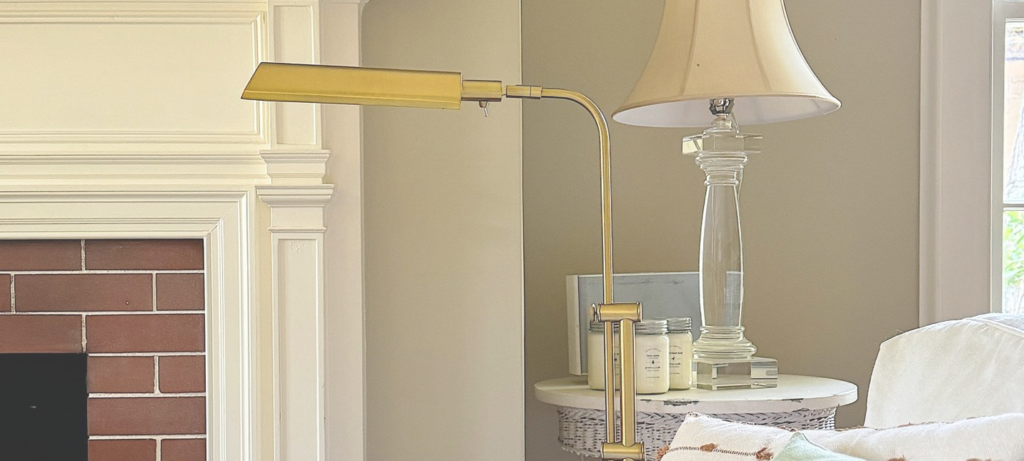
My approach is to spend less time thinking about overhead lighting (which I avoid at home almost entirely, all year round, because it’s almost always unflattering) and more time thinking about light at different levels and in different qualities. A floor lamp with a warm shade in one corner. Table lamps that create pools of warm light rather than trying to illuminate the whole room. Candles — real ones, because there is genuinely no substitute for what a flame does to an atmosphere — in the evening.
The Summer Evening Ritual of Candlelight
I’ve become quite serious about candles. Not in the way that involves collecting hundreds of them or treating them as objects not to be burned (a crime), but in the way that involves thinking about where candlelight falls in a room and what it does to the atmosphere at different times of evening.
In summer, I light candles later than I do in winter — there’s no need for artificial warmth when the evening light is still golden at 8pm. But when I do light them, usually around the time the sky is going that particular deep blue that feels like the actual beginning of night, the effect is extraordinary. The warm light catches the terracotta objects, the brass, the glass, and the room goes from beautiful to genuinely magical. This is not an exaggeration. Candlelight does something to a carefully considered space that electric light simply cannot, and the summer warmth makes it feel more natural, less compensatory.
The Outdoor-Indoor Conversation: Making Your Home Feel Like It Extends
One of the most sophisticated things you can do in summer home decor is create a genuine visual and sensory conversation between your interior and whatever outdoor space you have access to — even if that outdoor space is a single Juliet balcony or a window box. The summer home that feels most alive is the one where you can’t quite tell where inside ends and outside begins.
In practical terms, this means a few things. It means choosing colours for your interior that feel continuous with the natural world outside rather than in opposition to it — the earthy, botanical palette we’ve been discussing throughout this piece is perfect for this. It means letting real light in rather than guarding against it (those gauzy linen curtains again, always). It means having plants inside that mirror the greenery outside. And it means, if you have any outdoor space at all, styling it with the same care and intentionality you bring to your interior.
The Balcony and Small Outdoor Space Edit
My balcony is not large. It holds two chairs, a small side table, a collection of pots that has grown to an extent I occasionally feel concerned about, and, in summer, the particular pleasure of being slightly outside without being properly outside. It is my favourite place in my home for approximately four months of the year, which seems like a worthy return on investment for the attention I’ve paid to it.
The styling principles for a small outdoor space are essentially the same as for a small indoor room: edit ruthlessly, invest in a few quality pieces, use plants generously to add life and create a sense of enclosure, and choose materials that age well. Teak weathers beautifully. Terracotta looks better every year. Good outdoor linen (and it exists, properly treated, genuinely beautiful) brings the inside-out conversation full circle.
“The summer home I’ve always wanted isn’t a different home — it’s this home, paying attention. That’s the quiet luxury of it. The beauty was always here.”
The Mindful Edit: What Summer Home Decor Taught Me About Simplicity
There’s a lesson in this whole process that I didn’t expect to find and that has stuck with me beyond the aesthetics. When you edit a home for a season — when you put away the heavy things and bring forward the light things, when you make deliberate choices about what earns its place in a room — you end up with something that feels not just more beautiful but more honest. Like you’ve removed the accumulation and found the intention underneath.
I keep coming back to this idea of the considered room. Not the room that’s been professionally styled for a photoshoot, and not the room that’s happened to you over years of acquisition without intention, but the room that reflects a genuine set of choices made by a person who knows what she values. That’s the room that feels like a sanctuary. That’s the room you come home to and immediately feel better in.
The clean girl aesthetic — which started as a beauty trend but has, in my experience, seeped into the way a whole generation of women approaches their spaces, their routines, and their relationship with possessions — is really about this. It’s about clarity. About choosing carefully rather than collecting indiscriminately. About letting quality replace quantity and trusting that a few genuinely beautiful things create more pleasure than many mediocre ones.
And summer is, perhaps, the best time of year to practise this. Because the season itself asks for lightness. It asks you to put away the heavy things. To open the windows. To let more light in and to trust that what remains, when you’ve removed the unnecessary, is enough. More than enough. Beautiful.
∿
Room by Room: A Final Summer Decor Checklist
Before I let you go, I want to give you something practical to take away — not a rigid prescription, but a framework that’s helped me think about each room’s summer potential in a way that feels manageable rather than overwhelming.
Living Room
- Swap heavy cushion covers for linen or cotton alternatives in warm, light tones
- Replace winter candles with something lighter — green, floral, or clean-fresh scents
- Edit the coffee table down to five objects or fewer, each deliberately chosen
- Add a large botanical element — dried or living — for organic presence and height
- Hang lighter window treatments or pull back heavier curtains to reveal whatever sheers might be underneath
Bedroom
- Switch to linen or high-quality cotton bedding in warm neutral tones — the investment is worth it completely
- Store heavy blankets and replace with a single light coverlet and a textured throw
- Edit the night table to: lamp, one beautiful object, current book, water glass
- Add a linen or lavender spray for an effortless bedtime ritual
- Let more air and light in — a lighter window treatment in the bedroom changes the quality of morning in a way that’s almost startling
Kitchen
- Edit countertops rigorously — only beautiful and functional objects earn surface space in summer
- Start a small herb garden on the windowsill — three terracotta pots, three herbs, done
- Decant everyday items into ceramic or glass vessels for an effortlessly styled look
- Style the table loosely: linen runner, mismatched but complementary glassware, a simple botanical arrangement
Bathroom
- Upgrade to lighter towels in warm ivory or soft sage and fold them neatly
- Decant soaps and lotions into matching vessels — this takes ten minutes and changes everything
- Add one small plant and one beautiful object and remove everything else from the visible surfaces
- Hang a bunch of eucalyptus in the shower for a spa-quality daily ritual
The most important thing I can tell you, after all of this, is that summer home decor doesn’t require a budget or a renovation or a full weekend of effort. It requires attention. It requires the willingness to look at your home with fresh eyes and ask what it would feel like if it moved with the season rather than against it. And once you start asking that question, the answers tend to be surprisingly clear.
Your home is already beautiful. Summer is just asking you to meet it where it is.