
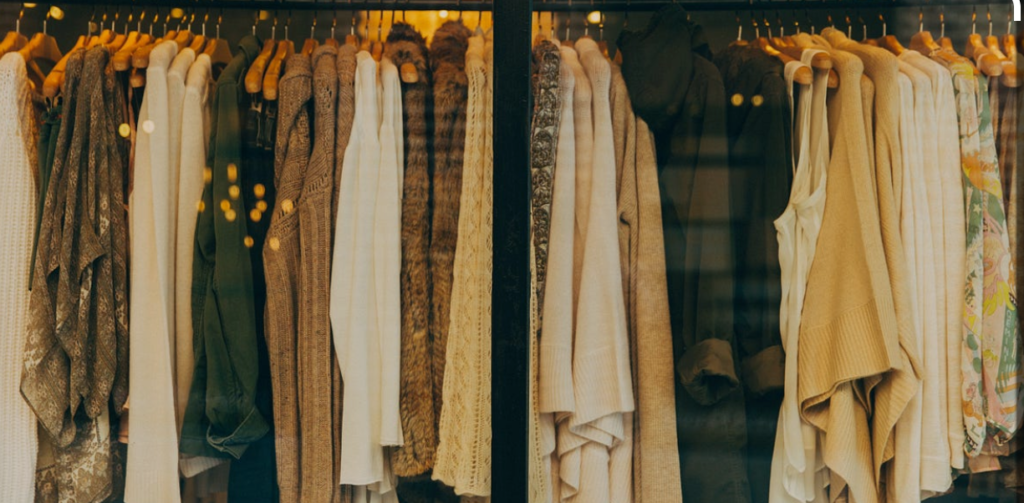
On quiet luxury, the capsule wardrobe, and why the most elegant thing you can wear is your own certainty.
here is a specific kind of morning I keep coming back to in my memory. Paris, early March, the light still thin and silvery. I was standing outside a boulangerie on a street whose name I never learned properly, holding a warm paper bag with both hands, and I was wearing the most unremarkable outfit — stone-coloured trousers, a soft oatmeal turtleneck, a camel coat I’d had for three winters. Nothing extraordinary. Nothing that would have made anyone stop and stare.
And yet I felt — the only word I can find, even now — magnificent.
Not because I looked perfect. Not because of where I was, or who might be watching. But because every single thing I had on that morning had been chosen with a kind of quiet deliberateness. Because I knew myself in those clothes. Because for once, nothing I was wearing was trying to be anything other than exactly what it was — and neither, in that moment, was I.
I’ve thought about that feeling often since. About what it means to actually dress for yourself, not for a trend, not for a room, not for a version of yourself you’re performing or auditioning. What it means to arrive somewhere — a café, a meeting, a quiet solo dinner — and feel genuinely at home inside your own silhouette.
That is what this essay is really about. Not trends. Not ten easy ways to elevate your wardrobe. Not what to wear to look “put together” for other people. It’s about something softer and harder to name: the particular kind of confidence that arrives not when your clothes are expensive, but when they are true.Part One
On Learning to Dress Without an Audience
I spent my twenties dressing for rooms I hadn’t entered yet. For hypothetical dinners, imagined encounters, scenarios constructed entirely in my head. I’d stand in front of my wardrobe at 7am thinking not “what do I want to wear today?” but “what should I be wearing today?” — and the difference between those two questions is enormous.
The first is a conversation with yourself. The second is a performance with no clear stage.
We absorb so much about what a woman is supposed to look like. From the images we scroll through before we’re properly awake, from the way certain clothes get coded as “serious” or “feminine” or “appropriate,” from the well-meaning comment a colleague made once that lodged itself somewhere behind your ribs and never fully left. We are relentlessly educated in the opinions of others, and it takes years — sometimes decades — to learn to hear your own voice on the subject.
What helped me, eventually, was getting very boring about it.
I stopped buying things because they were beautiful in the shop and started asking a single question: does this feel like me? Not “will this look good?” or “is this on trend?” Just — is this mine? Does something in my body recognise it? And slowly, slowly, the wardrobe shifted. The impulse buys stopped arriving. The things I actually wore every single day became clearer, and the things hanging unworn at the back revealed themselves for what they were: costumes for someone I never quite became.
This, I’ve come to believe, is the beginning of what people now call a capsule wardrobe — but it’s less about the number of pieces and more about the quality of the relationship you have with each one. It’s not minimalism for its own sake. It’s the quiet luxury of owning less and knowing more.
Building a Wardrobe That Knows You
The phrase “capsule wardrobe” gets thrown around so casually now that it’s almost lost its meaning. Pinterest boards full of thirty-seven perfectly folded pieces, all in the same muted palette, somehow making you feel like you need to go shopping immediately to achieve the illusion of buying nothing. It can feel prescriptive. Almost sterile.
But the idea underneath it — that a handful of truly right pieces will serve you better than a wardrobe full of almost-right ones — is genuinely transformative once you let yourself feel it rather than just intellectually agree with it.
For me, the foundation isn’t about specific items. It’s about how each piece functions — not just on the body, but for the soul. The pieces that make me feel like myself, regardless of what season it is or what I’m walking into.
01The OvercoatLong, structured, in camel or stone. The piece that makes every outfit feel decided. Wear it over everything and watch the whole look sharpen.
02The KnitA heavyweight cashmere or merino in cream, oatmeal, or warm ivory. The garment equivalent of wrapping yourself in something that loves you back.
03The TrouserWide or straight-cut, in bone, charcoal, or off-white. Not quite formal, not quite casual — and that middle ground is exactly where elegance lives.
04The White ShirtOversized, with heavy cotton or a silk poplin. The most democratic garment in fashion — it asks nothing and gives everything.
05The Simple DressA fluid midi in a neutral or muted tone. The kind you reach for when you want to look entirely effortless and spend exactly twelve seconds getting dressed.
06The Loafer or Ballet FlatIn leather, in tan or black or burgundy. Shoes that feel as comfortable as they look considered — because a woman in discomfort is never truly elegant.
What I love about these particular pieces is that none of them shout. They are the wardrobe equivalent of someone who is entirely comfortable with silence. And when you wear them together, or mix them thoughtfully, something happens that is hard to explain and immediately felt: you stop thinking about what you’re wearing altogether. Your clothes disappear — in the best possible way — and what remains is just you.
That’s the goal, isn’t it? Not to be noticed for the clothes. To be noticed, finally, entirely for yourself.
“There’s something quietly powerful about dressing beautifully for yourself — with no audience in mind, no validation required. It’s the most private form of self-respect.”
On Style & Selfhood
Old money summer — linen blazer, bone trousers, simple gold chain, afternoon lightPart Two
What Old Money Style Actually Means
Let’s talk about the phrase that’s been circling fashion conversations for the last two years, because I think it deserves more nuance than it usually gets.
“Old money style” — or “quiet luxury,” its more modern sibling — gets reduced to a colour palette. Cream, camel, navy, white. Understated fabrics. No logos. The assumption that true wealth requires no announcement.
And while all of that is aesthetically accurate, I don’t think it captures what actually makes the look so compelling — or why it resonates with so many women who have no particular interest in inherited wealth.
What we’re responding to, I think, is the posture. Not physical posture — though there’s that too — but the emotional posture. The sense of someone who is not trying to impress you. Who is not competing, not performing, not reaching for your approval with their outfit. Someone who dressed the way they dressed because it pleased them, and your reaction to it is genuinely, warmly irrelevant.
That ease — that unearned-feeling but actually deeply cultivated ease — is what the aesthetic is really encoding. And it’s available to any of us. Not through wealth. Through self-knowledge.
The most reliably “quiet luxury” outfits I’ve ever worn have been my most affordable. A vintage white shirt, three years old and perfectly broken in. Trousers I had tailored for less than the cost of a trendy blouse. A cashmere jumper I waited six months to find in a thrift shop, then wore until the elbows thinned. What they had in common was not their price point. It was that I understood them. They fit me — not just physically, but philosophically. They were mine in every sense that actually matters.
The old money woman isn’t wearing expensive things to look expensive. She’s wearing comfortable things because she is comfortable. That’s it. That’s the secret, and it costs nothing at all.
✦Part Three
Soft Glam & the Ritual of Getting Ready
I want to say something about beauty that might be slightly unfashionable, which is that I think getting ready is one of the most underrated pleasures of being a woman — when you let it be pleasurable, rather than turning it into an obligation.
There’s a version of getting ready that is stressful and hurried, standing under fluorescent light, running late, applying mascara in the car. And then there’s another version entirely. The one that happens in the morning before everything else begins, in a quiet bathroom with good light, moving slowly through a series of small rituals that feel — even when the products are simple, even when the routine is brief — like an act of care.
The shift between those two experiences isn’t about how much time you have. It’s about how you hold the time you do have.
What I’ve come to think of as “soft glam” isn’t a specific makeup look — though it tends toward particular things: luminous skin, a barely-there flush, brows that look like yours on a good day, a lip in your most flattering neutral or a clean berry. It’s a philosophy. The idea that beauty is an enhancement of what’s already there, not a correction of what isn’t.
Morning skincare — glass bottles, soft light, marble vanity, slow rituals
My own morning ritual has shrunk considerably over the years. I used to own approximately ninety-seven products and use none of them consistently. Now I have maybe eight, and I use each one every single day with a kind of reverence that I’m slightly embarrassed to admit to. What surprised me was that simplifying didn’t diminish results — it revealed them. When you stop layering product over product, you start to see your skin. Actually see it.
- The CleanseA gentle oil cleanser in the evening, something pH-balanced and entirely unremarkable in the morning. No foam that strips, no scrubs before coffee. The skin in the morning is a guest — greet it gently.
- The Vitamin C MomentA few drops of something with L-ascorbic acid, pressed in slowly with warm palms. This is the step I do standing in front of the window, watching whatever light is happening outside. It takes less than a minute and I protect it fiercely.
- The Moisture LayerA rich cream or a barrier serum, depending on the season. In winter, something deeply emollient — I’ve been partial to ones with ceramides and peptides, the quiet architects of good skin over time. In summer, something lighter with hyaluronic acid and a sense of restraint.
- The SPF — AlwaysThis is non-negotiable and always has been, even before I understood why. The formulas now are extraordinary — blurring, glowing, genuinely pleasurable to apply. There is no luxury skincare practice more foundational than this one.
- The Lip, TendedA thick balm every single night. Nothing transformative, nothing expensive — just the ordinary intimacy of caring for the smallest things.
For makeup on an average day, I’ve found my way to something I can only describe as “the version of myself after a very good week.” A tinted moisturiser or a light base, concealer where I need it, a cream blush tapped onto the apples of my cheeks with my fingers while the product is still warm, a single coat of mascara. Brow gel. Sometimes a lip liner in a shade called something like “naked” or “sable,” because the world of nude lip liners is vast and deeply serious and I stand fully behind it.
The result is less a “look” and more a kind of quality of being. Like the light in the room has been adjusted by two degrees. That is the whole goal of soft glam — not transformation, but illumination.
“Elegance isn’t about being seen. It’s about being remembered — and the women who are most unforgettable are almost always the ones who seem entirely unconscious of the effect they have.”
The Hair Question — Effortless Is Always an Effort
Nobody talks enough about the singular power of good hair. And by “good hair” I don’t mean complicated hair, or fashion-week hair, or the kind that requires forty-five minutes and a degree in architectural engineering. I mean hair that looks like it is doing exactly what it was always going to do.
The phrase that circulates — “rich girl hair” — is worth unpacking, because what it’s describing isn’t really a texture or a style. It’s a quality. A particular kind of gloss, or weight, or movement. The sense that no one has forced anything to happen. Hair that has been, as they say, left to its devices — but its devices are excellent, because the foundation was tended carefully before it was left alone.
What this looks like in practice is far less glamorous than the term suggests. It is: not over-washing (twice a week, at most, for most hair types). A good mask once a week, left on for longer than the packet suggests. Avoiding heat where you can, and using a quality protectant where you can’t. Air-drying, whenever time allows — and letting whatever your hair naturally does become the texture you work with, not the texture you correct.
It is also, frankly, a good haircut. A truly good cut — from someone who understands your hair’s specific personality — is the single most effective luxury upgrade available, and it lasts for months.
I have been wearing variations of the same loose, low-maintenance style for several years now. Long enough to pull back, layered enough to fall interestingly when I don’t. Half-up in the morning when I can’t decide; a loose knot at the nape when I feel like disappearing into myself; down and slightly imperfect when I want to feel like I’ve barely tried, which is usually when I’ve tried the most.The most elegant women I know all have one thing in common: they seem unbothered by their hair. They’ve made peace with it. This peace, I assure you, did not come naturally. It was negotiated, slowly, over years.
Effortless loose chignon, gold hoops, white linen — natural afternoon light, open windowPart Five
On Slow Living & the Feminine Energy
of Doing Less, Deliberately
I want to write about slow living not as a trend — because like all trends, framing it that way makes it feel both urgent and temporary — but as something closer to a practice. Something that has to be chosen, again, every day, against the considerable pull of everything that would prefer you move faster and want more and produce at a pace that doesn’t leave room for the kind of quiet where you remember who you are.
The connection between slow living and personal style is one I’ve come to understand gradually. It goes something like this: when your life is moving very fast, your choices reflect that speed. You buy things quickly, dress thoughtlessly, reach for whatever is closest because you don’t have time to consult your actual preferences. And you end up with a wardrobe, a face, a presence that belongs slightly to no one — assembled from the friction of too many rushed moments rather than composed with intention.
Slow living, in the way I’ve come to understand it, is not about doing fewer things. It is about inhabiting what you do more fully. It’s a Sunday morning that you allow to actually be a Sunday morning — without immediately filling it with productivity or planning or the low-level anxiety of entertainment. It’s the difference between eating breakfast and reading the news simultaneously, and sitting with your coffee and really tasting it, really being in that particular light at that particular hour.
What slow living gave my wardrobe was this: the space to actually notice what I wore and how it made me feel. The willingness to get dressed slowly and not apologise for the time that took. The realisation that buying less and caring for things more was not a deprivation but an upgrade — one that applied to clothes just as much as it applied to relationships, time, and attention.
The elevated basics philosophy is, at its heart, a slow-living philosophy. It says: instead of ten of something mediocre, choose one of something beautiful and maintain it well. Instead of chasing what’s new, know what’s yours. Instead of dressing for a life you wish you were living, dress beautifully in the life you have — today, exactly as it is, in whatever ordinary room you’re standing in.
There is, I find, a particular kind of richness in a day spent slowly. The way time expands when you’re not fighting it. How a long walk in a coat you love feels different from a hurried one. The pleasure of a morning skincare ritual done in silence, before the day has asked anything of you. A candle lit at four o’clock in November, not because guests are coming, but because you deserve to live in a room that smells beautiful.
These are not grand gestures. They are the smallest possible acts of self-regard. But accumulated, they form something that looks remarkably like a life — and a self — that you actually chose.
“Dressing well every day — for yourself, on a Tuesday, with nowhere particular to be — is a radical act. It says: I am worth the effort. It says: this ordinary life deserves beauty.”
On Intentional LivingPart Six
Femininity, Identity, & the Courage of Having a Sense of Style
Something I have noticed is that women who dress beautifully — deliberately, unapologetically, with clear aesthetic point of view — often encounter a strange resistance. As if caring about how you look is evidence of not caring about things that matter more. As if elegance and depth are somehow in competition.
I find this exhausting and also, in a particular light, revealing. The idea that aesthetic care is vanity rather than craft — that wanting to be beautiful is less serious than wanting to be successful — tells you more about how we’ve been taught to value things than it does about the women themselves.
To dress with intention is to make a series of creative decisions every single day. It is to know yourself well enough to know what serves you and what doesn’t. It is to understand proportion and texture and colour as languages, and to be articulate in them. This is not shallow. This is, actually, a sophisticated practice that deepens with every year you give it.
The women I most admire stylistically are not women with large budgets or constant access to new things. They are women who seem to have arrived somewhere — a steady, unhurried relationship with how they present themselves to the world. Women who have clearly decided something, and who have the quiet confidence of someone who no longer needs to reconsider their decision at every turn.
There is a word I keep coming back to: composure. Not stiffness. Not performance. The kind of composure that comes from being deeply acquainted with yourself — knowing your silhouette, your palette, your pace, your particular way of moving through a room. The kind that dresses beautifully in the morning and then, having dressed, is done with the matter and fully present for the rest of the day.
That is the aspiration I carry. Not to look a certain way. Not to embody a trend or a type. But to know myself well enough that getting dressed feels less like a decision and more like a greeting — to my own life, to the particular day ahead, to the version of myself that has slowly, patiently, become someone I recognise.
Feminine style, at its most evolved, is not decoration. It’s identity. It’s the accumulated record of all the mornings you chose, with quiet conviction, to face the world in something that felt true.
Woman by window — linen, warm light, coffee, the posture of someone entirely at ease
The Most Beautiful Thing You Can Wear
I want to end where I began — with that Paris morning, the thin March light, the warm paper bag and the unremarkable coat. Because I’ve been turning it over in my mind while I’ve been writing this, trying to understand exactly why it lodged itself so firmly in memory.
And I think it’s this: it was the first time I remember dressing without a single thought about anyone else. No imagined audience, no aspirational self, no performance for some version of my life I hadn’t arrived at yet. Just me, in clothes I genuinely loved, in a city that didn’t care either way, on a morning that asked nothing of me.
The most beautiful thing you can wear, I’ve come to believe, is that ease. The ease of someone who has done the work — the self-examination, the editing, the slow accumulation of genuine preferences — and arrived somewhere quiet. Somewhere that requires no maintenance. Somewhere that is simply, finally, you.
Build your capsule slowly. Choose quality over volume, always. Tend to your skin the way you’d tend to anything you loved — with consistency and patience and the understanding that the effects won’t be immediate but they will, in time, be profound. Let your hair do what it wants to do. Let your makeup be the best version of your face on a Tuesday, not a transformation for a Saturday you haven’t reached yet.
Dress for the life you have. The ordinary, specific, entirely unrepeatable life that is yours — that is happening right now, in this light, in this room. Dress beautifully for it.
That is what elegance is. Not the coat. Not the shoes. Not the palette or the label or the level of investment. It’s the certainty. The quiet, cultivated, entirely personal certainty that you know yourself, you trust yourself, and you have arrived exactly where you intended to be.
Frequently Asked Questions
How do I start building a capsule wardrobe without feeling like I have to throw everything out?
Start with an audit, not a purge. Spend an evening going through your wardrobe and identifying the pieces you actually reach for — not the things you keep for hypothetical occasions, but the things you wear repeatedly and feel good in. These are your capsule. The rest isn’t necessarily for throwing away; it’s simply for reassessing. From there, rather than buying to fill gaps, start buying only when you find something that genuinely earns a place. The capsule wardrobe builds itself if you let it.
What does “quiet luxury” actually mean as a style, and is it still relevant in 2026?
Quiet luxury is less a trend and more a posture — the idea that quality, fit, and understatement communicate more than logos or obvious newness. Neutral palettes, impeccable fabrics, and garments that fit your body rather than making your body fit them. It is absolutely still relevant in 2026, not as a trend per se, but as a long-standing approach to dressing that has found a new audience. The good news is that it costs nothing in terms of philosophy and only as much as you choose in terms of investment.
How do I achieve “soft glam” as a makeup look without it looking too done-up?
The key is skin first. A dewy, well-moisturised base makes everything else look considered rather than layered. Go lighter on coverage than you think you need — a tinted moisturiser or a light foundation blended with a damp sponge gives that second-skin finish. Add a cream blush in a soft rose or peach, applied with fingers rather than a brush for a natural flush. Then a single coat of mascara, a groomed brow, and a lip in your most flattering neutral. The whole routine should take under ten minutes. If it takes longer, you’re probably working too hard against yourself.
What is “rich girl hair” and how do I achieve it without spending a fortune?
Rich girl hair is essentially hair that moves well, looks healthy, and appears effortless — the key word being “appears.” The foundation is not washing too often (2–3 times a week maximum), using a nourishing mask weekly, minimising heat, and getting a genuinely good cut every three to four months. Beyond that: a quality hair oil, applied to the mid-lengths and ends when hair is nearly dry, makes an enormous difference to the texture and shine. The rest is allowing your hair to do what it naturally does, rather than fighting it. Work with your texture, not against it.
What are the best “elevated basics” to invest in if I can only choose a few?
If I had to choose three: a cashmere or high-quality merino knit in a neutral (cream, oatmeal, or grey), a well-cut coat that works across seasons, and a pair of trousers that fit your waist and hips perfectly without tailoring. These three pieces together cover an extraordinary range of occasions and will outlast any trend-driven purchase by years. Quality leather shoes — ballet flats or a clean loafer — make an honourable fourth. Everything else is context.