

There’s a version of me, somewhere in my mid-twenties, who genuinely believed she understood nutrition because she’d read enough headlines, followed enough accounts, and tried enough trending approaches to feel reasonably informed. Looking back now, with the gentle, slightly wincing clarity that only comes with time and distance, I realize she understood almost nothing, and worse, a lot of what she thought she understood was actively working against the very goals she was chasing.
I want to write about this honestly, because I think so much of the nutrition conversation happening across social media right now, the same spaces filled with gorgeous, Pinterest-worthy aesthetics and genuinely lovely style inspiration, is also quietly filled with misinformation dressed up in beautiful packaging. It’s easy to absorb confident, simple-sounding rules about food without ever questioning whether they’re actually true, or whether they’re serving the particular goals you’re working toward, simply because they’re delivered with enough visual polish and enough conviction to feel credible, the kind of confidence that’s genuinely hard to argue with in the scrolling moment, even when it doesn’t hold up to closer, more careful scrutiny.
This article is the conversation I wish someone had had with me years ago, walking through the genuinely common mistakes I see so many women making, myself included for longer than I’d like to admit, that quietly undermine their actual health goals rather than supporting them. I want to be clear up front that I’m not a registered dietitian or a medical professional, and nothing here is meant to replace personalized guidance from someone qualified to give it, particularly if you’re managing any specific health condition or have a more complicated relationship with food than what I’m describing in general terms throughout this piece. What I can offer is the accumulated, sometimes hard-won perspective of someone who has spent a long time paying attention to this topic, made plenty of genuine mistakes along the way, and gradually arrived somewhere calmer and more sustainable than where she started, even if that calmer place took considerably longer to reach than she ever would have guessed at the very beginning of this whole long, winding process.
Why “Health Goals” Deserve a Gentler Definition Than We Usually Give Them
Before I get into any specific mistakes, I want to pause on the phrase “health goals” itself, because I think so much of what goes wrong in this whole conversation starts with how narrowly and harshly we tend to define that phrase in the first place. For years, my own version of a health goal was almost entirely about appearance, about becoming smaller, about chasing some specific aesthetic I’d absorbed from wherever I happened to be looking at the time. I didn’t think of it that way explicitly; I told myself it was about health, about feeling good, about energy and vitality. But if I’m honest about what was actually motivating most of my choices during that period, it was almost entirely about how I looked rather than how I genuinely felt or functioned.
I think this matters enormously for understanding why so many well-intentioned approaches to nutrition end up backfiring. When the underlying goal is narrowly aesthetic, every choice gets evaluated against that single, often unforgiving standard, which tends to encourage exactly the kind of restrictive, anxious, all-or-nothing thinking that makes a sustainable relationship with food nearly impossible to build. When the goal shifts toward something broader, genuine energy, stable mood, the physical capability to do the things you actually want to do, sleeping well, recovering well from exercise, feeling generally well in your own body, the whole conversation around food changes shape entirely, becoming something closer to genuine self-care rather than an ongoing project of correction and restriction.
I’d gently encourage you, before reading any further into the specific mistakes I’m about to walk through, to spend a moment honestly examining what your own health goals actually are, underneath whatever language you’ve been using to describe them. This isn’t about judgment, genuinely. It’s simply that so much of what follows will land differently depending on whether you’re working toward genuine, holistic wellbeing or working from a place of trying to fix or shrink something about yourself that you’ve come to see as a problem.
Mistake One: Treating Restriction as the Default Starting Point
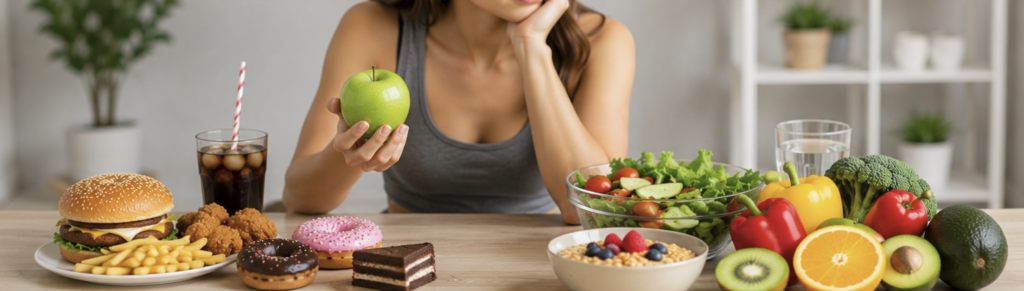
I think the single most common mistake I see, and the one I made most consistently myself for years, is approaching nutrition with restriction as the automatic, default first move, rather than considering whether restriction is genuinely the right approach for the specific goal at hand. There’s a pervasive cultural assumption that improving how you eat means primarily eliminating things, cutting out entire categories of food, dramatically reducing overall intake, treating less as inherently more virtuous regardless of context.
This default toward restriction tends to backfire in ways that are genuinely well-documented across nutrition and behavioral research, even though the cultural messaging around restriction remains so persistent and so confidently delivered. Severely restricting intake, whether through cutting calories dramatically or eliminating entire food groups without genuine medical necessity, tends to trigger a cascade of consequences that work directly against most people’s actual long-term goals. Energy crashes. Mood becomes harder to regulate. The body’s hunger and fullness signals become less reliable rather than more, making it genuinely harder to eat intuitively and consistently. And perhaps most significantly, restriction tends to create the exact psychological conditions that lead to the all-or-nothing cycling I’ll talk about in more detail shortly, where periods of strict limitation give way to periods of feeling like the whole effort has failed entirely.
What actually shifted my own relationship with this was learning to ask a different first question. Instead of immediately asking what I should cut out or reduce, I started asking what my body might actually be needing more of, what might genuinely be missing from how I was eating that, if added rather than subtracted, would move me meaningfully closer to feeling the way I actually wanted to feel. This reframe, from subtraction to genuine addition and nourishment, changed almost everything about how sustainable and how pleasant this whole area of life became for me.
I want to be careful here, because I’m not suggesting that thoughtful moderation or genuinely informed adjustments to how you eat are inherently wrong. What I’m pushing back against is the reflexive, often joyless assumption that restriction is always the correct starting point, when so much of the actual research and so much of my own lived experience suggests that building toward adequate, varied nourishment tends to produce far more sustainable, far more genuinely health-supporting results than starting from a place of cutting things away.
Mistake Two: Letting Social Media Set the Terms of the Conversation
I think it’s worth being honest about how much influence social media has over how most of us, myself absolutely included, think about food and nutrition right now, and how much of that influence operates beneath our conscious awareness rather than through anything we’d describe as a deliberate decision to be informed by a particular platform or creator.
The aesthetic, Pinterest-inspired, soft-glam, quiet-luxury content that dominates so much of the beauty and lifestyle conversation right now often comes bundled with nutrition messaging that sounds confident and visually appealing without necessarily being accurate or appropriate for the person consuming it. A beautifully shot video of someone’s “what I eat in a day,” filmed in gorgeous natural light, set to a lovely soundtrack, surrounded by all the visual markers of an enviable, put-together life, can carry enormous persuasive weight regardless of whether the actual nutritional content being shown is appropriate, sufficient, or even accurate for the person watching it.
I fell into this pattern for years, genuinely believing that because a particular approach to eating looked so aspirational, so aligned with the elegant, considered lifestyle I was trying to build for myself across every other area, it must also be nutritionally sound. I’ve since learned, sometimes the hard way, that aesthetic appeal and nutritional accuracy are genuinely unrelated qualities, and that some of the most visually beautiful, most widely shared nutrition content circulating online is built on oversimplified, sometimes outright incorrect information that simply happens to be packaged more attractively than the more nuanced, less visually exciting truth.
What’s helped me most is developing a habit of pausing before adopting any specific approach I’ve encountered through social media, asking myself whether this is coming from someone with genuine, relevant qualifications, whether the claims being made sound plausible against what I understand about how nutrition science actually works, and whether the approach being suggested would genuinely serve my own specific body, lifestyle, and goals rather than simply looking appealing in a thirty-second video. This small pause, easy to skip in the moment but genuinely valuable over time, has saved me from chasing more than a few trends that, in retrospect, were doing very little for my actual wellbeing despite how convincing they seemed in the moment.
Mistake Three: The All-or-Nothing Trap That Undoes Months of Progress
I want to spend real time on this particular mistake, because I genuinely believe it’s one of the most destructive patterns in this entire conversation, and one that took me an embarrassingly long time to recognize clearly enough to actually address. All-or-nothing thinking, the tendency to treat any single choice that doesn’t perfectly align with your intended approach as evidence of total failure, deserving total abandonment of the effort altogether, has derailed more genuine progress for more people, myself included, than almost any other single pattern I can think of.
This usually plays out in a familiar, almost predictable sequence. You start a new approach to eating with genuine enthusiasm and commitment. For some period, days or weeks, you follow it closely, feeling increasingly confident and proud of your consistency. Then, inevitably, because life is genuinely unpredictable and food is genuinely woven into so much of our social and emotional experience, something happens that doesn’t fit the plan. A celebration, a stressful week, simply a craving that feels too strong to resist. And rather than treating this single moment as exactly what it is, one choice among thousands you’ll make over the course of a lifetime, the all-or-nothing pattern transforms it into proof that the whole effort has failed, that you might as well abandon the approach entirely since you’ve already “ruined” it.
I think this pattern is so deeply destructive because it treats nutrition as a test you either pass or fail completely, rather than as an ongoing, lifelong practice made up of countless individual choices, most of which matter far less in isolation than the overall pattern they form together over weeks and months and years. A single meal, a single day, even a single difficult week genuinely doesn’t define your overall health trajectory nearly as much as the all-or-nothing mindset insists it does in the heated, emotional moment.
What’s helped me move past this pattern, gradually and with real effort, is learning to treat any individual choice that doesn’t align with my broader intentions as simply data, information to notice and learn from, rather than evidence of failure deserving punishment or total abandonment. The next meal, the next day, is always an opportunity to simply continue, without needing some dramatic, fresh restart that implicitly treats the previous attempt as having been completely wasted. This shift in framing, from binary success-or-failure to continuous, forgiving practice, has done more for my actual long-term consistency than any specific dietary approach I’ve ever tried.
Mistake Four: Confusing “Clean” With “Nutritious”
I want to address the language we use around food directly, because I think the specific words we choose carry genuine psychological weight, shaping how we relate to eating in ways that go well beyond their literal meaning. The framing of food as “clean” versus, by implication, “dirty,” has become genuinely pervasive across the wellness and beauty content I see constantly, often delivered with the same soft, elegant visual aesthetic that’s become so dominant across this whole corner of social media and lifestyle content.
I think this framing is genuinely problematic, separate from any specific nutritional claim it might be attached to in any given context. Describing food in moralistic terms, clean versus dirty, good versus bad, implicitly attaches a sense of virtue or shame to eating choices that, in reality, exist along a much more nuanced and individual spectrum than that binary language suggests. Foods aren’t inherently moral or immoral; they provide different combinations of nutrients, different levels of satisfaction, different roles in an overall pattern of eating that, taken as a whole, either supports or doesn’t support whatever specific goals a person is working toward.
I noticed, once I started paying closer attention to this language, how much it had shaped my own internal experience of eating, creating a quiet, persistent sense of guilt around foods I’d absorbed the idea of as “unclean,” regardless of whether that label had any genuine nutritional basis or was simply a marketing framing that had become so widespread it felt like established fact. Unlearning this language, replacing it with more neutral, more accurate descriptions of what food actually does, what nutrients it provides, how it fits into an overall pattern, has genuinely improved my relationship with eating far more than any specific change to what I was actually eating ever did on its own.
I’d encourage paying attention to this language in your own internal dialogue and in the content you’re consuming, noticing when moralistic framing creeps in and gently questioning whether it’s actually accurate or simply a persuasive, aesthetically appealing way of describing what’s ultimately a far more neutral, far more individual reality than the language suggests, regardless of how confidently or how beautifully that language happens to be presented.
Mistake Five: Chasing the Latest Trend Instead of Building Genuine Understanding
I think one of the more exhausting patterns I fell into for years, and one I see constantly across the broader wellness conversation right now, is the habit of chasing whatever specific approach happens to be trending at any given moment, abandoning whatever I’d been doing previously the moment something newer, more exciting, more aesthetically compelling appeared in my feed. This constant trend-chasing, I’ve come to believe, genuinely prevents the development of the deeper, more durable understanding that actually supports long-term success far more reliably than any single trending approach ever could.
Nutrition trends, almost by definition, tend to oversimplify genuinely complex topics into appealing, easily digestible rules, because that simplicity is exactly what makes them spreadable and engaging across social media in the first place. The actual science of nutrition is considerably more nuanced and more individual than most trending content has room to convey, which means that chasing trend after trend tends to leave you with a collection of disconnected, sometimes contradictory rules rather than any genuine, foundational understanding of how nutrition actually works and how it applies specifically to your own body and goals.
What’s helped me most is shifting away from chasing specific trending approaches and toward building a more foundational understanding of nutrition basics, the kind of information that doesn’t change every few months depending on whatever’s currently circulating across social media. This deeper understanding, even at a fairly general level, has made me far more resistant to chasing whatever new trend appears, because I’m able to evaluate new information against a stable foundation rather than simply accepting whatever sounds most appealing or most aligned with the aesthetic I happen to be drawn to at the time.
I think this connects to something I’ve written about elsewhere regarding building a considered, intentional wardrobe rather than chasing every passing trend in fashion. The same underlying principle applies here just as strongly: a stable, well-considered foundation serves you far better over time than a constantly shifting collection of whatever happens to be popular in any given month, however appealing each individual trend might seem in isolation.
Mistake Six: Ignoring Hunger and Fullness Signals in Favor of External Rules
I want to talk about something I think deserves much more attention in this conversation than it typically receives: the genuine cost of consistently overriding your own body’s hunger and fullness signals in favor of external rules about when, how much, and what you’re supposed to eat, regardless of what your actual body is communicating in any given moment.
I spent years eating according to external schedules and rules rather than genuine internal signals, following whatever specific eating pattern happened to be trending, regardless of whether it actually matched my own body’s natural rhythms and needs. Over time, I noticed that this constant overriding of internal signals seemed to make those signals themselves less reliable, harder to read and trust, almost as if the skill of recognizing genuine hunger and genuine fullness had atrophied from years of simply not being used in favor of following external rules instead.
Rebuilding this internal awareness took genuine time and patience, and I won’t pretend it happened quickly or easily. What helped most was simply paying closer attention, without judgment, to how different levels of hunger and fullness actually felt in my body, separate from any external rule about what I was supposed to be feeling or doing at any particular time. This is a skill, genuinely, one that develops gradually with consistent attention rather than something that simply returns instantly once you decide to start paying attention to it.
I think this particular mistake, prioritizing external rules over internal signals, connects to so many of the other mistakes I’ve already described. It’s part of why all-or-nothing thinking takes hold so easily, because external rules provide a clear, binary standard to either meet or fail, while internal signals are inherently more fluid and more forgiving. It’s part of why trend-chasing feels so appealing, because trends provide external structure that feels easier to follow than the messier, more individual work of learning to trust your own body’s communication. Rebuilding trust in these internal signals, slowly and patiently, has been one of the more meaningful, if less immediately visible, shifts in my entire relationship with food.
Mistake Seven: Treating Hydration as an Afterthought
I think hydration deserves a real place in this conversation, separate from the more emotionally loaded mistakes I’ve described so far, because I genuinely believe it’s one of the more overlooked, more easily fixed pieces of this whole picture. For years, I treated water as something I’d get to eventually, prioritizing coffee, and later in the day, whatever beverage happened to be most appealing or most convenient, without giving genuine, consistent attention to actual water intake throughout an ordinary day.
Inadequate hydration genuinely affects energy, mood, concentration, and even how accurately your body’s hunger signals communicate with you, sometimes registering as hunger when what your body is actually signaling is a need for water rather than food. I noticed this pattern in myself more than once, reaching for a snack when what I actually needed, it turned out once I paid closer attention, was simply a glass of water I’d been neglecting throughout an otherwise busy, distracted day.
I’m not going to give you a specific number of glasses or ounces to aim for, because individual hydration needs genuinely vary based on body size, activity level, climate, and overall health, the same point I made when writing about lip care and the broader relationship between hydration and how our skin and bodies function. What I will say is that this particular piece of the puzzle is genuinely simple to address, requiring no complicated dietary overhaul, no restriction, no trending approach, simply more consistent attention to something most of us already understand we should be doing more of anyway.
I keep a water bottle visible on my desk now, the same kind of small, environmental cue I’ve described using elsewhere to support other habits I genuinely want to maintain, and this small, almost embarrassingly simple change has done more for my consistent hydration than any more elaborate strategy ever managed.
Mistake Eight: Underestimating the Role of Genuine Variety
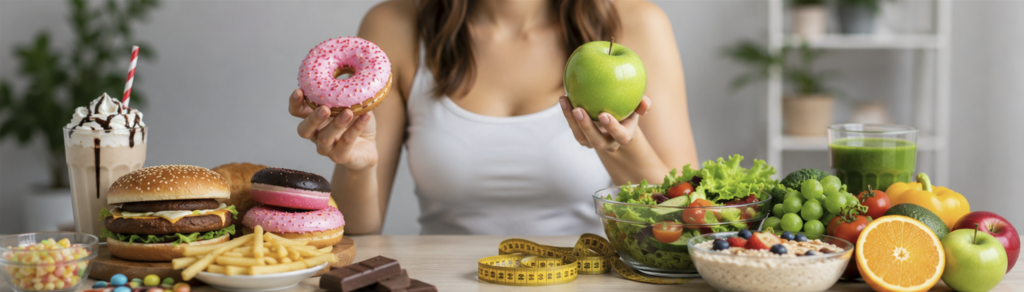
I want to talk about variety, because I think it’s an underrated piece of this conversation that gets less attention than more dramatic-sounding mistakes, despite genuinely mattering quite a bit for long-term nutritional adequacy and overall satisfaction with how you’re eating. For a long stretch of my own journey, I settled into a fairly narrow, repetitive rotation of foods, partly out of genuine convenience and partly because I’d absorbed the idea that simplicity and consistency in eating were inherently virtuous, regardless of whether that narrow rotation was actually providing the genuine variety my body benefits from.
Different foods provide different combinations of nutrients, and a genuinely varied pattern of eating tends to support more comprehensive nutritional adequacy than even a very “healthy” but narrow, repetitive rotation of the same handful of foods week after week. Beyond the purely nutritional argument, I’ve also found that genuine variety supports a much more sustainable, much more enjoyable relationship with food overall, preventing the kind of boredom and eventual rebellion against an overly restrictive, repetitive pattern that so often precedes the all-or-nothing collapse I described earlier.
I think this connects beautifully to the broader philosophy I’ve written about regarding building a considered, intentional approach to other areas of life, the same elegant, thoughtful variety I’d encourage in a wardrobe rather than wearing the exact same narrow rotation indefinitely out of habit rather than genuine preference. Food, approached with the same curious, exploratory spirit, becomes something closer to genuine pleasure and discovery rather than a narrow, repetitive obligation to be endured.
Mistake Nine: Believing Supplements Can Replace a Genuinely Varied Pattern of Eating
I want to address supplements carefully and honestly, because I think this is an area where marketing claims often dramatically outpace what’s actually supported by solid evidence, and where I genuinely believe a lot of money gets spent chasing solutions that a more varied, more consistent pattern of eating would address more effectively and far more affordably.
I went through a phase, somewhat embarrassing to admit now, where I believed that a sufficiently impressive collection of supplements could meaningfully compensate for an otherwise inconsistent, narrow pattern of actual eating. This belief was genuinely reinforced by how beautifully marketed so much of the supplement industry has become, with gorgeous packaging, confident claims, and aesthetic appeal that fits seamlessly into the same quiet luxury, wellness-focused content filling so much of the broader beauty and lifestyle conversation right now.
What I’ve come to understand, and what genuinely qualified nutrition professionals consistently emphasize, is that supplements are generally most useful for addressing specific, identified gaps or needs, often best determined in consultation with a doctor who can assess your individual situation, rather than as a general substitute for the broader, more foundational work of eating a genuinely varied, adequate pattern of food in the first place. No supplement, however impressively marketed, fully replaces what a varied, sufficient pattern of actual eating provides, and I think a healthy skepticism toward dramatic supplement claims, the same skepticism I’ve encouraged toward trending nutrition advice more broadly, serves most people better than enthusiastic adoption of whatever’s currently being promoted as the next essential addition to a wellness routine.
Mistake Ten: Letting Perfectionism Replace Genuine Self-Compassion
I want to close this list of specific mistakes by returning to something more foundational, because I think it underlies almost everything else I’ve described throughout this entire article. Perfectionism, the insistence that any genuinely sustainable approach to nutrition must be followed flawlessly to count as worthwhile at all, has done more damage to my own long-term consistency, and I suspect to countless other women’s relationships with food, than almost any specific dietary mistake on its own.
This perfectionism shows up in so many of the patterns I’ve already described. It’s underneath the all-or-nothing collapse that follows a single imperfect choice. It’s underneath the restrictive, joyless approach to eating that treats any deviation as failure. It’s underneath the constant trend-chasing, always searching for the one perfect approach that will finally make everything click into place without requiring the patience and self-compassion that genuine, sustainable change actually demands.
What’s helped me most, more than any specific nutritional strategy, has been learning to approach this entire area of life with genuine self-compassion rather than harsh self-criticism, treating myself with the same patience and understanding I’d naturally extend to a friend navigating the exact same challenges. This doesn’t mean abandoning genuine effort or care; if anything, self-compassion has made me far more consistent and far more genuinely thoughtful about my choices than perfectionism ever managed, precisely because it removes the paralyzing fear of imperfection that used to derail so much of my progress whenever life inevitably got messy or unpredictable.
What a Genuinely Sustainable Approach Actually Looks Like
I want to spend some time describing what I’ve actually landed on, after years of working through all of the mistakes I’ve just walked through, not as a prescriptive plan for you to follow exactly, but as an honest example of what a more sustainable, more genuinely healthy relationship with food can look like once the patterns I’ve described start to shift.
My own approach now centers around genuine variety, eating a wide range of different foods across different categories, paying attention to how different choices actually make me feel rather than following rigid external rules about what I’m supposed to be eating at any given time. I eat when I’m genuinely hungry rather than according to a rigid schedule, and I stop when I’m genuinely satisfied rather than according to some external rule about portion size that may or may not actually match what my body needs in that particular moment. I drink water consistently throughout the day, treating it as basic maintenance rather than an afterthought. I don’t moralize individual foods, and I’ve genuinely stopped using language like “clean” or “cheating” to describe ordinary eating choices that exist along a far more neutral spectrum than that kind of language suggests.
When I make a choice that doesn’t align with my broader intentions, whether that’s an evening of less varied eating during a particularly stressful week or simply a craving I decide to honor rather than resist, I treat it as exactly what it is, one choice among countless others, rather than evidence of failure deserving punishment or dramatic correction. The next meal is always simply the next opportunity to continue, without needing some elaborate, symbolic fresh start.
This approach isn’t dramatic or exciting in the way that trending content often is. It doesn’t photograph as compellingly as a beautifully staged “what I eat in a day” video, and it doesn’t offer the satisfying simplicity of a single, confident rule to follow. But it’s genuinely sustainable in a way that almost nothing I tried during my years of restriction, trend-chasing, and all-or-nothing cycling ever managed to be, and I think that sustainability, more than any specific approach’s theoretical effectiveness, is ultimately what determines whether any nutritional strategy actually supports your genuine, long-term health goals.
How to Evaluate Nutrition Advice You Encounter Going Forward
I want to leave you with some practical guidance for navigating the genuinely overwhelming amount of nutrition content you’ll continue to encounter, particularly across the beautifully produced, aesthetically appealing social media spaces so many of us spend time in. I think developing a few simple habits of evaluation can genuinely protect you from repeating some of the mistakes I’ve described throughout this entire article.
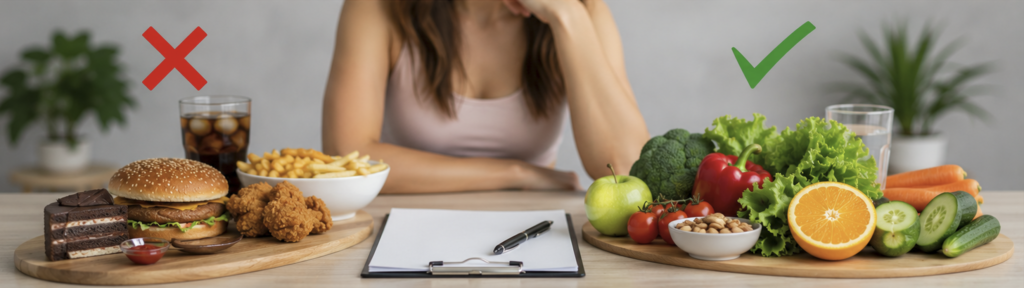
Pay attention to who’s actually delivering the information, and whether they have genuine, relevant qualifications rather than simply an appealing aesthetic and a confident delivery. Be skeptical of any claim that sounds too simple or too dramatic, since genuine nutrition science tends to be more nuanced and more individual than most viral content has room to convey. Notice moralistic language around food, clean versus dirty, good versus bad, and treat it as a signal to look more critically at whatever claim is being made, since that kind of framing tends to prioritize persuasion over accuracy. And perhaps most importantly, ask whether any specific approach being suggested feels genuinely sustainable for your own life, your own preferences, your own body, rather than simply appealing in the moment you encountered it.
I’d also encourage seeking out registered dietitians and other genuinely qualified professionals when you want personalized guidance, rather than relying entirely on general content, however well-researched, that can’t account for your specific individual circumstances, health history, and goals. General information, the kind I’ve shared throughout this article, can offer a useful foundation and a healthier overall mindset, but it genuinely can’t replace the kind of personalized guidance that accounts for your specific body, situation, and history in the kind of depth a single article, however long, simply isn’t able to provide.
A Final, Honest Word About Patience
I want to close by acknowledging something that I think gets lost in so much of the nutrition conversation, particularly the trend-driven, aesthetically polished version of it that dominates so much of social media right now. Genuine, sustainable change in this area of life takes real time, often considerably more time than any individual trending approach promises or implies. The patterns I’ve described throughout this article, restriction, all-or-nothing thinking, trend-chasing, moralistic language, ignoring internal signals, took me years to fully recognize and address, and I won’t pretend that unlearning them happened quickly or in some single, dramatic moment of realization.
What I can offer, having walked through this entire process myself, is genuine reassurance that the patient, unglamorous work of building a sustainable relationship with food is worth every bit of the effort it requires, even when it doesn’t photograph as beautifully or spread as quickly as whatever’s currently trending across the same feeds you’re scrolling through. I hope something in this long, honest conversation helps you recognize a few of these patterns in your own life, and gives you the genuine encouragement to start gently shifting away from whichever ones feel most familiar, one patient, self-compassionate choice at a time.
Quick Answers to the Questions I Get Asked Most About Avoiding These Mistakes
How do I know if I’m eating enough, or if I’m under-eating without realizing it? Genuine signs of under-eating can include persistent fatigue, difficulty concentrating, mood changes, and disrupted hunger signals; if you suspect you might be under-eating, this is genuinely worth discussing with a doctor or registered dietitian rather than trying to assess and address on your own.
Is it really that bad to follow a trending nutrition approach if it seems to be working for me? If something genuinely feels sustainable and is supported by reasonably solid evidence, that’s different from blindly following every new trend without any critical evaluation; the concern is less about any single approach and more about the pattern of constant, uncritical trend-chasing without building genuine, lasting understanding that would let you evaluate the next trend more wisely than the last one.
How long does it actually take to rebuild trust in hunger and fullness signals? This varies considerably between individuals, but most people find it takes consistent, patient attention over a period of weeks to months rather than something that resolves quickly, and working with a professional can genuinely help if this feels like a significant struggle, particularly if those signals have been overridden or ignored for many years.
Are all supplements unnecessary, then? Not at all; specific supplements can genuinely be valuable for addressing identified gaps or needs, ideally determined with guidance from a doctor, rather than as a general substitute for the broader work of eating a genuinely varied, adequate diet in the first place, which remains the more foundational priority for most people in most circumstances.
What’s the single most important shift someone could make after reading this? If I had to choose one, I’d genuinely point toward replacing all-or-nothing thinking with continuous, self-compassionate practice, since so many of the other mistakes I’ve described become far less damaging once that particular shift takes hold, even before any other specific pattern has fully changed.
I hope this long, honest walk through everything I’ve learned, often the hard way, gives you something genuinely useful to carry forward, whatever your own relationship with food and nutrition currently looks like. The goal was never perfection, for me or for you. It was simply building something sustainable enough to actually last, gently, patiently, one ordinary choice at a time.
Mistake Eleven: Treating Every Emotional Connection to Food as a Problem to Solve
I want to talk about something I think gets handled poorly in a lot of mainstream nutrition content, which is the relationship between emotions and eating. There’s a tendency in a lot of wellness messaging to treat any emotional connection to food as inherently problematic, something to be identified and eliminated entirely, as though the only legitimate reason to eat anything is pure, detached physiological hunger with no emotional dimension whatsoever.
I think this framing is genuinely unrealistic and, frankly, a little unkind to how humans actually relate to food across every culture and every era of history. Food has always carried emotional and social meaning, connected to celebration, comfort, connection, memory, and tradition, woven through every meaningful occasion most of us can think of. A birthday cake, a holiday meal prepared a certain way because it’s always been prepared that way, the specific comfort of a dish that reminds you of a particular person or place; none of this represents some kind of failure or disordered relationship with eating. It represents being a person embedded in a culture and a set of relationships, which is exactly what we all are.
What I think genuinely matters is noticing whether food has become your only or primary tool for managing difficult emotions, used so consistently and so exclusively that other forms of coping and genuine emotional processing have atrophied from disuse. That’s a meaningfully different situation from simply enjoying a meal that carries emotional significance, or reaching for something comforting during a genuinely hard week without that becoming your only available coping strategy. I’d encourage real honesty with yourself about which of these situations more accurately describes your own relationship with food, and if it feels like the former, that’s genuinely worth exploring with a therapist or counselor who can help you build a broader, more varied toolkit for managing difficult emotions, rather than something to address purely through changing what or how you eat.
I spent years feeling vaguely guilty about any eating that had emotional rather than purely physiological motivation, treating myself harshly for choices that, in retrospect, were simply ordinary, human, completely unremarkable parts of an emotionally rich life. Letting go of that guilt, while still staying honestly attentive to whether food had become an overly singular coping mechanism, has made this whole area of life feel considerably less fraught than it used to.
Mistake Twelve: Believing Strict Meal Timing Rules Matter More Than They Actually Do
I want to address meal timing specifically, because I think it’s an area where a lot of confident-sounding rules circulate without nearly as much solid backing as their confident delivery would suggest. Whether you should eat within a specific window after waking, whether eating later in the evening is inherently problematic, whether you need to eat every few hours to keep your metabolism functioning properly; these kinds of rigid timing rules have circulated through wellness culture in various forms for years, often contradicting each other depending on whichever specific approach happens to be trending at any given moment.
I spent a genuinely embarrassing amount of mental energy, for a period of my life, organizing my entire day around specific eating windows and timing rules I’d absorbed from various sources, treating any deviation as a meaningful setback rather than simply an ordinary variation in an ordinary day. What I’ve come to understand, through both personal experience and paying closer attention to what genuinely qualified sources actually say on this topic, is that for most people without specific medical conditions requiring particular timing considerations, the overall pattern and quality of eating across a day and a week matters considerably more than precise timing down to specific windows and hours.
This doesn’t mean timing is entirely irrelevant; there are genuine, individual reasons someone might benefit from particular timing approaches, often related to specific health conditions, athletic training schedules, or simply personal preference and what feels good in their own body. But the rigid, anxiety-inducing timing rules that circulate so widely across general wellness content tend to apply far more certainty and far more universal importance to this topic than the actual evidence genuinely supports for most people in most situations.
Letting go of rigid timing rules and simply eating according to genuine hunger and the practical realities of my actual schedule, rather than some externally imposed window I’d absorbed from a source with no knowledge of my specific life or body, removed an entire category of unnecessary stress and anxious calculation from my daily experience. I’d encourage questioning any timing rule that’s being presented with more certainty and more universal applicability than genuinely seems warranted, especially if following it is creating more stress and rigidity than it’s providing any clear, tangible benefit.
Mistake Thirteen: Letting Nutrition Labels Become a Source of Anxiety Rather Than Information
I think nutrition labels deserve a careful, honest conversation, because I’ve watched myself and so many other women develop a genuinely anxious, almost compulsive relationship with reading and re-reading labels in a way that I don’t think serves anyone’s actual wellbeing, regardless of how informed and responsible that behavior might initially feel.
There’s real value in nutrition labels as a source of general information, helping you understand roughly what you’re eating and supporting genuinely informed choices when that information is useful to you. What I think becomes genuinely counterproductive is when label-checking transforms into a compulsive, anxiety-driven ritual, scrutinizing every number on every package before allowing yourself to eat something, treating any number that doesn’t match some internally held standard as evidence that the food itself is somehow dangerous or forbidden, regardless of how that single food fits into your overall, much larger pattern of eating across an entire day or week.
I noticed this pattern becoming genuinely consuming during a period when I was, ironically, trying to be “more responsible” about my eating, spending disproportionate mental energy calculating and recalculating numbers that, in the bigger picture, mattered far less than the anxious, joyless relationship with food that all that calculating was creating in the process. Stepping back from this compulsive label-checking, trusting more in the broader patterns I’d built around genuine variety and attentiveness to hunger and fullness, ultimately felt far more aligned with genuine health than the hyper-vigilant label-scrutinizing ever did.
I’d encourage using nutrition labels as one useful source of information among many, rather than the primary, anxiety-inducing gatekeeper determining whether you’re allowed to eat something. If checking labels has started to feel compulsive or distressing rather than simply informative, that’s genuinely worth examining honestly, and potentially discussing with a professional who can help you build a calmer, more sustainable relationship with this kind of information.
Mistake Fourteen: Navigating Social Eating as Though It’s a Separate, More Dangerous Category
I want to talk about something that affects nearly everyone at some point, which is the particular anxiety that can build up around eating in social situations, restaurants, gatherings, holidays, anywhere that eating happens outside the controlled, predictable environment of your own kitchen following your own carefully considered patterns. I spent years treating social eating as a genuinely separate, more fraught category, approaching dinners out or holiday gatherings with a level of anxious calculation that, looking back, drained so much genuine joy and connection out of occasions that were meant to be about exactly that, joy and connection, rather than careful nutritional management.
What I’ve come to believe, gradually and through real, sometimes uncomfortable practice, is that social eating doesn’t need to be approached with fundamentally different rules or fundamentally more anxiety than how I eat in any other context. The same general principles, eating according to genuine hunger and fullness, enjoying genuine variety, avoiding moralistic judgment about specific foods, apply just as well in a restaurant or at a holiday table as they do in my own kitchen on an ordinary Tuesday. The anxious, separate-category treatment I used to bring to these situations was, I now recognize, simply another expression of the same perfectionist, all-or-nothing thinking I described earlier in this article, just applied specifically to occasions that felt less controllable than my usual, carefully managed routine.
Letting go of this separate, anxious category and simply extending the same patient, self-compassionate approach to social eating that I’ve worked to build into the rest of my relationship with food has genuinely transformed how much I enjoy occasions that used to fill me with quiet dread well before they’d even begun. Holidays, celebrations, dinners with people I love, became occasions for genuine connection and pleasure again, rather than carefully managed nutritional minefields requiring constant vigilance and inevitable, exhausting post-event guilt.
I think this shift matters enormously for anyone hoping to build a genuinely sustainable, lifelong relationship with food, because social eating is simply an unavoidable, genuinely wonderful part of being a person embedded in relationships and culture. A sustainable approach to nutrition has to be able to accommodate this reality gracefully, rather than treating it as a separate danger zone requiring an entirely different, more restrictive set of rules than everything else.
Mistake Fifteen: Eating Distractedly and Missing the Actual Experience
I want to mention something smaller in scope than some of the other mistakes I’ve described, but one that I think genuinely affects how satisfying and how sustainable your relationship with food feels day to day. For years, I ate almost every meal while doing something else, scrolling my phone, working through emails, half-watching something on a screen nearby, treating the actual act of eating as background noise to whatever else felt more urgent or more interesting in the moment.
What I’ve noticed, once I started paying closer attention, is that distracted eating tends to undermine the genuine satisfaction and fullness signals that a more present, attentive approach to eating naturally supports. When your attention is elsewhere, it becomes considerably harder to notice the gradual signals of fullness and satisfaction that would otherwise help guide how much you eat and when you’ve genuinely had enough. I’d often finish a meal eaten while distracted feeling strangely unsatisfied, even after consuming what should have been a perfectly adequate amount, simply because I hadn’t actually been present enough to register the experience of eating it.
I’ve made a genuine, deliberate effort to eat at least some meals each day without screens or other significant distractions, simply sitting with my food, paying attention to flavor and texture and the actual experience of the meal in front of me. This shift, small and almost embarrassingly simple, has genuinely improved how satisfying meals feel and how naturally I’m able to recognize when I’ve had enough, without needing to rely on external rules or calculations to determine that for me.
I think this connects to something I’ve written about elsewhere regarding presence and ritual across other areas of self-care, the same quiet, deliberate attention I try to bring to morning skincare or getting dressed with intention. Eating, treated with that same presence rather than as background noise to something else, becomes a genuinely more pleasant and more nutritionally intuitive experience than the distracted, half-attentive version most of us default to without ever questioning whether it’s actually serving us well.
How These Patterns Show Up Differently Across Different Seasons of Life
I want to acknowledge honestly that everything I’ve described throughout this article doesn’t apply identically across every season and circumstance of a woman’s life, and I think it’s worth addressing this directly rather than writing as though one universal approach applies regardless of context. Pregnancy, postpartum recovery, various hormonal transitions, periods of significant stress or grief, managing a chronic health condition; all of these genuinely change what a sustainable, supportive relationship with food might actually look like, sometimes considerably, and I think it would be dishonest to suggest otherwise.
I’ve moved through a few of these different seasons myself, and I can say honestly that the general principles I’ve described throughout this article, self-compassion over perfectionism, variety over restriction, genuine attentiveness over rigid external rules, have remained useful across all of them, even as the specific practical application shifted considerably depending on what each particular season actually required. During a period of genuine grief a few years back, for instance, my appetite and my relationship with food changed in ways I hadn’t experienced before, and the most helpful thing I did during that stretch was extending myself genuine patience and flexibility rather than trying to force my eating back into whatever pattern had felt normal before everything changed.
I’d encourage you, whatever season of life you’re currently moving through, to hold the general principles in this article loosely enough to adapt them to your own specific, current circumstances, rather than treating any of this as a rigid prescription meant to apply identically regardless of what else is genuinely happening in your life right now, since no single article, however thorough, could ever fully account for the countless individual variables that make your particular situation genuinely your own. And if you’re moving through a particularly significant transition, whether that’s pregnancy, a major health change, or simply a genuinely difficult season emotionally, please don’t hesitate to involve a doctor or registered dietitian who can provide guidance specific to your actual situation, rather than relying solely on general principles like the ones I’ve shared here.
The Quiet Relief of No Longer Fighting Your Own Body
I want to close with something a little more personal and a little less structured than the specific mistakes I’ve walked through throughout this entire article, because I think it captures something important that’s harder to convey through any single, discrete lesson. The most significant shift in my own relationship with food and nutrition wasn’t really any specific change in what I ate or how I approached any particular meal. It was a broader, more fundamental shift from treating my body as an adversary to be managed and corrected toward treating it as a genuine partner whose signals and needs deserved to be listened to and trusted.
I think so much of the nutrition conversation circulating across social media right now, however beautifully produced and aesthetically aligned with the elegant, considered lifestyle so many of us are working to build, quietly reinforces that adversarial framing, treating the body as a problem requiring constant management and correction rather than a partner deserving genuine care and trust. Unlearning that framing took genuinely years of patient, sometimes difficult work, and I won’t pretend I’ve arrived at some permanent, fully resolved place where none of these old patterns ever resurface during particularly stressful or vulnerable moments.
What I can say honestly is that the quiet relief of no longer feeling like I’m at war with my own body, of approaching food with curiosity and care rather than anxiety and control, has been worth every bit of the effort it took to get here. I hope, whatever specific mistakes from this article you might recognize in your own life, that you eventually find your way toward that same quiet relief, that same sense of partnership with your own body rather than ongoing battle against it. It’s available, genuinely, even if it takes considerably longer to reach than any trending approach promises, and I think it’s worth every bit of the patient, sometimes difficult work required to actually get there, one ordinary, imperfect, genuinely human day at a time.