

Why “Balanced” Got Hijacked by Diet Culture
Before walking through what balance actually means, I think it’s worth understanding how this perfectly reasonable, genuinely helpful concept got tangled up with so much of the restrictive, anxiety-inducing messaging that now surrounds it. I’ve come to believe that “balanced” became a kind of safe, seemingly neutral word that diet culture borrowed and quietly redefined, using it to describe approaches that were, in practice, considerably more restrictive and considerably less genuinely balanced than the word itself implies.
I noticed this pattern clearly once I started paying closer attention to how the word actually gets used across different pieces of wellness content. A “balanced” meal, in a lot of this messaging, somehow always seems to mean smaller, lighter, more carefully measured, framed in ways that subtly reinforce the same restrictive goals that more overtly diet-focused language might pursue, just with softer, more palatable packaging. This bothered me once I genuinely noticed it, because I think it’s quietly misleading, borrowing the reassuring, neutral connotation of genuine balance to describe something that’s actually still operating from a place of restriction and control.
What I want to offer instead, throughout this entire article, is a more honest, more genuinely accurate understanding of what balance actually means in the context of eating. It’s not a euphemism for restriction. It’s not a smaller, more careful version of “diet.” It’s something considerably more generous and considerably more flexible, built around genuine variety, adequacy, and the kind of sustainable, lifelong relationship with food that actually supports real health rather than chasing a narrower, more restrictive ideal dressed up in reassuring language.
The Actual Building Blocks: Understanding Food Groups Without the Anxiety
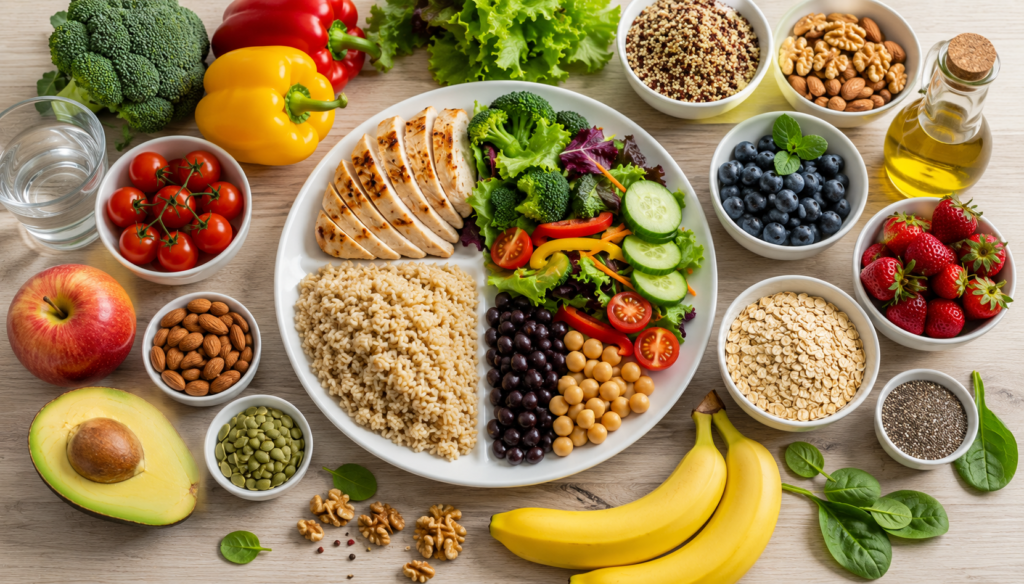
I want to walk through the basic food groups that genuinely form the foundation of balanced eating, doing so in a way that feels educational and genuinely useful rather than the anxious, moralized framing this topic so often receives. I think understanding these categories at a foundational level, without attaching guilt or virtue to any of them, is genuinely one of the most empowering pieces of nutritional knowledge available, precisely because it gives you a framework to evaluate information for yourself rather than relying entirely on whatever specific rule happens to be trending.
Carbohydrates, found in foods like whole grains, fruits, starchy vegetables, and legumes, provide your body’s primary, most readily accessible source of energy. I’ve written at length elsewhere on this site about how unfairly maligned this entire category has become across broader diet culture, and I want to reiterate here that adequate carbohydrate intake genuinely supports energy, mood, and overall function, rather than being something to minimize in pursuit of some vaguely defined idea of health.
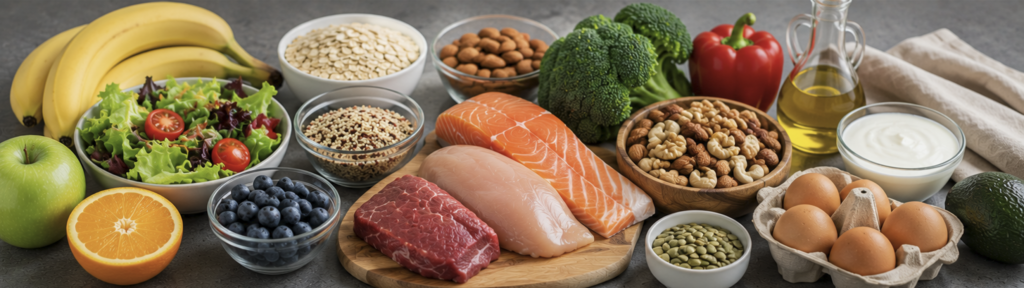
Proteins, found in foods like meat, fish, eggs, dairy, legumes, and various plant-based sources, provide the building blocks your body needs for tissue repair, immune function, and countless other essential processes beyond simply supporting muscle, which tends to be the only context protein gets discussed in across a lot of fitness-focused content. Fats, found in foods like oils, nuts, seeds, avocados, and fatty fish, support hormone production, the absorption of certain vitamins, and provide sustained energy, despite having spent considerable time as the most demonized category across various eras of diet culture messaging.
Fruits and vegetables, beyond providing some carbohydrate energy, offer a genuinely vast range of vitamins, minerals, fiber, and other beneficial compounds that support everything from digestion to immune function to long-term health in ways that are difficult to fully replicate through any other category of food or, for that matter, through supplements alone. Dairy, or fortified alternatives for those who don’t consume dairy, provides calcium and other nutrients supporting bone health, alongside protein and other beneficial components depending on the specific product.
I think laying these categories out simply, without moralizing language or implied hierarchy between them, genuinely demonstrates what balance actually looks like at its foundation: a genuine, varied combination of all of these categories, working together to support the full range of what your body actually needs, rather than any single category being inherently superior or inferior to the others.
What a Balanced Plate Genuinely Looks Like
I want to move from abstract food groups into something more visual and practical, because I think this is where balanced eating becomes genuinely useful as a day-to-day framework rather than just an interesting but somewhat abstract nutritional concept. The visual model I’ve found most genuinely helpful, the one that several reputable health organizations have used in various forms over recent years, involves thinking about your plate divided roughly into sections rather than precise, anxiety-inducing measurements.
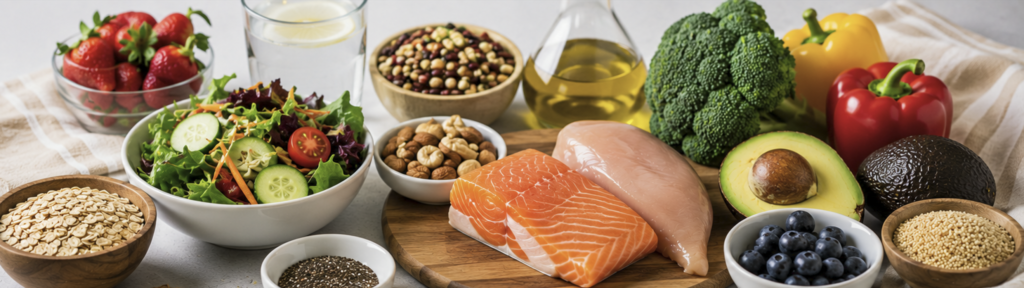
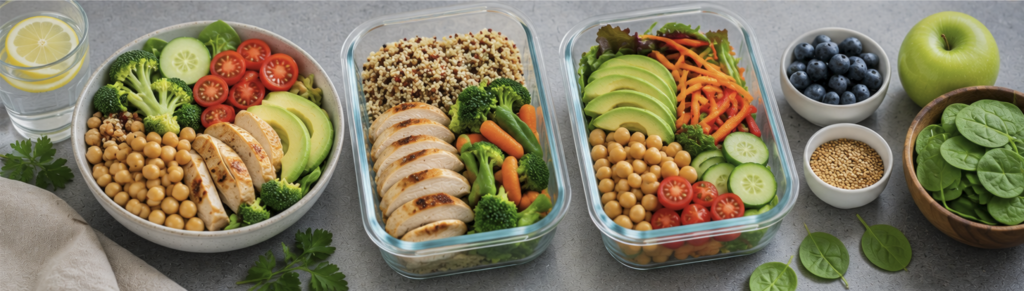
Roughly half your plate filled with vegetables and fruits, a quarter with a protein source, and a quarter with whole grains or other carbohydrate sources, with a reasonable amount of healthy fat incorporated either within these categories or added separately, provides a genuinely useful general framework for what a balanced meal tends to look like. I want to be clear that this is a general visual guide rather than a precise rule requiring exact measurement, and that individual needs, appetite, activity level, and countless other factors mean this ratio will genuinely shift somewhat from person to person and meal to meal, rather than needing to be replicated with rigid precision at every single sitting.
What I love about this visual framework, compared to more numerically precise approaches involving counting or measuring, is how naturally it accommodates genuine variety and flexibility. A breakfast built around this general proportion looks completely different from a dinner following the same basic visual guide, and both can genuinely fit the framework while looking, tasting, and feeling entirely distinct from each other. This flexibility, I think, is exactly what makes a visual, proportion-based approach to balance so much more sustainable than the rigid, numerically precise alternatives that tend to dominate more restrictive approaches to eating.
I’d also gently note that this visual framework genuinely doesn’t need to apply with exact precision to every single meal or snack throughout your day. Some meals, perhaps a simple breakfast or a quick snack, won’t naturally include every single category in this particular proportion, and that’s genuinely fine. What matters more is the overall pattern across your entire day and week, rather than each individual meal perfectly replicating this visual guide in isolation.
Why Variety Matters More Than Any Single “Superfood”
I want to address something I think gets lost in a lot of nutrition content, particularly the kind that circulates so widely across the aesthetically beautiful, Pinterest-inspired wellness spaces so many of us spend time in. There’s a persistent fascination with individual “superfoods,” specific ingredients marketed as having extraordinary, almost magical health benefits that set them apart from everything else, encouraging the idea that finding and incorporating the right specific foods matters more than the broader pattern of eating across your entire week.
I’ve come to believe this framing, however visually appealing and however confidently delivered, genuinely misunderstands how nutrition actually works. No single food, however nutrient-dense or however beautifully marketed, provides everything your body needs, and an overly narrow focus on specific “superfoods” can actually distract from the much more important, much less glamorous-sounding principle of genuine, broad variety across your overall eating pattern. A diet built around a small handful of trendy, heavily marketed ingredients, however impressive their individual nutritional profiles, genuinely provides less overall benefit than a varied pattern incorporating a wide range of different foods across every category I described earlier.
I think this matters enormously for the specific audience reading content like this, women drawn to the elegant, considered aesthetic that surrounds so much of wellness content right now, content that often features beautifully styled bowls centered around whatever specific ingredient happens to be trending that particular season. I’d genuinely encourage enjoying these trendy ingredients if they appeal to you, while also recognizing that genuine nutritional balance comes from the much broader, much less photogenic principle of eating a wide variety of different foods consistently over time, rather than from finding the one perfect ingredient that solves everything on its own.
Building Balance Into a Genuinely Busy, Real Life
I want to address something practical and honest, because I think so much nutrition content, however well-intentioned, describes balanced eating in ways that assume considerably more time, money, and energy than most genuinely busy women actually have available on an ordinary day. I want to talk honestly about how to build genuine balance into a life that’s already full, rather than describing some idealized version of eating that quietly assumes circumstances most of us simply don’t have.
I think the single most useful shift I made was learning to think about balance across an entire week rather than demanding it from every individual meal. Some days, particularly busier ones, genuinely don’t allow for the kind of careful, considered meal preparation that a perfectly balanced plate might ideally call for, and I’ve learned to make peace with that reality rather than treating it as a failure requiring correction. A day built around simpler, less elaborately balanced individual meals, sitting within an overall week that still includes genuine variety and adequacy across all the major food categories, genuinely supports balanced nutrition just as effectively as a week where every single meal perfectly replicates the ideal plate proportions I described earlier.
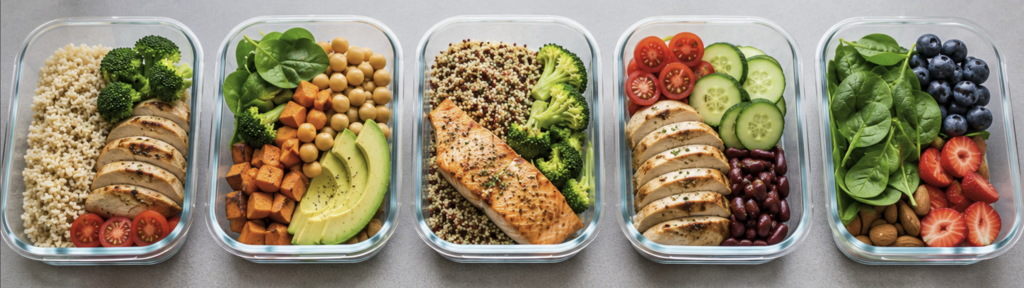
I’ve also found enormous value in building a small rotation of genuinely simple, reliably balanced meals that don’t require much thought or preparation time, the same practical, considered approach I’ve written about elsewhere regarding meal preparation for consistent fitness fueling. Having a handful of go-to combinations, a particular grain bowl, a simple stir-fry, an easy egg-based breakfast, that naturally incorporate genuine variety and balance without requiring elaborate planning each time, removes so much of the friction that otherwise makes consistent, balanced eating feel considerably more demanding than it actually needs to be.
I think this connects to something I keep returning to across everything I write about food and nutrition on this site: balance isn’t really about perfection or precision. It’s about a generally consistent, generally varied pattern that you’re genuinely able to sustain across the real, sometimes chaotic texture of an ordinary busy life, rather than some idealized version that only works on the rare, unhurried day when you have unlimited time and energy to devote to careful meal preparation.
The Role of Pleasure: Why Balanced Eating Includes Joy, Not Just Nutrients
I want to spend real time on something I think gets genuinely undervalued in most discussions of balanced eating, which is the role of pleasure, satisfaction, and genuine enjoyment in a truly sustainable approach to nutrition. So much nutrition content treats food purely as fuel, a functional input to be optimized for nutritional content alone, while largely ignoring the genuine, important role that taste, satisfaction, and emotional connection to food play in any approach that’s actually meant to last a lifetime rather than just a few motivated weeks.
I’ve come to believe that genuine balance includes pleasure as a legitimate, important component, not an indulgence to be minimized or carefully rationed, but a genuine part of what makes any approach to eating sustainable over the long term. A technically perfect nutritional plan that leaves you feeling deprived, joyless, and constantly fighting against genuine cravings and preferences is, in my honest assessment, considerably less balanced than a slightly less nutritionally precise approach that you genuinely enjoy and can sustain consistently for years rather than abandoning in frustration after a few difficult weeks.
This doesn’t mean balance simply means eating whatever you want without any consideration for nutrition; that would genuinely miss the point just as much as the joyless, purely functional approach I just described. What I’m advocating for is a genuine integration of both considerations, building meals and patterns that provide real nutritional adequacy while also genuinely tasting good, satisfying actual cravings and preferences, and bringing real pleasure into an area of life that, frankly, deserves to include pleasure rather than being reduced purely to careful nutritional optimization.
I think this is part of why the aesthetic, considered approach to food that’s become so popular across Pinterest and social media, the beautifully plated meals, the genuine attention to how food looks and is presented, the soft, elegant styling that surrounds so much of current food content, genuinely has real value beyond just appearance. There’s something meaningful about treating meals with enough care and attention that they become genuinely pleasurable occasions rather than purely functional refueling stops, and I think that attention to genuine enjoyment is an underrated, important piece of what makes balanced eating actually sustainable over a lifetime rather than just a temporary, willpower-dependent project.
Hydration: The Quiet Foundation Beneath Everything Else
I’ve written about hydration extensively elsewhere on this site, but I want to include it here too, because I genuinely believe it deserves a place in any thorough explanation of balanced eating, even though it gets discussed less often than the more obviously food-focused categories I described earlier. Adequate hydration genuinely supports digestion, energy, concentration, and even how accurately your body’s hunger and fullness signals communicate with you, making it a genuinely foundational piece of overall balance rather than a separate, secondary consideration.
I’m not going to repeat the specific guidance I’ve already shared elsewhere in detail, but I do want to emphasize that any genuine conversation about balanced eating that ignores hydration entirely is missing something genuinely important. Water, along with the fluid naturally present in foods like fruits and vegetables, forms a quiet, often overlooked foundation beneath everything else this article describes, and I’d encourage giving it the same consistent attention you’d give to the more obviously food-focused pieces of balanced eating.
How Balance Shifts Across Different Seasons of Your Life
I want to address something honestly that I think a lot of nutrition content describes as though one universal definition of balance applies identically regardless of age, life stage, health status, or circumstance. Genuine nutritional needs shift considerably across different seasons of a woman’s life, and I think acknowledging this honestly matters more than pretending a single, static approach to balance applies identically forever, regardless of what else is happening in your body and your life.
Pregnancy and postpartum recovery bring genuinely different nutritional needs than other periods of life, often requiring more of certain nutrients and benefiting from guidance considerably more personalized than anything a general article like this one could responsibly provide. Various hormonal transitions across a woman’s life, including but not limited to those associated with menstrual cycles, perimenopause, and menopause, can genuinely shift how your body responds to and processes different foods, sometimes requiring thoughtful adjustment to what balance actually looks like for you during these particular transitions.
Periods of significant stress, illness, recovery from injury, or major life transition can also genuinely shift what your body needs and how realistic certain aspects of “ideal” balanced eating feel to maintain consistently. I think it’s important to acknowledge this honestly rather than implying that any single static framework applies identically regardless of what else is genuinely happening in your life at any given time. If you’re moving through any of these particular transitions and want guidance specific to your situation, I’d genuinely encourage seeking out a registered dietitian who can account for your individual circumstances far more thoroughly and far more responsibly than any general article possibly could.
The Mindset Shift That Changes Everything: From Rules to Relationship
I want to come back to something I touched on near the beginning of this article, because I think it’s genuinely the most important shift available to anyone hoping to build balanced eating into a genuinely sustainable, lifelong habit rather than a temporary project eventually abandoned in frustration. The shift from thinking about nutrition as a set of external rules to follow toward thinking about it as an ongoing, evolving relationship with your own body and its genuine needs is, I believe, the single most transformative reframe available in this entire conversation.
Rules, however well-researched and well-intentioned, are inherently rigid, applying uniformly regardless of your specific body, your specific day, your specific genuine needs in any given moment. A relationship, by contrast, is responsive, adapting and evolving based on genuine communication and attention rather than blind adherence to fixed external standards. I think this is exactly why so many rule-based approaches to nutrition eventually fail, not because the underlying nutritional information is necessarily wrong, but because rigid rules simply can’t accommodate the genuine variability of an actual human life, with its busy weeks and unhurried ones, its celebrations and its quiet ordinary days, its shifting moods and energy levels and genuine, ever-changing needs.
Building this kind of relationship takes genuine time and patient attention, the same kind of gradual, attentive practice I’ve described across other pieces I’ve written about food and nutrition on this site. It means paying closer attention to how different foods and patterns of eating actually make you feel, rather than simply following whatever external rule sounds most confident or most aligned with whatever’s currently trending. It means extending yourself genuine grace and flexibility rather than rigid perfectionism, treating any individual choice that doesn’t perfectly align with your broader intentions as simply information to learn from rather than evidence of failure requiring punishment or dramatic correction.
I think this relationship-based approach to balance, more than any specific nutritional framework or food group breakdown, is ultimately what makes the difference between someone who eats well consistently across an entire lifetime versus someone who cycles endlessly through different rigid approaches, each one eventually abandoned once its inevitable unsustainability becomes clear.
Navigating Nutrition Information You’ll Encounter Going Forward
I want to offer some practical guidance for evaluating the considerable amount of nutrition content you’ll continue to encounter, particularly across the beautifully produced, aesthetically appealing social media spaces so many of us spend time in. I think developing a few simple habits of critical evaluation genuinely protects you from absorbing misleading or overly restrictive messaging dressed up as balanced, reasonable guidance.
I’d encourage being skeptical of any approach to “balance” that, upon closer examination, still seems to be primarily about restriction or minimizing intake, since genuine balance, as I’ve tried to describe throughout this entire article, is fundamentally about adequacy and variety rather than careful limitation. I’d also encourage paying attention to who’s actually delivering nutrition information, looking for genuine, relevant qualifications rather than simply an appealing aesthetic and confident delivery, the same guidance I’ve offered elsewhere on this site regarding evaluating nutrition content more broadly.
I think it’s also worth questioning any nutrition content that presents extremely confident, universal rules without acknowledging the genuine individual variation that exists across different bodies, different life stages, and different circumstances. Nutrition science, the genuine, well-researched kind, tends to be considerably more nuanced and more individually variable than most viral content has room to convey, and I’d encourage treating extreme confidence and oversimplification as a signal to look more critically at whatever claim is actually being made.
What I Wish I’d Understood About Balance Years Earlier
If I could go back and have a genuine conversation with the version of myself who spent years anxiously trying to follow whatever specific, rigid rule about “balanced eating” happened to be circulating at any given moment, I think I’d tell her this: balance was never meant to be a precise, anxiety-inducing standard you either meet perfectly or fail entirely. It was meant to be a genuinely flexible, generous framework, built around variety and adequacy rather than restriction and precision, that could actually accommodate the real, messy, wonderful texture of an actual human life.
I’d tell her that the confident, often contradictory messaging she’d absorbed from various sources over the years had quietly redefined a perfectly reasonable, genuinely helpful concept into something considerably more restrictive and considerably more anxiety-inducing than it ever needed to be. I’d tell her that genuine balance includes pleasure, includes flexibility, includes the inevitable imperfect days and weeks that are simply part of being a person rather than evidence of failure deserving harsh correction. And I’d tell her, gently, that the patient, unglamorous work of building this kind of genuine, sustainable relationship with food would eventually feel like a quiet, settled relief, considerably more valuable than whatever specific, rigid approach she’d been anxiously trying to perfect at any given moment along the way.
Putting It All Together: A Realistic Picture of Balanced Eating in Practice
I want to bring everything I’ve described throughout this article together into one cohesive, realistic picture, because I think it helps to see the whole concept woven together rather than only discussing individual pieces in isolation. Genuine balanced eating, as I’ve come to understand and practice it myself, looks like building most meals around a reasonable combination of protein, carbohydrates, vegetables or fruit, and a moderate amount of healthy fat, using the general visual plate guide I described earlier as a loose, flexible reference rather than a precise, anxiety-inducing rule.
It looks like genuine variety across your week, rotating through different foods within each category rather than narrowly repeating the same small handful of “approved” items indefinitely. It looks like consistent attention to hydration throughout your entire day, treating water as basic, ongoing maintenance rather than an afterthought. It looks like genuine pleasure and satisfaction woven through your eating, rather than purely functional, joyless nutritional optimization. And it looks like extending yourself real grace and flexibility, treating any individual meal or day that doesn’t perfectly align with these general principles as simply part of the normal, ordinary rhythm of a sustainable, lifelong relationship with food, rather than evidence of failure requiring dramatic correction.
This picture, I think, looks considerably less dramatic and considerably less photogenic than the confident, often restrictive messaging that circulates so widely across nutrition content right now. But it’s genuinely sustainable in a way that almost nothing built around rigid rules and careful restriction ever quite manages to be, and I think that sustainability, more than any single approach’s theoretical nutritional perfection, is ultimately what determines whether balanced eating becomes a genuine, lifelong habit or simply one more temporary project eventually abandoned once its unsustainability becomes clear.
Quick Answers to the Questions I Get Asked Most About Balanced Eating
Does balanced eating mean I can never enjoy treats or less nutritionally dense foods? Not at all; genuine balance includes room for foods you simply enjoy, without moralizing language treating them as inherently good or bad, as long as your overall pattern across time provides adequate variety and nutrition to support how you want to feel and function across the genuine, ordinary course of your week.
How strictly do I need to follow the plate proportions you described? Treat it as a general, flexible visual guide rather than a precise rule requiring exact measurement; individual meals will naturally vary, and what matters more is the overall pattern across your entire day and week rather than perfect replication at every single sitting, since real life rarely allows for, or even benefits from, that kind of rigid consistency anyway.
Is it really possible to eat balanced meals without spending hours cooking and planning? Genuinely yes, particularly once you build a small rotation of simple, reliable combinations that naturally incorporate variety and balance without requiring elaborate preparation each time; simplicity and consistency matter more than elaborate complexity, and most genuinely balanced eating happens through ordinary, repeatable habits rather than impressive, time-intensive cooking projects.
Should balanced eating look the same for everyone? No, genuinely not; individual needs vary based on factors like age, activity level, health status, and life stage, and anyone with specific concerns or significant life transitions should seek personalized guidance from a registered dietitian rather than relying solely on general frameworks like the one described here, since no general framework can fully account for every individual variation that genuinely matters.
What’s the biggest misconception about balanced eating that you’d want people to unlearn? That balance is a euphemism for restriction or eating less; genuine balance is fundamentally about adequacy and variety, ensuring your body gets what it actually needs across a wide range of categories, rather than careful limitation dressed up in softer, more reassuring language that simply makes restriction feel more palatable without actually changing its underlying nature.
I hope this long, honest exploration of what balanced eating actually means gives you a genuinely useful, considerably less anxiety-inducing framework to carry forward than whatever confident, restrictive messaging you might have absorbed from elsewhere. The goal was never perfection or precision. It was simply building something genuinely sustainable, genuinely varied, and genuinely pleasurable enough to actually last a lifetime, one ordinary, balanced, imperfect day at a time.
Reading Past Marketing Language to Find Genuine Balance
I want to spend real time on something I think trips up even genuinely thoughtful, well-intentioned women trying to eat well, which is the considerable gap between what food marketing implies about balance and what genuine nutritional balance actually requires. Packaging covered in words like “wholesome,” “clean,” “guilt-free,” or “balanced” itself has become so common that these words have largely lost any specific, reliable meaning, functioning more as aspirational marketing language than genuine indicators of nutritional content.
I learned to look past this language somewhat reluctantly, having spent years genuinely trusting that products marketed with these particular words must represent the kind of balanced choices I was trying to build into my regular eating. What I eventually understood, through paying closer attention and occasionally consulting more reliable sources, is that these words carry essentially no regulated, consistent meaning, and that a product marketed as “clean” or “balanced” can vary enormously in its actual nutritional profile depending entirely on the specific brand and formulation, regardless of how reassuring and aligned with genuine health the packaging language might sound.
What’s actually helped me far more than trusting marketing language is developing a basic, general familiarity with nutrition labels themselves, paying attention to genuine ingredient lists and overall nutritional content rather than the aspirational words printed in large, appealing fonts across the front of packaging. I’ve written elsewhere about the risk of becoming compulsively anxious about label-reading, and I want to reiterate that same caution here; the goal isn’t obsessive scrutiny of every number, but rather a general, informed awareness that lets you evaluate products more accurately than relying purely on whatever reassuring language the marketing team chose to feature most prominently.
I think this connects to something important about building genuine media literacy around nutrition more broadly, the same critical thinking I’d encourage applying to social media content I described earlier in this article. Marketing language, however aesthetically aligned with the quiet luxury, considered lifestyle so many of us are drawn to, genuinely shouldn’t be mistaken for reliable nutritional guidance, and developing the habit of looking past it toward more substantive information has genuinely served my own efforts toward balanced eating far better than trusting appealing packaging alone ever did.
Structuring Balance Across Different Meals of Your Day
I want to walk through how balance actually shows up differently across breakfast, lunch, and dinner, because I think these different meals genuinely call for somewhat different considerations, even while all working toward the same overall principles I’ve described throughout this entire article.
Breakfast, for many of us, including myself, tends to be the meal with the least available time and the most variation in actual appetite from day to day. I’ve found that keeping breakfast genuinely simple, built around a reliable combination like eggs with toast, yogurt with fruit and granola, or oatmeal with various additions, provides enough flexibility to accommodate different mornings while still generally incorporating protein, some carbohydrate, and often a piece of fruit, without requiring elaborate planning or preparation that a typical busy morning simply doesn’t allow for.
Lunch, depending on whether you’re working from home, in an office, or navigating some other daily structure, often becomes the meal most influenced by genuine practical constraints, available time, and what’s actually accessible to you in that particular moment of your day. I’ve found that having a few reliable, balanced options, whether that’s something I’ve prepared in advance or a few go-to choices I know I can rely on when eating out, removes considerable stress from this particular meal, allowing me to maintain reasonable balance without requiring extensive thought or preparation every single day.
Dinner often becomes the most flexible, most socially connected meal of the day, sometimes a simple, home-prepared meal following the same general principles I’ve described throughout this article, sometimes something more elaborate for a special occasion, sometimes a meal shared with others where the social and emotional dimension matters just as much, if not more, than precise nutritional balance in that particular moment. I’ve come to genuinely embrace this flexibility rather than fighting against it, recognizing that dinner’s role in connection and pleasure is just as legitimate a consideration as its nutritional content, particularly when the broader pattern across my week still provides genuine variety and adequacy.
Snacks, when genuine hunger calls for them between these main meals, tend toward simple combinations like fruit with nut butter, vegetables with hummus, or a small handful of nuts alongside something else, providing real nourishment rather than purely empty, unsatisfying options. I think snacking, much like every other piece of this conversation, benefits from the same general principles applied flexibly rather than anxiously, choosing options that genuinely satisfy hunger and provide some nutritional value without requiring elaborate calculation or restriction.
Maintaining Balance While Eating Out and Traveling
I want to address something genuinely practical, because I know how much anxiety can build up around maintaining balanced eating while navigating restaurants, travel, and the countless situations that don’t allow for the same control over ingredients and preparation that cooking at home provides. I spent years approaching eating out with a level of careful, anxious calculation that, looking back, genuinely diminished how much I enjoyed occasions that were meant to be pleasurable rather than sources of stress and careful management.
What’s worked far better for me is approaching restaurant meals with the same general, flexible principles I apply at home, rather than either abandoning any consideration of balance entirely or swinging into anxious over-management of every choice. I’ll generally look for a meal that includes some protein and vegetables alongside whatever else appeals to me, without obsessing over precise proportions or treating the meal as fundamentally different from how I’d approach eating at home. I’ve found that this flexible, reasonably attentive approach allows me to genuinely enjoy dining out, including dishes that wouldn’t necessarily fit perfectly into the visual plate guide I described earlier, while still maintaining overall balance across my broader pattern of eating that week.
Travel presents its own particular challenges, different food availability, disrupted routines, the general practical difficulty of maintaining your usual patterns while away from home. I’ve learned to extend myself considerable flexibility during travel specifically, focusing on enjoying the experience, including the genuine pleasure of trying new foods and regional specialties, rather than rigidly attempting to replicate my usual balanced eating pattern in circumstances that simply don’t always allow for it. I trust that returning to my usual, more consistent pattern once I’m home again will quickly restore whatever balance might have shifted slightly during a trip, rather than treating travel as a crisis requiring careful damage control.
I think this flexible approach to eating out and traveling connects to something I’ve written about more broadly regarding social eating, the same underlying principle that balance, genuinely understood, has to be able to accommodate the real, wonderful texture of an actual life, including travel and dining out and the countless occasions that don’t perfectly replicate your usual home-cooked routine, rather than treating any departure from that routine as a meaningful threat to your overall nutritional balance.
Teaching Balance to the People You Love, Without Passing Down Anxiety
I want to touch on something that I think matters enormously for many women reading content like this, particularly those navigating these questions not just for themselves but also for children, partners, or other family members who are absorbing messages about food and balance simply by watching how the people around them approach eating. I think this is a genuinely significant responsibility, and one I take seriously in my own life, even though I’m writing primarily from my own personal experience rather than as a parenting expert.
I’ve become increasingly mindful of the language I use around food in front of the people I love, consciously avoiding the moralistic, restrictive framing I described earlier in this article, the “clean” versus “dirty” language, the guilt and anxiety that so often surrounds eating in households where diet culture’s messaging has taken deep root. I want the people in my life, especially any children who might eventually be influenced by how I model this relationship, to absorb a genuinely balanced, flexible, joyful relationship with food rather than the anxious, restrictive patterns I spent years unlearning myself.
This means modeling genuine variety and adequacy rather than visible restriction, eating treats without visible guilt or moralizing commentary, and generally demonstrating the kind of relaxed, confident relationship with food that I believe genuinely serves long-term health far better than rigid, anxious management ever could. I think this matters enormously, because so much of how children especially develop their own relationship with food comes not from explicit instruction but from simply observing the adults around them, absorbing whatever emotional tone surrounds eating in their household long before they’re old enough to consciously evaluate any of the actual nutritional content involved.
I’d encourage anyone navigating these questions for a household rather than just themselves to think carefully about the emotional tone they’re modeling around food, recognizing that the anxious, restrictive patterns so many of us absorbed from our own upbringing or from broader diet culture messaging are genuinely possible to interrupt, replacing them with something calmer, more flexible, and more genuinely sustainable for everyone involved.
How Balanced Eating Connects to the Broader Elegant, Considered Life
I want to draw a connection here that I think matters more than it might initially seem, between genuine nutritional balance and the broader, more intentional approach to living that so many of us are working to build across every other area of our lives, the same quiet luxury, considered elegance I’ve written about extensively elsewhere on this site. I don’t think these are really separate categories so much as different expressions of the same underlying philosophy, the same patient, intentional approach applied to food as to fashion, beauty, and how we structure our days more broadly.
There’s a particular kind of confidence that comes from genuinely understanding your own relationship with food, rather than anxiously following whatever external rule happens to be trending, and I think this confidence shows up in ways that extend well beyond the kitchen or the dinner table. A woman who has built a calm, balanced, genuinely sustainable relationship with eating tends to carry that same settled confidence into other areas of her life, the same quiet self-trust that radiates from someone dressed with intention or genuinely comfortable in her own well-cared-for skin, the parallels I keep returning to across everything I write about self-care on this site.
I think this is part of why the aesthetic, considered approach to food that’s become so visible across Pinterest and social media right now genuinely resonates with so many of us, beyond simply being visually appealing. There’s something meaningful about treating meals, even very ordinary, everyday meals, with enough care and attention that they feel like genuine moments of nourishment and pleasure rather than purely functional, rushed refueling stops squeezed in between everything else demanding your attention. A beautifully set table, even for a solo lunch on an ordinary Tuesday, a thoughtfully arranged plate, the simple ritual of actually sitting down rather than eating standing at a counter while distracted by something else; these small, considered touches genuinely support the broader, more intentional relationship with food that this entire article has been describing.
I’d encourage bringing this same intentionality into your own relationship with balanced eating, not as one more item on an already long list of things to optimize and perfect, but as a genuine extension of the same considered, elegant approach to life that you’re likely already working to build across every other area, from how you dress to how you care for your skin to how you structure your mornings and evenings. Balance, understood this way, becomes less of a separate nutritional project and more simply one more thread in the same larger fabric of an intentional, well-cared-for life.
When to Seek Personalized Guidance Beyond General Principles
I want to be genuinely clear and honest about the limits of what a general article like this one can responsibly offer, because I think it’s important to acknowledge plainly when these broad principles genuinely aren’t enough and when seeking personalized, professional guidance becomes the more appropriate and more responsible path forward.
If you’re managing a specific health condition, whether that’s diabetes, a cardiovascular concern, a digestive condition, or any other diagnosis that affects how your body processes and responds to different foods, the general principles I’ve described throughout this article genuinely aren’t a substitute for personalized guidance from your doctor and, ideally, a registered dietitian who can account for your specific medical needs in a depth and precision this general article simply isn’t designed to offer. If you suspect you might have a complicated or genuinely difficult relationship with food, whether that involves patterns of restriction, compulsive eating, or significant anxiety around eating that goes beyond the ordinary, ordinary challenges this article has addressed, please reach out to a qualified mental health professional or eating disorder specialist who can provide the kind of support a general nutrition article simply isn’t equipped to offer.
If you’re pregnant, breastfeeding, or navigating any other significant life transition that genuinely shifts your nutritional needs in ways this general article hasn’t specifically addressed, personalized guidance from a qualified professional will serve you far better than attempting to apply general principles that weren’t designed with your specific situation in mind. I think it’s important to say this clearly and without hedging, because I genuinely believe that knowing when general information isn’t enough, and having the confidence to seek more personalized support, is just as important a skill as understanding the general principles themselves.
A Few Words on Patience, Because This Genuinely Takes Time
I want to close this long, detailed exploration of balanced eating the way I tend to close everything I write on this topic, with honest acknowledgment that building this kind of genuine, sustainable relationship with food takes real time, considerably more time than any single article, however thorough, can fully convey or guarantee. The shift from anxious, rule-bound eating toward the calmer, more flexible, genuinely balanced relationship I’ve described throughout this entire piece happened for me gradually, over years rather than weeks, through patient practice and a genuine willingness to question messaging I’d absorbed for most of my adult life without ever fully examining it.
I think this patience matters enormously, because so much of the broader wellness conversation implies that genuine transformation should happen quickly, that the right information or the right approach should produce immediate, dramatic change in how you relate to food. My own experience suggests something considerably gentler and considerably more realistic: genuine change in this area happens slowly, through repeated practice and patient self-compassion, gradually replacing old patterns with new ones rather than through any single, dramatic moment of realization that instantly resolves years of absorbed messaging and habit.
What I can offer, having walked this entire path myself, is genuine reassurance that this patient work is worth every bit of the effort and time it requires. The relationship with food I have now, calm, varied, genuinely pleasurable, free from the anxious calculation and restriction that used to surround nearly every meal, feels like one of the most meaningful, most quietly valuable shifts I’ve made across my entire adult life, considerably more significant than any specific nutritional outcome it might have also produced along the way.
A Few Common Misconceptions Worth Clearing Up
I want to address a handful of specific misconceptions about balanced eating that I encounter constantly, both in my own past thinking and in conversations with other women navigating this same topic, because I think directly naming and addressing them is more useful than leaving them as vague, unspoken assumptions sitting beneath everything else I’ve described throughout this article.
One persistent misconception is that balanced eating requires eating the exact same things every day to maintain consistency, when genuine balance actually depends on variety across time rather than rigid repetition of identical meals. I spent a period of my own life believing that consistency meant sameness, eating nearly identical meals day after day in the name of maintaining control and predictability, when what my body actually benefited from far more was genuine variety across my week, even while maintaining consistent general principles about proportion and adequacy.
Another common misconception is that balanced eating means every single meal must contain every food group in precise proportion, when in reality, balance operates at the level of your overall pattern across days and weeks rather than requiring perfect representation in every individual sitting. A breakfast that’s mostly carbohydrate and protein without a significant vegetable component doesn’t represent a failure of balance, provided your overall day or week includes adequate vegetable intake elsewhere. This distinction, between balance as an overall pattern versus balance as a requirement for every single meal, genuinely matters for reducing the anxious, perfectionistic pressure that so often surrounds this topic.
A third misconception, one I find genuinely insidious because of how reasonable it initially sounds, is that balanced eating is primarily about portion control and careful measurement. While genuine attention to appropriate portions matters to some degree, I think an overemphasis on precise measurement and careful portion calculation tends to recreate much of the same anxious, restrictive energy that genuine balance is meant to move away from in the first place. I’ve found that learning to eat according to genuine hunger and fullness signals, the intuitive eating principles I’ve written about elsewhere on this site, serves balanced eating far better over the long term than rigid measurement and portion calculation ever managed to.
A fourth misconception involves the idea that achieving genuine balance requires eliminating processed foods entirely, treating anything that comes from a package as inherently opposed to balanced, healthy eating. I think this oversimplifies a considerably more nuanced reality; many processed foods, from canned beans to frozen vegetables to whole grain bread, genuinely support balanced eating and convenient, sustainable meal preparation, while the blanket demonization of all processed foods regardless of their actual nutritional content tends to create unnecessary anxiety and impractical standards that most genuinely busy women simply can’t sustain alongside everything else demanding their time and attention.
I think naming these specific misconceptions directly, rather than leaving them as vague background assumptions, genuinely helps clarify what balanced eating actually requires versus what various strands of diet culture have quietly added to the concept without it ever being genuinely necessary or accurate. Stripping away these particular misconceptions, more than almost anything else I’ve described throughout this entire article, tends to make balanced eating feel considerably more achievable and considerably less anxiety-inducing than its more restrictive, perfectionistic cousin that so often masquerades under the same reassuring name.
I hope, more than anything else this long article has offered, that you walk away with a genuinely calmer, more generous understanding of what balanced eating actually means, considerably different from whatever anxious, restrictive version of this concept you might have absorbed from elsewhere across the broader wellness and diet culture conversation. Balance was never meant to be a precise standard you either meet perfectly or fail entirely. It was meant to be exactly what the word genuinely implies: a flexible, generous, sustainable equilibrium between all the different things your body and your life actually need, including, importantly, genuine pleasure and flexibility alongside nutritional adequacy.
I think the woman who eats well consistently across an entire lifetime isn’t the one who perfected some precise, rigid formula and followed it flawlessly forever. She’s simply the one who built a patient, flexible, genuinely sustainable relationship with food, extending herself grace during the inevitable imperfect days and weeks, trusting her own body’s signals more than whatever confident, restrictive rule happened to be circulating most widely at any given moment. I hope you find your own way toward that same calm, sustainable relationship, gently, patiently, one genuinely balanced, imperfect day at a time, for as long as eating well continues to matter to you across the genuine, full length of your life.
And if you take only one thing forward from this entire long conversation, I hope it’s simply this: balance was always meant to be generous, not restrictive. It was always meant to include pleasure, flexibility, and genuine variety, rather than the careful, anxious limitation that diet culture has so often quietly attached to the word. Reclaiming that original, generous meaning, for yourself and for anyone else watching how you move through this particular area of your life, is, I genuinely believe, one of the most valuable and most quietly liberating shifts available to any woman ready to build healthy eating habits meant to last for genuinely the rest of her life.