
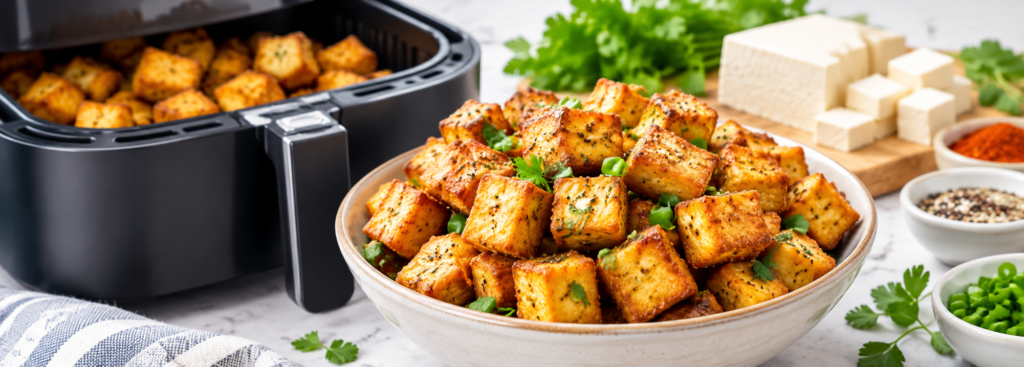
Meta description: Learn how to air fry tofu until it’s golden and crispy on the outside, tender inside. Pressing, seasoning, temperature, and timing — all explained. Primary keyword: air fryer tofu Secondary keywords: crispy tofu air fryer, how to air fry tofu, air fryer tofu recipe, crispy tofu without oil, best tofu for air frying
Tofu has a reputation problem. Mention it at a dinner party and you’ll often get a wrinkled nose, a memory of some sad, waterlogged cube from a stir-fry gone wrong. That’s a shame, because tofu — treated correctly — is one of the most satisfying things you can put in an air fryer. Crisp, golden edges. A tender, almost custardy center. No deep-frying, no vat of oil, no kitchen that smells like a fast-food joint for the rest of the night.
The short answer to the question in the headline: yes, absolutely, you can air fry tofu, and it might be one of the best things you make in that machine all month. The slightly longer answer is that there’s a real technique to it — a handful of steps that separate crispy, craveable tofu from the chewy, bland cubes that give the ingredient a bad name. This guide covers all of it: choosing the right tofu, pressing it properly, cutting it for maximum crispiness, seasoning it well, and getting the air fryer settings right, along with enough flavor variations and serving ideas to keep it in regular rotation.
Why Air Frying Works So Well for Tofu
Tofu is mostly water — a block of firm tofu can be anywhere from 80 to 85 percent water by weight. That water is the enemy of crispiness in almost any cooking method, but it’s a particular problem for tofu because the protein structure holds onto moisture stubbornly. Traditional pan-frying works, but it requires enough oil to create real contact crisping, plus close attention to prevent sticking and uneven browning. Deep-frying gets great texture but adds a lot of oil and mess for a home cook.
An air fryer solves this elegantly. It’s essentially a small, powerful convection oven — a heating element combined with a fan that circulates hot air rapidly around the food. That circulating air does two things simultaneously: it dries the surface of the tofu quickly (encouraging browning and crispness) and it cooks the exterior at a high enough temperature to create genuine Maillard browning — the chemical reaction responsible for that deep golden color and savory, slightly nutty flavor — without needing to submerge the tofu in oil. You get most of the textural payoff of frying with a fraction of the oil and virtually none of the splatter or cleanup.
The other advantage is convenience. Once the tofu is prepped, it’s largely hands-off: toss it in the basket, shake or flip partway through, and let the machine do the work while you prepare a sauce or side dish.
Choosing the Right Type of Tofu
Not all tofu is created equal, and the type you buy has a bigger impact on your final result than almost any other variable in this guide.
Tofu comes in a spectrum of firmness: silken, soft, medium, firm, extra-firm, and sometimes “super firm” or pre-pressed varieties. Silken and soft tofu are too delicate and water-rich for air frying — they’ll fall apart before they have any chance to crisp, and they’re better suited to smoothies, sauces, or dishes like mapo tofu where a silky texture is the point.
For air frying, extra-firm tofu is the clear winner, with regular firm tofu as an acceptable second choice if extra-firm isn’t available. Extra-firm has a lower water content and a denser protein structure, which means it holds its shape well during cooking and crisps more readily on the outside while still developing a pleasant, slightly chewy interior.
If your grocery store carries “super firm” or “high-protein” tofu — often sold in vacuum-sealed packages rather than the water-packed tubs — this is worth seeking out. It’s been pressed at the factory, has an even lower moisture content, and can sometimes go straight into the air fryer with minimal additional pressing, which is a genuine time-saver on a weeknight.
Firm Versus Extra-Firm Tofu
It’s worth spelling out the difference a little more, since the terminology can be confusing across brands. Firm tofu has enough structural integrity to hold its shape when cut and handled, but it still contains a fair amount of water and can feel slightly springy or bouncy. Extra-firm tofu has been pressed more during manufacturing, resulting in a denser texture with less water — it feels heavier for its size and holds cut edges more crisply.
For air frying specifically, that lower water content in extra-firm tofu translates directly into better crisping, because there’s simply less moisture that needs to evaporate before the surface can start to brown. If you only have firm tofu on hand, you can absolutely still get good results — you’ll just want to be more diligent about pressing (covered next) to compensate for the higher starting moisture content.
How to Press Tofu
Pressing is the single most important step in this entire process, and it’s the step people most often skip or rush — usually to their detriment.
Pressing tofu means removing excess water from the block before cooking, and it accomplishes two things: it concentrates the tofu’s flavor (since diluted tofu tastes like very little) and, more importantly for our purposes, it removes the moisture that would otherwise steam the tofu from the inside during cooking, preventing the surface from ever properly crisping.
How to press tofu without a special tool:
-
Remove the tofu from its packaging and drain off the liquid.
-
Wrap the block in a clean kitchen towel or several layers of paper towels.
-
Place the wrapped tofu on a plate or cutting board.
-
Set something flat and heavy on top — a cast-iron skillet, a cutting board with a couple of cans stacked on it, or a large book protected by a plate.
-
Let it sit for at least 20 to 30 minutes, checking and replacing the towel if it becomes fully saturated.
If you have a dedicated tofu press (an inexpensive gadget with a spring-loaded mechanism), it can achieve a similar or slightly better result in less time, and it’s a worthwhile purchase if you cook tofu often. But it’s genuinely optional — the towel-and-weight method has worked for home cooks for decades and requires nothing you don’t already own.
How Long Tofu Should Be Pressed
The general rule is a minimum of 15 to 20 minutes for a noticeable improvement, with 30 minutes to an hour producing better results, and up to overnight (in the refrigerator) for the driest, chewiest, most crisping-ready tofu. For a weeknight dinner, 20 to 30 minutes is a reasonable, practical target — enough to make a real difference without derailing your timeline.
If you’re organized enough to press it in the morning before work, or the night before, do that; the tofu will simply sit, pressed, in the refrigerator until you’re ready to cook, and the extra time only helps. There’s no real downside to pressing longer, within reason — you’re not going to over-press tofu into ruin.
How to Cut Tofu
Once pressed, cutting technique affects both cooking evenness and the ratio of crispy surface area to soft interior — which, frankly, is the whole game with crispy tofu.
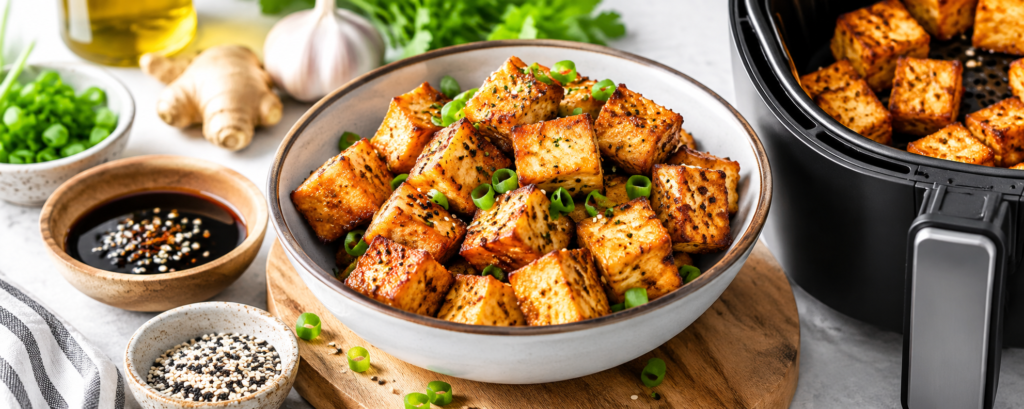
Cubes (roughly ¾ to 1 inch) are the most common and versatile cut, working well in grain bowls, salads, and stir-fry-style dishes. They cook fairly evenly and give you a good mix of crispy exterior and tender center in every piece.
Slabs or planks (about ½ inch thick, cut into rectangles) maximize surface area relative to volume, which means more crisping per bite — a good choice if you want maximum crunch, or if you’re making something like a tofu “steak” to serve whole with a sauce.
Triangles are a popular cut in many Asian-inspired preparations and cook similarly to cubes, offering a slightly different presentation.
Whatever shape you choose, try to keep the pieces reasonably uniform in size. Air fryers cook by circulating hot air, and pieces of dramatically different sizes will finish at different times — the smaller pieces drying out while the larger ones are still catching up.
Different Tofu Shapes and Textures
Beyond the basic cube-versus-slab decision, a few other approaches are worth knowing. Tearing pressed tofu into rough, irregular chunks by hand (rather than cutting with a knife) creates uneven surfaces with lots of nooks and crannies — these craggy edges crisp up exceptionally well and create a texture reminiscent of popcorn chicken. This technique has become popular in recipes specifically chasing maximum crunch, and it’s worth trying at least once if you’re a texture-focused eater.
Cubing tofu smaller (½ inch) increases the crisp-to-soft ratio further and works particularly well for salads or as a crunchy topping, while larger pieces (1 to 1.5 inches) retain more of a tender, custardy center, which some people prefer for a more substantial, protein-forward main dish.
How to Remove Excess Moisture
Pressing addresses the bulk of the internal moisture, but a few additional steps help further, especially if you’re short on time or working with regular firm rather than extra-firm tofu.
After cutting, pat the tofu pieces dry with a paper towel or clean kitchen towel — this removes surface moisture that would otherwise create steam in the air fryer basket during the first few minutes of cooking. Some cooks also let cut tofu sit uncovered in the refrigerator for 15 to 20 minutes before cooking, allowing additional surface moisture to evaporate naturally. If you’re using cornstarch (discussed below), it also helps absorb any remaining surface moisture, working double duty as both a drying agent and a crisping agent.
Marinades
Because tofu has a naturally mild flavor, marinating is one of the most effective ways to build real depth into the finished dish. However, marinades introduce liquid — which works against crisping if not handled thoughtfully.
The workaround is straightforward: marinate the tofu briefly (15 to 30 minutes is plenty; tofu absorbs flavor fairly efficiently, especially once pressed and with some surface texture from tearing or cutting), then remove it from the marinade and pat it dry before adding cornstarch and oil and transferring to the air fryer. This gives you the flavor benefit without the sogginess that comes from air frying wet, marinade-soaked tofu.
A simple, versatile base marinade: 2 tablespoons soy sauce (or tamari for gluten-free), 1 tablespoon rice vinegar, 1 teaspoon sesame oil, 1 clove garlic (minced), and a small amount of grated ginger. This works as a foundation you can adjust in dozens of directions, several of which are covered in the flavor variations section below.
Seasonings
If you’re skipping a marinade in favor of speed, a dry seasoning approach works well too. Toss pressed, cut tofu with a small amount of oil, then season directly with salt, garlic powder, onion powder, smoked paprika, and black pepper — a simple combination that delivers real flavor without any waiting time. Nutritional yeast is a popular addition for tofu specifically, contributing a savory, slightly cheesy note that many people find appealing, along with a small nutritional boost.
Cornstarch and Other Methods for Creating Crispiness
If pressing is the most important step, cornstarch is the most important ingredient. A light dusting of cornstarch (or arrowroot starch, or potato starch, as alternatives) on the surface of the tofu before air frying creates a thin, starchy coating that crisps dramatically better than the tofu’s surface would on its own — it’s the same principle behind why cornstarch-dusted chicken or cauliflower crisps up so well in an air fryer.
To use it: after pressing, cutting, and patting the tofu dry (and removing it from any marinade), toss the pieces in a bowl with 1 to 2 tablespoons of cornstarch per standard block of tofu, tossing gently until each piece has a light, even coating. Then add a small amount of oil (see below) and toss again before transferring to the air fryer basket. The starch absorbs surface moisture and, under the air fryer’s hot, circulating air, forms a genuinely crispy shell — this single step is often the difference between “pretty good” tofu and “restaurant-quality” tofu.
Oil and How Much to Use
One of the appeals of air frying is using less oil than traditional frying, but a small amount of oil still matters for achieving good browning and crisp texture — air fryers aren’t truly oil-free cooking, they’re low-oil cooking. For a standard block of tofu, 1 to 2 teaspoons of a neutral, high-smoke-point oil (avocado oil, vegetable oil, or canola oil) tossed with the cubes after the cornstarch coating is typically sufficient. Too much oil, counterintuitively, can make the coating greasy rather than crisp, since it doesn’t allow the starch layer to dry and set properly against the hot air.
A light misting from an oil spray bottle, rather than pouring, tends to distribute oil more evenly across all the pieces, which supports more consistent browning.
Air Fryer Temperature
For most air fryer tofu recipes, 400°F (200°C) is the standard, reliable temperature. This is hot enough to drive off surface moisture quickly and achieve good Maillard browning within a reasonable cooking window, without being so aggressive that the exterior burns before the interior heats through.
Some recipes suggest starting slightly lower (around 375°F) for the first several minutes to allow more even moisture evaporation, then finishing at 400°F for the last few minutes to maximize browning — this two-stage approach can work well but adds complexity that isn’t strictly necessary for good results.
Cooking Time
At 400°F, cubed tofu (roughly ¾ to 1 inch) typically takes 15 to 20 minutes total, shaken or flipped at the halfway point. Smaller pieces or thinner slabs may finish closer to 12 to 15 minutes, while larger cubes or thicker slabs may need closer to 20 to 25 minutes.
These times are approximate — air fryer models vary meaningfully in their heating elements and airflow design, and factors like how full the basket is (overcrowding slows cooking considerably, discussed below) will shift the timeline. Start checking around the lower end of the range and add time in small increments (2 to 3 minutes) until the desired crispness is reached, rather than assuming a fixed time will work perfectly across every machine.
When to Flip or Shake the Tofu
Shaking the basket or flipping the pieces at least once, roughly halfway through cooking, is essential for even browning — since the tofu pieces touching the basket surface directly will brown faster than the sides exposed only to circulating air. For best results, shake or flip every 7 to 10 minutes throughout the cooking time, rather than just once. This takes only a few seconds each time and makes a real, visible difference in how evenly the final result browns.
How to Prevent Sticking
A few practical measures reduce sticking: don’t skip the light coating of oil, since a completely dry cornstarch surface is more prone to sticking to the basket than one with a thin oil layer; avoid overcrowding, since pieces packed too tightly against each other or the basket surface are more likely to tear when you shake or flip them; and consider a light spray of oil directly on the basket itself before adding the tofu, particularly on baskets with worn non-stick coating.
How to Avoid Soggy Tofu
If your tofu comes out soft or soggy rather than crisp, the most likely culprits, roughly in order of importance, are: insufficient pressing (moisture wasn’t adequately removed before cooking), skipping the cornstarch coating, overcrowding the basket (which traps steam around the pieces rather than allowing hot air to circulate freely), or removing the tofu from the air fryer too early. Addressing pressing and cornstarch first typically solves the majority of soggy-tofu complaints.
How to Achieve Restaurant-Style Crispiness
For tofu that rivals what you’d get at a good Asian restaurant, combine every technique in this guide: press for at least 30 minutes (longer if time allows), tear or cut into pieces with irregular, craggy surfaces rather than perfectly smooth cuts, coat generously in cornstarch, use a light but even coating of oil, cook at 400°F, and shake the basket every 7 to 8 minutes. Avoid overcrowding — cook in batches if necessary, since a single, even layer with some space between pieces is far more important to the final result than saving a few minutes by cramming everything in at once.
Common Mistakes
The most frequent mistakes, in rough order of impact: skipping or rushing the pressing step; overcrowding the air fryer basket, which prevents proper air circulation and results in steamed rather than crisped tofu; using silken or soft tofu instead of firm or extra-firm; adding too much oil, which can make the coating soggy rather than crisp; forgetting to shake or flip partway through cooking; and pulling the tofu out before it’s had enough time to develop real color and crunch, often out of impatience or uncertainty about doneness.
Troubleshooting
Tofu is mushy in the middle, not crispy anywhere: likely insufficient pressing and no cornstarch coating — address both.
Tofu is crispy at first but goes soft after a few minutes out of the air fryer: this is fairly normal, since the crispy coating softens somewhat as it cools and any residual steam is trapped; serving immediately, and tossing in sauce (if using) just before serving rather than letting it sit in sauce, helps preserve crispness longer.
Tofu sticks badly to the basket: likely too little oil, or a basket with degraded non-stick coating; a light spray directly on the basket before adding tofu can help.
Some pieces are burnt while others are underdone: uneven piece sizes, or insufficient shaking during cooking; cut pieces more uniformly and shake more frequently.
Flavor Variations
Once the base technique is solid, tofu becomes an excellent vehicle for a huge range of flavors, since its neutral base takes on seasoning readily.
Spicy tofu: Toss cooked crispy tofu with a sauce made from 2 tablespoons chili garlic sauce, 1 tablespoon soy sauce, 1 teaspoon honey or maple syrup, and a splash of rice vinegar, warmed briefly and tossed with the hot tofu straight from the air fryer.
Garlic tofu: Sauté 3 to 4 cloves minced garlic in a small amount of oil until fragrant, then toss with the crispy tofu along with soy sauce, a touch of sugar, and chopped scallions.
Teriyaki tofu: Combine ¼ cup soy sauce, 2 tablespoons brown sugar, 1 tablespoon rice vinegar, 1 teaspoon grated ginger, and 1 clove minced garlic; simmer briefly until slightly thickened, then toss with the crispy tofu just before serving.
BBQ tofu: Toss the finished crispy tofu in your favorite barbecue sauce, then return to the air fryer for 2 to 3 minutes at 380°F to set the glaze slightly — this creates a sticky, caramelized exterior reminiscent of barbecued meat.
Asian-inspired sesame tofu: Combine soy sauce, a touch of honey, rice vinegar, and sesame oil, tossed with the crispy tofu and finished with a generous sprinkle of toasted sesame seeds and sliced scallions.
High-Protein Tofu Meals
A standard block of extra-firm tofu contains roughly 15 to 20 grams of protein, making crispy air fryer tofu a genuinely substantial protein source for both vegetarian and omnivorous meals alike. Building a full meal around it is straightforward: pair with a whole grain (rice, quinoa, farro), a vegetable component (roasted or air-fried alongside, or fresh in a salad), and a sauce, and you have a complete, balanced plate with 20-plus grams of protein per serving.
Serving Suggestions
Rice and grain bowls: Layer rice or another grain with crispy tofu, roasted or raw vegetables, and a drizzle of sauce — teriyaki, peanut, or a simple soy-sesame dressing all work well.
Salads: Crispy tofu adds substantial protein and satisfying texture to green salads, grain salads, or noodle salads, especially when tossed with a bit of sauce right before serving so it doesn’t sit and soften.
Wraps: Crispy tofu, shredded vegetables, and a flavorful sauce rolled into a tortilla or lettuce wrap make for an easy, portable lunch.
Noodles: Toss crispy tofu with cooked noodles (rice noodles, soba, or standard wheat noodles), a sauce, and quick-cooked or raw vegetables for a fast noodle bowl.
Vegetables: Crispy tofu pairs naturally with roasted or air-fried vegetables — broccoli, bell peppers, snap peas, and carrots are all classic companions in stir-fry-style dishes.
Meal-Prep Ideas
Crispy tofu holds up reasonably well for meal prep, though it’s worth noting upfront that it won’t stay quite as crisp after refrigeration and reheating as it is fresh from the air fryer — that’s simply the nature of any fried or air-fried food. To meal prep effectively, cook a larger batch of plain (unsauced) crispy tofu, portion it into containers alongside a grain and vegetables, and store sauce separately to add just before eating, which keeps the tofu from becoming soggy while it sits in the refrigerator.
Storage
Cooked tofu keeps in an airtight container in the refrigerator for 3 to 4 days. Store it separately from any sauce if possible, since sauce sitting on the tofu will soften the crispy coating considerably over time.
Reheating
The air fryer is, unsurprisingly, the best tool for reheating leftover crispy tofu — a few minutes at 375°F will re-crisp the exterior far more effectively than a microwave, which tends to make the coating soft and slightly rubbery. If you don’t have access to an air fryer for reheating, a hot skillet with a small amount of oil is the next-best option.
Key Takeaways
-
Extra-firm tofu, well-pressed, is the foundation of crispy air fryer tofu — this step matters more than any seasoning choice.
-
A light cornstarch coating dramatically improves crispiness and is worth the extra minute it takes.
-
400°F for 15 to 20 minutes, shaking every 7 to 8 minutes, is a reliable starting point for most air fryer models.
-
Avoid overcrowding the basket — cook in batches if needed for the crispiest results.
-
Marinate briefly and pat dry before cooking to add flavor without sacrificing crispness.
Frequently Asked Questions
Do I really need to press tofu before air frying? Yes — this is the single most important step for achieving crispy results. Skipping it typically leads to soggy, unevenly cooked tofu.
Can I air fry tofu without oil? You can, and it will still cook and firm up, but a small amount of oil (1 to 2 teaspoons per block) significantly improves browning and crisp texture. Truly oil-free results tend to be noticeably less crispy.
Why is my air fryer tofu chewy instead of crispy? This usually points to insufficient pressing, skipping the cornstarch coating, or overcrowding the basket, which traps steam and prevents proper crisping.
Can I use frozen tofu? Yes — freezing and thawing tofu changes its texture, making it spongier and better at absorbing marinades, though it also becomes more porous rather than dense. Press thawed frozen tofu well before cooking, as it releases a significant amount of water.
How long does air fryer tofu take to cook? Typically 15 to 20 minutes at 400°F for standard cubes, shaken partway through, though this varies by air fryer model and piece size.
Final Thoughts
Crispy air fryer tofu isn’t complicated once you understand the handful of steps that actually matter: pressing, a light starch coating, a reasonable amount of oil, and enough heat and airflow to let the surface genuinely crisp rather than steam. Once you’ve made it once or twice, the process becomes close to automatic, and you’ll likely find yourself reaching for a block of tofu with the same casual confidence you’d reach for chicken thighs. Give the technique a real try before writing tofu off — the version most people remember disliking almost certainly wasn’t made this way.